

Meredythe | May 7, 2026 | Blog
A slip and fall injury at a public place in Austin can happen in seconds, leaving you with medical bills, lost wages, and pain. Property owners have a legal responsibility to maintain safe premises, and when they fail to do so, you may have grounds for a claim. We at Heaton Injury Law, PLLC understand how confusing premises liability law can be, which is why we’ve created this guide to help you understand your rights.
This article walks you through what property owners owe you, how to prove negligence, and the steps you need to take to protect your case.
What Property Owners Actually Owe You in Texas
Texas law treats slip-and-fall injuries as premises liability claims, meaning the property owner’s legal duty depends entirely on your status when you were injured. If you were a customer in a store, a diner at a restaurant, or a visitor to a business, you’re classified as an invitee-and that status matters significantly. Property owners owe invitees the highest level of care under Texas law. This status requires them to actively inspect premises for hazards, repair dangerous conditions, and warn about risks they’ve discovered. This isn’t theoretical: courts in cases like Keetch v. Kroger have established that property owners cannot simply ignore wet floors, broken stairs, or debris. If you slip because of a condition the owner knew about or should have known about through reasonable inspection, that owner bears responsibility.
How Owners Learn About Hazards
The distinction between actual knowledge and constructive knowledge is critical to your claim. Actual knowledge means the owner knew about the specific hazard before your fall-for instance, a manager witnessed a spill twenty minutes before you arrived. Constructive knowledge means the hazard existed long enough that a reasonably attentive owner should have discovered it during normal operations. Albertsons v. Mohammadi made clear that constructive knowledge ties directly to the precise condition causing your fall, not just general awareness of risk. Courts ask: how long was this hazard present, and would a reasonable inspection have caught it?
In Austin’s high-traffic retail and hospitality environments, property owners typically conduct inspections every two to four hours. A hazard present for longer than that interval suggests they should have known about it. This timeline becomes powerful evidence in your favor because it establishes that the owner failed to meet their inspection obligations.
Visitor Status Changes Everything
Your legal standing hinges on whether you were an invitee, licensee, or trespasser when injured. Invitees receive the strongest protection because property owners invited you onto the premises for business purposes. Licensees-such as social guests or contractors-get less protection; owners must warn about known dangers but aren’t required to conduct active inspections for unknown hazards. Trespassers receive minimal duty, though the attractive nuisance doctrine protects children around pools or other dangerous attractions.
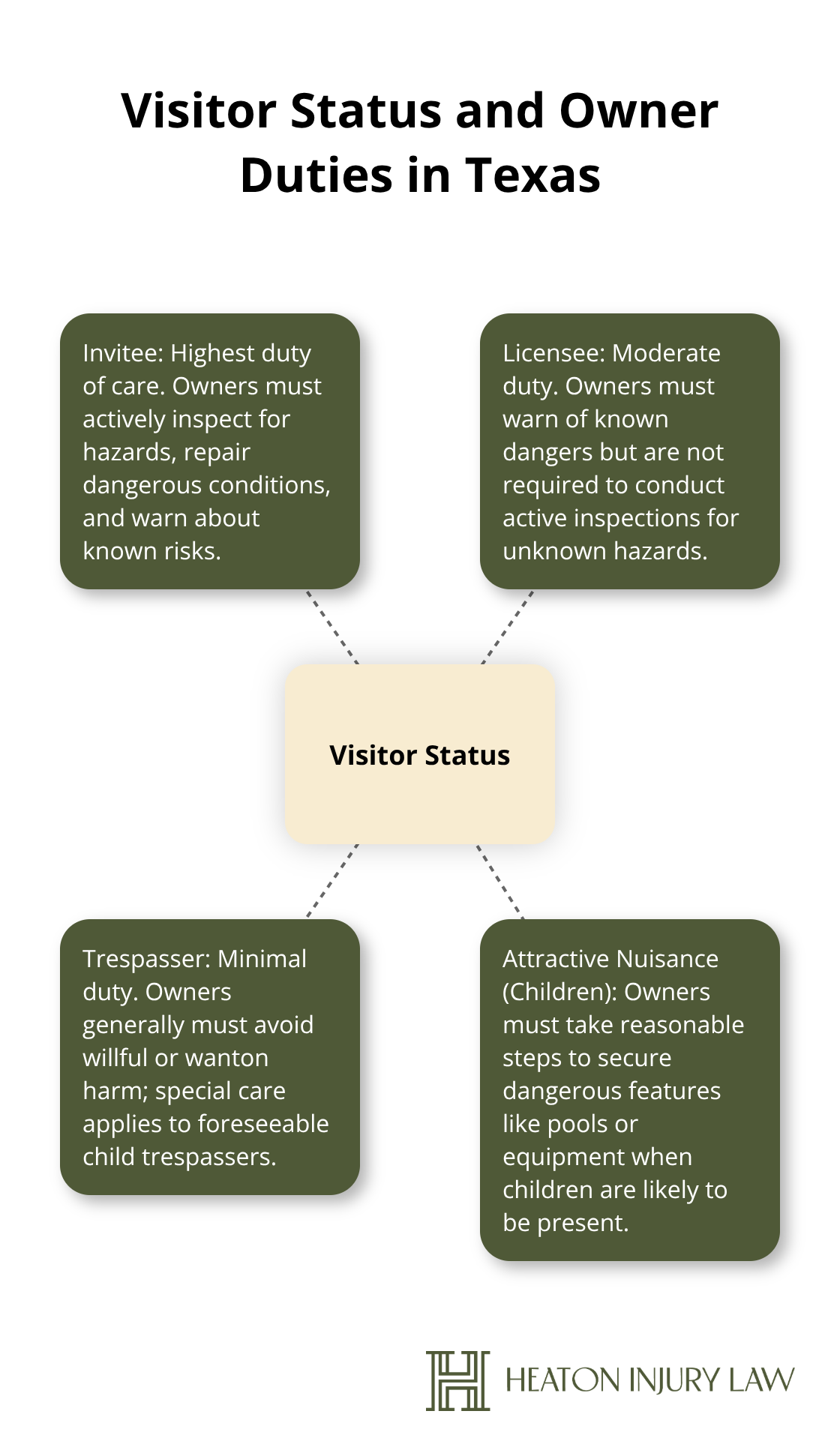
Most slip-and-fall cases in Austin involve invitees because they occur in stores, restaurants, offices, and public venues where owners actively solicit visitors. This matters because proving negligence against an owner requires showing they breached their specific duty to you based on your status. The owner’s failure to inspect for hazards constitutes negligence toward an invitee but not necessarily toward a licensee.
The Four Elements That Determine Negligence
Courts determine negligence by examining four specific elements: the hazard posed an unreasonable risk, the owner knew or should have known about it, the owner failed to fix or warn about it, and that failure directly caused your injuries. Texas follows proportionate responsibility under Section 33.001, meaning if you’re more than 50% at fault, you recover nothing. If you’re 50% or less at fault, damages are reduced by your percentage of fault.
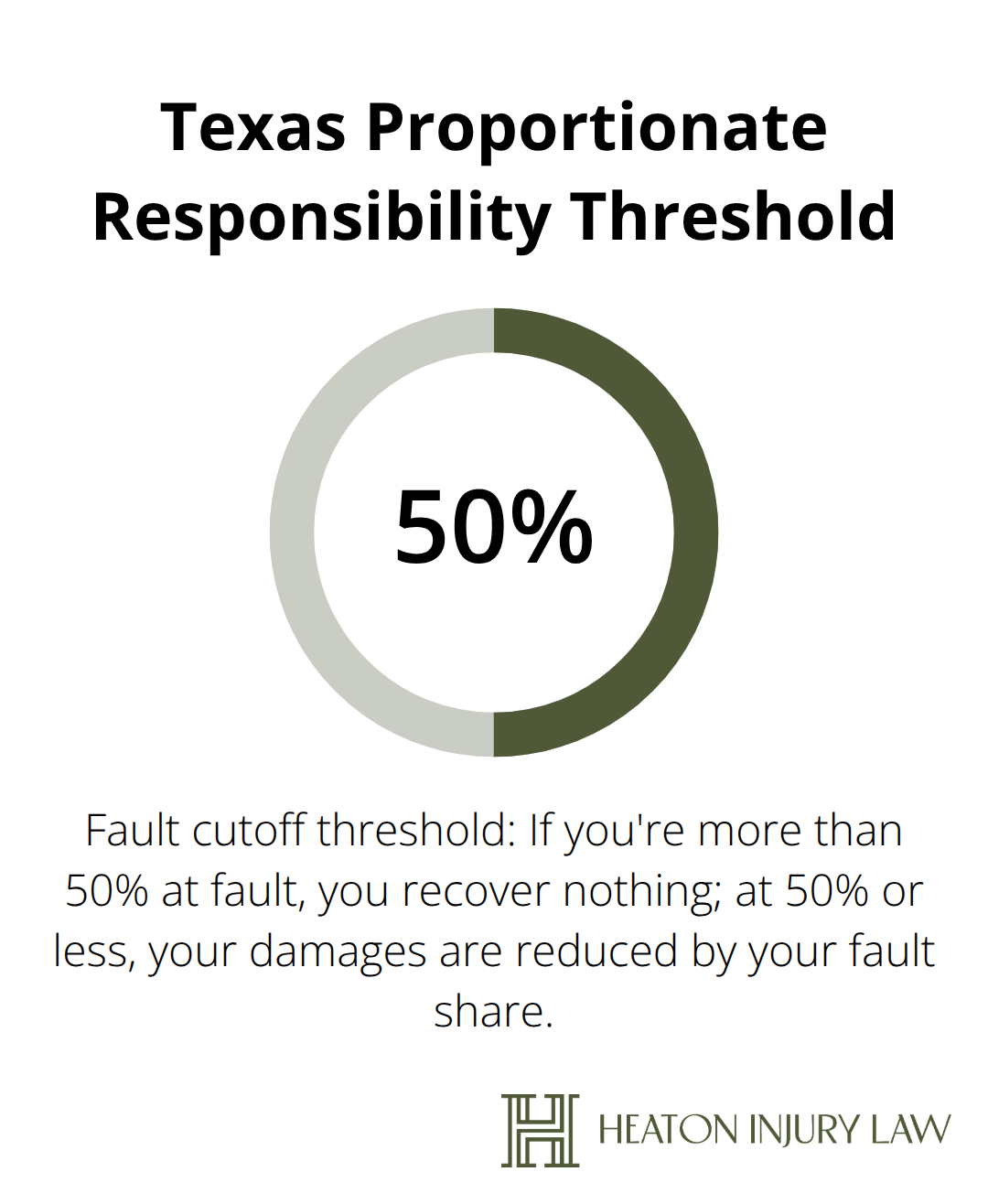
This is why establishing the owner’s knowledge and failure to act is essential-it shifts fault away from you and onto the party responsible for maintaining safe premises. The strength of your claim depends on how clearly you can demonstrate that the owner breached their duty. If you’ve been injured in a slip-and-fall accident, contact a skilled Austin personal injury lawyer to discuss your case and understand your legal options.
Common Hazards That Lead to Slip and Fall Injuries in Austin
Wet Floors and Weather-Related Dangers
Wet floors rank as the leading cause of slip-and-fall injuries in Austin retail and hospitality spaces, accounting for a significant portion of premises liability claims. Austin’s subtropical climate intensifies this problem-sudden afternoon thunderstorms drench building entrances and walkways faster than maintenance crews can respond, and property owners often fail to deploy warning signs or increase inspection frequency during rain. A manager mops a grocery store aisle without barriers and creates immediate danger; worse still is the owner who discovers standing water and does nothing for hours. Courts in Texas hold owners accountable when wet conditions persist beyond a reasonable timeframe, typically near an hour or more in busy commercial spaces. If you slipped on water that had been present long enough for the owner to discover it through standard inspections, that owner’s negligence is provable. Weather-related hazards demand aggressive action from property owners-failure to act during or after rain is indefensible because the risk is predictable and preventable.
Broken Stairs, Cracked Pavement, and Uneven Surfaces
Broken stairs, cracked pavement, and uneven surfaces represent maintenance failures that courts take seriously because they are permanent hazards, not temporary spills. A step with a one-inch height difference, a sidewalk buckled by tree roots, or a handrail missing bolts does not require the owner to have witnessed your fall-the hazard itself proves negligence because it indicates the owner failed to inspect or repair known conditions. Austin’s aging infrastructure and active construction create constant opportunities for uneven walking surfaces, and property owners who ignore these conditions face strong liability exposure. Poor lighting compounds these risks dramatically; inadequate lighting increases fall risk significantly in stairwells, parking areas, and building entrances. Unmarked obstacles like loose mats, extension cords, or debris left in walkways are indefensible hazards because they serve no purpose and owners can eliminate them instantly.
Inadequate Lighting and Unmarked Obstacles
If an owner leaves a cord across a high-traffic area or fails to secure a mat that poses a tripping hazard, that negligence is clear-cut. Austin businesses in entertainment districts and downtown areas face particular scrutiny because high foot traffic and evening hours demand superior lighting and obstacle-free pathways. The owner’s failure to maintain these basic safety standards directly violates their duty to invitees and creates the foundation for a strong claim. These hazards-whether environmental, structural, or situational-establish patterns that courts recognize as negligence. Understanding which hazards apply to your accident is the first step toward proving the owner’s responsibility, which leads directly to the question of how you actually demonstrate negligence in your specific case.
How to Prove the Owner Knew About the Hazard
Proving negligence in a slip-and-fall case hinges on establishing that the property owner knew or should have known about the dangerous condition before your fall. Actual knowledge is straightforward-a manager saw the spill, a maintenance worker reported the broken stair, or surveillance footage captures an employee noticing the hazard. Constructive knowledge is where most cases gain traction because it doesn’t require the owner to have witnessed the hazard directly. Instead, courts examine how long the condition existed and whether a reasonable inspection would have discovered it. In Wal-Mart v. Gonzalez, Texas courts established that constructive knowledge exists when a hazard persists long enough that the owner should have found it through standard inspections. For busy retail locations in Austin, this typically means an hour or more. If a wet floor remained uncleaned for six hours, if a broken stair existed for weeks without repair, or if debris accumulated in a walkway over days, the owner’s failure to inspect and discover these conditions constitutes negligence.
Document the Hazard Immediately
Photograph the hazard’s condition when you fell-capture standing water, measure stair damage, note lighting levels. Gather maintenance records if possible; if the owner conducted no inspections on the day of your fall or failed to document routine checks, that absence of records strengthens your claim significantly. Witness statements matter enormously here. If another customer mentioned the hazard to staff before your fall, or if employees later admitted the condition had been present all morning, those statements prove the owner should have known. Security footage preservation is time-critical because most businesses overwrite recordings within 24 hours to 30 days. Contact an attorney immediately after your fall to send a preservation letter demanding the owner retain all video footage, incident reports, maintenance logs, and inspection schedules. This forces documentation into the record before it disappears.
Prove the Owner Failed to Act
Demonstrating that the owner failed to act on their knowledge transforms negligence from suspicion into provable fact. The owner’s duty was not merely to know about the hazard but to fix it or warn about it promptly. If a manager knew about a wet floor but deployed no warning sign and posted no employee to monitor the area, that failure is indefensible. If maintenance knew about broken stairs but took no action for weeks, the owner breached their duty entirely. Courts focus on reasonableness and timeliness. A spill discovered at 10 a.m. that remains uncleaned at 2 p.m. represents failure because the owner had hours to respond. A stair with over a substantial height difference that persisted for months shows the owner simply ignored maintenance obligations.
Connect Your Injury to the Owner’s Negligence
Collect evidence of the owner’s failure through inspection reports that show no entry for the hazard’s area on the day of your fall, through witness testimony that no warning signs or barriers existed, and through before-and-after photographs showing the hazard’s severity. If you suffered injuries directly traceable to that specific condition-a fracture from tripping on uneven pavement, a head injury from falling down broken stairs-the causal link is clear. Medical records documenting your injuries, emergency room reports, and imaging studies all establish that the owner’s negligence caused your harm, not your own carelessness. Texas follows a proportionate responsibility standard; if you were 50 percent or less at fault, you can recover damages reduced by your percentage of fault. This means even if you were slightly distracted or moving quickly, your claim survives if the owner’s negligence substantially caused your fall.
Protect Your Case Immediately
Seek medical attention right after your public place slip fall in Austin, even if injuries appear minor, because damage often emerges hours or days later and medical records establish the direct link between the fall and your harm. Report the incident to the property owner or manager immediately and request a written incident report; if they refuse, write down the date, time, location, and staff names present. Photograph the hazard from multiple angles, capture lighting conditions, document any missing warning signs, and take pictures of your injuries and the clothing you wore during the fall.
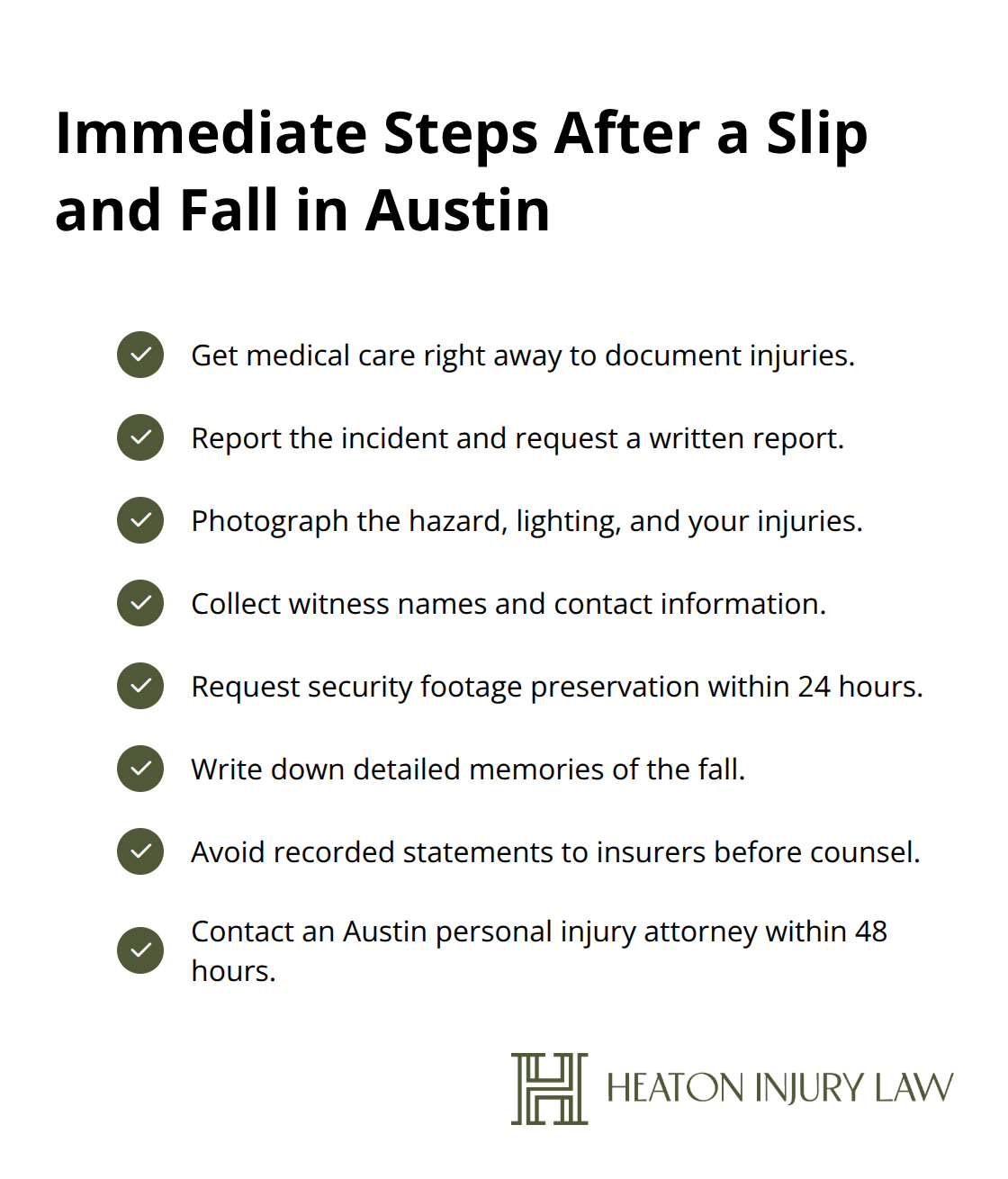
Collect contact information from every witness who saw your fall or heard your account right afterward, since witnesses vanish quickly and their statements carry enormous weight in negotiations. Request security footage preservation in writing within 24 hours because most businesses overwrite recordings within 30 days. Write down everything you remember about the fall while details remain fresh-the exact location, what you were doing, how you fell, and what you felt immediately after-and avoid giving recorded statements to insurance adjusters until you consult an attorney.
Contact an Austin personal injury attorney within 48 hours of your fall because Texas imposes a strict two-year statute of limitations on slip-and-fall claims and early action protects evidence before it vanishes. We at Heaton Injury Law, PLLC handle premises liability claims and work on contingency, meaning you pay nothing unless we recover compensation for you. We investigate your accident thoroughly, gather evidence before it disappears, and handle all communication with insurance companies so you can focus on recovery.
The information provided in this blog is for general informational purposes only and does not constitute legal advice. Every case is unique, and laws may vary by jurisdiction. Reading this content does not create an attorney-client relationship. For guidance specific to your situation, please consult with a qualified personal injury attorney licensed in Texas.
Artificial intelligence may have been used to assist in generating some text or images in these articles.