

Meredythe | May 19, 2026 | Blog

Insurance companies fight hard to minimize what they pay on auto accident claims. At Heaton Injury Law, PLLC, we’ve seen how adjusters use tactics to question liability and downplay injuries.
A strong case requires solid evidence, proper documentation, and strategic preparation. This guide shows you what separates claims that settle fairly from those that get denied or undervalued.
How Insurers Fight Back on Your Claim
Insurance Adjusters Challenge Your Account
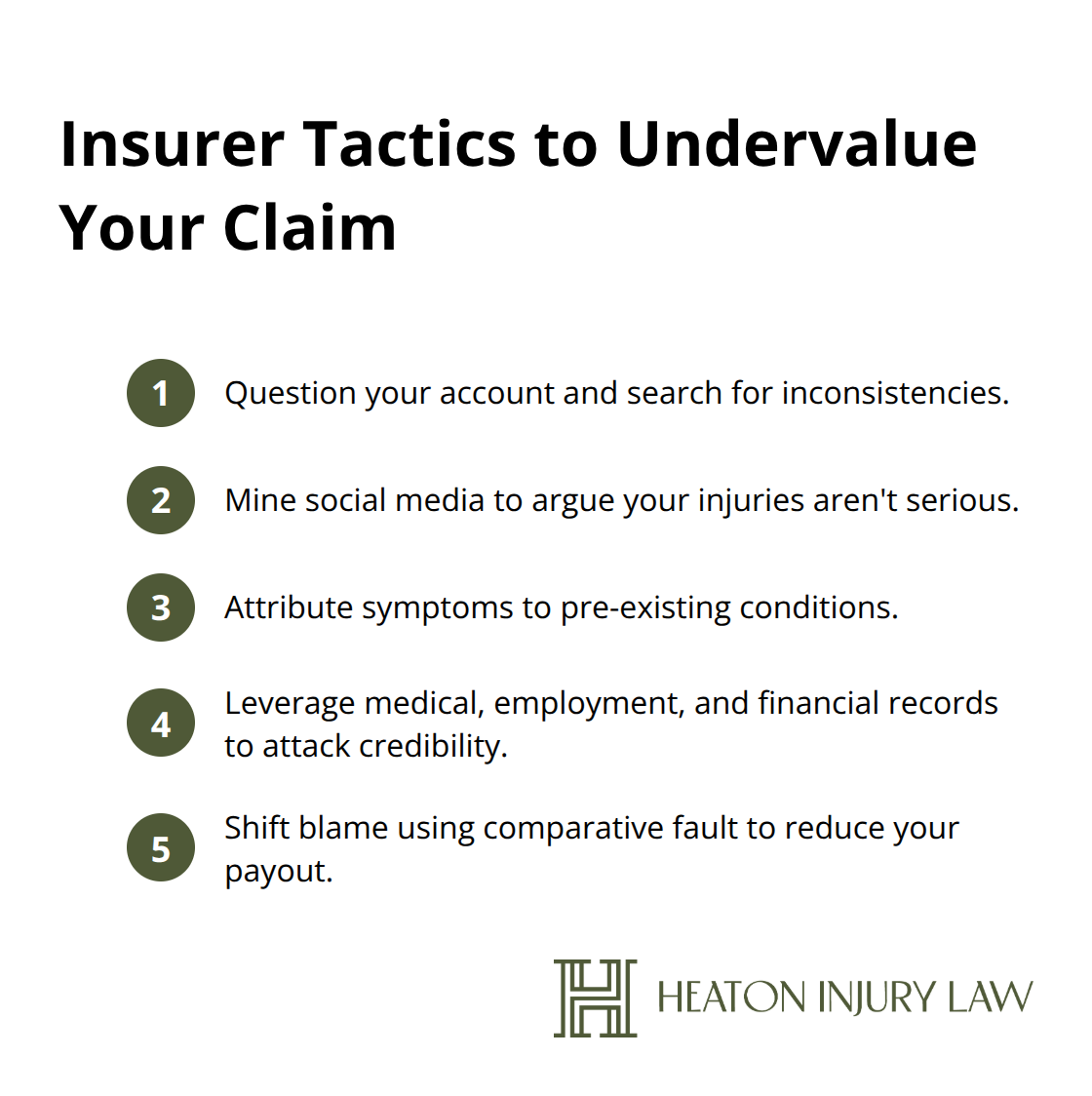
Insurance adjusters reject your version of events without question. They actively search for reasons to deny liability or reduce what they owe you. The Texas Department of Transportation reports that more than 18,000 people were seriously injured in car accidents in a recent year, yet many of those injured individuals receive settlements far below what their cases are worth. Trained investigators scrutinize inconsistencies in your statements, gaps in medical documentation, and any hint that you share fault for the crash.
Adjusters examine your social media posts, interview witnesses before you do, and obtain your medical history to argue that your injuries existed before the accident. They challenge the causal link between the accident and your injuries, suggesting that your pain or limitations stem from a pre-existing condition rather than the crash itself. If you posted anything online about activities you performed after the accident-even routine tasks like grocery shopping-they use that to argue your injuries aren’t as serious as claimed. They request your complete medical history, employment records, and financial statements to build a narrative that minimizes your credibility. The goal is simple: create doubt about your account so they can justify a lower settlement or outright denial.
Comparative Fault Becomes a Weapon
Comparative fault rules in Texas give insurers another powerful tool to reduce what you recover. Texas uses a comparative fault system that apportions blame among parties in a car crash, meaning you can still recover damages even if you share fault, but your recovery is reduced by your percentage of fault. If damages are $100,000 and you’re found 20% at fault, you receive $80,000.
Insurers argue that you were speeding, failed to yield, or weren’t paying full attention-anything to shift a portion of blame to you. They focus on minor traffic violations or split-second decisions you made before impact. Traffic law violations are frequently used to establish fault, especially when red lights are run or illegal turns occur. Adjusters weaponize comparative negligence to shrink your compensation, even when the other driver bears primary responsibility.
Red Flags That Trigger Aggressive Investigation
Red flags that trigger deeper investigation include delayed medical treatment, conflicting statements between you and witnesses, vague descriptions of how the accident happened, or any indication that you were distracted or impaired. Adjusters flag cases where the police report contains ambiguous language about fault or where witness statements contradict each other.
If your medical records show a gap in treatment or if you later claim injuries that weren’t mentioned in your initial statement, they use that inconsistency to argue you’re inflating damages. They request your event data recorder (commonly called a car’s black box), which can reveal your actual speed at impact and whether you braked before collision. Photographs of vehicle damage help them argue the impact was minor and therefore couldn’t have caused serious injury.
Building Documentation That Defeats Doubt
The stronger your documentation from day one, the harder it becomes for an adjuster to manufacture doubt about your claim. Immediate medical evaluation, detailed accident scene photos, witness contact information, and consistent statements create a foundation that withstands scrutiny. This evidence-gathered while memories remain fresh and details remain clear-forms the backbone of a case that insurers cannot easily dismiss or undervalue.
What separates a claim that settles fairly from one that gets denied depends largely on how thoroughly you document the accident and your injuries from the start. Insurance companies use algorithms to undervalue claims, which is why preparation and consistent documentation signal that you will not accept inadequate compensation. The next section examines the specific types of evidence that strengthen your position and make your case difficult for insurers to challenge.
Evidence That Strengthens Your Auto Accident Case
Medical Records Establish the Link Between Accident and Injury
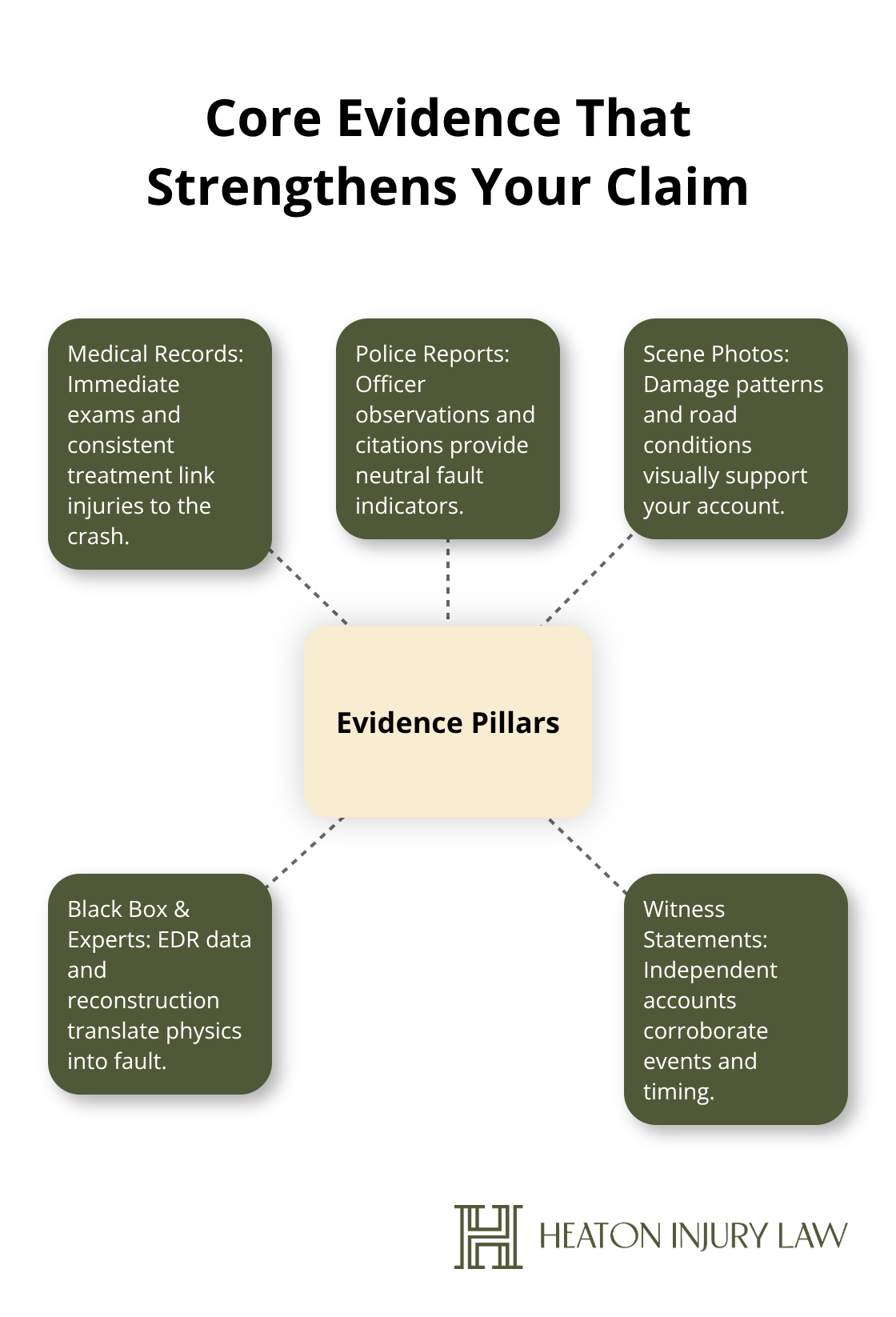
Medical records form the foundation of every strong auto accident claim, and they must be detailed and contemporaneous with your injuries. You should seek medical evaluation immediately after the accident, even if you feel fine, because some injuries like whiplash and internal bleeding appear hours or days later. Your medical documentation should include the date of injury, specific symptoms reported, examination findings, diagnostic test results, and the provider’s opinion linking your injuries directly to the crash.
Insurance adjusters scrutinize gaps in treatment, so consistency matters-if you stop seeing a doctor for three months and then resume, they argue your injuries weren’t serious enough to require ongoing care. You must request copies of all medical records, imaging studies, and provider notes; photograph any visible injuries; and maintain a detailed log of pain levels, medications, and how injuries affect your daily activities. When medical records clearly establish causation between the accident and your injuries, adjusters lose their primary weapon for denying or minimizing your claim.
Police Reports and Scene Photographs Create Objective Evidence
Police reports and accident scene photographs provide objective evidence that insurers cannot easily dismiss. The police report documents officer observations, witness statements, traffic violations, road conditions, and often contains a preliminary fault assessment-information that carries significant weight because officers have no stake in the outcome. You should obtain the official report within 7-10 days of the accident, as details fade and evidence disappears.
Photographs of vehicle damage patterns, final resting positions, skid marks, traffic signals, road hazards, and street signs create a visual record that supports your account of events. You must capture these images before tow trucks remove vehicles and before cleanup crews clear the scene.
Black Box Data and Expert Analysis Reveal the Truth
Event data recorders, commonly called black boxes, capture your actual speed at impact, whether you braked before collision, and seat belt usage-data that either supports or contradicts the other driver’s statements. You can request this information from the vehicle manufacturer or through your attorney during the discovery process. Expert testimony from accident reconstruction specialists analyzes vehicle damage, road conditions, and physics to determine how the collision occurred and who bears fault. These professionals translate physical evidence into clear explanations that judges and juries understand.
Witness Statements Provide Independent Corroboration
Witness statements, collected at the scene with contact information, carry weight in your case because independent observers have no motivation to lie. You should gather names, phone numbers, and email addresses from anyone who saw the accident happen. Their accounts, recorded while memories remain fresh, often contradict what the other driver claims and support your version of events.
When you combine police documentation, photographs, black box data, and witness accounts, you build a case so factually grounded that adjusters cannot manufacture reasonable doubt about liability or the severity of impact. This evidence foundation becomes your strongest negotiating tool-and if settlement discussions stall, it positions your case for trial readiness.
What Makes a Case Trial-Ready
Act Fast to Preserve Critical Evidence
Investigation depth separates cases that settle fairly from those that collapse under pressure. Most car accident claims in Austin resolve through insurance settlements before a lawsuit is filed, which means your case must be constructed as if trial is inevitable. You must act within 48 hours of the accident because witness memories fade, surveillance footage gets deleted, and physical evidence disappears. Contact the Austin Police Department directly to obtain the police report rather than relying on the insurance company’s version. Photograph every detail of the accident scene, including vehicle positions and damage patterns. Collect written statements from all witnesses with their contact information before they scatter.
Request preservation of the event data recorder data from the other driver’s vehicle manufacturer; this black box information reveals actual speed at impact and braking patterns that either support or destroy the other driver’s account. Hire an accident reconstruction expert if liability is contested, because their analysis of vehicle damage, skid marks, and physics transforms raw evidence into courtroom-ready testimony.
Document Your Medical Treatment Thoroughly
You must document your medical treatment meticulously-every appointment, every symptom, every limitation-because gaps in treatment give adjusters ammunition to claim your injuries weren’t serious. Photograph visible injuries and maintain a pain journal with dates and severity levels. Preserve all receipts for medical expenses, medications, and related costs. Organize this evidence chronologically in a case file that tells a coherent story from impact through recovery.
Navigate Texas Comparative Fault Law
Understanding Texas comparative fault law is non-negotiable because adjusters weaponize it aggressively. Texas law allows you to recover damages even if you share fault, but your recovery is reduced by your percentage of fault-so if you’re found 20% responsible for a $100,000 claim, you receive $80,000. Adjusters will argue you were speeding, failed to yield, or weren’t paying attention, specifically to shift blame your direction.
Combat this by gathering traffic violation data for the other driver and obtaining any citations issued at the scene. Document traffic signal timing with photographs. If you received a citation and the other driver didn’t, that evidence powerfully supports your position on comparative negligence.
Prepare for Settlement Negotiations
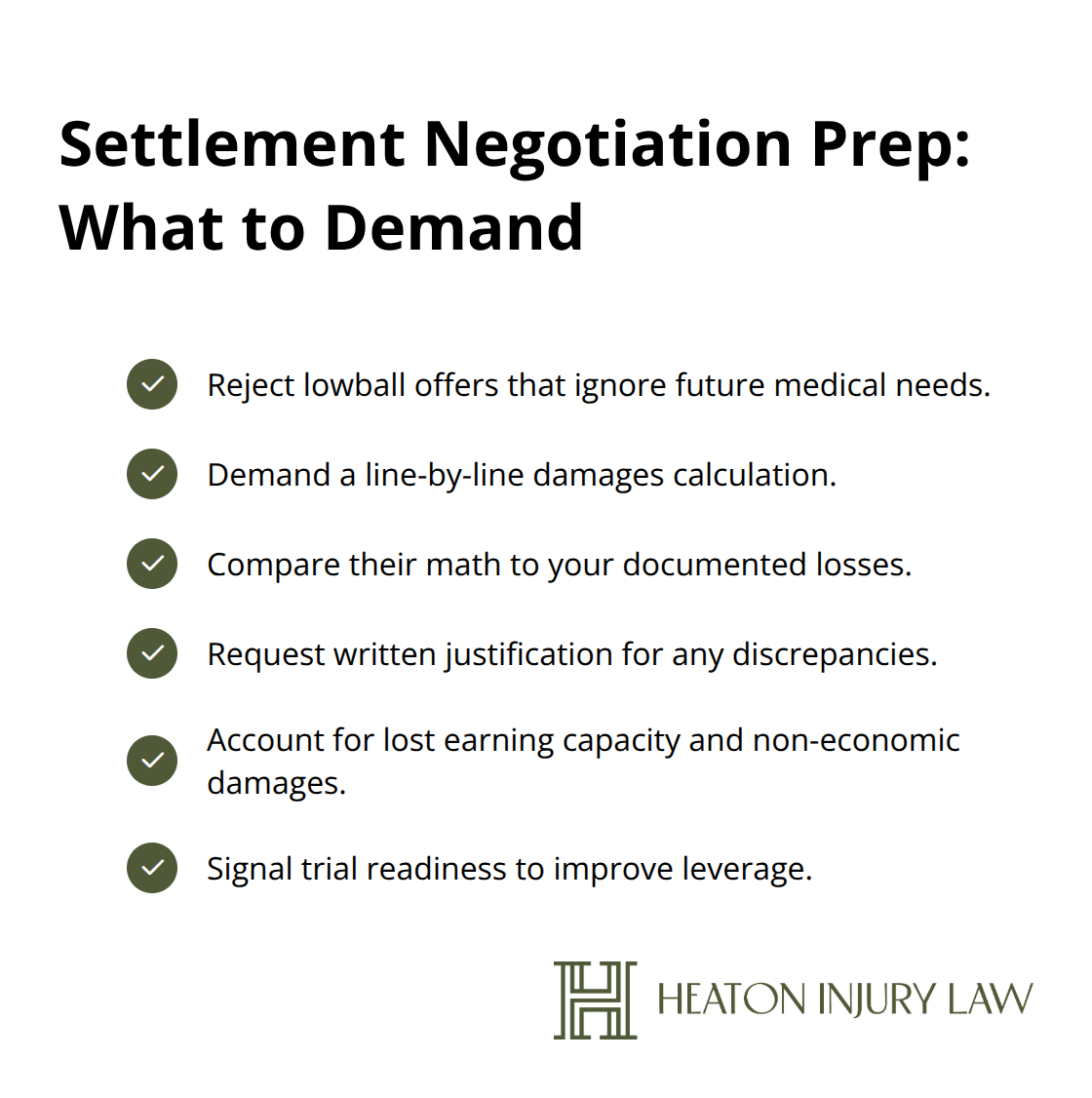
Settlement preparation begins the moment you hire an attorney because insurers test your resolve early with lowball offers designed to end negotiations quickly. Reject initial offers that don’t account for future medical needs, lost earning capacity, or pain and suffering-adjusters expect this and budget accordingly. Request detailed explanations for any settlement offer, including how they calculated medical expenses, lost wages, and non-economic damages. If their math doesn’t match your actual losses documented in medical records and employment statements, demand they justify the discrepancy. This signals you understand the process and won’t accept inadequate compensation, which shifts settlement dynamics in your favor.
Conclusion
A strong auto accident case doesn’t happen by accident-every piece of evidence you gather, every medical appointment you document, and every statement you preserve builds a foundation that withstands the tactics insurers use to minimize your recovery. When you combine medical records, police documentation, witness accounts, and expert analysis, you create a narrative so factually grounded that adjusters cannot manufacture reasonable doubt about liability or injury severity. An Austin auto accident lawyer who understands insurer tactics and Texas comparative fault law can navigate settlement negotiations with confidence and prepare your case for trial when necessary.
We at Heaton Injury Law, PLLC handle car accidents on contingency, meaning you pay nothing unless we win your case. Our team knows how insurers think because we’ve worked inside their defense strategies, which allows us to anticipate their arguments and counter their tactics effectively. This insider knowledge transforms evidence into a strategic advantage that maximizes your recovery.
Contact us today for a free consultation to evaluate your case, discuss your options, and understand what your claim is truly worth. Schedule your consultation with Heaton Injury Law, PLLC or call 713-987-7107 to get started. The sooner you act, the stronger your case becomes, so don’t let the statute of limitations pass or allow evidence to disappear while you wait.
The information provided in this blog is for general informational purposes only and does not constitute legal advice. Every case is unique, and laws may vary by jurisdiction. Reading this content does not create an attorney-client relationship. For guidance specific to your situation, please consult with a qualified personal injury attorney licensed in Texas.
Artificial intelligence may have been used to assist in generating some text or images in these articles.