

Meredythe | May 20, 2026 | Blog
Rideshare accidents in Austin happen more often than most people realize, and the injuries that result can be serious and costly. If you’ve been hurt in a rideshare vehicle, you likely have questions about your rights and how to recover compensation.
We at Heaton Injury Law, PLLC understand the confusion that follows a rideshare injury claim in Austin. This guide walks you through your legal options and the concrete steps you need to take right now.
What Injuries Happen in Rideshare Accidents
Passenger Injuries from Vehicle Collisions
Rideshare accidents in Austin produce three main injury patterns, each with distinct compensation challenges. Passenger injuries from vehicle collisions rank as the most common. A rear-end crash at a traffic light, a T-bone intersection collision, or a sideswipe during lane changes throws passengers forward, backward, or sideways with force they cannot brace for and are usually unexpected. Whiplash, fractured ribs, spinal injuries, and head trauma occur frequently because passengers lack the protective positioning a driver maintains. Soft-tissue injuries appear minor initially but develop into chronic pain over weeks or months, making medical documentation essential from day one.
Traumatic brain injuries represent a serious subset of passenger injuries. The National Highway Traffic Safety Administration reports that motor vehicle crashes account for 14% of all traumatic brain injuries treated in emergency departments.
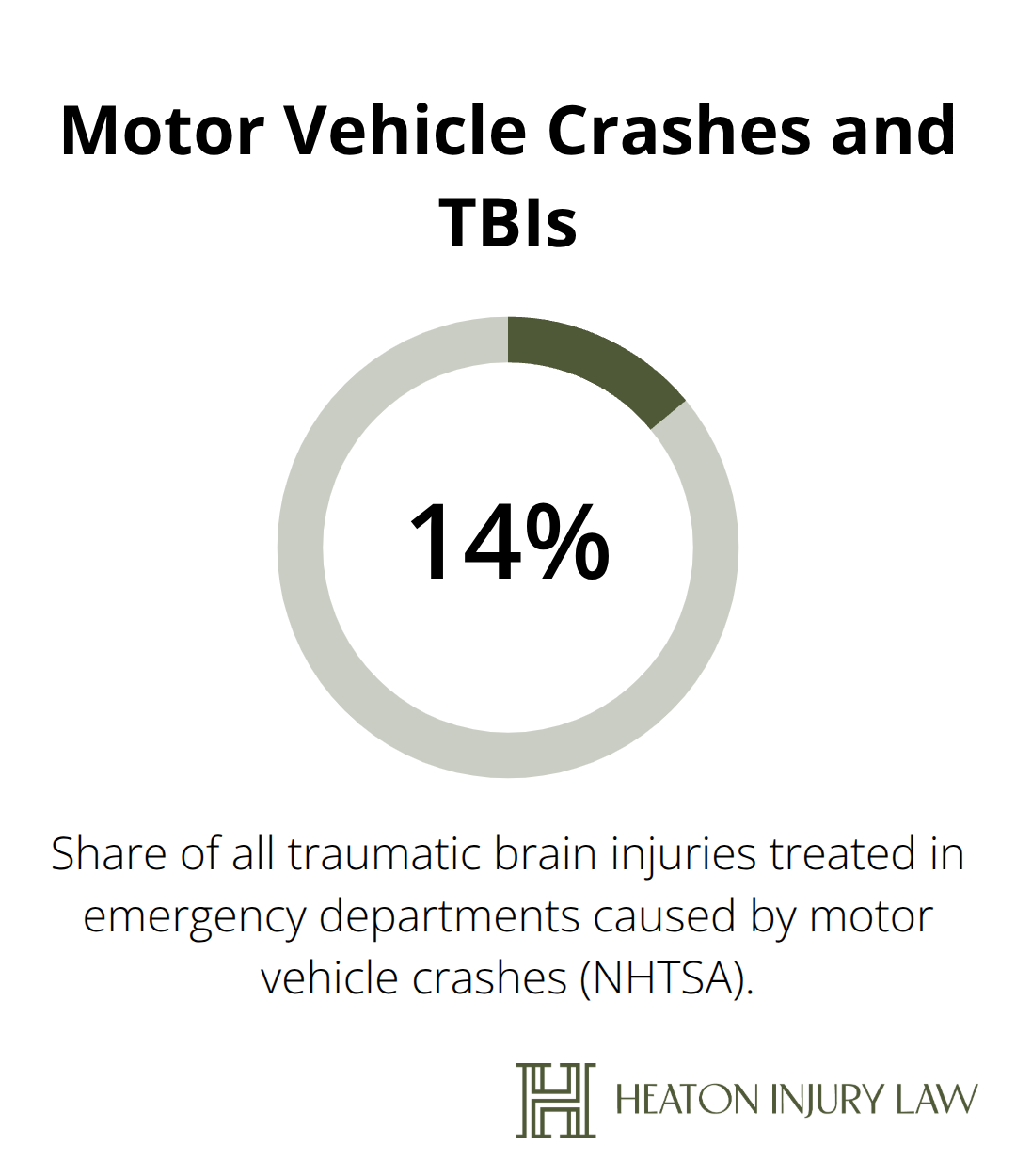
This statistic is likely low relative to actual collision related traumatic brain injuries given delayed recognition of symptoms. Many passengers also delay seeking medical care because adrenaline masks initial symptoms, which weakens their injury claims later when insurers question the severity.
Driver Injuries During Active Rides
Driver injuries during active rides present different liability complexities. An Uber or Lyft driver operating the vehicle experiences impact forces differently than passengers and may suffer occupational injuries that compound the accident trauma. A driver with a pre-existing back condition can aggravate it during a collision, creating a more significant injury or permanent disability that affects earning capacity long-term.
Rideshare drivers without adequate personal auto insurance face coverage gaps because most standard policies exclude commercial use. The rideshare company’s contingent liability coverage only applies when the app is active, leaving gaps during transition periods. These coverage gaps can leave drivers vulnerable to significant out-of-pocket expenses.
Multi-Vehicle Accidents and Compounded Liability
Accidents involving multiple vehicles multiply the claim complications significantly. A five-car pileup on I-35 involving a rideshare vehicle requires determining which driver caused the initial impact, whether multiple drivers share fault under Texas comparative negligence law, and which insurance policies apply to each vehicle. Property damage compounds the injury claim because vehicles become evidence, repair costs mount quickly, and rental car expenses add to total losses.
In multi-vehicle accidents, witness statements become critical because they establish the sequence of events. Police reports, dash camera footage, and GPS data from the rideshare app all serve as concrete evidence. Texas law allows recovery even when you share some fault, but the percentage of your fault reduces your compensation proportionally, making early legal guidance necessary to protect your claim value.
Understanding which injuries you sustained and how they occurred sets the foundation for your compensation claim. The next step involves learning how insurance coverage actually works in rideshare accidents and what your rights are under Texas law.
What Insurance Coverage Actually Protects You
The Three-Layer Insurance Puzzle
Rideshare accidents create a three-layer insurance structure that confuses most injury victims. When an Uber or Lyft driver activates the app, Texas law requires the rideshare company to carry commercial liability coverage with minimum limits of $1 million for bodily injury and property damage per incident. This $1 million policy sits above the driver’s personal auto insurance, but only when a passenger occupies the vehicle or the driver actively travels to pick one up. The moment the app turns off, that commercial coverage vanishes, and only the driver’s personal policy applies-which typically excludes rideshare use entirely.
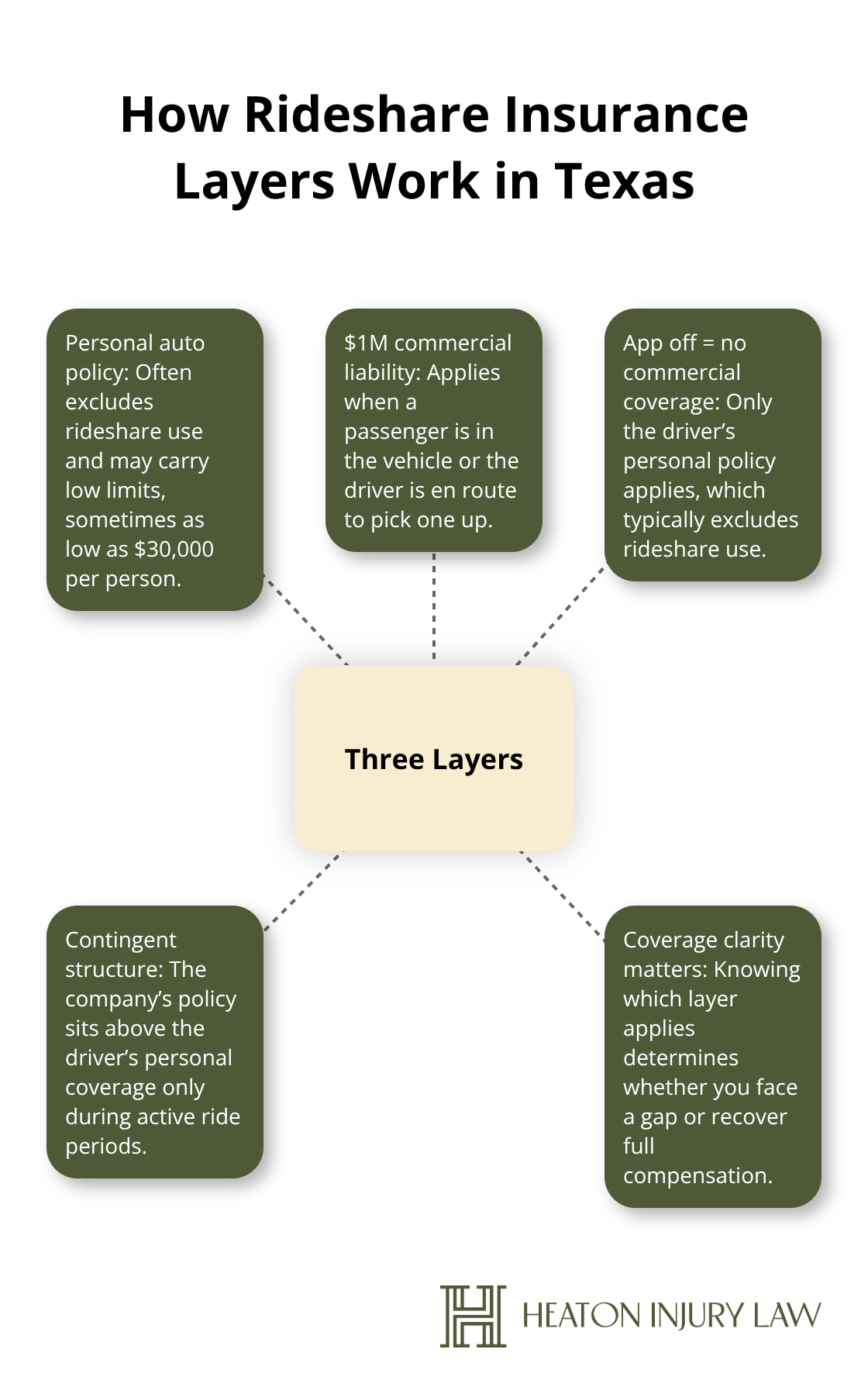
Many drivers carry personal policies with limits as low as $30,000 per person, leaving you severely undercompensated when that becomes your only source of recovery.
Obtaining Insurance Documentation
Request the rideshare company’s insurance documentation immediately after your accident. Uber and Lyft must provide this information under Texas law, and delays in obtaining it weaken your claim significantly. Your own uninsured and underinsured motorist coverage activates when the at-fault driver’s insurance falls short, so review your personal policy limits now to understand your safety net. Understanding which policy layer covers your specific accident determines whether you recover full compensation or face a coverage gap.
Proving Fault Under Texas Law
Liability in Texas rideshare crashes follows fault-based rules, meaning the party most responsible for causing the accident pays for damages. Proving fault requires concrete evidence: police reports, dash camera footage, GPS data from the rideshare app (showing speed and location), witness statements, and photos of the accident scene. Texas allows you to recover compensation even if you share some fault with the at-fault driver, but your recovery reduces by your percentage of responsibility-so a $100,000 claim drops to $80,000 if you bear 20% fault.
The Two-Year Deadline and Evidence Preservation
File your claim within two years of the accident date; this is Texas’s statute of limitations for personal injury cases, and missing this deadline eliminates your right to sue permanently. Do not delay contacting legal representation because insurance companies count on injured victims making costly mistakes like accepting quick settlement offers before understanding the full extent of their injuries or signing recorded statements that insurers later use against them. Evidence degrades and witness memories fade, so act within weeks of your accident, not months. Medical bills, lost wages, and pain and suffering all form part of your recoverable damages, but only if you document them thoroughly from day one forward.
The path to fair compensation depends on understanding these insurance layers and acting decisively. Your next step involves taking specific actions immediately after the accident to protect your claim and preserve the evidence that supports your recovery.
What to Do Immediately After a Rideshare Accident
The first hours after a rideshare crash determine whether you build a strong claim or sabotage your recovery. Your priority is gathering evidence before the scene clears and before your memory fades.
Collect Evidence at the Scene
Photograph the entire accident scene from multiple angles, capturing vehicle damage, skid marks, traffic signals, weather conditions, and road hazards. Take photos of your injuries immediately if visible. Write down the rideshare driver’s name, license plate number, driver’s license information, and personal insurance details before leaving the scene.
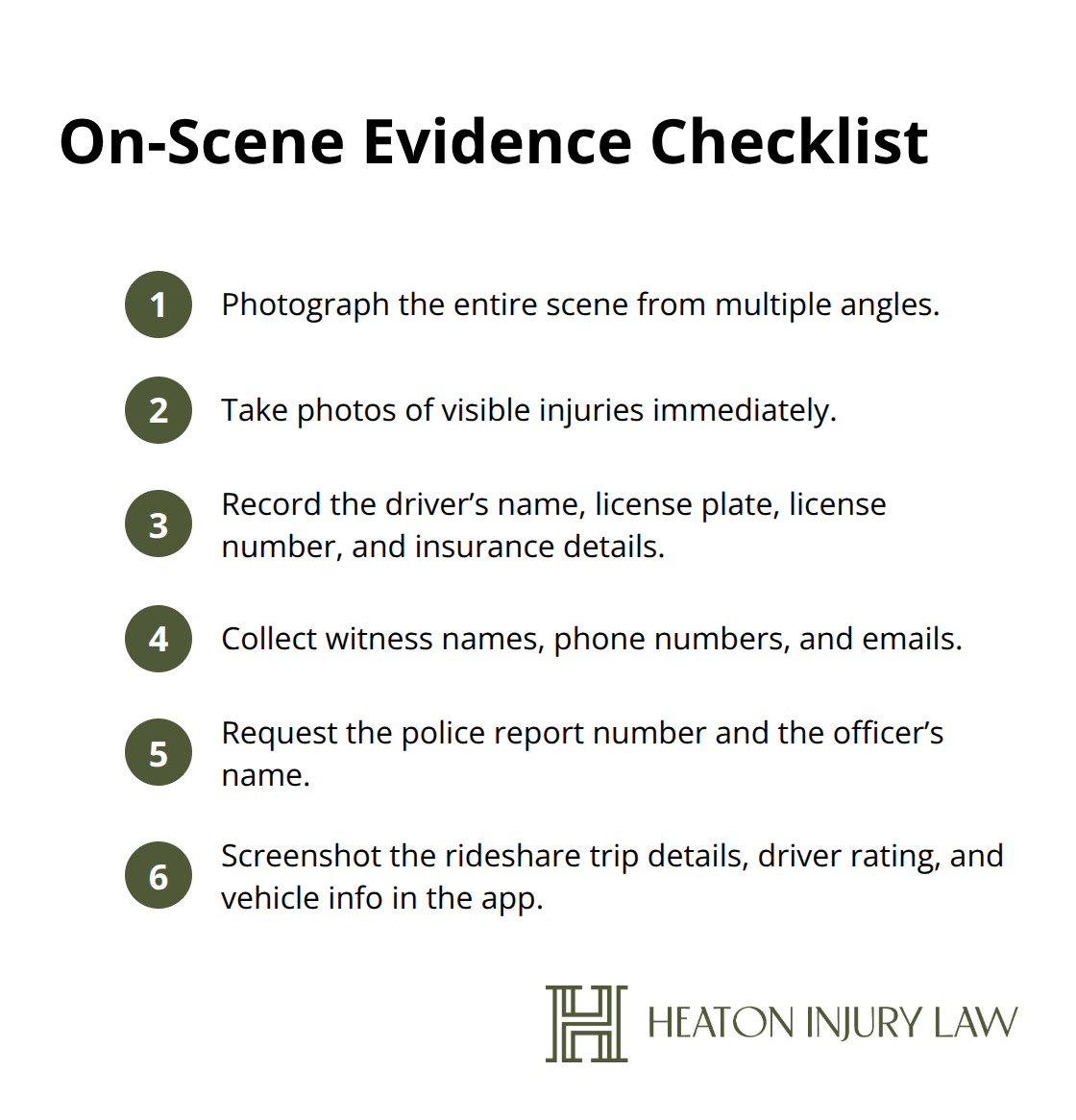
Get contact information from every witness, including their phone numbers and email addresses. Request the police report number and officer’s name. Pull up the rideshare app on your phone and screenshot the trip details, driver rating, and vehicle information.
Do not post anything about the accident on social media, as insurers monitor these posts and use them to minimize your claim value. Report the accident through the Uber or Lyft app immediately, but keep your description factual and avoid admitting fault or making definitive statements about what happened.
Request Insurance Documentation Promptly
The rideshare company’s insurance documentation must be requested right away because delays create documentation gaps that insurers exploit later. Texas law requires Uber and Lyft to provide this information, and obtaining it early strengthens your position significantly. Insurance companies count on injured victims making costly mistakes like signing recorded statements without legal counsel or accepting settlement offers before understanding the full scope of their injuries.
Seek Medical Evaluation Without Delay
Seek medical evaluation within 24 to 48 hours, even if you feel fine. The Journal of Emergency Medicine reports that many serious injuries like concussions, internal bleeding, and soft-tissue damage show no immediate symptoms but emerge days or weeks later. Waiting to see a doctor weakens your claim because insurers argue the delay proves your injuries are minor.
Request copies of all medical records, imaging results, and doctor notes immediately after each appointment and maintain a symptom diary documenting pain levels, mobility restrictions, and how injuries affect your daily activities. This documentation becomes essential evidence when insurers question the severity of your condition.
Contact Legal Representation Early
Contact an experienced personal injury attorney immediately after your accident so they can begin evidence preservation, investigate liability, and coordinate with the rideshare company’s insurance before they adopt a defensive posture. Your claim value depends on the actions you take right now, not months from now. An attorney with knowledge of Texas rideshare law can identify which insurance policies apply to your specific accident and protect your rights before critical deadlines pass.
Final Thoughts
A rideshare injury claim in Austin involves multiple insurance layers, strict deadlines, and complex liability rules that demand immediate action. Your legal options depend entirely on the evidence you preserve and the decisions you make within days of your accident, not weeks or months later. Texas law gives you two years to file a personal injury claim, but waiting that long destroys your case because witnesses disappear, memories fade, and insurance companies exploit delays to minimize what they owe you.
The compensation you deserve covers medical expenses, lost wages, property damage, and pain and suffering, but only if you document everything from day one. Photographs of the scene, medical records showing your injuries, and witness statements create the foundation for recovery. Accepting an early settlement offer before understanding the full extent of your injuries costs you thousands of dollars, and recorded statements to insurance adjusters without legal counsel often backfire when insurers use your own words against you.
We at Heaton Injury Law, PLLC handle rideshare crashes and catastrophic injuries across Austin with insider knowledge of how insurers operate to maximize your recovery. We work on contingency, meaning you pay nothing unless we win your case, and contact us today for a free consultation to discuss your specific accident and develop a personalized strategy for securing fair compensation.
The information provided in this blog is for general informational purposes only and does not constitute legal advice. Every case is unique, and laws may vary by jurisdiction. Reading this content does not create an attorney-client relationship. For guidance specific to your situation, please consult with a qualified personal injury attorney licensed in Texas.
Artificial intelligence may have been used to assist in generating some text or images in these articles.