
Meredythe | April 6, 2026 | Blog
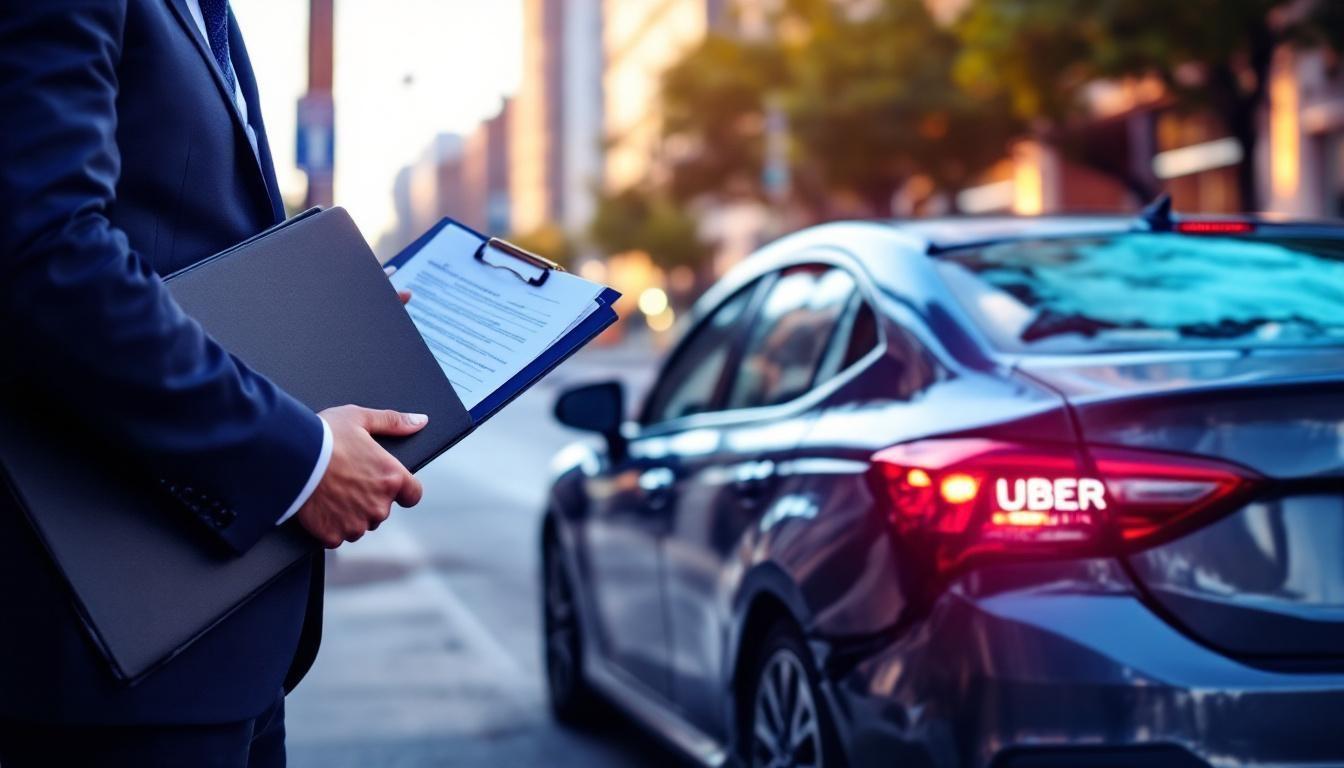
Rideshare accidents happen more often than most Austin residents realize, and the aftermath can be overwhelming. If you’ve been injured in an Uber or Lyft crash, understanding your rights and compensation options is the first step toward recovery.
At Heaton Injury Law, PLLC, we help accident victims navigate insurance claims and hold responsible parties accountable. This guide covers what you need to know about rideshare crashes in Austin and how to protect yourself.
Why Rideshare Accidents Happen in Austin
Driver Fatigue and Pressure to Earn
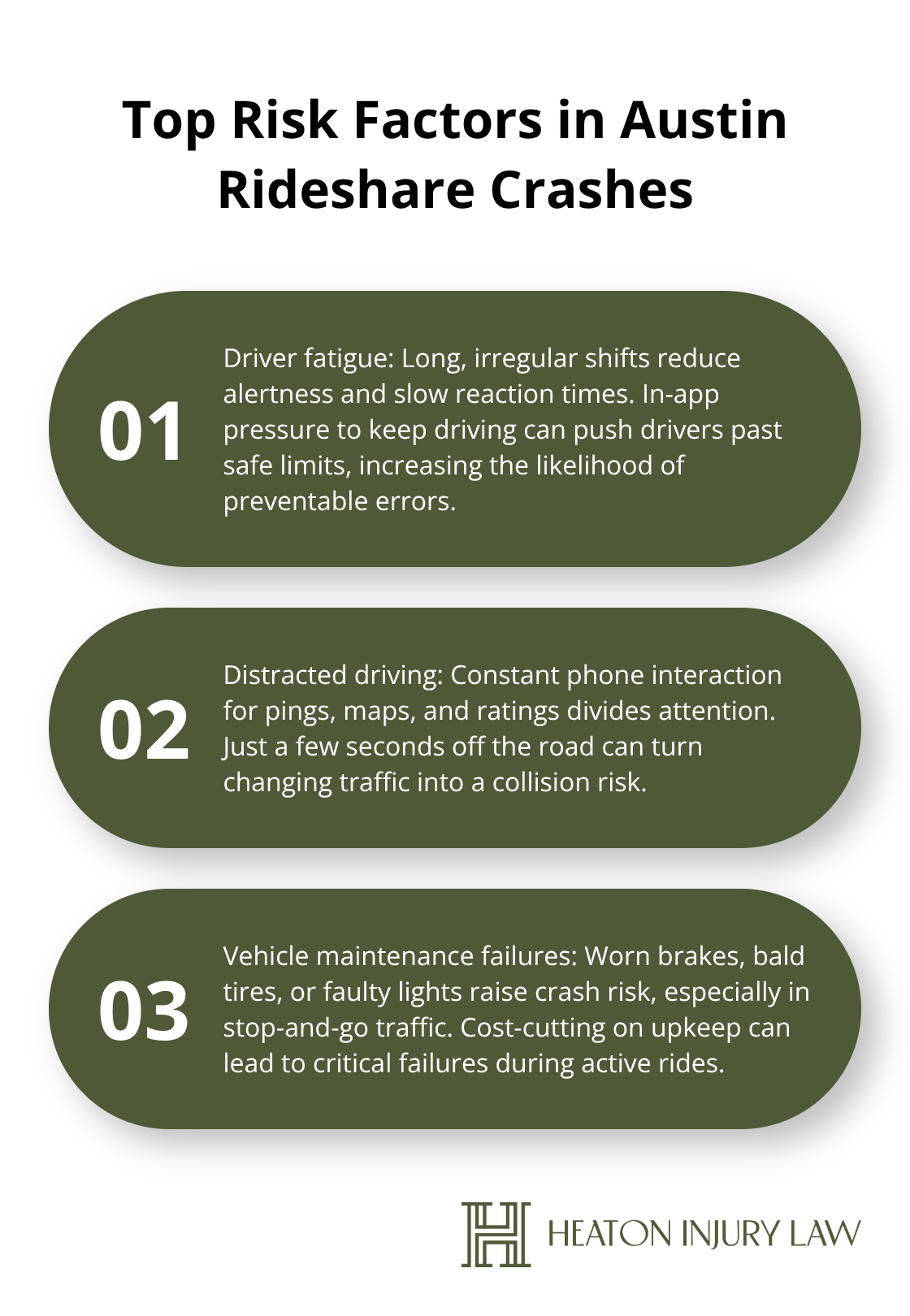
Rideshare drivers in Austin operate under intense pressure to maintain high ratings and maximize earnings, and this pressure directly causes preventable accidents. Many drivers work extended shifts without adequate rest, which significantly impairs their reaction time and decision-making abilities. The National Highway Traffic Safety Administration reports that drowsy driving causes approximately 91,000 crashes annually across the United States, and rideshare drivers face particular vulnerability since they control their own schedules without much, if any, oversight and have financial incentives to stay on the road longer.
Distracted Driving and Navigation Demands
Distracted driving compounds the fatigue problem-drivers constantly check their phones for ride requests, navigation updates, and passenger ratings, which prevents them from maintaining full attention on traffic conditions. In Austin’s growing traffic environment, where congestion increased substantially over the past five years, this divided attention becomes especially dangerous. A driver’s eyes leave the road for seconds at a time, and those moments create windows for collisions that could have been avoided.
Vehicle Maintenance Failures
Vehicle maintenance issues plague the rideshare industry because many drivers operate older vehicles to minimize costs. A driver prioritizing short-term profits may ignore warning signs like worn brake pads, failing tires, or malfunctioning headlights until a critical failure occurs during an active ride. Under certain circumstances, Texas law requires rideshare companies like Uber and Lyft to carry liability insurance with minimums of $50,000 per person, $100,000 per accident, and $25,000 for property damage, yet this coverage applies only if the driver caused the accident. If the rideshare driver is on the Uber or Lyft application in the course and scope of picking up passengers, different limits apply.
Reckless Driving Behaviors
Reckless driving behaviors, including speeding to complete more rides per hour and running red lights to save time, represent deliberate choices that turn rideshare vehicles into hazards. Austin drivers report frequent incidents of rideshare vehicles making sudden lane changes, aggressive acceleration, and failure to yield. These actions reflect a driver’s decision to prioritize speed over safety.
Building Your Accident Claim
If you’ve been injured in a rideshare crash, documenting the driver’s behavior, vehicle condition, and the exact circumstances becomes critical for your claim. Photograph the accident scene, the vehicles involved, and any visible injuries. Collect the driver’s name, license plate, vehicle details, and contact information from witnesses who saw what happened. A police report creates an official record that strengthens your position when liability questions arise, and medical records from your immediate treatment establish the connection between the crash and your injuries. However, police do not respond to every crash. Therefore, it is imperative you obtain third party witness information to support your claim. These details form the foundation for identifying all responsible parties and pursuing the compensation you deserve.
What Injuries and Damages Result From Rideshare Crashes
Physical Injuries From Impact and Collision
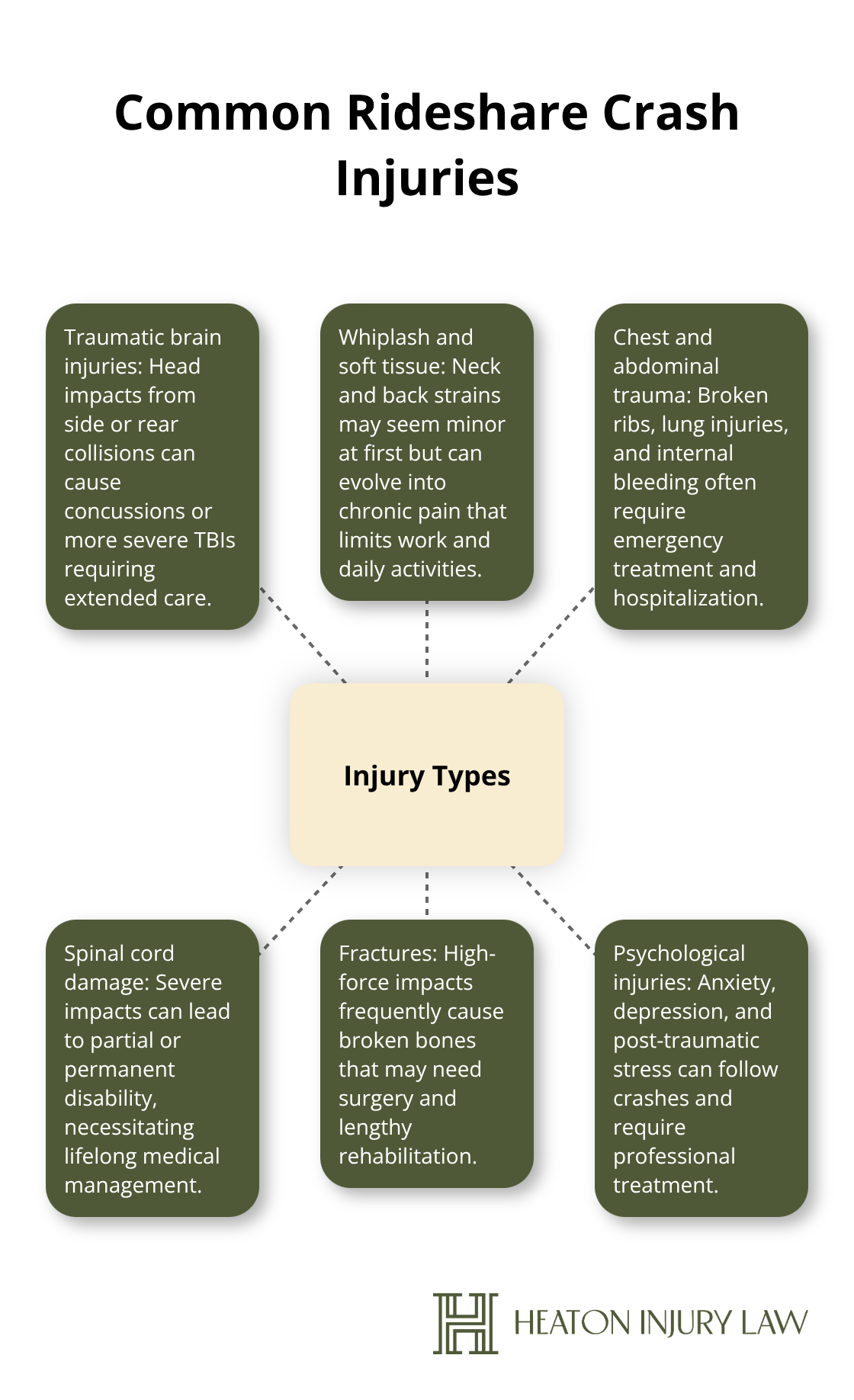
Rideshare crashes produce severe physical injuries that vary based on vehicle speed, collision angle, and seating position. Passengers in rear seats face particular vulnerability because they lack the protective positioning of drivers, and sudden deceleration or side-impact forces can slam your head into windows, seats, or other hard surfaces. The National Institute of Neurological Disorders and Stroke reports that traumatic brain injuries occur in approximately 1.7 million cases annually in the United States, with motor vehicle accidents accounting for a substantial portion of these injuries.
Broken ribs, collapsed lungs, internal bleeding, and abdominal injuries frequently result from the force of impact and often require emergency surgery and extended hospitalization. Whiplash and soft tissue injuries may appear minor initially but develop into chronic pain conditions that persist for months or years, affecting your ability to work and maintain normal daily activities. Spinal cord damage and severe fractures can cause permanent disability, requiring lifelong medical management and adaptive equipment.
Psychological and Emotional Consequences
Rideshare crashes inflict psychological damage that compounds your recovery burden and extends your treatment costs substantially. Anxiety disorders, post-traumatic stress, and depression commonly emerge after serious accidents, with some passengers developing acute fear responses to vehicles or riding situations. These mental health conditions require professional treatment and can interfere with your return to work and social engagement.
Medical Expenses and Financial Impact
Your medical expenses accumulate rapidly through emergency room visits, diagnostic imaging, surgical procedures, physical therapy, and specialist consultations. These bills represent only direct costs-lost wages occur when injuries prevent you from returning to work, and this financial pressure intensifies if your employer lacks disability coverage. Texas law permits you to recover medical expenses (both past and future), lost wages, pain and suffering, and property damage from responsible parties.
If you sustained injuries requiring ongoing treatment, surgery, or long-term care, your damages claim should account for rehabilitation costs, assistive devices, home modifications, and future medical monitoring. Document every medical visit, prescription, therapy session, and transportation cost related to your injury, as these records directly translate to compensation amounts. The longer your recovery extends, the larger your claim may become, which is why comprehensive medical documentation from the moment of impact through your final treatment proves essential for maximizing what you receive.
Building Your Damages Documentation
Responsible parties must compensate you for all harm the crash caused, and your documentation determines whether you recover full compensation or settle for less. Collect medical records from every provider who treated you, maintain receipts for all expenses related to your injury, and photograph any visible injuries as they heal. If the crash prevented you from working, obtain written statements from your employer confirming lost income and any benefits you forfeited. This documentation creates the factual foundation for your claim and prevents insurers from minimizing your injuries or disputing your recovery costs.
Understanding the full scope of your injuries and damages positions you to pursue fair compensation. The next step involves navigating the insurance claims process and identifying all parties responsible for your crash.
How Insurance Coverage Works in Rideshare Crashes
Tiered Coverage Based on Driver Status
Uber and Lyft maintain tiered insurance systems that activate based on your driver’s status when the crash occurs, and understanding which coverage applies directly determines your compensation options. When a driver operates offline, their personal auto insurance applies, but most personal policies explicitly exclude rideshare use, leaving you with limited recovery options. Texas law requires rideshare companies to carry liability insurance with minimums of $50,000 per person, $100,000 per accident, and $25,000 for property damage, which activates when the driver is online waiting for a ride request but not when they are actively transporting a passenger.
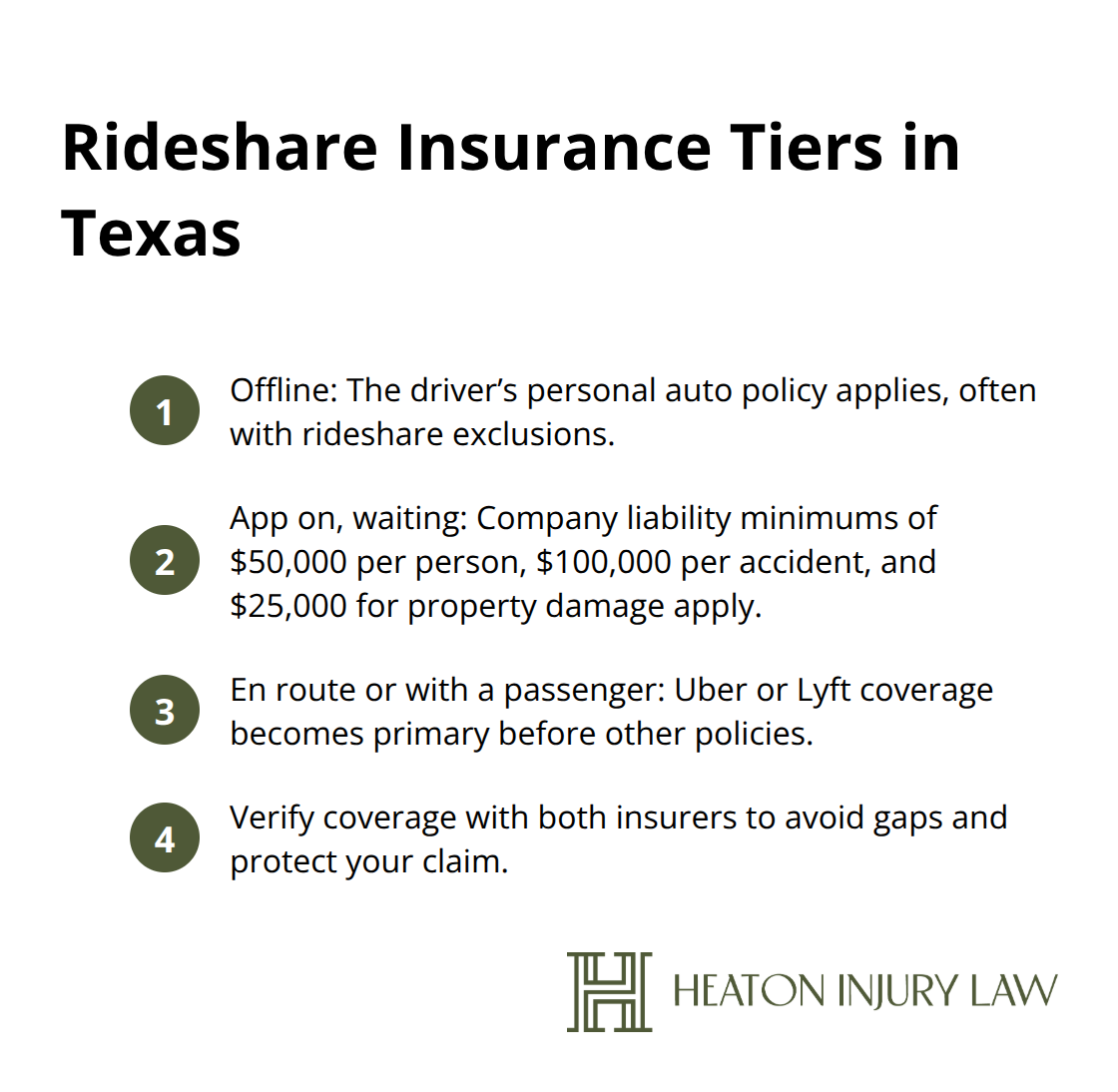
This contingent liability coverage becomes primary when the driver actively transports you, meaning Uber or Lyft covers damages first before any other insurance applies. In addition, the rideshare company’s applicable per person and per accident liability limits increases. The Texas Department of Insurance emphasizes verifying coverage details with both the driver’s insurer and the rideshare company, since coverage gaps create situations where you bear financial responsibility for injuries the crash caused.
Establishing Negligence and Liability
Your liability claim succeeds when you demonstrate the driver’s negligence caused your injuries, and Texas follows a modified comparative fault rule that reduces your compensation proportionally if you share partial fault for the accident. Rideshare companies investigate crashes through coordination with insurance, conducting investigations, determining liability, and negotiating resolutions, but their investigators prioritize protecting company interests over maximizing your recovery. Multiple parties may share responsibility for damages, so more than one insurer or driver could be liable for your injuries and losses.
Settlement Timelines and Compensation Amounts
Settlement offers typically arrive within six weeks of completed treatment for straightforward cases, though complex situations involving multiple parties or serious injuries extend negotiations for weeks or months. Average settlements vary and the exact amounts depend on your specific injuries, medical expenses, lost wages, and the strength of your documented evidence.
Documentation That Strengthens Your Claim
Collect the Uber driver’s name, license plate, vehicle details, witness contacts, and police reports immediately after a crash, then maintain comprehensive medical and repair documentation to strengthen your negotiating position. Insurers often undervalue claims when documentation is incomplete, so every medical record, receipt, and communication related to your injury directly translates to increased compensation amounts. Photograph the accident scene, the vehicles involved, and any visible injuries. Obtain written statements from your employer confirming lost income if the crash prevented you from working. This factual foundation prevents insurers from minimizing your injuries or disputing your recovery costs.
Conclusion
Rideshare crashes in Austin create complex liability situations where multiple parties share responsibility for your injuries and losses. The tiered insurance system, driver negligence, vehicle maintenance failures, and reckless behavior all factor into determining who owes you compensation. Your recovery depends on documenting everything from the moment of impact through your final medical treatment, because insurers scrutinize claims and often undervalue injuries when evidence is incomplete.
Immediately after a crash, seek medical care even if injuries seem minor, since some conditions develop over hours or days. File a police report to create an official record, photograph the accident scene and vehicles, and collect the driver’s name, license plate, vehicle details, and witness contact information. Report the incident to Uber or Lyft, notify your own insurance company, and preserve all medical records, receipts, and communications related to your injury.
An Austin Uber accident attorney handles negotiations with insurers, investigates the crash thoroughly, and identifies all responsible parties on your behalf. We at Heaton Injury Law, PLLC approach every case with the goal of maximizing your recovery and can discuss your specific situation during a free case review.
The information provided in this blog is for general informational purposes only and does not constitute legal advice. Every case is unique, and laws may vary by jurisdiction. Reading this content does not create an attorney-client relationship. For guidance specific to your situation, please consult with a qualified personal injury attorney licensed in Texas.
Artificial intelligence may have been used to assist in generating some text or images in these articles.