

Meredythe | April 27, 2026 | Blog

Losing a loved one due to someone else’s negligence leaves families facing overwhelming grief and financial hardship. At Heaton Injury Law, PLLC, we understand the weight of these circumstances and help families in Austin navigate wrongful death claims.
Texas law provides a path to hold negligent parties accountable and secure compensation for your family’s losses. This guide explains your rights, who can file, what damages are available, and how the claims process works.
What Makes a Death Wrongful Under Texas Law
Legal Definition and Causation
In Texas, wrongful death occurs when someone dies as a direct result of another person’s negligence, carelessness, or wrongful act. Texas Civil Practice and Remedies Code § 71.002 defines this clearly: the death must stem from conduct that would have supported a personal injury claim if the victim had survived. This distinction matters because wrongful death does not require criminal intent or malice-it focuses on establishing that negligence led directly to the death. A driver texting while operating a vehicle, a property owner ignoring a hazardous condition, or a physician making a medical error deviating from the applicable standard of care all create potential wrongful death liability if death results. The key requirement is proving causation: that the defendant’s actions or inactions directly caused the fatal injury or illness. Without establishing this causal link, no wrongful death claim exists under Texas law, regardless of how tragic the circumstances.
Types of Incidents That Trigger Wrongful Death Claims
Fatal accidents span multiple contexts in Austin. Motor vehicle collisions (cars, trucks, company vehicles, motorcycles, and rideshare vehicles) account for a significant portion of wrongful death cases. Workplace accidents and construction site fatalities create liability when employers or property owners fail to maintain safe conditions or provide proper personal protective equipment on the job. Medical malpractice – surgical errors, misdiagnosis, or medication mistakes – can result in wrongful death claims against healthcare providers under certain circumstances. Nursing home neglect and inadequate care lead to claims against facilities and staff. Property owners face liability when hazardous conditions (unmarked stairs, inadequate security, or toxic substances) cause fatal injuries.
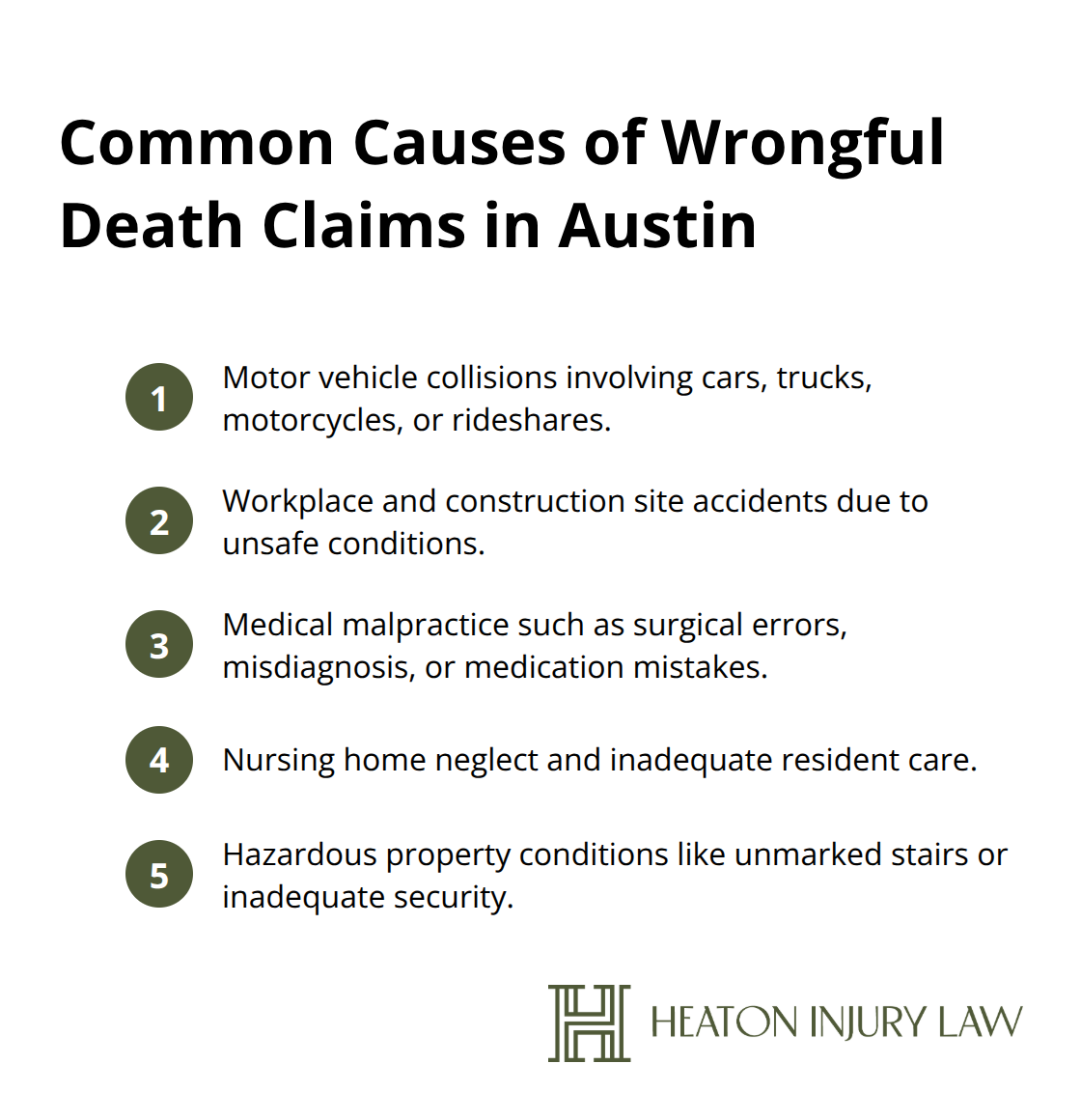
Each scenario requires proof that the defendant’s negligence directly caused the death, not merely that an accident occurred.
The Two-Year Filing Deadline
The statute of limitations in Texas is two years from the date of death, according to Texas statute 16.003. This deadline is absolute and applies to all wrongful death claims filed in Austin and across the state of Texas. If your loved one died on January 15, 2024, you must file by January 15, 2026 – missing this window eliminates your legal right to pursue compensation entirely. The clock starts on the date of death, not when you discovered the negligence, with one exception: if the defendant’s negligence was deliberately concealed or fraudulently hidden, the two-year period begins when you reasonably discover the wrongful conduct.
Who Can File and When
Immediate family members – spouses, children, and parents – can file within the two-year window. If eligible relatives do not act within 90 days of death, the estate’s executor or administrator may file on their behalf, provided surviving family members have not objected. This 90-day grace period for estate representatives is a safety net, but relying on it creates unnecessary risk. The moment a death occurs due to suspected negligence, the clock begins ticking toward that critical two-year deadline. Understanding who qualifies to file and what damages each family member can recover shapes the entire claims strategy moving forward.
Who Qualifies to File and What Compensation You Can Recover
Eligible Family Members Under Texas Law
Texas law restricts wrongful death claims to immediate family members: surviving spouses, natural and adopted children of any age, and parents. A surviving spouse can file independently, and separated spouses retain filing rights unless legally divorced. Children – biological, adoptive, or adult – all qualify, but adoptive children cannot sue biological parents if they already have a claim through their adoptive parents. Parents can file for a child’s death regardless of the child’s age. Notably, siblings, grandparents, aunts, uncles, and unmarried partners have no legal standing to file wrongful death claims in Texas, even if they suffered significant emotional loss.
The 90-Day Window for Estate Representatives
If eligible family members fail to file within 90 days, the estate’s executor or administrator can step in, but only if surviving relatives have not objected. This distinction matters: the executor cannot override the family’s decision to pursue or abandon the claim. Acting quickly during this 90-day window prevents unnecessary complexity and protects against missing the two-year statute of limitations entirely.
Economic Damages: Quantifiable Losses
Compensatory damages include economic losses such as lost earning capacity (what the deceased would have earned over their lifetime), medical expenses incurred before death, and funeral and burial costs. Economic damages have no statutory cap, so documenting lost income, medical bills, and funeral expenses with receipts and tax returns strengthens your claim’s value. Gathering financial records early-tax returns, pay stubs, medical invoices, funeral bills-creates a concrete foundation for calculating what your family lost and accelerates negotiations with insurance companies.
Non-Economic and Punitive Damages
Non-economic damages compensate for intangible losses: loss of companionship, loss of guidance and advice, loss of household services, and the deceased’s pain and suffering before death. In Texas, there is no cap on non-economic damages. Punitive damages apply only in cases involving willful gross negligence or intentional misconduct – such as drunk driving or deliberate dangerous conduct – and courts award them to punish the wrongdoer, not to compensate survivors.
How Damages Get Divided Among Beneficiaries
The division of damages among eligible beneficiaries depends on settlement agreements or jury decisions, and family members may divide proceeds unequally if they agree. Understanding these compensation categories helps you prepare documentation and set realistic expectations as your claim moves forward. The next phase-gathering evidence and building your case-determines how much compensation you ultimately recover.
How Evidence and Strategy Shape Your Wrongful Death Recovery
Act Fast to Preserve Critical Evidence
The first 48 hours after a fatal accident may determine whether your case succeeds or fails. Scene photographs fade, witness memories blur, vehicle data is lost, and physical evidence disappears if you wait. Obtain the police report immediately, hire an expert to photograph the accident scene if possible, and document witness contact information before memories shift.
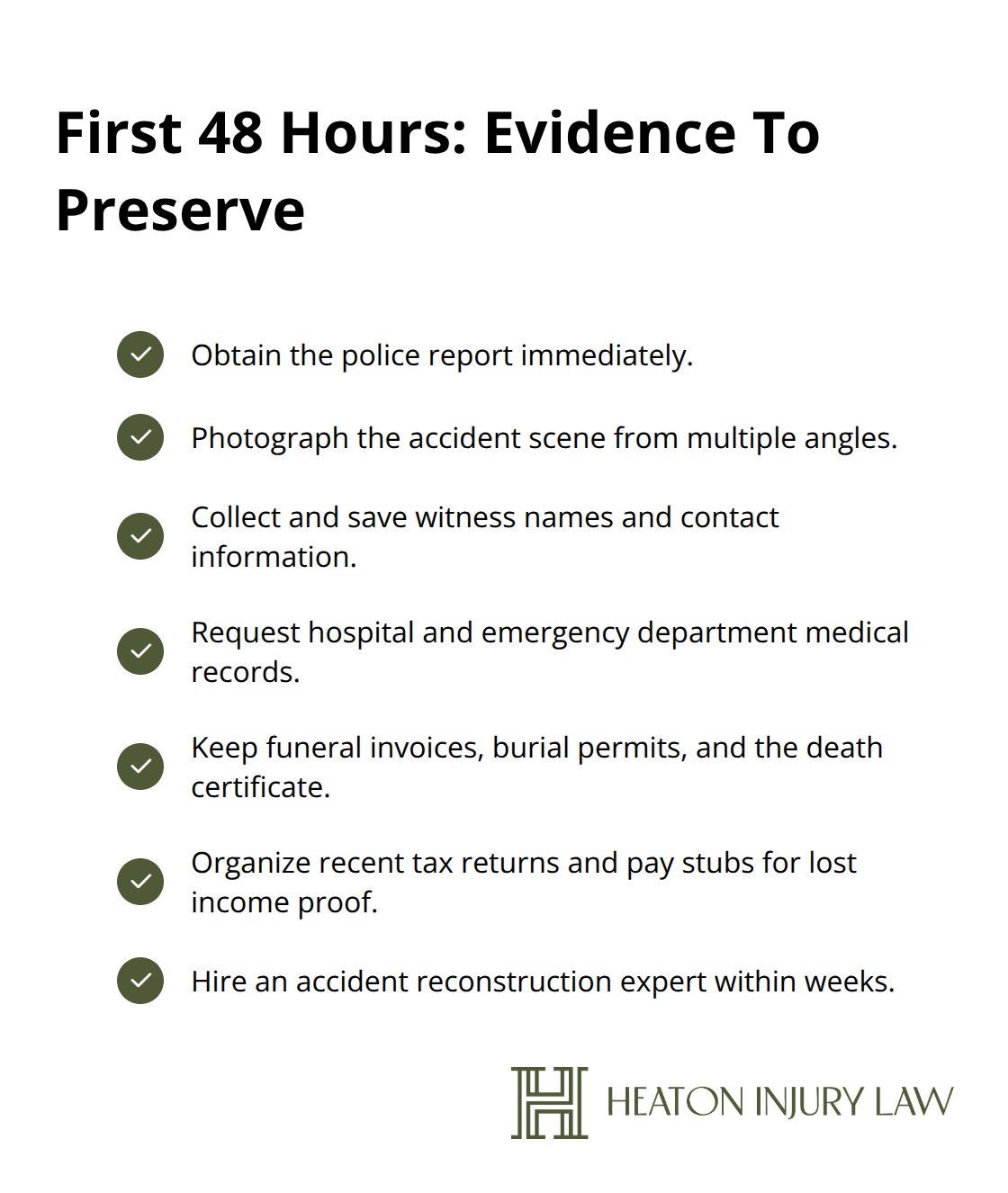
Medical records from the hospital or emergency department establish causation and quantify pain and suffering before death. Funeral invoices, burial permits, and death certificates form the financial foundation for your claim.
Tax returns and pay stubs from the past three to five years demonstrate lost earning capacity and future loss of earnings – the largest component in most wrongful death claims. If your loved one was self-employed, bank statements and business tax returns become essential documentation. Preserve all communication with the at-fault party, their employer, or property owner, as admissions made early strengthen your position significantly. Scene evidence deteriorates quickly, so hire an accident reconstruction expert within weeks of the death to capture details that photographs alone cannot convey.
Medical Experts Link Negligence to Death
Medical expert testimony separates successful claims from weak ones. An expert witness establishes the causal link between the defendant’s negligence and the fatal outcome, translating medical complexity into language that juries understand. Without credible medical testimony, insurance companies dismiss claims as speculative. Courts in Travis County and surrounding areas require clear evidence connecting the defendant’s actions to the death before awarding damages.
Protect Yourself Against Insurance Company Tactics
Insurance companies employ delay tactics and undervalue claims systematically – they bank on grieving families accepting low offers without legal representation. Do not discuss fault, liability, or settlement with adjusters without an attorney present.
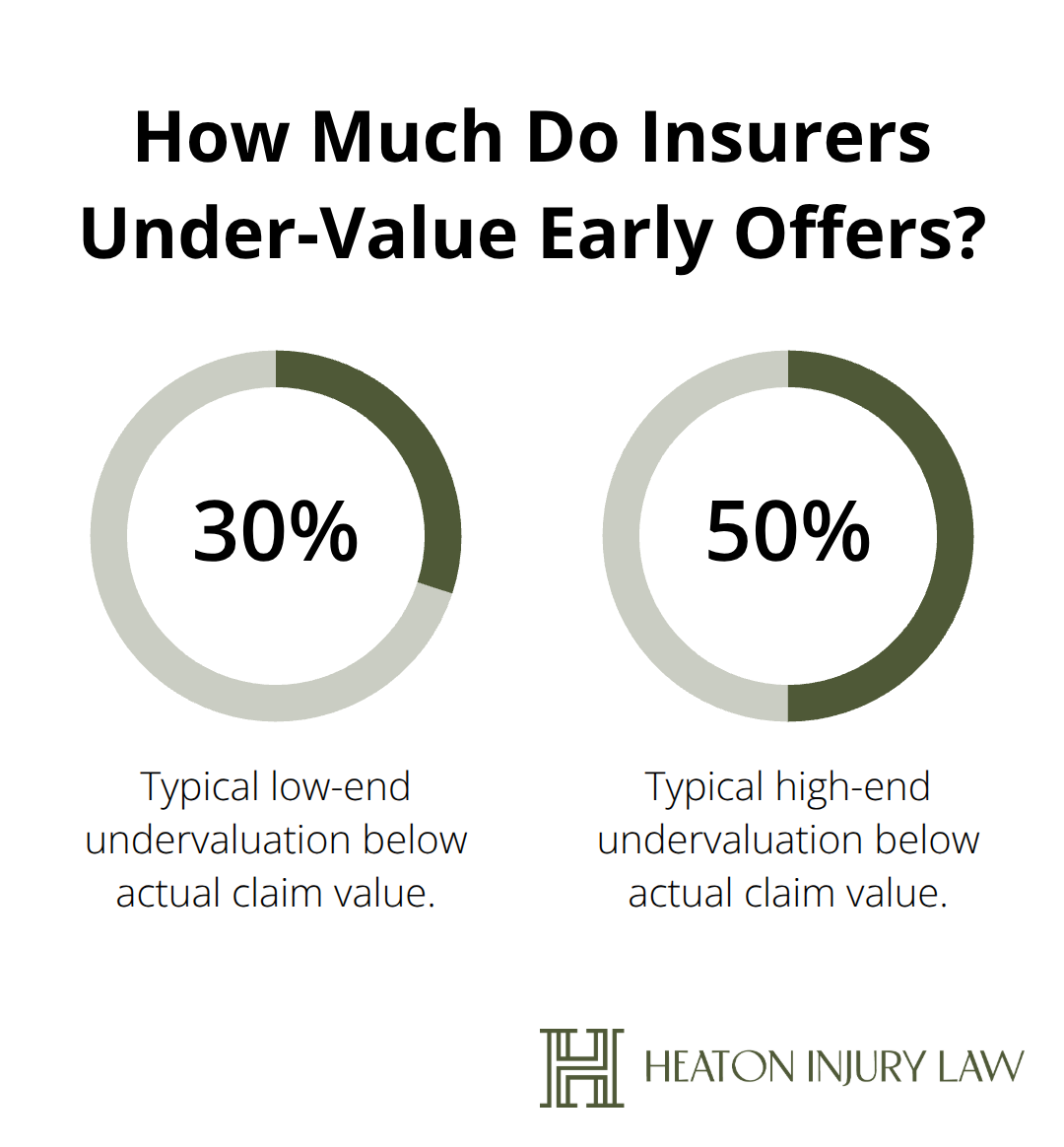
Early settlement offers from insurers may range from 30 to 50 percent below actual claim value, according to data from personal injury litigation studies. Negotiation strength comes from documented losses, expert testimony, and credible trial readiness.
Build Trial Readiness to Force Fair Settlements
If settlement negotiations stall or the insurer refuses fair compensation, trial preparation becomes your leverage. Juries respond to specificity-not vague claims about pain and suffering, but concrete details about a parent’s role in a child’s life, a spouse’s financial contributions, or years of lost companionship. Prepare for trial by gathering character witnesses, compiling photographs and videos of family moments, and organizing financial records into clear exhibits. The defendant’s insurer knows whether your case is trial-ready; firms that invest in thorough preparation and expert witnesses signal strength that forces better settlement negotiations. Most wrongful death claims settle before trial, but only when families demonstrate they will not accept inadequate compensation and are prepared to present evidence to a jury.
Final Thoughts
Wrongful death claims demand strategic action, documented evidence, and commitment to holding negligent parties accountable. The two-year statute of limitations, eligibility requirements, and damage caps create a complex landscape where timing and preparation determine outcomes. Families navigating this process alone face significant disadvantages: insurance companies exploit grief, evidence deteriorates rapidly, and settlement offers typically fall far short of actual losses.
We at Heaton Injury Law, PLLC recognize that pursuing justice after losing a loved one extends beyond legal technicalities. Your immediate steps matter most-contact an Austin wrongful death attorney within days of the death to preserve evidence, secure witness statements, and document losses. Gather tax returns, medical records, funeral invoices, and any communication with the at-fault party, and reject early settlement offers that undervalue your family’s suffering.
Reach out to Heaton Injury Law, PLLC to schedule a free consultation. We listen to your family’s story, explain your legal options clearly, and guide you toward justice and financial support during this difficult time. We offer contingency-fee representation, meaning you pay nothing unless we recover compensation for your family.
The information provided in this blog is for general informational purposes only and does not constitute legal advice. Every case is unique, and laws may vary by jurisdiction. Reading this content does not create an attorney-client relationship. For guidance specific to your situation, please consult with a qualified personal injury attorney licensed in Texas.
Artificial intelligence may have been used to assist in generating some text or images in these articles.