

Meredythe | June 4, 2026 | Blog

Rideshare accidents happen fast, and the aftermath can feel overwhelming. You’re injured, confused about coverage, and unsure what rights you actually have in Austin.
At Heaton Injury Law, PLLC, we help rideshare injury victims understand their protections and fight for fair compensation. This guide walks you through your insurance options, the steps to take right now, and how to build a strong claim.
What Counts as a Rideshare Injury in Austin
Rideshare injuries in Austin fall into two distinct categories that determine your compensation path: injuries to you as a passenger or driver, and injuries you cause to third parties like pedestrians or other drivers. The distinction matters because coverage shifts depending on your role and the rideshare app’s status at the time of impact.
Your Role Determines Coverage
If you’re a passenger in an active Uber or Lyft trip, the rideshare company’s liability coverage applies immediately. If you’re the rideshare driver, coverage depends entirely on whether the app was active, whether you had accepted a ride, or whether you were simply logged in waiting for requests. Third-party victims-pedestrians, cyclists, or drivers hit by a rideshare vehicle-have the strongest claims because the rideshare company carries substantial liability insurance designed for exactly these situations.
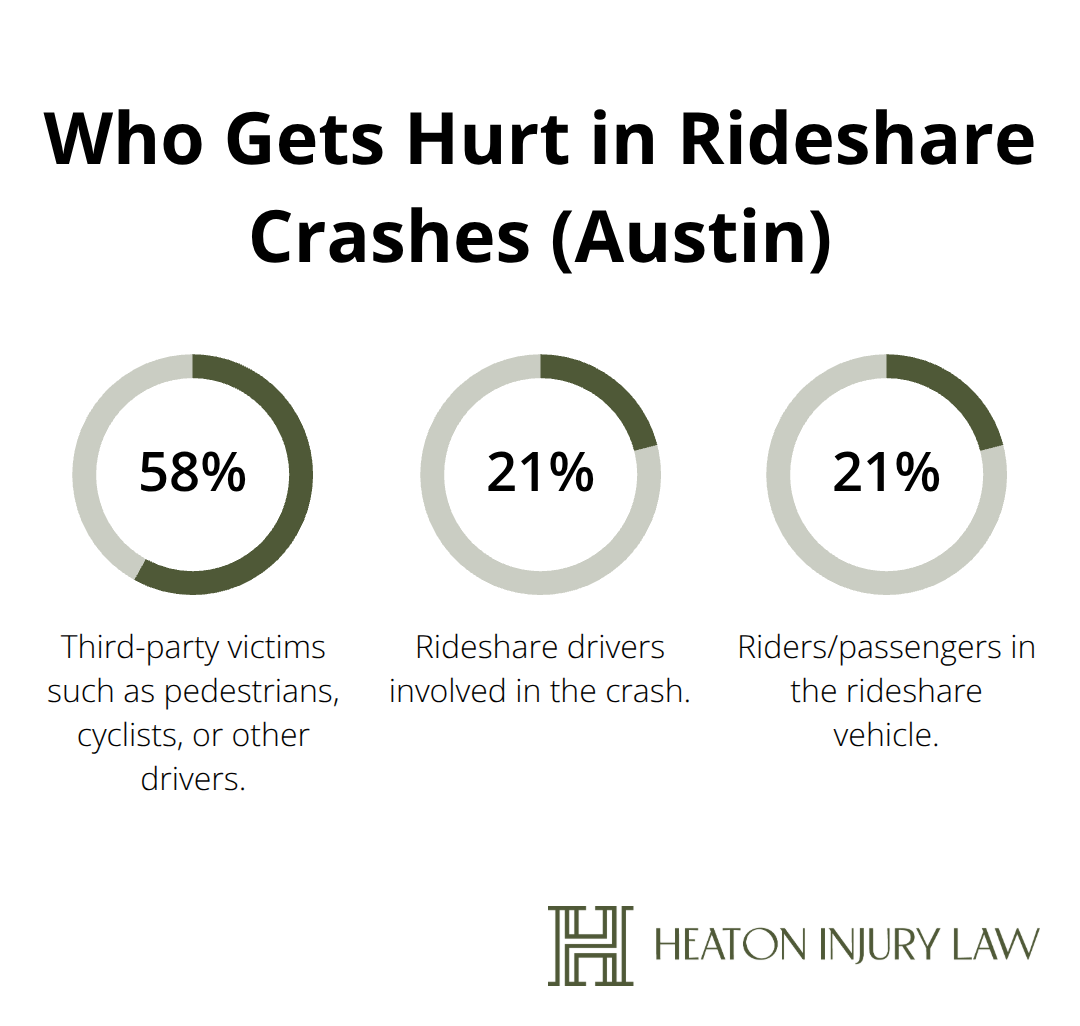
Rideshare crash data shows roughly 58% of victims are third parties, 21% are drivers, and 21% are riders. Your position in the crash directly affects which insurance policy covers you.
How App Status Changes Your Coverage
When the rideshare app is completely off, your personal auto insurance handles the claim as it would for any regular car accident. The moment you turn the app on but haven’t accepted a ride yet, rideshare companies provide limited liability coverage with strict terms and lower caps than active-trip coverage. Once you accept a passenger request or actively transport someone, full rideshare company coverage kicks in, offering stronger protection and higher limits.
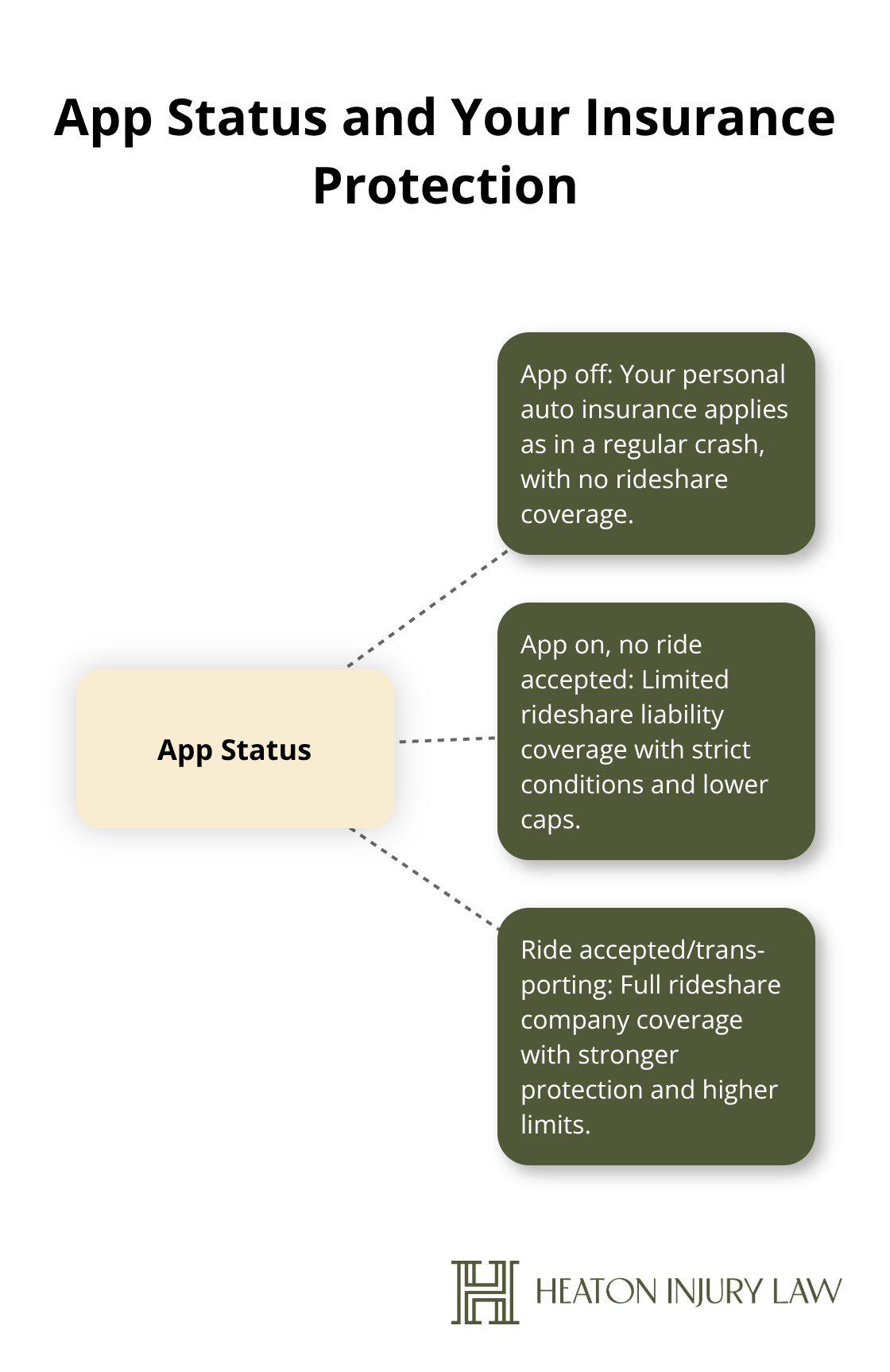
This layered approach frustrates many drivers because the gaps feel arbitrary, but rideshare platforms write these terms into their insurance agreements.
What Injuries Qualify for Compensation
Your injuries qualify for compensation regardless of severity-from soft tissue injuries requiring physical therapy to traumatic brain injuries and spinal cord damage. Texas law allows you to recover medical expenses, lost wages, pain and suffering, physical impairment, disfigurement, and loss of household services.
Most rideshare crash claims in Austin settle within the first year because insurers prefer avoiding depositions and trial exposure. Your actual recovery depends on documenting injuries thoroughly and proving fault through app logs, GPS data, and police reports. The strength of your evidence determines whether you recover quickly or face a longer negotiation with the insurance company.
Your Insurance Coverage and Legal Rights After a Rideshare Crash
Understanding Coverage Based on Your Role
The insurance picture after a rideshare crash in Austin splits into three distinct scenarios, and understanding which one applies to you determines whether you recover quickly or face months of negotiation. If you were a passenger in an active Uber or Lyft trip, the rideshare company’s liability coverage applies automatically, and this is the strongest position to be in because these policies carry substantial limits designed specifically for passenger injuries. When the rideshare app was completely off at the time of impact, your personal auto insurance treats the claim like any standard car accident, which means your own policy limits apply first and the rideshare company bears no responsibility.
The middle ground creates the most confusion: if the app was on but you hadn’t accepted a ride yet, rideshare companies provide limited liability coverage with lower caps and strict conditions that often make recovery harder than you’d expect.
How App Status Determines Your Protection
If you were the rideshare driver and the app was off, your personal auto insurance covers the claim entirely. If the app was on but no passenger was accepted, rideshare limited coverage applies. If you actively transported a passenger, full rideshare company coverage kicks in immediately. This layered approach means the same driver faces dramatically different protection levels depending on a single decision to activate the app.
Third-Party Victims Hold the Strongest Position
Rideshare crash data shows that third-party victims like pedestrians and other drivers represent 58 percent of all injuries, and these victims hold the strongest legal position because the rideshare company’s substantial liability insurance covers exactly these situations. The rideshare company carries this insurance regardless of driver negligence because they assume the risk of operating a commercial transportation network on Austin streets. For drivers injured in their own vehicle, coverage depends entirely on app status at impact, and many drivers discover gaps in their protection only after filing a claim.
Building Evidence That Strengthens Your Claim
If the rideshare driver was texting, speeding, or violated traffic laws, depositions often uncover these facts, which strengthens your claim and pushes insurers toward settlement rather than trial exposure. Approximately 90 to 95 percent of personal injury claims in rideshare cases settle outside court, which means most injured people recover compensation without litigation. Texas law allows you to pursue past and future medical expenses, lost wages, pain and suffering, physical impairment, and disfigurement, and the strength of your claim depends on documenting injuries thoroughly and preserving app logs, GPS data, and police reports immediately after the crash.
What Happens Next in Your Claim
Insurers attempt to minimize payouts by questioning liability or downplaying injuries, which is why the evidence you collect in the first hours after impact matters enormously. The documents you preserve-police reports, medical records, app screenshots, and witness statements-form the foundation that either accelerates settlement or forces the insurer to justify their position in depositions and court. Your next step involves taking immediate action at the accident scene to protect your rights.
Steps to Take Immediately After a Rideshare Accident
Act Fast at the Accident Scene
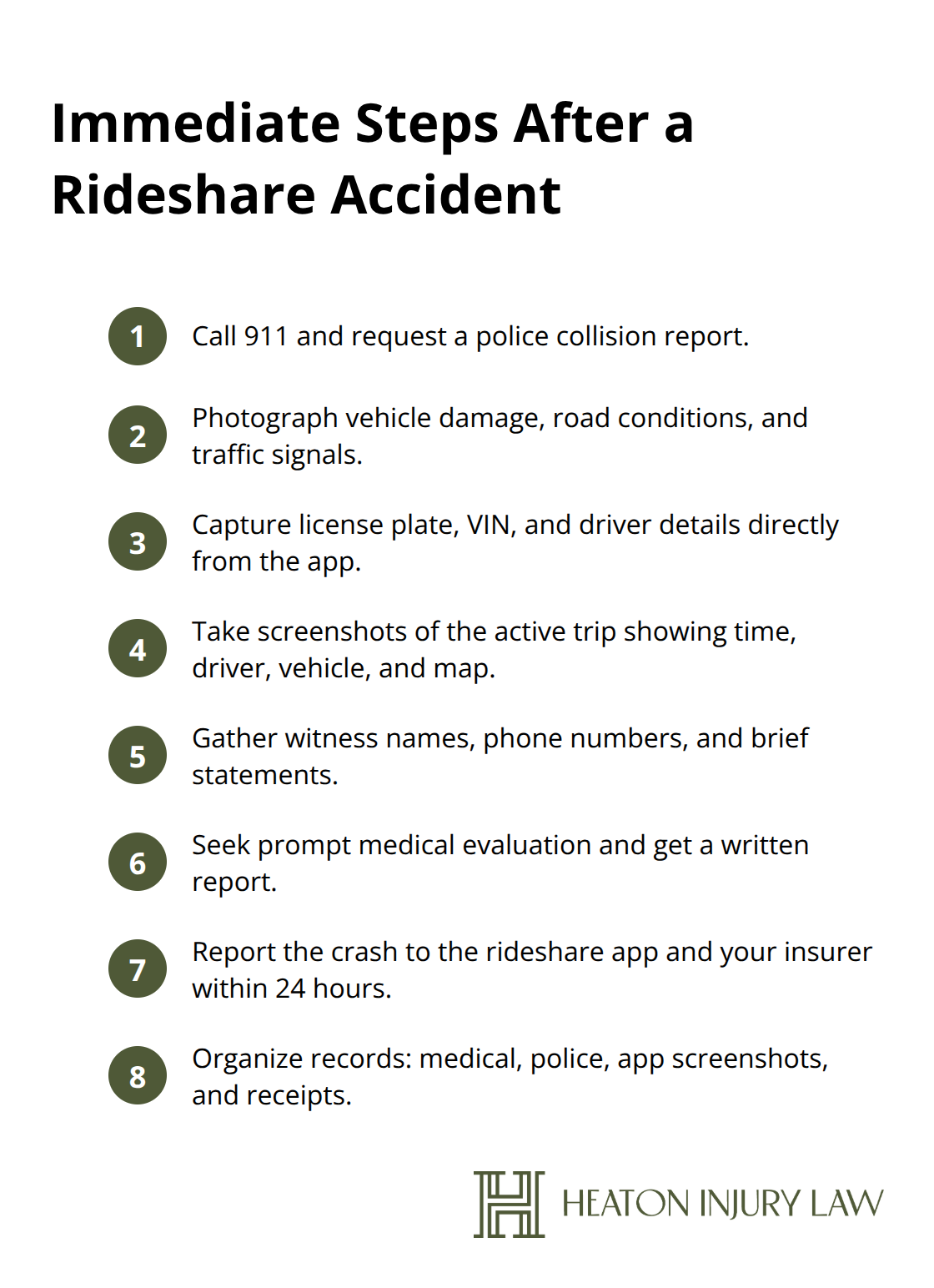
The first hour after a rideshare accident determines whether your claim moves forward smoothly or gets bogged down in disputes over fault and injury severity. Call 911 immediately and request a police collision report, which creates an official record that insurers cannot dismiss later. While waiting for police, photograph the accident scene from multiple angles, including vehicle damage, road conditions, traffic signals, and the position of all vehicles involved.
Capture the rideshare vehicle’s license plate, VIN, and the driver’s name and contact information directly from the app rather than relying on conversation, since app data provides timestamped, official records. Take screenshots of the active trip on your phone showing the order time, driver name, vehicle details, and map progress, because rideshare companies control this data and it can disappear or become harder to access once the trip ends.
Collect Witness Information and Evidence
Obtain contact information from any witnesses, including their names, phone numbers, and what they saw, since witness statements often prove decisive when liability is disputed. Write down the weather conditions, time of day, and any traffic violations you observed the driver commit, as these details strengthen your claim when insurers question fault.
Seek Medical Evaluation Without Delay
Seek medical evaluation immediately, even if you feel fine, because some injuries like concussions and internal bleeding show symptoms hours or days later. Get a written medical report documenting your injuries, treatment plan, and prognosis, as this becomes the foundation for calculating damages in your claim. Preserve all medical records, receipts for medications, and documentation of lost wages from work, since Texas law allows recovery of past and future medical expenses and lost income.
Report the Accident to All Parties
Report the accident to the rideshare company through the app within 24 hours and request written confirmation of your report, then contact your personal auto insurance carrier to report the claim as well. Do not accept any settlement offer from the rideshare company’s insurer without consulting an attorney, because initial offers typically undervalue injuries and fail to account for future medical costs or permanent impairment.
Build Your Documentation Record
Document everything going forward: maintain a detailed log of medical appointments, pain levels, physical limitations, and how the injury affects your daily life, since this evidence directly impacts the compensation you receive for pain and suffering and loss of household services. Store all documents in one secure location (medical records, police reports, app screenshots, and receipts) so you can access them quickly if an insurer requests information or if your claim moves toward settlement negotiations.
Final Thoughts
Rideshare injury rights in Austin protect you across multiple scenarios, but only if you act decisively in the hours and days following impact. You have the right to recover medical expenses, lost wages, pain and suffering, and permanent impairment regardless of whether you were a passenger, driver, or third-party victim. The rideshare company’s insurance covers you when the app was active, your personal auto insurance applies when it wasn’t, and the strength of your claim depends entirely on the evidence you preserve at the accident scene.
Most rideshare crash victims settle their claims without trial because insurers recognize that depositions expose driver negligence and regulatory violations that make litigation costly and risky for them. Your documentation of the scene, medical records, app screenshots, and police reports form the foundation that either accelerates settlement or forces the insurer to justify a lowball offer in court. The two-year statute of limitations in Texas means you have time to act, but delays in reporting, seeking medical care, or preserving evidence weaken your position significantly.
We at Heaton Injury Law, PLLC understand how rideshare crashes disrupt your life and how insurance companies attempt to minimize what they owe you. Our firm handles rideshare crashes, car accidents, and catastrophic injuries across Austin, and we work on contingency, meaning you pay nothing upfront and only if we recover compensation for you. Contact Heaton Injury Law, PLLC for a free consultation to discuss your rideshare injury claim and learn exactly what your case is worth.
The information provided in this blog is for general informational purposes only and does not constitute legal advice. Every case is unique, and laws may vary by jurisdiction. Reading this content does not create an attorney-client relationship. For guidance specific to your situation, please consult with a qualified personal injury attorney licensed in Texas.
Artificial intelligence may have been used to assist in generating some text or images in these articles.