

Meredythe | July 20, 2026 | Blog

A slip and fall can happen in seconds, but the path to fair compensation takes months. Understanding the slip and fall timeline helps you know what to expect at each stage.
At Heaton Injury Law, PLLC, we guide injured Texans through every step-from the moment you fall to the day your case closes. This guide walks you through the real timeline you’ll face.
What to Do Immediately After You Fall
Act Fast at the Scene
The first hours after a slip and fall are critical. Your actions during this window directly impact your ability to recover fair compensation. Many injured people make costly mistakes by failing to document what happened or by speaking to insurance representatives without guidance. Treat the incident scene as evidence that will disappear.
Report the fall to the property manager, business owner, or whoever controls the location immediately. Request that they file an incident report and ask for a copy. Do not accept their word that they will handle it later. Get the name, title, and contact information of the person who takes your report. If no one is present, document this fact with photos and timestamps.
Document Your Injuries and the Hazard
Seek medical attention the same day, even if you feel fine. Adrenaline masks pain, and internal injuries may not show symptoms immediately. A medical record created on the day of the fall strengthens your claim significantly. Texas courts recognize that delayed treatment raises questions about injury severity.
Take photos of the hazard that caused your fall, your shoes, and your injuries. Photograph the lighting conditions and any signage or lack thereof. Collect contact information from every witness, including their phone numbers and email addresses. Write down what they saw while their memory is fresh.
Protect Your Rights Against Insurance Tactics
Do not give a recorded statement to the property owner’s insurance company. Statements made under pressure can be twisted to argue comparative fault under Texas law, potentially reducing your recovery. Instead, preserve evidence by sending a written preservation letter to the property owner requesting they maintain all video footage, incident reports, inspection records, and maintenance logs.
Hazards get cleaned up and/or repaired quickly, and video evidence disappears when companies overwrite security footage. Most businesses cycle through footage every 30 to 90 days. In extreme cases, video evidence may be overwritten within 24 hours. Save the clothing and shoes you wore during the fall in a sealed bag. Keep receipts for all medical expenses, photographs, and notes about your pain levels and limitations.
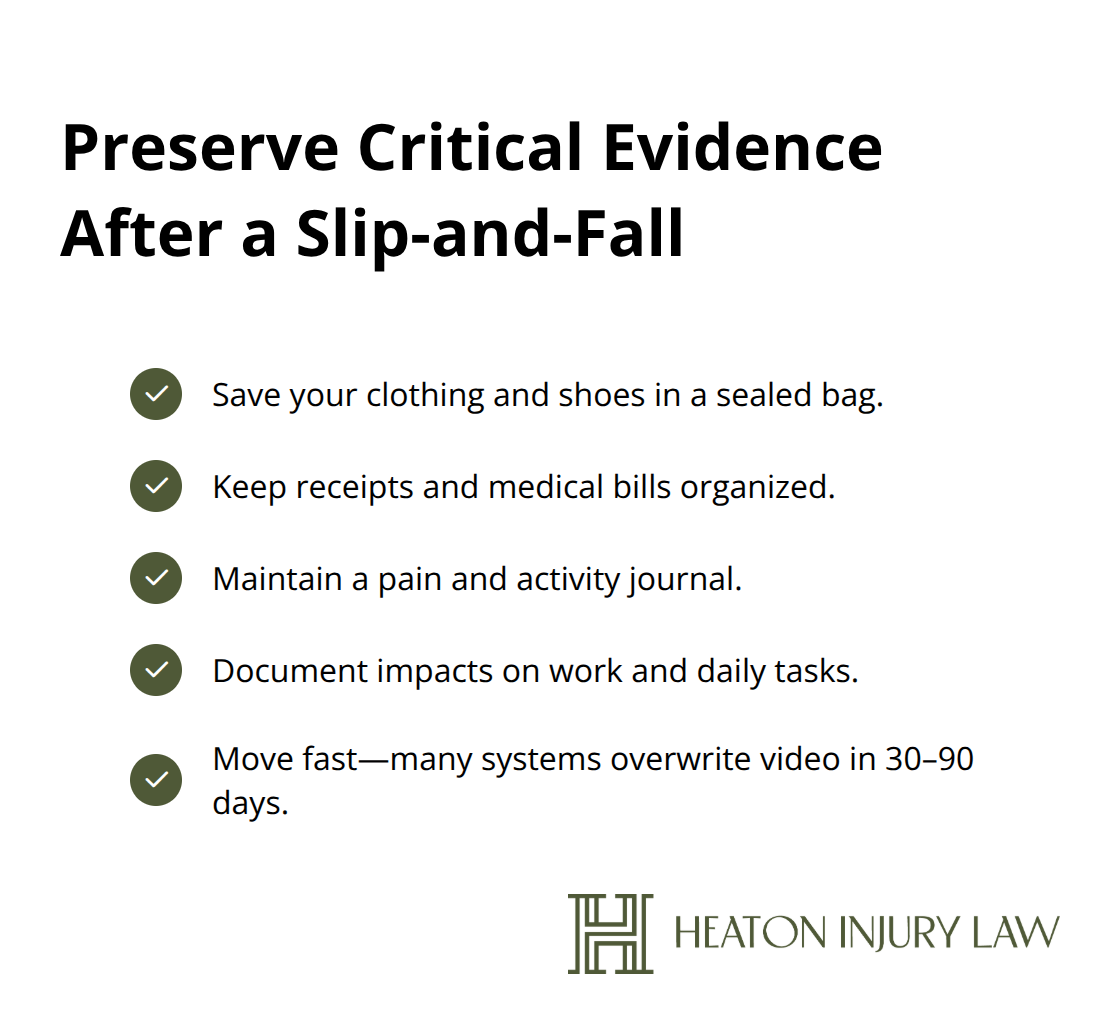
Document how the fall affected your work, daily activities, and quality of life (these records form the foundation of your case and determine how much compensation you can pursue).
Once you have secured the scene and protected your evidence, the next phase begins: filing a formal claim with the property owner’s insurance company and launching the investigation into what the owner knew about the hazard.
The Claims Process and Legal Investigation
File Your Claim Within the Critical Window
The property owner’s insurance company expects your claim shortly after your fall. Submit a written claim via certified mail that includes your name, contact information, date and location of the incident, description of the hazard, names of witnesses, and documentation of your injuries and medical treatment. Certified mail proves delivery and creates a paper trail that protects you later. The insurer must acknowledge receipt and begin their investigation by law, but most adjusters handle dozens of claims simultaneously, which means your case receives minimal attention unless you apply consistent pressure. Many injured Texans accept the first settlement offer, which typically arrives within 60 to 90 days and falls 40 to 60 percent below what the claim actually warrants. The insurer’s goal is swift closure with minimal payout, not fair compensation for your suffering.

Establish What the Property Owner Knew
Texas law requires proof that the owner had actual knowledge of the specific hazard or constructive knowledge-meaning the hazard existed long enough that reasonable inspections would have revealed it. Security footage, maintenance logs, inspection records, and incident reports establish a timeline of when the hazard existed. If video footage shows the spill for two hours before your fall with no staff response, that demonstrates negligence. Witness interviews, prior incident reports at the location, and examination of the owner’s safety policies expose gaps in their procedures. Slip-and-fall engineers can testify about inadequate lighting, handrail failures, or surface defects that created the dangerous condition when expert testimony becomes necessary.
Counter Low Offers with Evidence and Pressure
Adjusters use delay tactics, requesting redundant medical records or claiming injuries are pre-existing to justify low offers. A detailed demand letter citing the specific facts of your case, comparable settlement ranges, and the strength of liability evidence counters these tactics effectively. Texas modified comparative negligence rules work in your favor when evidence is solid; if you are 50 percent or less at fault, you recover damages reduced only by your percentage of fault. The insurer understands that filing a lawsuit signals you will not accept pennies on the dollar, which often motivates them toward reasonable settlement discussions rather than forcing you toward trial preparation.
Settlement Negotiations and Trial Preparation
Signal Trial Readiness to Shift Negotiations
Most slip-and-fall cases settle before trial, but settlement only happens when the property owner’s insurance company believes you will actually go to court. Many injured Texans accept inadequate offers because they lack trial preparation and assume the insurer will eventually offer fair value on its own. The opposite is true. Insurers test your resolve constantly through delay tactics, requests for duplicate medical records, and low-ball offers that hope you will capitulate from financial pressure or exhaustion.
The moment you signal that you are trial-ready-through aggressive demand letters, expert reports, and formal lawsuit filings-settlement negotiations shift dramatically in your favor. Texas modified comparative negligence law protects you when evidence is strong; if you are 50 percent or less at fault, you recover full damages minus only your percentage of responsibility. An insurer facing a jury trial knows that juries often award more than settlement offers, especially when hazards remained unaddressed for extended periods or when property owners failed basic safety inspections.
Leverage Evidence and Expert Reports
Demand letters citing specific liability evidence, comparable settlement ranges from similar Texas cases, and the cost of litigation to the insurer create leverage that low-ball tactics cannot withstand. If the insurer refuses reasonable settlement within 90 to 120 days after your demand letter, filing a lawsuit shifts momentum entirely. The lawsuit triggers discovery, depositions, and expert preparation that force the insurer to confront the full cost and risk of trial.
Most cases settle within a year or so from the incident, but settlement speed depends entirely on how aggressively you push back against low offers and how prepared you appear for trial. Expert testimony becomes necessary when liability hinges on technical issues like inadequate lighting levels, handrail failures, or surface defects that created unreasonable hazards. Texas courts recognize qualified engineers and safety experts who testify that the property owner breached its duty of care.
Depositions Expose Damaging Admissions
Depositions and discovery reveal what insurance companies realize about your case strength. During discovery, the property owner must produce all video footage, maintenance logs, inspection records, prior incident reports at the location, and communications about known hazards. Depositions allow your attorney to question the property manager, maintenance staff, and safety officers under oath about what they knew and when they knew it.
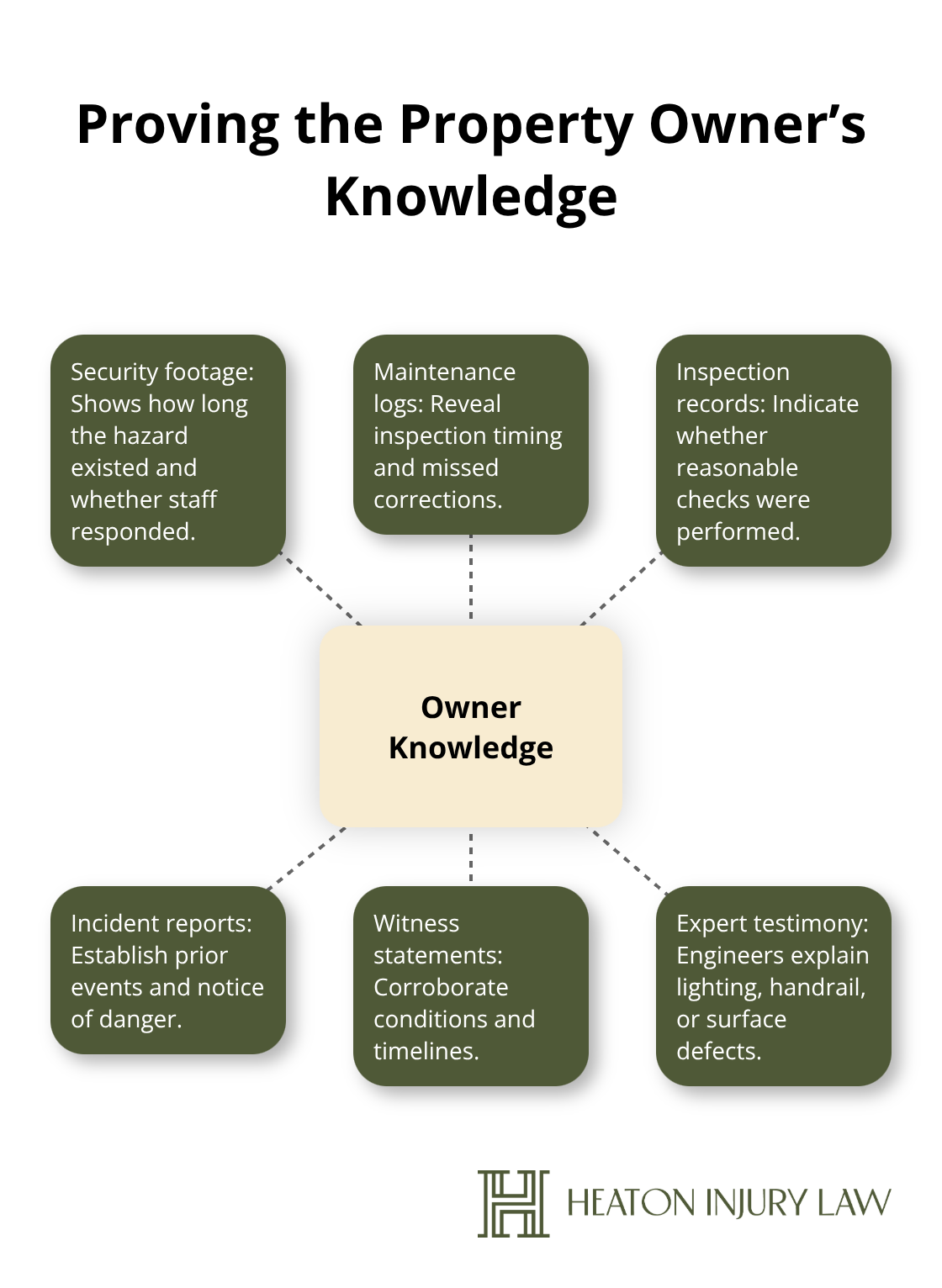
Many property owners maintain sloppy records or admit during depositions that inspections were inadequate or that similar incidents occurred previously. These admissions devastate the insurer’s negotiating position. The insurer understands that juries often find expert testimony persuasive, which motivates settlement offers significantly higher than pre-litigation demands.
Your Role During Discovery and Depositions
Your role during depositions is straightforward: answer questions truthfully about your fall, your injuries, and your treatment. Avoid exaggeration or emotional language that opposing counsel can exploit. Let the evidence and expert testimony carry your case (most cases never reach trial because discovery and deposition testimony reveal facts so damaging to the property owner that settlement becomes the insurer’s only rational choice).
Trials occur only when settlement negotiations completely break down, but trial readiness throughout the process ensures you receive fair compensation long before a jury verdict becomes necessary. The insurer’s understanding that you will pursue litigation with full preparation and expert support motivates reasonable settlement offers far more effectively than passive acceptance of initial demands.
Final Thoughts
Your slip and fall timeline from incident to resolution typically spans six months to one year, though straightforward cases close faster when evidence is strong and the insurer recognizes liability early. We at Heaton Injury Law, PLLC maximize your recovery by treating every case as trial-ready from day one, which means we gather comprehensive evidence immediately and investigate what the property owner knew about the hazard. Our approach applies consistent pressure on insurance adjusters who otherwise rely on delay tactics and low-ball offers to reduce payouts.
Settlement happens only when the insurer believes you will actually pursue litigation, and that credibility comes from preparation, expert testimony, and demonstrated willingness to go to court. Most cases settle before trial, but this outcome requires aggressive negotiation and evidence that exposes the property owner’s negligence (security footage, maintenance logs, and prior incident reports all demonstrate what they knew and when they knew it). The insurer understands that juries often award more than settlement offers, especially when hazards remained unaddressed for extended periods.
Contact us for a free consultation to discuss your specific fall, your injuries, and your options. We handle slip-and-fall claims on a contingency-fee basis, meaning you pay nothing unless we recover compensation for you. Time matters in these cases because evidence disappears and memories fade, so reach out today to begin preserving critical evidence and building your case toward fair resolution.
The information provided in this blog is for general informational purposes only and does not constitute legal advice. Every case is unique, and laws may vary by jurisdiction. Reading this content does not create an attorney-client relationship. For guidance specific to your situation, please consult with a qualified personal injury attorney licensed in Texas.
Artificial intelligence may have been used to assist in generating some text or images in these articles.