

Meredythe | July 13, 2026 | Blog

If you’ve been injured in Texas, you have a limited window to file a claim. The statute of limitations in Texas sets strict deadlines that can make or break your case.
Missing these deadlines means losing your right to compensation entirely. At Heaton Injury Law, PLLC, we’ve seen injured people lose thousands because they waited too long to act.
What Statute of Limitations Actually Means for Your Injury Case
The statute of limitations is a hard deadline set by Texas law that determines how long you have to file a lawsuit after an injury. Under Texas Civil Practice and Remedies Code § 16.003(a), most personal injury claims must be filed within two years from the date the injury occurred. This is not a suggestion or a guideline-it is a legal wall. Once that two-year window closes, courts will dismiss your case, and you lose the right to recover compensation. The clock starts on the injury date itself, not when you discovered the harm, not when you filed an insurance claim, and not when symptoms appeared.
Why Texas enforces strict time limits
Texas imposes these time limits because the legal system values finality and reliability. Defendants need certainty that old claims will not suddenly surface years later when evidence has disappeared, witnesses have moved away, and memories have faded. Litigation data shows that cases filed more than three years after injury have significantly lower settlement values and higher trial costs because evidence quality deteriorates sharply over time. Surveillance footage from accident scenes gets overwritten within 30 to 90 days. Vehicle damage evidence gets repaired or scrapped. Medical records become harder to interpret without immediate context.
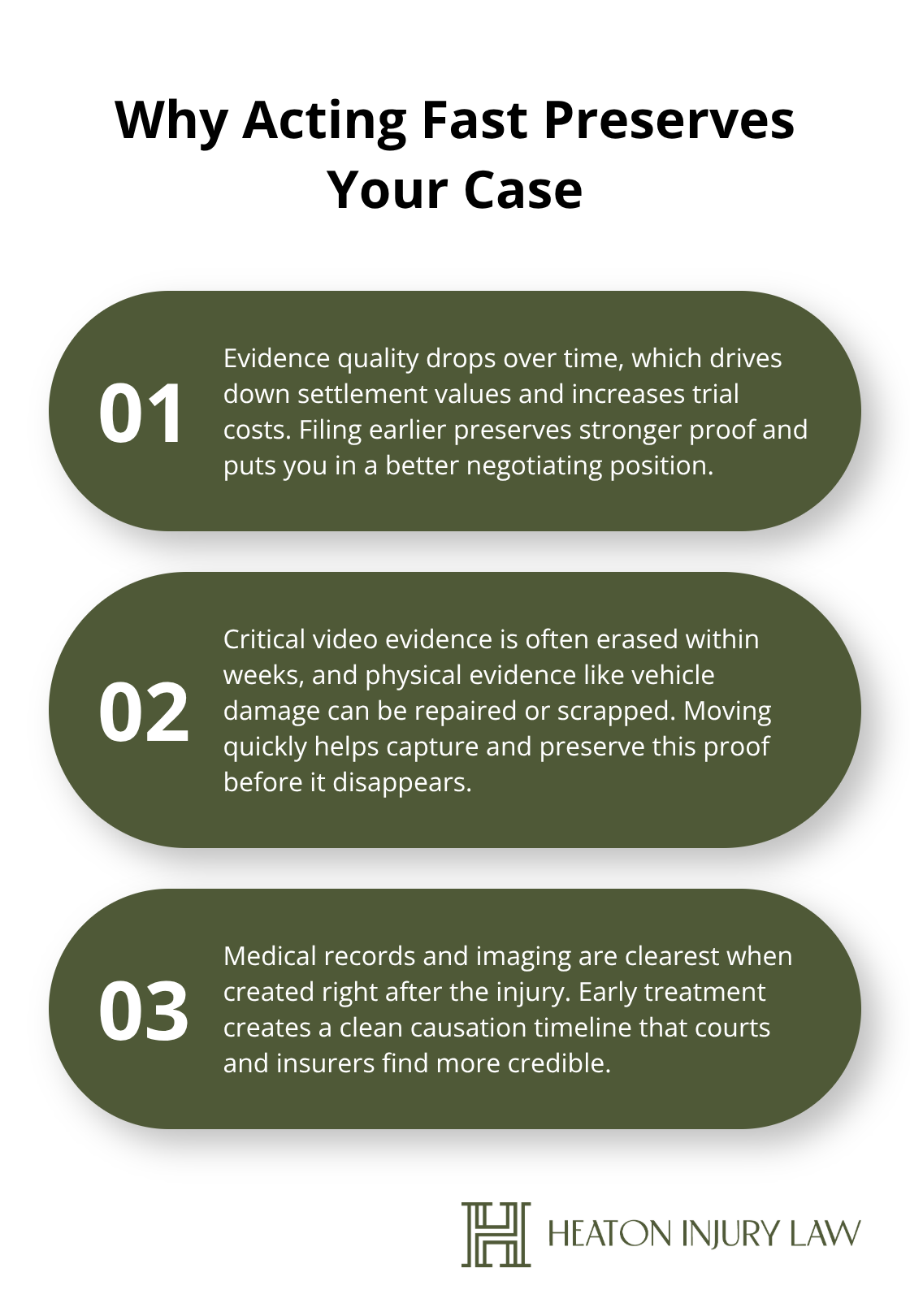
The statute of limitations pushes injured people to act while evidence is fresh and strong, which actually works in your favor if you move quickly.
How the two-year deadline works in practice
The two-year window is absolute for most injury claims, but understanding exactly when it starts is critical. If you are injured on January 15, 2025, your deadline to file is January 15, 2027. Missing January 15 by even one day means your claim is barred forever. For minors, Texas law tolls the statute-meaning the clock pauses-until the child turns 18. If a 10-year-old is injured, the two-year period does not start until that person reaches 18, giving them until age 20 to file. For adults with legal disabilities at the time of injury, similar tolling applies, but the disability must have existed when the injury occurred, not after.
The discovery rule exception for hidden injuries
The discovery rule creates a narrow exception for latent injuries where the harm was not immediately obvious. If you had a surgical instrument left inside your body during surgery, the two-year clock begins when you discovered it or reasonably should have discovered it through medical examination, not on the surgery date itself. This exception is not automatic-courts scrutinize whether a reasonable person should have known about the injury sooner. The discovery rule applies to other scenarios as well (toxic exposure, product defects, delayed wrongful death claims), but you must establish that the injury remained genuinely hidden and that you took reasonable steps to uncover it. Courts will examine your medical history, your attempts to seek answers, and whether symptoms should have alerted you to the problem. Building a solid timeline with medical records and expert opinions strengthens your position if the discovery rule applies to your case.
Understanding these deadlines and exceptions is the first step toward protecting your claim. The next section covers the specific deadlines that apply to different types of injury claims in Texas, so you can identify exactly which timeline governs your situation.
What Deadlines Apply to Your Injury Case
Most injury claims follow the two-year rule
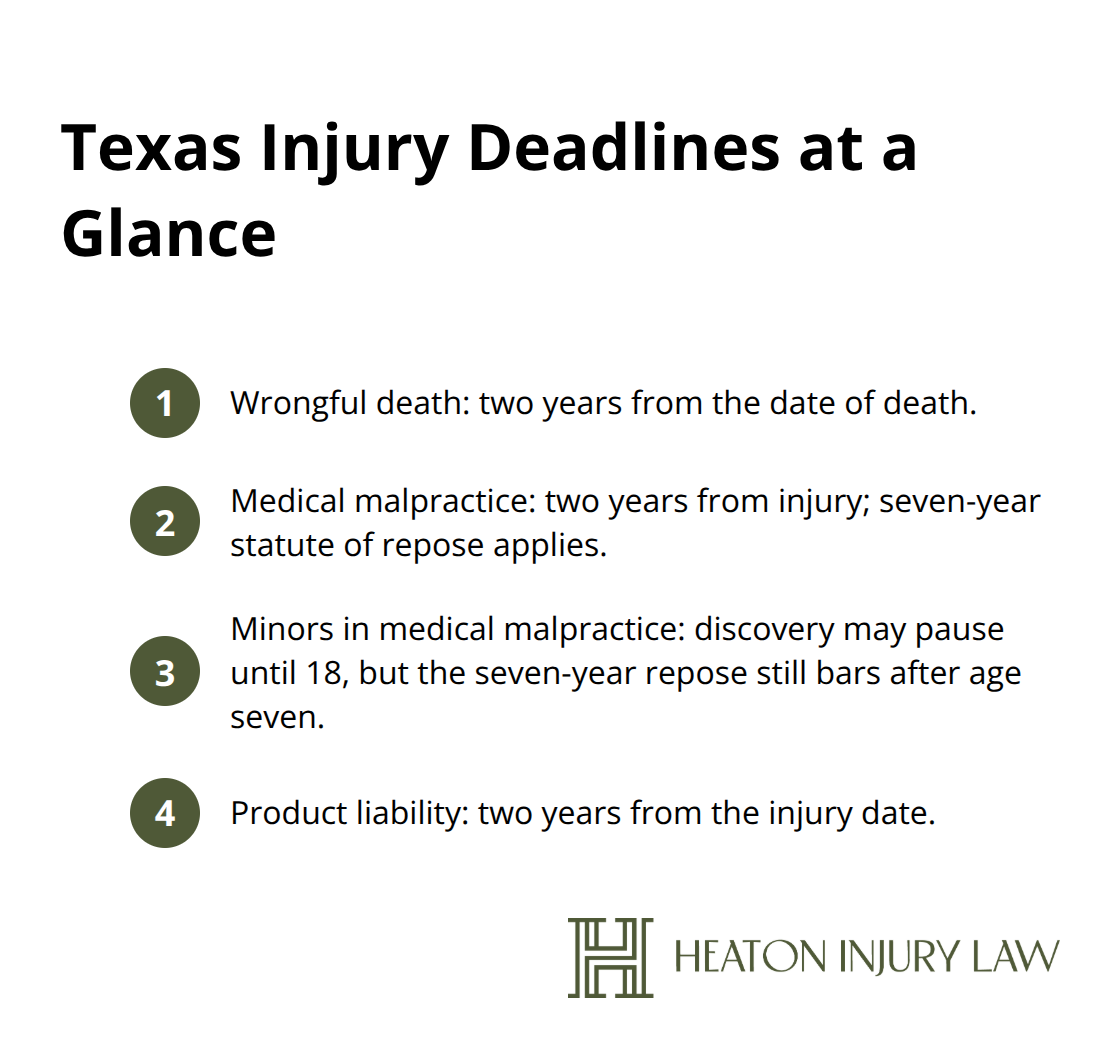
The two-year deadline applies to most personal injury claims in Texas, but not all injury cases follow the same timeline. Defamation claims must be filed within one year under Texas Civil Practice and Remedies Code § 16.002, making speed even more critical if your injury involves damage to reputation or false statements. Fraud claims have four years, and breach of fiduciary duty claims also get four years, but these are exceptions rather than the rule. Medical malpractice claims face the same two-year window from the date of injury, but Texas adds a seven-year statute of repose that serves as a hard cap regardless of when you discovered the harm. This means a surgical error committed seven years ago cannot be sued, even if you just learned about it last month.
The repose period eliminates discovery rule protection
The repose period eliminates the discovery rule protection for older medical errors, which is why consulting an attorney immediately matters in malpractice cases. Wrongful death claims follow the two-year deadline starting from the date of death, not the date of injury, so families must file within two years of losing their loved one. For minors injured in medical malpractice cases, the discovery rule can pause the clock until age 18, but the seven-year repose still applies, meaning a child harmed at birth cannot sue after age seven regardless of discovery date. Product liability claims also run two years from injury date and follow strict rules about when the harm became apparent.
When the clock actually starts-and what it is not
Understanding which deadline applies to your specific injury is non-negotiable because filing under the wrong timeline or missing the correct one ends your case permanently. The clock starts on the injury date itself, not when you filed an insurance claim, not when you received a diagnosis, and not when symptoms became severe enough to notice. Insurance companies count on injured people misunderstanding this fact and waiting months or years while thinking the statute of limitations has not started. If you were injured on March 10, 2024, your deadline is March 10, 2026, even if you did not seek medical care until April 2024 or did not hire an attorney until February 2026.
Tolling: the only circumstance that pauses the clock
The only circumstance that pauses the clock is if you were a minor at the time of injury or legally incapacitated when the injury occurred. Tolling for legal incapacity requires that the disability existed at the moment of injury, not afterward. Courts will not extend deadlines based on your personal circumstances, your financial situation, or your lack of knowledge about the law. The next section walks through the specific steps you should take immediately after an injury to protect your claim and avoid costly mistakes that many injured people make.
Common Mistakes That Cost Injured People Money
Waiting Too Long Destroys Your Evidence
Contacting an attorney months or years after an injury is the single biggest mistake injured people make in Texas. Many injured people assume the statute of limitations provides ample time and postpone legal help until symptoms worsen or medical bills accumulate. This delay costs money directly because evidence deteriorates rapidly. Surveillance footage from accident locations gets overwritten within 30 to 90 days. Witness phone numbers change. Medical imaging becomes harder to interpret without immediate context. Defendants know this, which is why their insurance adjusters often encourage injured people to handle claims alone or wait before filing.

The longer you wait, the weaker your evidence becomes, and the lower your settlement value drops. Courts and juries assign less weight to injuries documented months after the event because gaps in medical records create doubt about causation.
A realistic timeline protects your claim: injury occurs, seek immediate medical care within days, contact an attorney within weeks, complete medical treatment within three to six months, investigate the claim during months four through ten, and file suit by month eighteen to preserve your rights before the deadline. This schedule gives you six months of buffer before the statute of limitations expires, which is critical because unexpected medical complications or defense tactics can delay filing. The two-year deadline feels generous until you subtract the time needed for medical treatment, investigation, and negotiation.
Misunderstanding Which Deadline Applies to Your Injury
Missing the deadline because you didn’t understand which timeline applied to your injury is equally destructive. You assumed you had two years from when you discovered the injury, but the clock started on injury date. You believed your insurance claim was tolling the statute, but it wasn’t. You thought medical malpractice claims had longer than two years, forgetting the seven-year repose period. These misunderstandings happen constantly because the statute of limitations rules are buried in Texas Civil Practice and Remedies Code and vary by claim type.
Defamation claims get only one year, not two. Product liability claims must account for when the product was sold versus when the defect caused harm. Wrongful death deadlines start from the date of death, not injury. Government entity claims require notice filing within months, not the standard two years. One missed deadline means permanent dismissal with no appeal, no second chance, and no recovery. Courts have zero discretion to revive expired claims.
Real Consequences of Missing Your Deadline
A client who waited fifteen months to file a defamation claim because they didn’t know the one-year rule applied lost the right to sue permanently. Another client missed a government claim notice deadline by three weeks because they didn’t know cities and counties have different notification requirements than state agencies. These scenarios happen to injured Texans regularly, not as hypothetical examples.
The only protection against this mistake is contacting a Texas personal injury attorney early enough that they can identify the correct deadline for your specific injury and build a filing timeline that accounts for medical treatment, investigation, and negotiation without racing against the clock in the final weeks. An experienced attorney knows which deadline applies to your claim type and structures your case to meet it.
Final Thoughts
The statute of limitations in Texas is not a safety net-it is a deadline that arrives whether you are ready or not. Acting quickly after an injury protects your rights by preserving evidence, securing witness statements while memories are fresh, and giving your attorney time to investigate thoroughly before filing. Every week you delay reduces the strength of your case and increases the risk that critical evidence will disappear.
Contact a Texas personal injury attorney within weeks of your injury, not months or years later. An experienced attorney will identify the exact deadline that applies to your claim, calculate your filing date, and structure your case to meet it without rushing through critical investigation. They will handle evidence preservation, medical record gathering, and negotiation while you focus on recovery.
We at Heaton Injury Law, PLLC understand the pressure injured people face and the complexity of statute of limitations rules in Texas. Our contingency-fee representation means you pay nothing unless we win your case. Contact us today for a free consultation to confirm your deadline and protect your claim before time runs out.
The information provided in this blog is for general informational purposes only and does not constitute legal advice. Every case is unique, and laws may vary by jurisdiction. Reading this content does not create an attorney-client relationship. For guidance specific to your situation, please consult with a qualified personal injury attorney licensed in Texas.
Artificial intelligence may have been used to assist in generating some text or images in these articles.