

Meredythe | July 16, 2026 | Blog
Gig work offers flexibility, but it leaves you vulnerable when injury strikes. Unlike traditional employees, rideshare drivers, delivery workers, and freelancers often lack workers’ compensation protection.
At Heaton Injury Law, PLLC, we help injured gig workers in Austin understand their legal options and fight for fair compensation. This guide walks you through your rights and the steps to pursue a claim.
What Qualifies as a Gig Worker Injury Claim in Austin
Types of Gig Work and Employment Classifications
Gig work spans rideshare driving, food and package delivery, freelance services, and task-based platforms like TaskRabist. The problem is classification. Under California’s ABC test, which influences how courts nationwide evaluate worker status, you qualify as an independent contractor only if you work free from control, operate outside the hiring company’s usual business, and run an independently established trade. Texas doesn’t have California’s strict ABC framework, but courts here still examine control, permanence, and whether the work is integral to the business. This matters because your classification determines whether you can file a workers’ compensation claim or pursue a personal injury lawsuit instead.
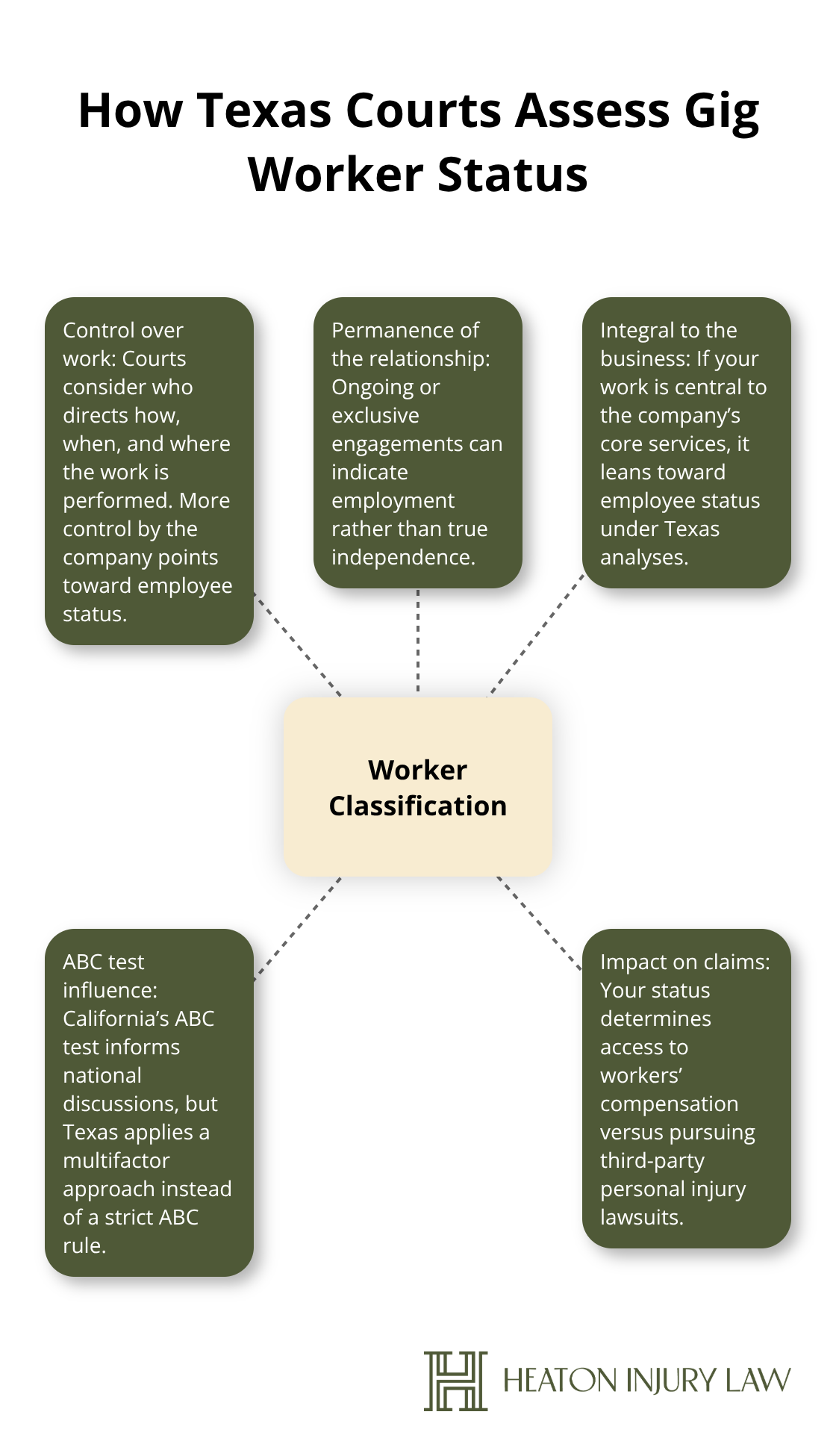
If you drive for Uber or DoorDash in Austin, you’re likely classified as independent, which blocks traditional workers’ comp but opens the door to third-party injury claims when someone else causes your accident.
Common Gig Injuries in Austin
Rideshare crashes, pedestrian strikes, delivery vehicle collisions, and repetitive strain from excessive app-based work represent the most frequent injuries gig workers face in Austin. Rideshare drivers experience injury rates comparable to or higher than traditional taxi drivers, yet they lack employer-provided coverage. When a drunk driver hits your rideshare vehicle, you cannot claim workers’ comp from the platform-but you can sue that driver and their insurer for damages. A customer assault against a delivery worker or a property defect that causes a fall during a task-based job also triggers third-party liability claims. The critical distinction is this: workers’ comp protects you only if your employer controls how you work and covers workplace injuries regardless of fault.
Why Independent Contractor Status Changes Your Legal Path
Independent contractor status means you lose the workers’ compensation safety net but gain the ability to hold third parties accountable through personal injury law. Your classification determines which legal avenue you can pursue. When someone else’s negligence or wrongful conduct injures you, you have the right to file a personal injury claim against that responsible party and their insurance. This shift from employer protection to third-party liability claims requires a different legal strategy-one that focuses on proving negligence, establishing damages, and recovering compensation directly from the party at fault. Understanding this distinction shapes how you approach your injury claim and what evidence you need to gather.
How to Build a Strong Third-Party Injury Claim
Establishing Negligence in Your Accident
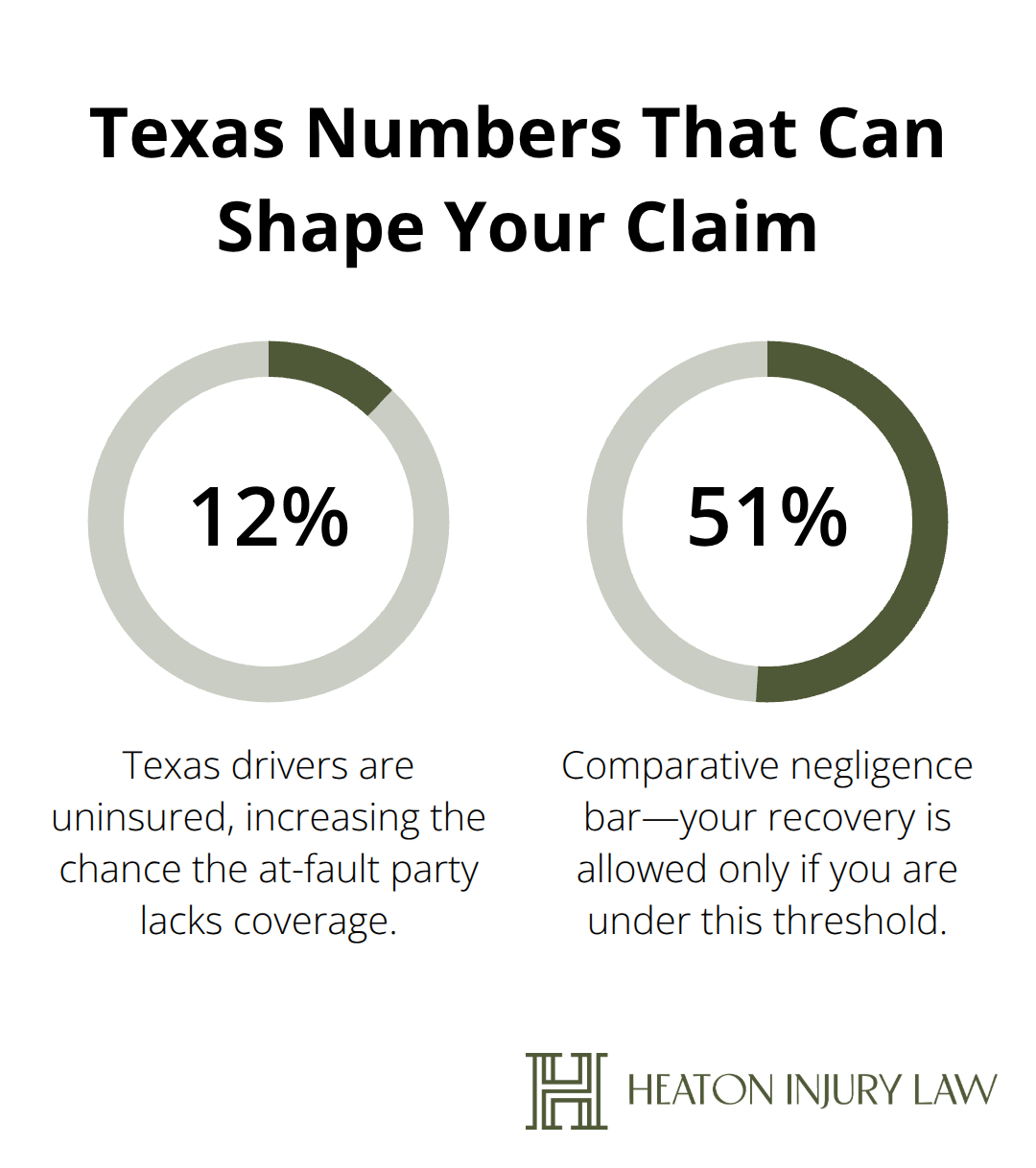
When someone else causes your injury, you hold them legally responsible for damages through a personal injury claim. This is your primary path forward as a gig worker in Austin. The foundation of any third-party claim rests on establishing negligence-proving the other party owed you a duty of care, breached that duty, and caused your injury and losses. In rideshare accidents, this means showing the other driver violated traffic laws or acted recklessly. In delivery work, it means demonstrating a property owner failed to maintain safe conditions or a customer assaulted you. Texas courts apply a comparative negligence standard, meaning you can still recover even if you bear partial fault, as long as you’re less than 51% responsible.
Gathering Evidence That Strengthens Your Position
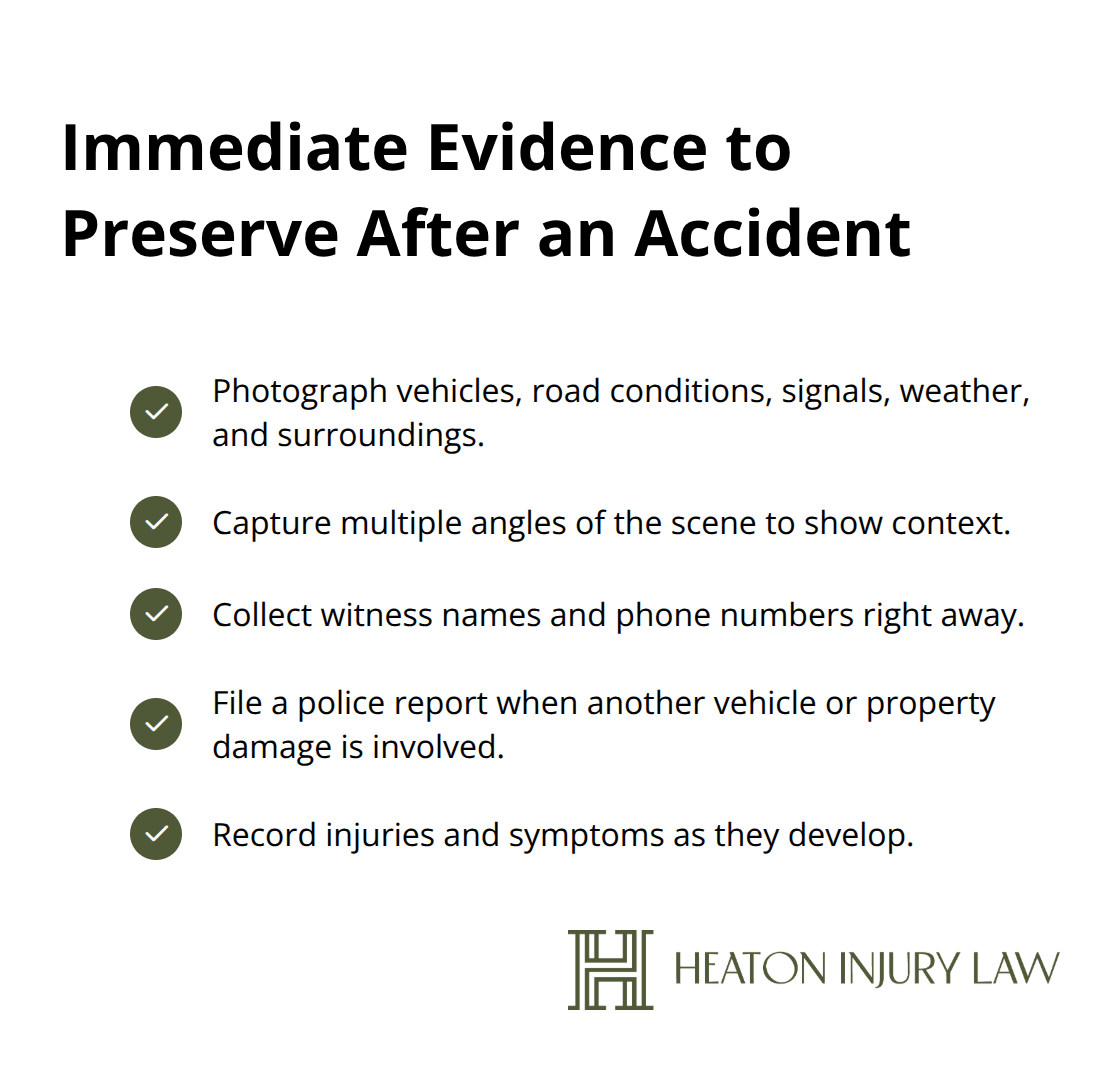
You must act fast to preserve evidence. Photograph vehicle damage, road conditions, weather, traffic signals, and the accident scene from multiple angles. Collect contact information from witnesses immediately-their statements carry weight when memories remain fresh. Medical records become critical evidence linking the injury directly to the accident. File a police report when applicable, as this creates an official record that strengthens your position significantly. Insurance companies employ adjusters trained to minimize payouts, so they’ll scrutinize your claim for any inconsistency or delay in reporting. Never accept a quick settlement offer without understanding your full injury scope; some injuries develop weeks or months later, and early settlements often leave you undercompensated.
Understanding Your Insurance Coverage Options
Your insurance coverage options depend on how you structure your gig work and which platforms you drive for. Rideshare platforms like Uber and Lyft provide contingent coverage during active rides, but gaps exist when the app is on but no passenger is booked. Many gig workers purchase personal commercial auto insurance to fill these gaps, typically costing $50 to $150 monthly but protecting you when platform coverage doesn’t apply. Some commercial policies include uninsured motorist coverage, which pays your damages when the at-fault driver lacks adequate insurance-a real possibility in Austin given that roughly 12% of Texas drivers are uninsured.
Documenting Medical Treatment and Lost Income
Health insurance is your responsibility as an independent contractor, making it essential to document all medical treatment related to your injury. Lost wages become a recoverable damage category, but you must track income meticulously through platform statements and tax records to prove exactly what you lost. The key actionable step is reviewing your current coverage limits today-if you carry only minimum liability limits, a serious injury claim could exceed what’s available, leaving you with unrecovered losses.
Moving Forward With Your Claim
Insurance companies know that injured gig workers often lack employer support and may feel pressured to settle quickly. They count on this vulnerability. Understanding your coverage gaps and documenting damages thoroughly shifts the power dynamic in your favor. The next step involves navigating how insurance companies respond to your claim and recognizing the tactics they use to reduce what they owe you.
Protecting Your Claim From Insurance Company Tactics
Act Immediately to Preserve Evidence
Insurance adjusters in Texas are trained to minimize payouts, and they exploit gaps in your documentation or delays in reporting to reduce what you recover. The moment an injury occurs, photograph everything at the scene-vehicle damage, road conditions, traffic signals, weather, and surrounding property. Collect witness names and phone numbers immediately; memories fade quickly, and a witness statement recorded days later carries far less weight than one captured the same day. File a police report when the accident involves another vehicle or property damage, as this official record becomes critical evidence that insurers struggle to challenge.
Document Medical Treatment and Lost Income Thoroughly
Keep detailed medical records from every appointment, including imaging, test results, and provider notes linking your injury directly to the accident. Document lost income through platform statements, tax returns, and communication with gig platforms showing reduced earnings during recovery. Insurance companies will request this documentation anyway, so organizing it early strengthens your position and prevents them from claiming you failed to substantiate your damages. The more complete your records, the harder it becomes for adjusters to argue your injuries are minor or unrelated to the accident.
Avoid Tactics That Weaken Your Position
Never discuss your injury on social media, as insurers monitor your accounts for posts or photos that contradict your damage claims. When an adjuster contacts you, provide only basic information and avoid recorded statements without legal guidance-anything you say can be used against you to argue your injuries are less severe than claimed. Adjusters often pressure gig workers with quick settlement offers because they know many lack employer support and face financial pressure to accept fast payouts. A settlement offer of $5,000 for a serious injury that develops complications over months leaves you without recourse once you’ve signed away your rights.
Understand Comparative Negligence and Settlement Pressure
Texas allows you to recover damages even if you’re partially at fault, as long as you’re less than 51% responsible under comparative negligence rules, but insurers will twist this standard to argue you bear more fault than you actually do. Serious injuries generate ongoing medical costs, permanent disability, lost earning capacity, and pain and suffering damages that extend far beyond initial treatment. Many gig workers underestimate their damages because they lack employer-provided benefits and assume their claim is straightforward. Insurance companies count on this vulnerability to settle claims for far less than they’re worth.
Shift the Power Dynamic With Legal Representation
Working with legal representation on contingency means you pay nothing upfront and your attorney advances costs, recovering fees only if you win or settle. This structure aligns your lawyer’s financial interest with yours-they profit more when you recover more. An attorney familiar with Texas negligence law and insurance defense strategies can counter lowball offers, demand full policy limits when appropriate, and prepare your case for trial if settlement negotiations stall. Having legal representation prevents you from leaving money on the table and shifts the power dynamic away from the insurance company back toward your recovery.
Final Thoughts
Insurance companies understand that gig workers often lack employer support and financial stability, so they exploit this vulnerability by pressuring quick settlements and minimizing documented damages. Your defense against these tactics requires you to act fast, preserve evidence immediately, and document everything meticulously before negotiating with trained adjusters. Texas comparative negligence law protects you even if you bear partial fault, provided you remain less than 51% responsible, but only if you can prove it with solid evidence that you gather and maintain throughout your claim.
The most critical decision you make is whether to handle your gig worker claims Austin alone or work with legal representation. At Heaton Injury Law, PLLC, we handle gig worker injuries including rideshare crashes and understand how insurance companies operate because we’ve worked both sides of litigation. Our contingency fee structure means you pay nothing upfront, and we advance all costs, recovering our fees and expenses only when you win or settle.
Contact Heaton Injury Law, PLLC today for a free consultation to discuss your injury claim. With 14+ years of experience, we know how to counter insurance tactics and maximize your recovery. Your injury claim deserves an advocate who understands Austin’s gig economy and fights for what you actually deserve.
The information provided in this blog is for general informational purposes only and does not constitute legal advice. Every case is unique, and laws may vary by jurisdiction. Reading this content does not create an attorney-client relationship. For guidance specific to your situation, please consult with a qualified personal injury attorney licensed in Texas.
Artificial intelligence may have been used to assist in generating some text or images in these articles.