

Meredythe | June 29, 2026 | Blog

An injury in Austin can turn your life upside down fast. Medical bills pile up, insurance companies push back, and you’re left wondering what happens next.
We at Heaton Injury Law, PLLC understand the Austin injury claim process inside and out. This guide walks you through every stage-from the moment you’re injured to the day you receive compensation.
What to Do Right After Your Injury
Seek Medical Attention Immediately
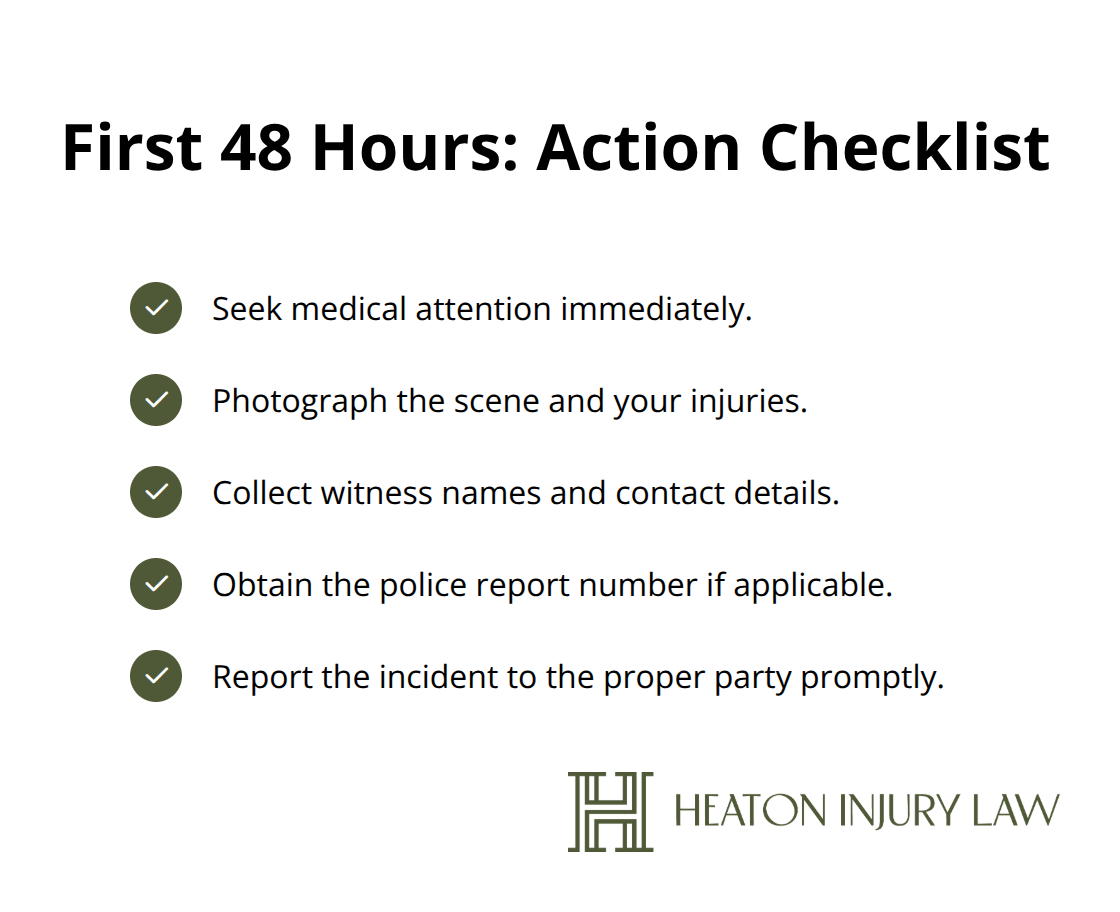
The first 24 to 48 hours after an injury determine how strong your claim becomes. Medical attention must come first, not as a formality but as the foundation of your entire case. When you seek treatment immediately, you create a medical record that directly links your injury to the accident. Insurance companies scrutinize delays in treatment; a gap of even a few days gives them ammunition to argue your injuries weren’t serious or weren’t caused by their insured.
Get evaluated at an emergency room, urgent care facility, or your primary care doctor as soon as possible. Some injuries don’t show symptoms immediately-internal bleeding, concussions, and soft tissue damage often emerge hours or days later. If you wait, you lose the chance to document the connection between the accident and your condition.
Document the Accident Scene and Injuries
Documentation at the scene matters enormously, but most people do it poorly. Take photos of vehicle damage, property damage, road conditions, traffic signals, and weather (anything that shows how the accident happened). Get the names, phone numbers, and addresses of every witness who saw what occurred; eyewitness statements carry significant weight in settlements and trials.
If police respond, obtain the report number and the officer’s name; you’ll need this to file your insurance claim. Write down details while your memory is fresh: the time of day, exactly what happened, what you were doing, and how you felt immediately after. This written account becomes invaluable when months pass before your case moves forward.
Photograph your injuries as they develop over the next few days and weeks; visual evidence of swelling, bruising, or other changes strengthens your claim substantially.
Report the Incident Promptly
Report the incident to your insurance company, your employer if the injury occurred at work, or the property owner if you were injured on their premises. Prompt reporting creates an official record and demonstrates you acted responsibly. Missing these early steps makes every subsequent stage of your claim harder.
The decisions you make in these first days directly shape what happens when you file your claim with the insurance company and begin negotiations.
How Insurance Companies Handle Your Claim
The Adjuster’s Role and Strategy
The moment you file a claim, the insurance company assigns an adjuster to your case. Their job is to minimize what they pay, not to help you. Understanding how they operate protects you from accepting lowball offers that don’t reflect your actual damages.
Insurance adjusters work for insurance companies and are trained to minimize payouts, using a formula-based system to calculate claim value starting with your medical bills and multiplying by a factor typically between 1.5 and 5, depending on injury severity. This formula ignores what your case is truly worth in court.
Protecting Yourself During the Claims Process
Many adjusters will contact you directly and ask for a recorded statement; never give one without consulting an attorney first. Anything you say can be twisted to reduce your settlement.
The adjuster will also request your medical records, social media accounts, and a detailed injury history. They comb through this information looking for inconsistencies or gaps that suggest your injuries aren’t as serious as claimed. If you have a pre-existing condition, they’ll argue your current injuries are unrelated or exaggerated.
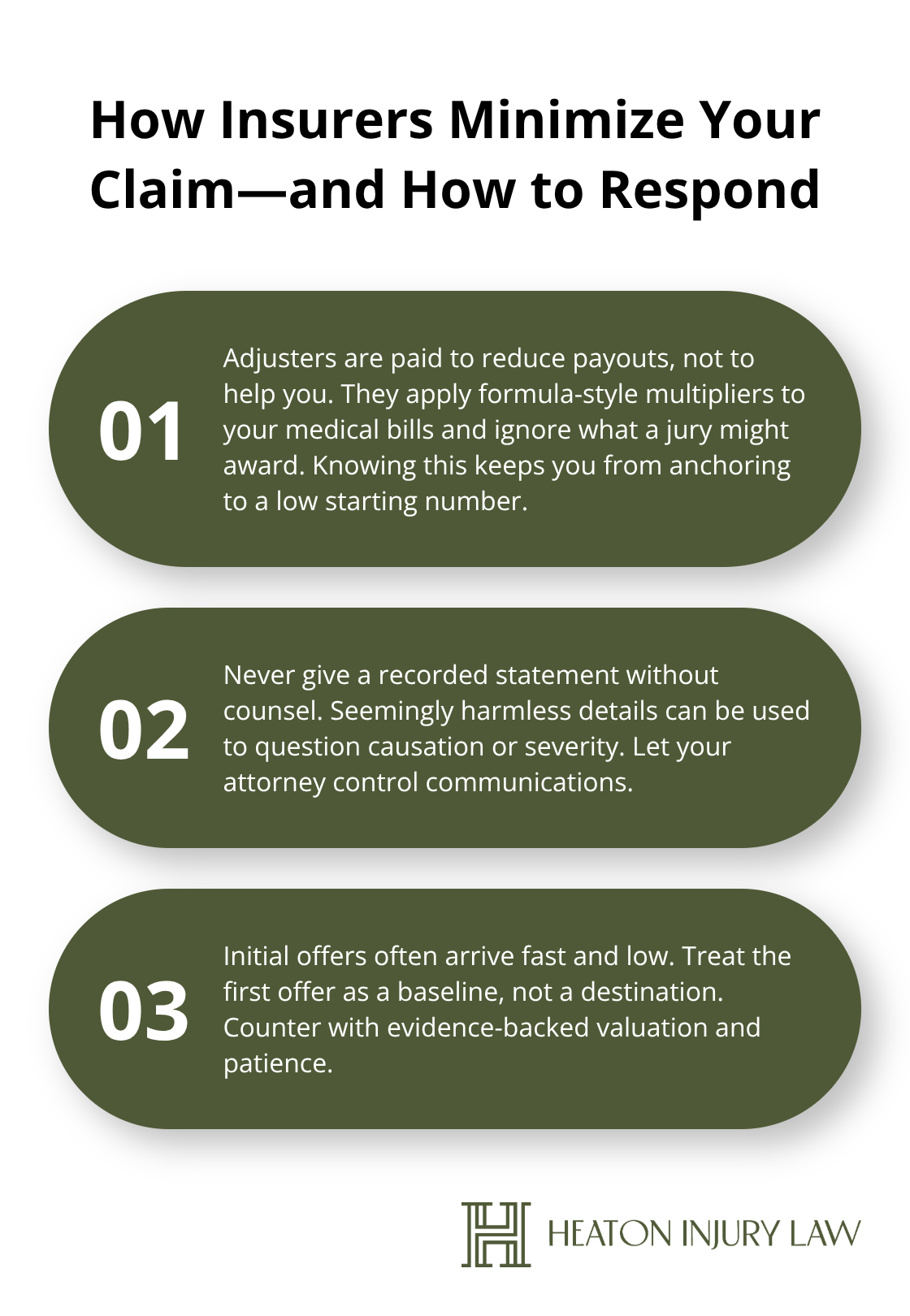
Your first settlement offer typically arrives within 30 to 60 days and is almost always inadequate. Insurance companies know most people are desperate to pay bills and will accept whatever comes first. Rejecting their initial offer is not a setback; it’s the beginning of real negotiation.
Negotiating Beyond the Initial Offer
Settlement negotiations can stretch over months, and timing matters. Insurance companies bank on you getting tired and accepting less. Your attorney handles all communication, preventing the adjuster from pressuring you directly.
Economic damages like medical bills, lost wages, and future treatment costs are straightforward to calculate and defend. Non-economic damages for pain and suffering, emotional distress, and loss of enjoyment of life are harder to quantify but often represent the largest portion of your settlement. Texas courts recognize these losses as real and compensable.
A strong personal injury attorney knows the settlement ranges for your specific injury type in your county and uses that knowledge to push for maximum compensation rather than accepting whatever the insurance company initially offers.
When Settlement Talks Stall
If the insurance company refuses a fair settlement, your attorney files a lawsuit, which shifts power in your favor. An attorney with trial experience and the willingness to use it fundamentally changes how insurers approach your claim, often leading to settlement once litigation begins because the insurer faces the real possibility of a jury awarding far more than their settlement offer.
The statute of limitations in Texas is two years from your injury date, so filing before that deadline is non-negotiable. Waiting until the last minute weakens your position and limits your attorney’s ability to gather evidence and witnesses. When negotiations reach an impasse, the path forward leads to building your case for trial-a step that requires solid evidence, expert testimony, and thorough preparation.
When Settlement Negotiations Fail
Once the insurance company refuses a reasonable settlement offer, litigation becomes your path forward. This isn’t failure-it’s leverage. The moment your attorney files a lawsuit, the dynamic shifts dramatically. Insurance companies know that juries in Travis County and surrounding areas award damages far exceeding their settlement offers, and that reality forces them to take your claim seriously. Filing suit costs them money in legal defense, creates court deadlines they must meet, and exposes them to a verdict they cannot control. Many cases settle only after a lawsuit is filed because the insurer finally understands you’re willing to fight in court.
Discovery Reveals What Insurers Hide
Your attorney’s first step after filing is conducting discovery, the formal process where both sides exchange evidence. You produce medical records, accident reports, photos, witness statements, and financial documentation showing lost wages and medical expenses. The defendant’s insurance company must provide their investigation files, communications about your claim, and any evidence they’ve gathered. This exchange often reveals weaknesses in the insurer’s position-contradictions in witness statements, admissions in internal emails, or gaps in their investigation. In some cases, you may have the right to depose the adjuster who handled your claim, and experienced attorneys use these depositions to lock in testimony and expose the formula-based approach insurers use to undervalue cases.
Expert Witnesses Strengthen Your Position
Expert witnesses become critical at this stage. Medical experts explain your injuries and prognosis to a jury in language they understand; economists calculate your lost earning capacity over decades; accident reconstruction specialists demonstrate how the collision occurred. These experts cost money-typically $2,000 to $10,000 per expert depending on their field-but a strong expert can be the difference between a modest settlement and a substantial verdict. Your attorney weighs whether expert testimony strengthens your case enough to justify the expense.
Trial Unfolds Over Days, Not Hours
Trial in Texas typically lasts three to seven days depending on case complexity. Your attorney presents your case first, calling you to testify about your injuries and how the accident changed your life, then calling witnesses and experts to support your damages claim. The defense presents their side, usually arguing either that their client wasn’t at fault or that your injuries are less severe than claimed.
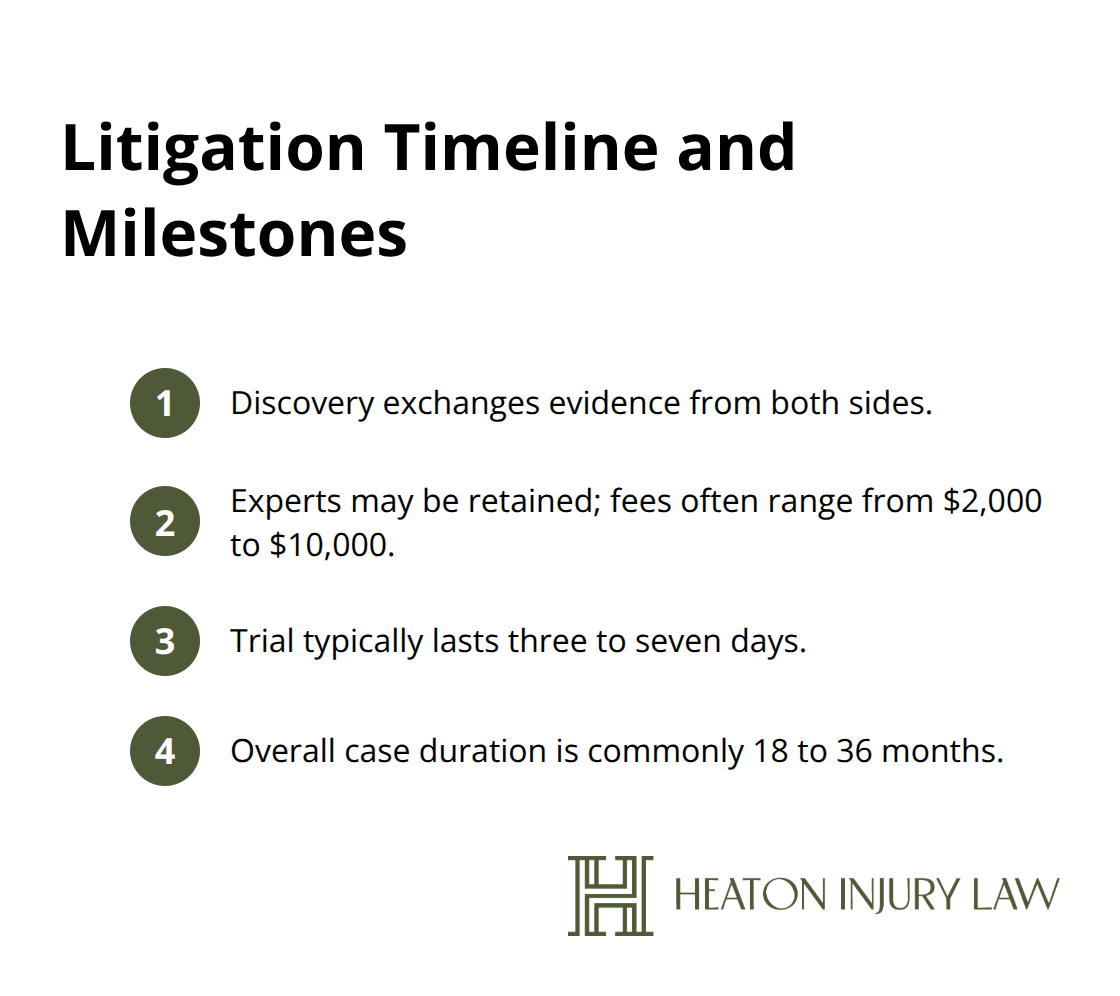
Jury selection happens before testimony begins, and your attorney’s skill at identifying jurors who will fairly evaluate your case matters enormously. Texas juries award pain and suffering damages regularly-there’s no cap on non-economic damages in personal injury cases-and they often award amounts far exceeding what insurance companies initially offered. After both sides present evidence and make closing arguments, the jury deliberates and reaches a verdict. If the verdict is in your favor, the court enters a judgment for the amount awarded. The entire process from filing suit to verdict typically takes 18 to 36 months, though some cases resolve faster through settlement once litigation pressure builds.
Final Thoughts
The Austin injury claim process moves through distinct phases, each with its own deadlines and decisions that shape your final outcome. From seeking immediate medical care to negotiating with insurance companies to preparing for trial, every step matters. The choices you make in the first 48 hours after your injury ripple forward through months or years of claims handling, and accepting a lowball settlement offer early closes the door on fair compensation.
Legal representation fundamentally changes what happens at every stage because an experienced attorney knows insurance company tactics, understands what your case is worth in your county, and handles all communication with adjusters so you’re not pressured into bad decisions. This willingness to litigate is what forces insurance companies to negotiate seriously-without it, you’re negotiating against a company whose entire business model depends on paying you less than your claim is worth. An attorney who takes cases to trial shifts the power dynamic entirely in your favor.
We at Heaton Injury Law, PLLC operate on contingency, meaning you pay nothing unless we win, and we’ve handled car, motorcycle, truck, brain and catastrophic injuries, rideshare crashes, slip-and-fall, workplace injuries, and wrongful-death claims across Austin and Travis County. Contact us for a free consultation to assess your case and explore your options without any obligation. The two-year statute of limitations means time matters, so reach out today and take control of your claim.
The information provided in this blog is for general informational purposes only and does not constitute legal advice. Every case is unique, and laws may vary by jurisdiction. Reading this content does not create an attorney-client relationship. For guidance specific to your situation, please consult with a qualified personal injury attorney licensed in Texas.
Artificial intelligence may have been used to assist in generating some text or images in these articles.