

Meredythe | July 23, 2026 | Blog
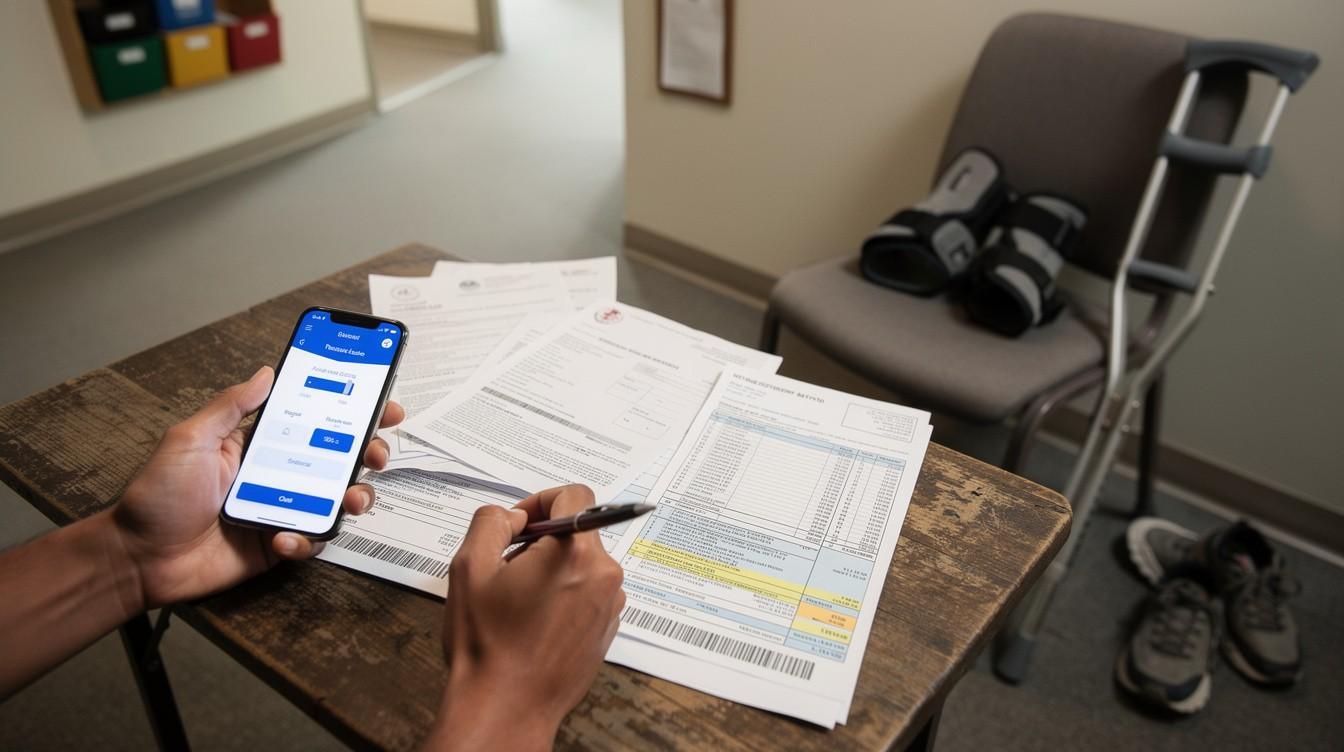
A slip and fall injury can leave you facing unexpected medical bills that pile up fast. Hospital visits, emergency care, imaging, and follow-up appointments create costs that feel overwhelming.
At Heaton Injury Law, PLLC, we help injured Texans understand how to manage these expenses and recover what they’re owed. This guide shows you practical steps to review your bills, negotiate with providers, and build a strong claim.
How Medical Bills Add Up After a Slip and Fall
Emergency and Initial Care Costs
A slip and fall injury creates medical bills that arrive in waves, and most people underestimate the total damage. Your first bill comes from the emergency room visit, which in Texas averages between $1,000 and $3,000 depending on the severity of your injury and the facility. Then come imaging costs-X-rays, CT scans, and MRI imaging can each cost $500 to $2,000 without insurance negotiation. Physician fees, specialist consultations, and any necessary procedures add thousands more before you even leave the hospital.
Ongoing Treatment and Hidden Charges
The real shock hits weeks later when follow-up appointments, physical therapy sessions, and prescription medications arrive. Physical therapy alone runs $50 to $150 per session, and most slip and fall injuries require at least 8 to 12 weeks of treatment. Prescription pain medications, anti-inflammatories, and other medications add another $200 to $500 to your bill. Many people assume their medical bills end when they stop visiting the doctor, but facility fees, administrative charges, and surprise balance bills from out-of-network providers often appear months later. This is why you must track every single charge from day one-medical bills in slip and fall cases routinely total $10,000 to $50,000 or more, depending on injury severity.
Breaking Down Your Bill Components
The breakdown of what you’ll actually pay matters just as much as the total. Hospital facility fees often represent 20 to 30 percent of your total bill and are frequently overcharged or duplicated in billing systems. Diagnostic imaging, lab work, and pathology charges come next, followed by physician and specialist fees. Rehabilitation services (physical therapy, occupational therapy, and sometimes mental health counseling for trauma) make up another significant chunk.
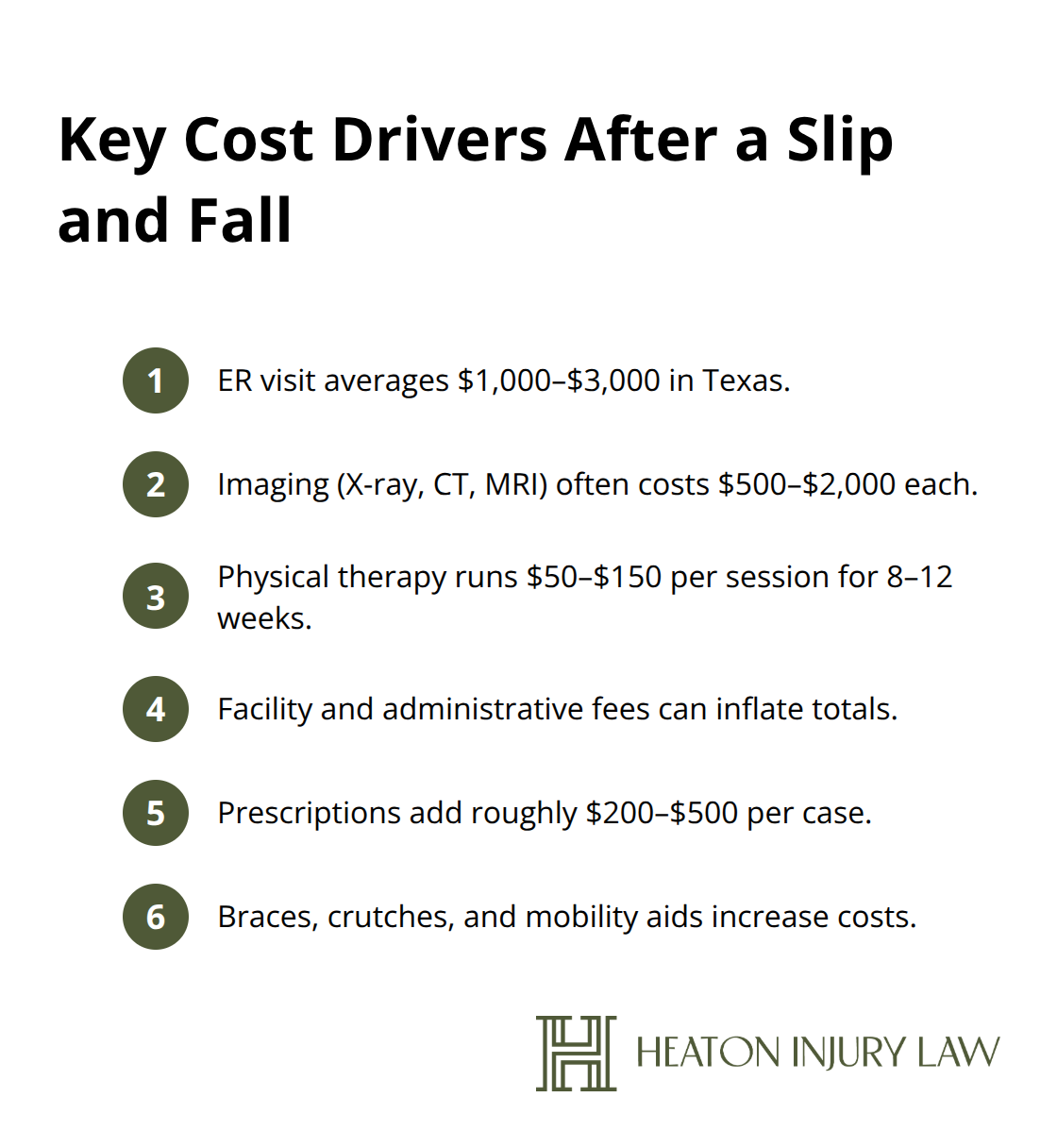
Prescription medications and durable medical equipment like braces, crutches, or mobility aids add costs that many people overlook when calculating damages.
Catching Billing Errors Before Settlement
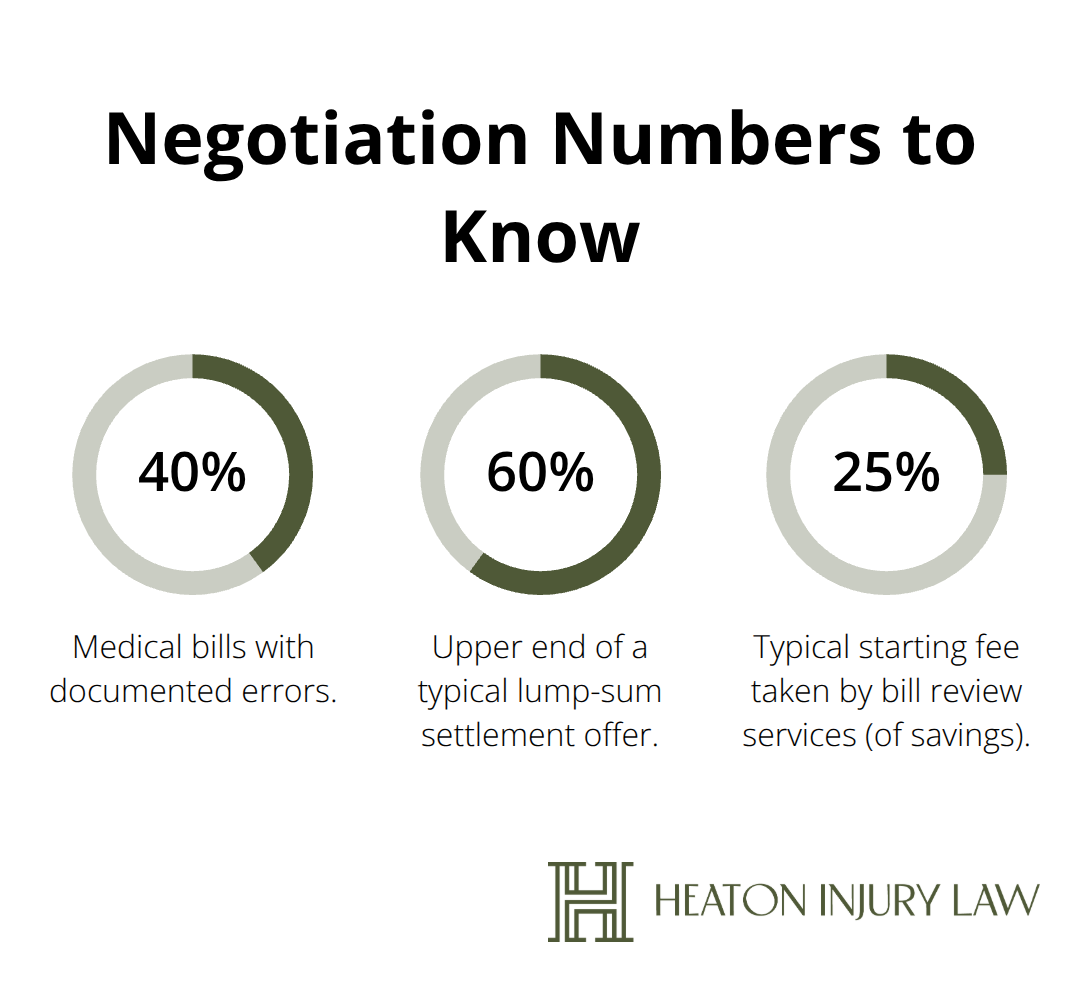
The critical part is that most of these charges contain errors. Studies show that up to 40 percent of medical bills contain billing mistakes, including duplicate charges, upcoding of services, and charges for procedures never performed. You must request itemized statements for every single date of service-this step is essential to catching overcharges before you settle your claim. When you receive an itemized bill, you’ll see specific CPT codes, the exact services provided, and the charges for each. Compare these charges to what your insurance company considers the allowed amount for that procedure in your area. Often you’ll find charges 50 to 100 percent higher than the standard rate. Documenting these discrepancies gives you leverage when negotiating with providers and strengthens your personal injury claim by showing the true value of your medical expenses. The next section walks you through the specific strategies for requesting those itemized statements and negotiating with healthcare providers to reduce what you owe.
How to Get Your Medical Bills Right
Request Itemized Statements From Every Provider
Contact the billing department at each hospital, clinic, and specialist office and ask explicitly for an itemized statement that shows the CPT code, description of service, date of service, quantity, and charge for each line item. Do not accept a summary bill or explanation of benefits from your insurance company-those documents hide the actual charges providers submitted. Most facilities will email or mail these within 5 to 10 business days.
The moment you receive them, open a spreadsheet and create a master document listing every charge, provider, date, CPT code, and amount. This single step catches roughly 40 percent of billing errors before you negotiate anything. Common mistakes include duplicate charges (the same service billed twice), upcoding (billing a more expensive procedure code than what was actually performed), and facility fees charged separately from physician fees for the same visit.
Identify Overcharges Using Insurance Benchmarks
Cross-reference each charge against the allowed amount your insurance company paid or would have paid for that service in your area. Insurance explanation of benefits documents show allowed amounts-use these as your benchmark for what a fair price looks like. If a provider charged $2,000 for an MRI and the allowed amount is $800, you have concrete evidence of overcharging.
Document every discrepancy in your spreadsheet and photograph or screenshot the original bills for your records. This documentation becomes your foundation for negotiation and strengthens any future claim by establishing the true value of your medical expenses.
Negotiate Directly With Billing Departments
Contact the billing department with a clear script. State the specific error, reference the CPT code and date of service, and provide the allowed amount as your reference point. For example: Provider X billed CPT code 70553 (MRI brain with contrast) on March 15 at $1,800, but the allowed amount in your area is $650. Request correction or adjustment.
Many providers will correct genuine errors immediately without argument. For legitimate charges that exceed fair market value, offer a lump-sum settlement of 40 to 60 percent of the billed amount if you have cash available, or propose an interest-free payment plan over 6 to 12 months. Providers often accept reduced payments rather than pursue collections, especially when you demonstrate knowledge of fair pricing.
Escalate When Providers Resist
If a provider refuses to negotiate, do not back down-escalate to the billing supervisor or patient advocate at the facility. Hospital patient advocates exist specifically to resolve billing disputes and have authority to approve adjustments. For out-of-network charges at in-network facilities, you have additional leverage under the No Surprises Act, which limits balance billing and requires providers to reprocess claims or reduce charges.
Medical bill review services exist, but you can handle this yourself first since you now have the tools and knowledge to negotiate directly. These services typically take 25 to 30 percent of the reduction they achieve, so a $10,000 reduction costs you $2,500 to $3,000 in fees. Negotiating yourself preserves that money for your net recovery. Once you’ve reduced your medical bills through these direct negotiations, the next step involves understanding how these documented expenses factor into your overall damage claim and what additional documentation strengthens your position when pursuing compensation from the responsible party.
How Your Medical Bills Become Part of Your Damage Claim
Connect Medical Expenses to Your Injury
Your documented medical expenses form the foundation of what you can recover from the party responsible for your slip and fall. Medical bills are economic damages, meaning they represent actual money you spent, and they carry more weight in settlement negotiations and court than subjective claims about pain. When you’ve already reduced your bills through negotiation, those lower amounts become your baseline for the claim. However, the property owner’s insurance company will scrutinize every charge to find reasons to dispute it, so you must connect each medical expense directly to the slip and fall incident and prove it was medically necessary.
Start with a letter from your primary care physician confirming that your injuries resulted from the fall on the specific date and location. This letter should also state which treatments were necessary to address those injuries. Without this documentation, insurers will argue that some charges relate to pre-existing conditions or unrelated medical issues. Next, create a timeline document showing the date of injury, each medical visit, the provider name, the service received, and the charge. This visual proof makes it harder for adjusters to dismiss your bills as inflated or unnecessary.
Build a Strong Documentation Record
Texas courts and insurers expect organized, detailed documentation, and having it prepared before settlement discussions begin gives you a significant advantage. Photograph or scan every medical bill, explanation of benefits statement, and receipt related to your injury. Store these documents in a single folder (digital and physical) with clear labels by date and provider. This organization demonstrates that you take your claim seriously and have invested time in substantiating your damages.
Include receipts for any out-of-pocket expenses beyond standard medical bills-transportation to appointments, medical equipment purchases, or home modifications needed due to your injury. These secondary costs often get overlooked but add legitimate value to your claim. Insurers respect claimants who present complete, organized evidence rather than scattered documents or rough estimates.
Understand How Insurance Complicates Recovery
Insurance coverage complicates recovery because multiple payers may be involved, and their priorities affect what you ultimately keep. Your health insurance typically pays first as the primary payer, which reduces what the at-fault party’s liability insurance must cover. However, many health plans include subrogation rights, meaning they can demand repayment from your settlement if you recover money from the responsible party. The same applies to government programs like Medicare or Medicaid if you’re enrolled.
Before you settle your claim, you must identify every entity with a lien or subrogation claim against your recovery. Request a subrogation demand letter from your health plan and contact your state’s Medicaid office if applicable. Calculate your net settlement by starting with the gross amount offered, subtracting your attorney fees and costs, then subtracting every lien and balance owed to healthcare providers.
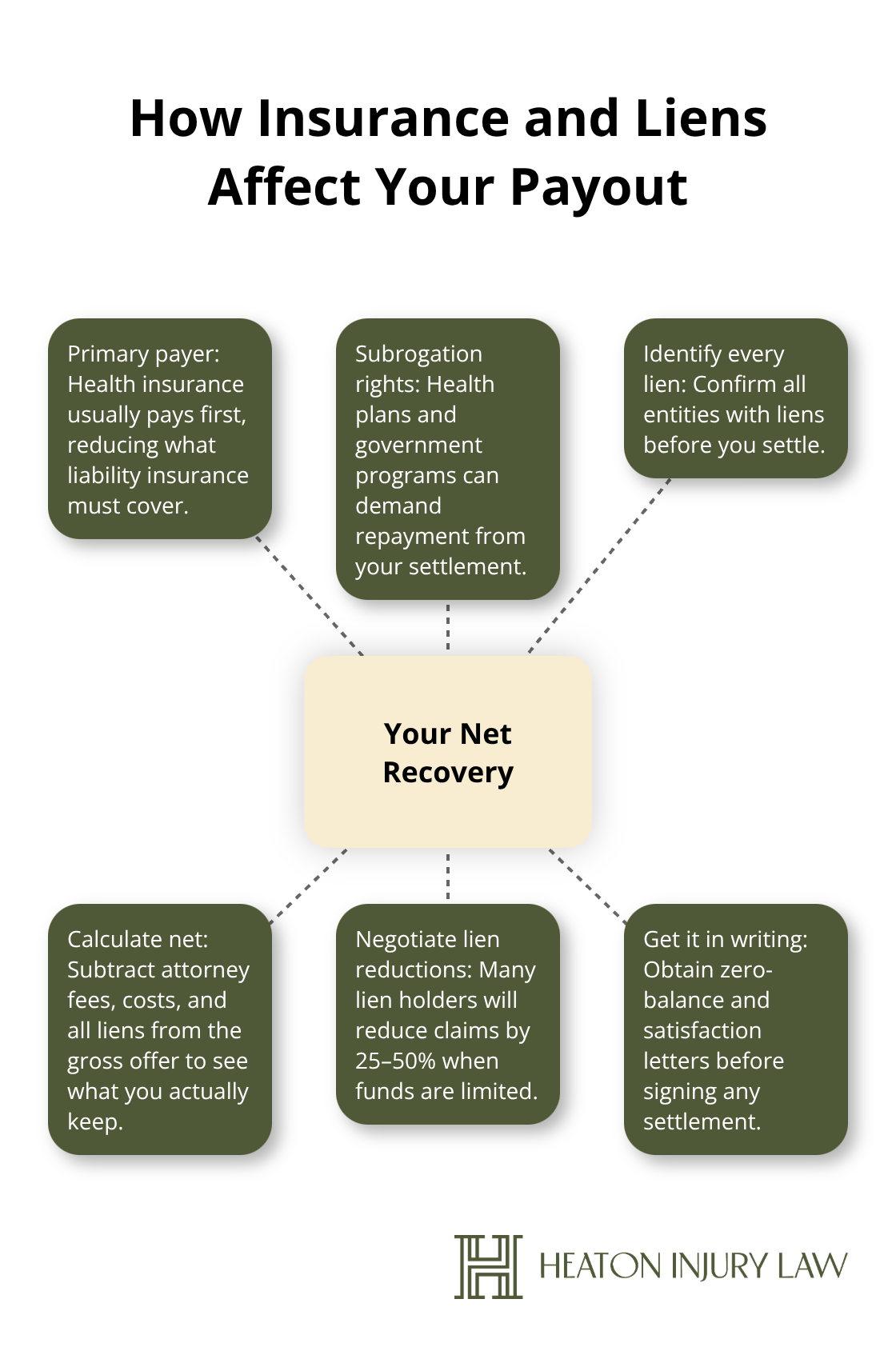
Many injured people accept settlement offers without understanding that liens will consume most of the money. For example, a $25,000 settlement minus a $5,000 attorney fee and a $12,000 health plan lien leaves only $8,000 for you, even though the gross number sounded substantial.
Negotiate Lien Reductions Before Settlement
Lien holders often accept reductions when you demonstrate that settlement funds are limited and that full repayment would leave you with inadequate compensation. Contact each lien holder with a written proposal showing your gross settlement, all deductions, and the remaining amount available. Many health plans and providers will reduce their claims by 25 to 50 percent rather than receive nothing if your case settles for less than expected.
Obtain written confirmation that liens are satisfied and zero-balance notices from providers before you sign any settlement agreement. These documents protect your credit and prevent surprise collection calls after your case closes. Document every negotiation in writing, including the original lien amount, the agreed reduction, and the final payoff amount. This paper trail prevents disputes months later when you’ve already distributed settlement funds.
Final Thoughts
Managing slip and fall medical bills requires you to organize your documentation, negotiate aggressively with providers, and understand how insurance and liens affect your final recovery. The steps outlined in this guide-requesting itemized statements, identifying overcharges, and negotiating reductions-can reduce your total medical costs by 25 to 50 percent before you settle your claim. This matters because every dollar you save on medical bills stays in your pocket rather than going to providers or lien holders.
Proper documentation separates successful claims from unsuccessful ones. When you maintain organized records, connect each charge to your injury, and demonstrate that you’ve already reduced inflated bills, insurers take your claim seriously and offer fair settlements. Without this documentation, adjusters will minimize your damages and argue that charges are excessive or unrelated to your fall.
Your slip and fall medical bills represent real economic losses, and you deserve full compensation for them. We at Heaton Injury Law, PLLC understand how overwhelming these expenses feel, and we’re here to help you navigate the process. Contact us for a free case review to discuss your specific situation and learn how we can help you recover the compensation you deserve.
The information provided in this blog is for general informational purposes only and does not constitute legal advice. Every case is unique, and laws may vary by jurisdiction. Reading this content does not create an attorney-client relationship. For guidance specific to your situation, please consult with a qualified personal injury attorney licensed in Texas.
Artificial intelligence may have been used to assist in generating some text or images in these articles.