

Meredythe | June 30, 2026 | Blog
A slip and fall accident can leave you injured, confused, and unsure about your legal options. If you’re considering a slip and fall lawsuit in Austin, understanding what happens in court makes a real difference.
We at Heaton Injury Law, PLLC help injured Austinites navigate these cases from start to finish. This guide walks you through liability, the legal process, and the compensation you may recover.
Liability and Negligence in Slip and Fall Cases
The Time-Notice Rule: The Core of Texas Slip and Fall Liability
In Texas slip-and-fall cases, liability hinges on one central question: did the property owner know or should they have known about the hazard that caused your fall? This is the time-notice rule established in Wal-Mart Stores, Inc. v. Reece, and it determines where most cases are won or lost. Property owners in Austin owe you a duty of care when you are lawfully on their premises as an invitee-a customer, tenant, or guest. That duty requires them to inspect the property regularly, identify hazards, and either fix them or warn you about them within a reasonable timeframe.
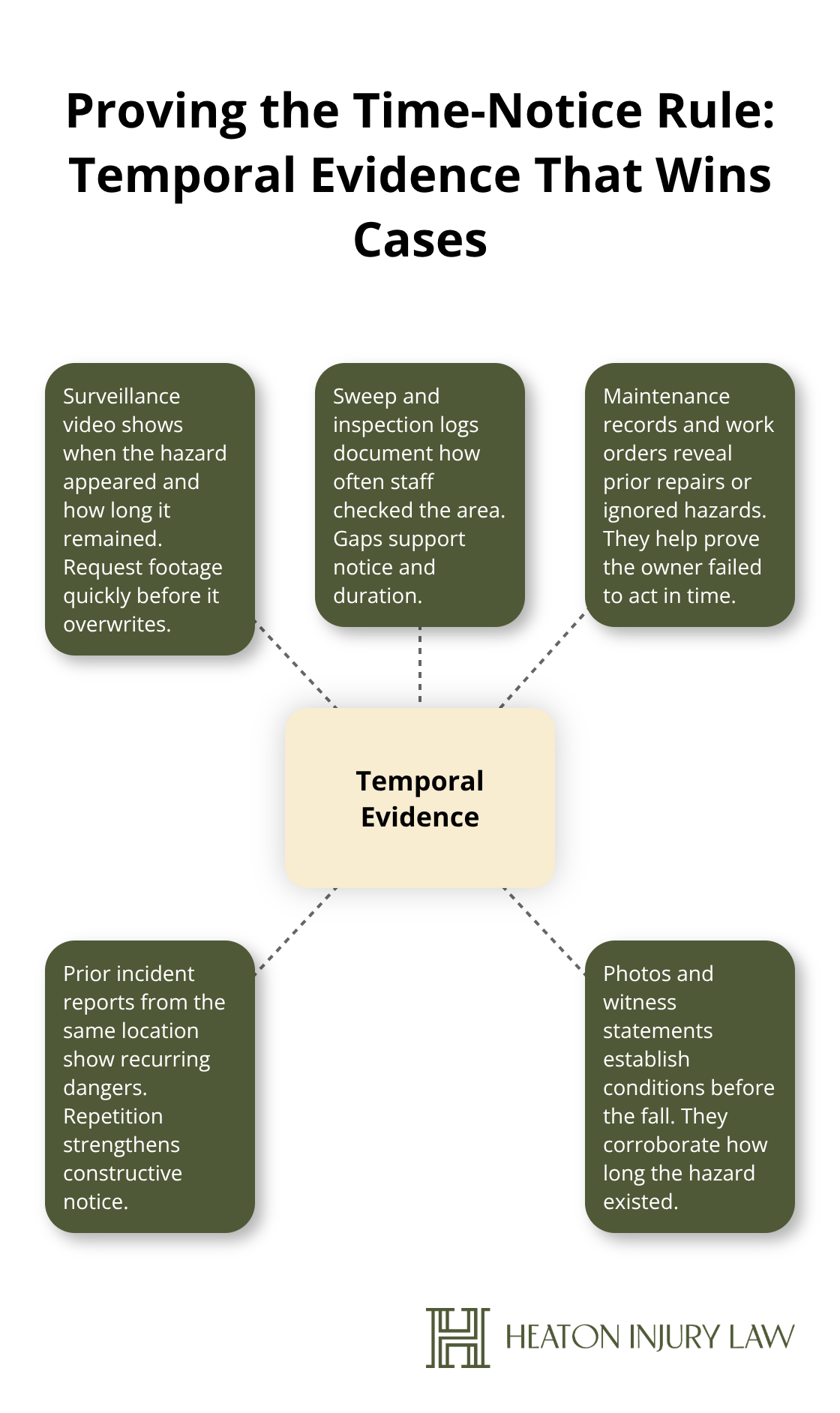
The critical part is temporal evidence. Proximity alone does not prove the owner knew about a spill, wet floor, or structural defect. You must show how long the hazard existed before you fell. A spill that happened five minutes before your fall is far harder to prove as negligence than one that sat for hours. Surveillance video, sweep logs, maintenance records, and incident reports from the same location become invaluable because they establish duration.
The Four Elements of Negligence
Negligence in slip-and-fall cases requires four elements: the owner owed you a duty of care, they breached that duty by failing to maintain the property safely or warn you of danger, that breach directly caused your fall, and you suffered damages. Each element must be proven in court through evidence and testimony. Without all four, your claim fails.
Property owners commonly defend themselves by claiming the hazard was open and obvious, you were distracted or comparatively negligent, or you had pre-existing conditions that caused the fall rather than their negligence. Texas courts have limited the open and obvious defense significantly-even visible hazards can trigger liability if the owner should have anticipated you would not avoid them or if warnings were inadequate.
Insurance Company Tactics and Defense Strategies
Do not underestimate the insurance company’s tactics. They pressure you toward quick settlements, request broad medical authorizations, and argue that your age, prior injuries, or activities at the time of the fall contributed to what happened. These strategies aim to minimize what they pay or eliminate liability altogether.
The strongest cases combine temporal evidence of how long the hazard existed with clear documentation of the property owner’s failure to act. Photos of the hazard, witness statements from people who saw conditions before you fell, medical records showing your injuries, and records proving the owner had notice of similar hazards at that location all strengthen your position substantially. This evidence transforms your claim from a he-said-she-said dispute into a factual record that supports your version of events.
Understanding these liability principles prepares you for what happens next in the legal process-the initial consultation where an attorney evaluates your case and begins gathering the evidence needed to prove negligence.
From Accident to Settlement: How Your Case Moves Through the Texas Court System
The Initial Consultation and Evidence Preservation
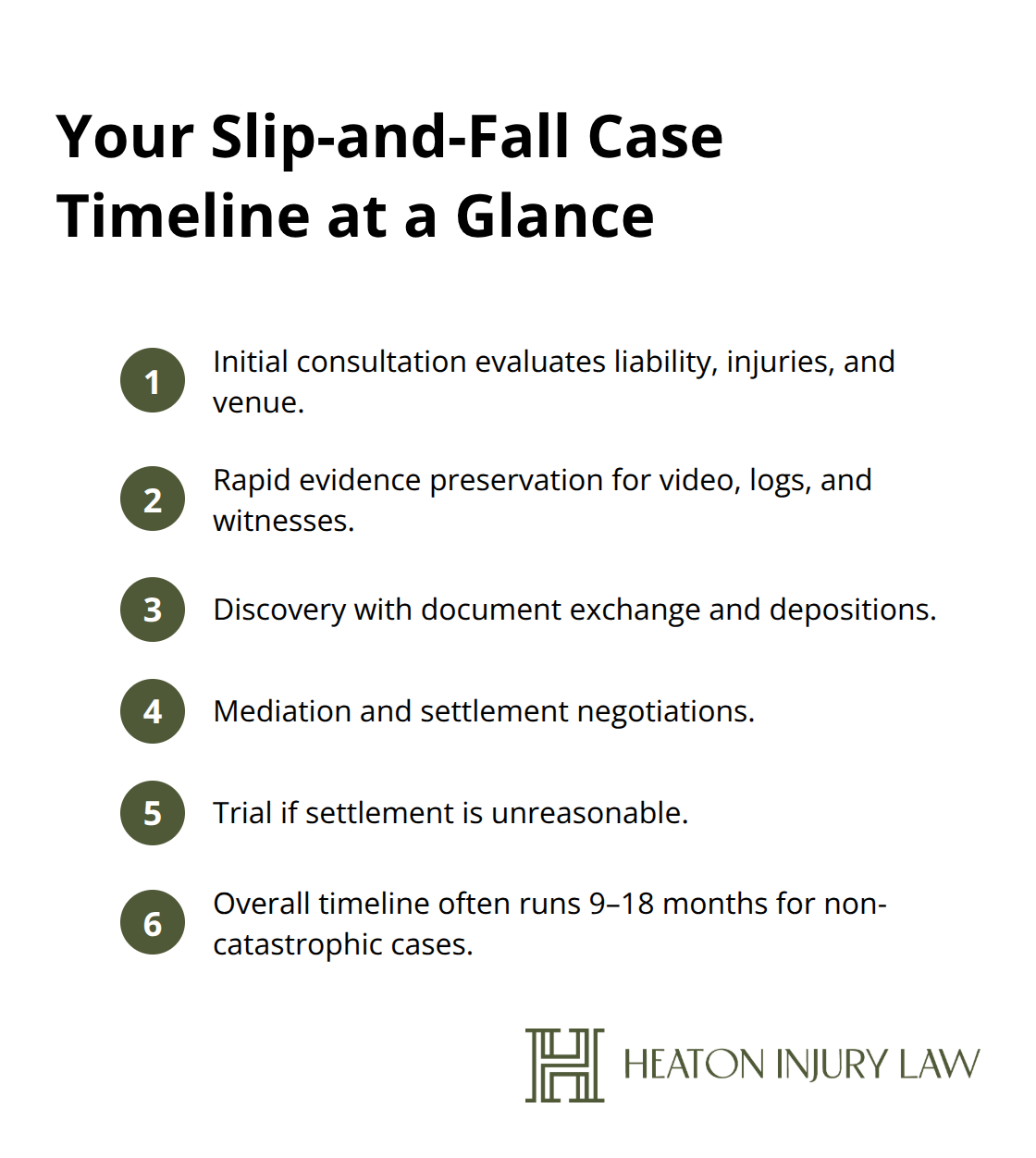
Your case begins the moment you contact an attorney. During the initial consultation, an experienced lawyer evaluates whether you have a viable claim by examining the hazard, your injuries, and the property owner’s maintenance history. This is where temporal evidence becomes the focus-the attorney investigates how long the hazard existed before your fall. They request surveillance footage immediately because it often overwrites within days, subpoena maintenance logs and sweep records to establish duration, and interview witnesses while memories remain fresh. This rapid preservation phase determines whether you have the strong factual foundation needed to overcome the time-notice rule. The consultation also covers your medical treatment, lost wages, and the scope of damages you may pursue. Most slip-and-fall attorneys work on contingency, meaning you pay nothing unless you win or settle, so the firm absorbs investigation costs upfront.
Discovery: Documents, Depositions, and Evidence Exchange
Discovery follows if settlement talks stall. Both sides exchange documents-maintenance records, incident reports, surveillance video, and witness statements-and conduct depositions where you and the property owner answer questions under oath. A deposition typically lasts a few hours, though complex cases extend longer. The opposing attorney asks about your background, the fall itself, your injuries, medical treatment, and how the accident affected your daily life and work. You should not volunteer information beyond what is asked. Stay factual, think before you respond, and if you do not remember something, say so rather than guess. Your attorney prepares you thoroughly and objects to improper questions to protect your rights. After your deposition, the other side may request an independent medical examination to challenge your injury claims. This phase typically takes six to eight months depending on case complexity.
Settlement Negotiations and Mediation
Settlement negotiations often intensify after depositions because both sides have tested the strength of their evidence and credibility. A mediator-a neutral third party-may facilitate discussions in a conference room where each side presents its case and makes settlement offers. About 97 percent of civil cases settle before trial according to the American Bar Association, so most slip-and-fall cases resolve during or shortly after discovery.

If the property owner’s insurer refuses a reasonable settlement, your attorney can pursue the case to trial, where a judge or jury decides liability and damages. The entire timeline from injury to settlement typically spans nine to eighteen months for non-catastrophic injuries, though complex cases with severe injuries take longer. Understanding this progression helps you prepare for what comes next-the damages you may recover and how courts calculate compensation for your losses.
Damages and Compensation You May Recover
Economic Damages: Quantifying Your Financial Losses
Economic damages in slip-and-fall cases represent your quantifiable losses and form the foundation of most settlements. Medical expenses typically include emergency room visits, hospital stays, surgery, physical therapy, prescription medications, and ongoing treatment for injuries sustained in the fall. In Austin, medical costs vary widely depending on injury severity, but documenting every expense matters because insurance companies scrutinize these claims closely. Preserve receipts, billing statements, and explanation-of-benefits documents from your healthcare providers.
Lost wages cover income you missed while recovering or attending medical appointments, calculated from your pay stubs and employer verification letters. If your injury prevents you from returning to your previous job, lost earning capacity becomes relevant-an economist can calculate the difference between what you earned before and what you can realistically earn going forward. For example, if a slip-and-fall injury prevents you from standing for extended periods and forces a career change with lower pay, that wage differential is recoverable. Keep detailed records of missed work days and communicate with your employer about your status to establish clear documentation.
Property damage, though less common in slip-and-fall cases, covers items destroyed or damaged during the fall. These quantifiable losses create a clear financial record that supports your claim for compensation.
Noneconomic Damages: Compensating Your Suffering
Noneconomic damages address the intangible suffering caused by your injury and often represent the largest portion of a settlement. Pain and suffering compensates for physical discomfort during recovery, mental anguish from the trauma of the accident, and loss of enjoyment of life if the injury permanently limits activities you previously enjoyed. Texas courts allow recovery for these damages, and juries often award substantial amounts when injuries are severe or permanent.
Disfigurement or disability also qualifies for compensation, particularly if visible scarring or functional limitations affect your quality of life. Loss of consortium covers the impact on your relationship with a spouse, such as lost intimacy or companionship. To strengthen noneconomic damage claims, document how the injury affected your daily activities-note pain levels, limitations on work or hobbies, emotional struggles, and changes to your social life.
Building Your Damages Case With Medical Evidence
Medical records and testimony from treating physicians about your ongoing pain and limitations carry significant weight in court. Insurance companies resist large noneconomic awards, but strong medical evidence and credible testimony about your suffering push settlements higher. Catastrophic injuries like hip fractures, traumatic brain injuries, or spinal cord damage commonly result in settlements or verdicts ranging from hundreds of thousands to millions of dollars because the lifelong impact justifies substantial awards. Minor injuries may resolve for tens of thousands depending on medical costs and lost wages.
Final Thoughts
A slip and fall lawsuit in Austin rests on three pillars: temporal evidence proving how long the hazard existed, documentation of the property owner’s failure to act, and clear proof of your injuries and damages as a result of the hazard. Surveillance footage, maintenance logs, witness statements, and medical records transform your case from a disputed account into a factual record that courts take seriously. The time-notice rule governs Texas slip-and-fall liability, and winning means showing the owner knew or should have known about the danger long enough to fix it or warn you.
Insurance companies challenge every element of your claim, so the strength of your evidence determines whether you settle fairly or face trial. Legal representation matters significantly in Austin slip-and-fall cases because an experienced attorney knows how to preserve evidence before it disappears, navigate Texas premises liability law, and counter the tactics insurers use to minimize payouts. We at Heaton Injury Law, PLLC understand how property owners and their insurers operate, and that knowledge shapes our strategy to maximize your recovery.
Your next step is straightforward: contact us for a free case evaluation. We assess whether you have a viable claim under the time-notice rule, identify what evidence needs immediate preservation, and explain what compensation you may recover for medical expenses, lost wages, and pain and suffering. Time matters in slip-and-fall cases because surveillance footage overwrites, witnesses move away, and the statute of limitations in Texas gives you two years to file.
The information provided in this blog is for general informational purposes only and does not constitute legal advice. Every case is unique, and laws may vary by jurisdiction. Reading this content does not create an attorney-client relationship. For guidance specific to your situation, please consult with a qualified personal injury attorney licensed in Texas.
Artificial intelligence may have been used to assist in generating some text or images in these articles.