

Meredythe | July 27, 2026 | Blog

A personal injury in Austin can turn your life upside down in seconds. Medical bills pile up, lost wages add stress, and you’re left wondering what comes next.
At Heaton Injury Law, PLLC, we’ve helped injured Austinites navigate this exact situation. This guide walks you through Austin injury planning-the concrete steps and strategies that actually maximize your recovery and protect your rights.
What to Do Immediately After Your Injury in Austin
Document Everything at the Scene
The first hours after a personal injury are critical. Your actions during this window directly impact your claim’s strength and your recovery trajectory. Start by documenting everything at the scene if you’re physically able. Take photos or video of the accident location, property damage, road conditions, traffic signals, and any visible injuries. Capture wide shots and close-ups. If witnesses are present, get their names, phone numbers, and email addresses before they leave.

Ask them to describe what they saw, and note their account in your phone or a notebook immediately.
File a Police Report
Police reports matter significantly in Austin injury cases. Call 911 for serious injuries or contact the Austin Police Department’s non-emergency line at 311 for property damage accidents. Request the report number and follow up within days to obtain a copy, as reports contain officer observations and sometimes witness statements that strengthen your position.
Seek Medical Treatment Without Delay
Medical treatment cannot wait. Visit an emergency room or urgent care clinic immediately after your injury, even if pain seems mild. Early imaging helps determine whether your injury is a fracture, tendinopathy, inflammatory condition, or other pathology, guiding treatment choice. Request copies of all medical records, imaging results, and provider notes at each visit. Keep receipts for all medical expenses, prescriptions, and transportation to appointments.
Track Your Lost Wages and Expenses
Document the dates you missed work and calculate hourly or salary amounts. Insurance companies scrutinize claims filed weeks or months after incidents, so acting quickly strengthens your credibility. Texas law gives you two years from the accident date to file a personal injury claim, but waiting erodes evidence and witness availability.
Contact an Attorney Promptly
Reach out to an experienced attorney soon after your injury to discuss your specific situation and next steps. Meredythe Heaton Wilkinson at Heaton Injury Law, PLLC brings 14+ years of litigation experience and insider knowledge of insurer tactics to handle car, motorcycle, truck, brain and catastrophic injuries, rideshare crashes, slip-and-fall, workplace injuries, and wrongful-death claims. We represent clients on a contingency-fee basis, meaning you pay nothing unless we recover compensation for you. Understanding your legal rights and insurance options comes next-knowledge that shapes how you approach negotiations and protections moving forward.
What Your Texas Insurance and Legal Rights Actually Cover
Know Your Policy Limits Before Filing a Claim
Your Texas insurance policy likely covers less than you think, and insurance companies count on this confusion. Most standard auto policies include liability coverage, which pays for injuries or property damage you cause to others, but your own medical bills fall under medical payments coverage or uninsured/underinsured motorist protection-both with strict limits. Check your declarations page now to find your policy limits, because knowing these numbers shapes your entire claim strategy. If another driver caused your injury, their liability insurance should cover your damages, but Texas insurers frequently deny or undervalue claims by arguing comparative negligence.
How Texas Negligence Laws Protect You
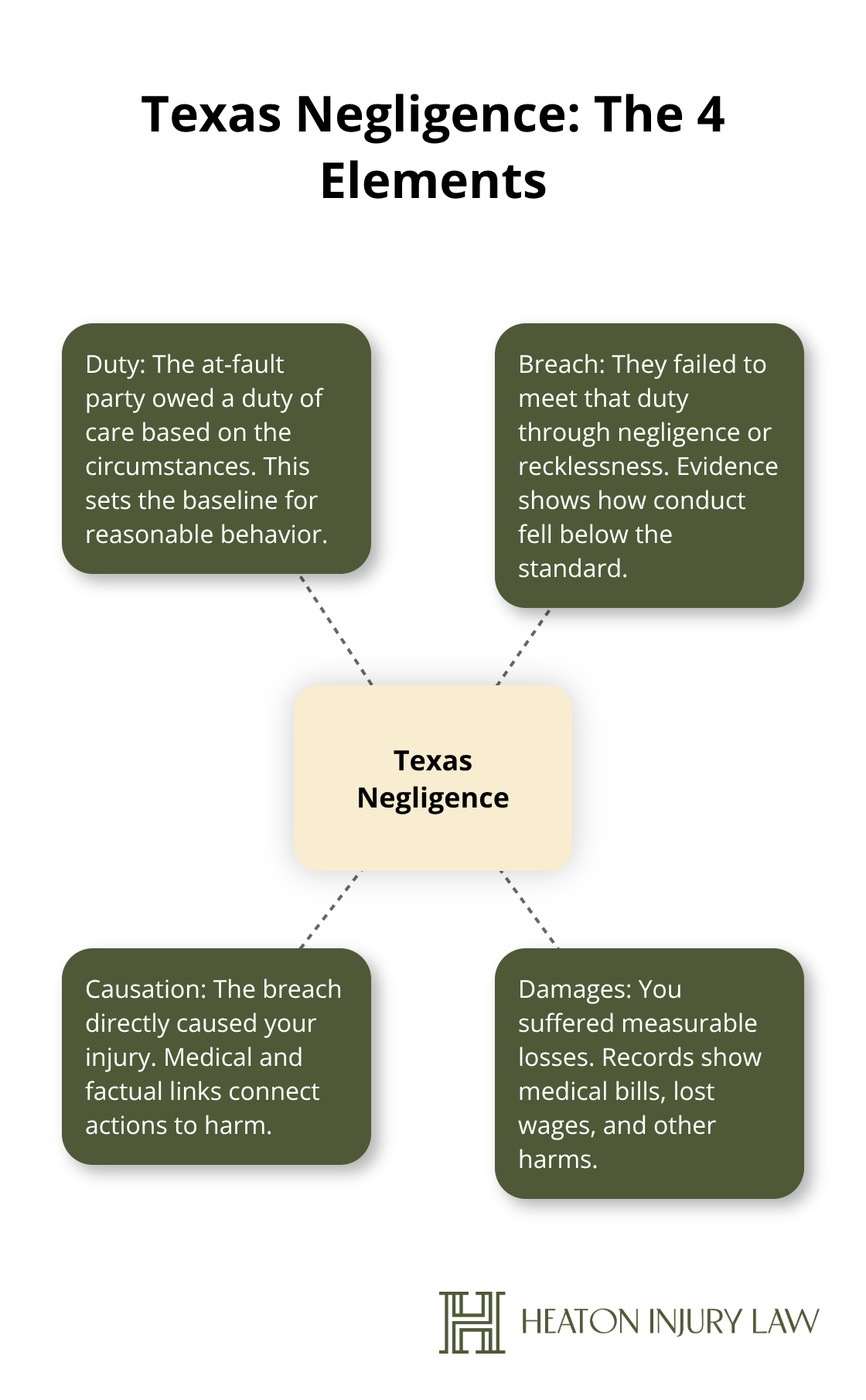
Texas law allows you to recover damages even if you’re partially at fault, as long as your fault doesn’t exceed 50 percent. If you are partly at fault, your damages are reduced by your percentage of fault, which means an insurer will aggressively push to inflate your responsibility. Negligence in Texas requires proving four elements: duty, breach, causation, and damages. The at-fault party owed you a duty of care, breached that duty through negligence or recklessness, their breach directly caused your injury, and you suffered measurable harm.
Document Everything to Protect Your Claim
Document everything meticulously because insurers scrutinize claims filed weeks or months after incidents, and any gap in your evidence becomes ammunition they use to minimize what they owe you. File promptly, gather all medical records and expense documentation immediately, and do not communicate directly with the other party’s insurance adjuster without legal guidance. Texas courts recognize economic damages including medical expenses (both past and future), lost wages from time off work, and property damage to your vehicle or motorcycle. Non-economic damages covering pain and suffering, emotional distress, and loss of enjoyment of life are not capped in most personal injury cases, meaning you can pursue the full extent of proven losses.
Act Within Texas’s Two-Year Filing Deadline
The statute of limitations for personal injury claims in Texas is two years from the accident date, but waiting even a few weeks allows evidence to fade and witnesses to become harder to locate. An experienced attorney strengthens your position significantly because they understand insurer tactics and know how to present evidence compelling enough for settlement or jury trial. Heaton Injury Law, PLLC represents clients on a contingency-fee basis, meaning you pay nothing unless we recover compensation for you, removing financial barriers to getting proper legal representation during your recovery. Building a strong injury claim requires organizing your medical records and treatment documentation systematically-the foundation that transforms your case from a disputed claim into a compelling demand for fair compensation.
Building Your Claim From the Ground Up
Organize Your Medical Records Systematically
Medical records form your strongest evidence, and disorganization destroys cases. Create a master folder immediately after your first medical visit and collect every receipt, bill, imaging report, provider note, and prescription documentation. Don’t wait months to gather these materials-insurance adjusters move fast, and scattered documentation signals weakness to them. Request records directly from each provider’s billing department; most Austin clinics provide copies within 5-10 business days. Organize chronologically by date, separating emergency room visits from follow-up appointments, physical therapy sessions, and specialist consultations. Label each document clearly and calculate cumulative medical expenses as you progress. This running total prevents underestimation when you calculate damages later.
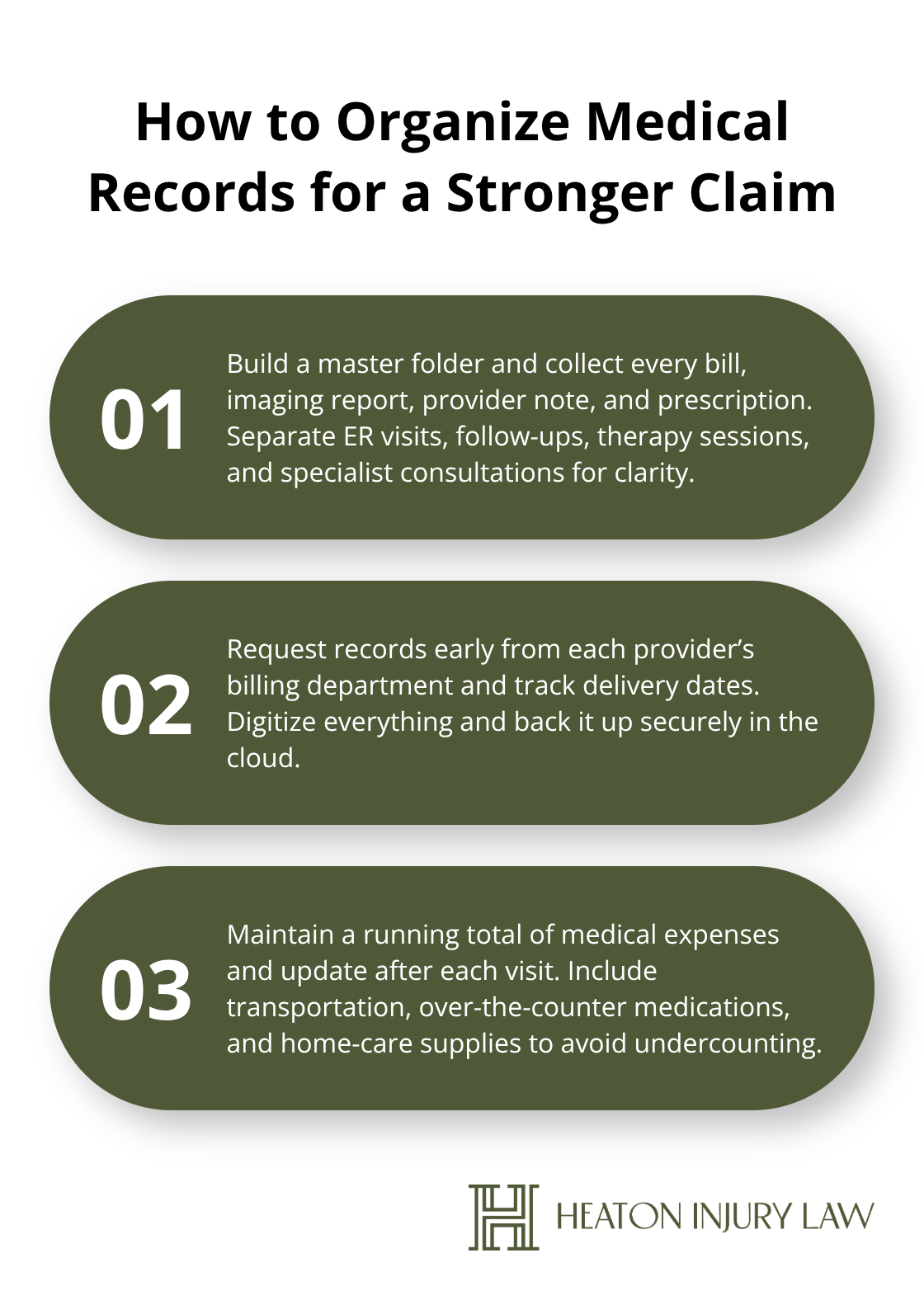
Include transportation costs to appointments, over-the-counter medications recommended by your doctor, and home care supplies like ice packs or compression wraps-these add up faster than most injured people realize. Photograph or scan everything, then store copies in cloud storage like Google Drive or Dropbox so weather, water damage, or theft doesn’t erase your evidence. Insurance companies exploit disorganized claimants by claiming missing documentation proves expenses never happened or were inflated.
Collect Witness Statements While Memories Remain Sharp
Witness statements carry enormous weight because they come from neutral parties without financial interest in your case. Collect contact information from every person who saw your injury occur-drivers, pedestrians, medical staff, coworkers-immediately while memories remain sharp. Ask each witness to write a brief account of what they observed: time, location, weather conditions, what they saw immediately before and after the incident, and your apparent condition. Email them a simple template asking for these specifics; most people comply when given clear direction. Save their written statements along with their phone numbers and email addresses in your master folder.
Calculate Lost Wages With Precision
Lost wages include all income lost during recovery: hourly wages, salary, self-employment earnings, bonuses, and commissions. Gather recent pay stubs, tax returns, and written confirmation from your employer stating your hourly rate and dates missed. For self-employed Austinites, provide bank statements and business income records showing your average monthly earnings before the injury. Future lost wages matter too-if your injury prevents you from returning to your previous job, document that loss with specificity. Insurance adjusters scrutinize wage calculations heavily, so accuracy strengthens your position considerably.
Account for All Medical Expenses, Present and Future
Medical expenses extend beyond current bills: include projected costs for ongoing physical therapy, future surgeries, prescription medications, assistive devices, and home modifications if your injury requires them. Texas courts recognize both past and future medical expenses as recoverable damages, so don’t limit yourself to what you’ve already paid. Calculate pain and suffering separately by multiplying your total medical expenses by a multiplier between 1.5 and 5, depending on injury severity and impact on daily life. An attorney reviews these calculations to verify you’re not underselling your claim, because accepting inadequate settlement offers happens when injured people underestimate their own damages.
Final Thoughts
Austin injury planning succeeds when you act decisively and organize systematically from day one. The steps outlined here-documenting evidence, seeking immediate medical care, understanding your legal rights, and building a comprehensive claim-form the foundation for maximizing your recovery. Texas law protects you even if you’re partially at fault, non-economic damages aren’t capped, and the two-year statute of limitations creates urgency for filing.
Professional legal representation matters because insurance companies exploit injured people who navigate claims alone. Adjusters use insider tactics designed to minimize payouts, and they count on claimants underestimating their damages or missing filing deadlines. An experienced attorney levels this playing field by understanding insurer strategies, presenting evidence persuasively, and negotiating from a position of strength.
Contact Heaton Injury Law, PLLC for a consultation to discuss your specific situation and move your claim forward. We represent clients on a contingency-fee basis, meaning you pay nothing unless we recover compensation for you. Reach out today to start protecting your rights.
The information provided in this blog is for general informational purposes only and does not constitute legal advice. Every case is unique, and laws may vary by jurisdiction. Reading this content does not create an attorney-client relationship. For guidance specific to your situation, please consult with a qualified personal injury attorney licensed in Texas.
Artificial intelligence may have been used to assist in generating some text or images in these articles.