

Meredythe | June 8, 2026 | Blog
A vehicle collision can turn your life upside down in seconds. Medical bills pile up, insurance companies push back, and you’re left wondering what happens next.
At Heaton Injury Law, PLLC, we help injured Austinites navigate the path forward after a crash. This guide walks you through the immediate steps you need to take, your legal rights in Texas, and how professional representation can strengthen your recovery.
What to Do Immediately After Your Collision
Act Fast to Preserve Evidence
The first hours after a vehicle collision determine how strong your recovery claim becomes. Most people freeze up, unsure of what matters and what doesn’t. This is exactly when critical evidence disappears and memories fade. The Texas Department of Insurance advises that if no one is injured, you should move vehicles out of the roadway to prevent further accidents. If anyone is hurt or the other driver fled the scene, call police immediately and request a police collision report for your claim. This report becomes foundational evidence in your case.
Document Everything at the Scene
While waiting for police, photograph the scene: the other vehicle, license plates, all vehicle damage, street signs, road conditions, and the angle of impact. These images provide objective records that insurance adjusters and courts rely on. Talk to anyone who witnessed the collision and write down their names and contact information along with the location, time, weather conditions, and exactly what happened. The Texas Department of Insurance emphasizes collecting the other driver’s insurance card and driver’s license, or if unavailable, their name, phone number, insurance company name, and policy number. Share your own information as well. This exchange prevents disputes later about who provided what details.
Seek Medical Care and Report the Accident
Medical attention cannot wait. Seek treatment immediately, even if you feel fine-some injuries like whiplash or internal bleeding emerge hours or days later. Keep all medical records and bills because they directly support your claim with your insurer and strengthen any legal action. After you get home, call your insurance company to report the accident and obtain the name and phone number of your assigned adjuster.
Handle Vehicle Repairs and Insurance Claims
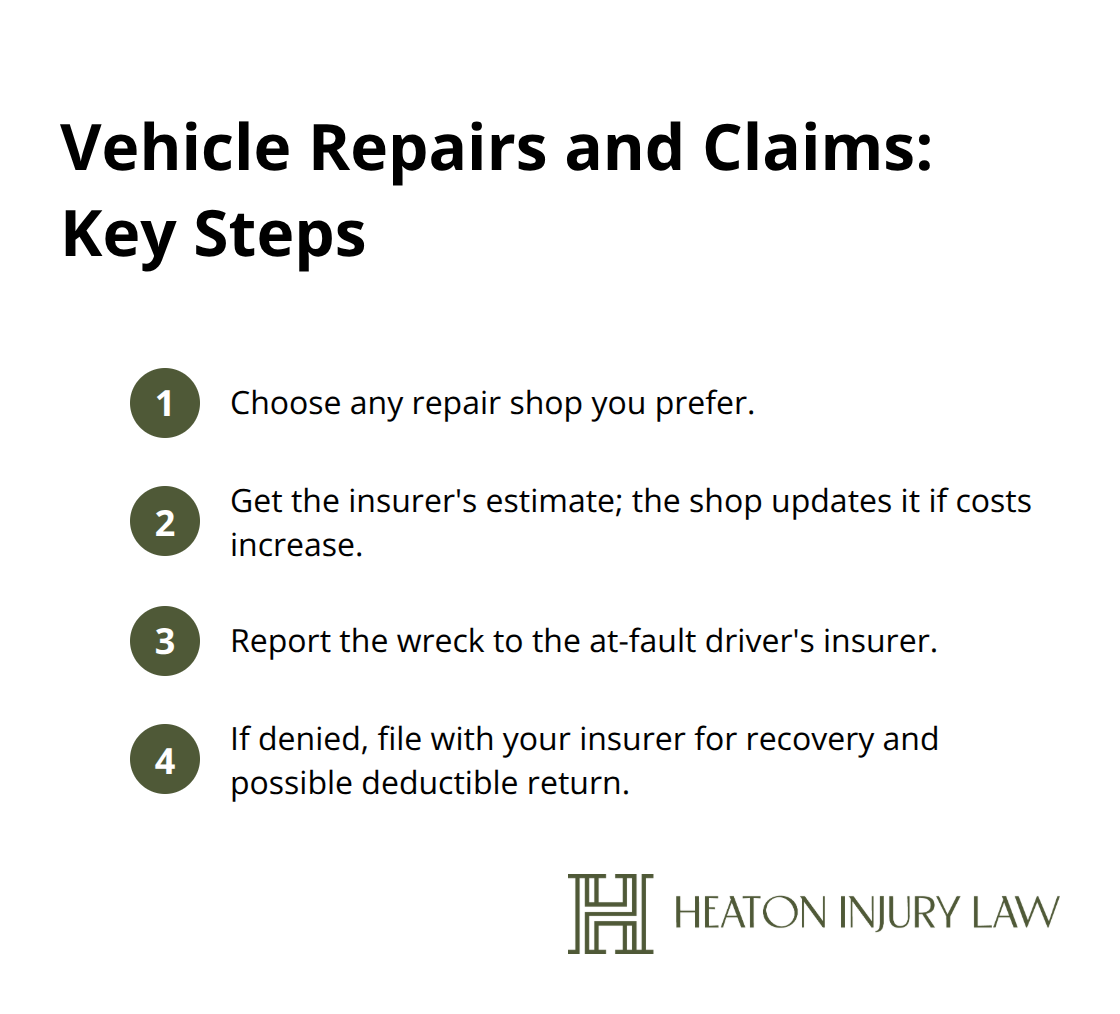
For vehicle repairs, you may have the freedom to choose any shop you want; your insurer may provide a list, but you are not necessarily required to use those shops. The insurer will provide a repair estimate, and if repairs cost more, the shop issues a new estimate that your insurer should cover if they agree with the additional work. If you believe the other driver caused the collision, report the wreck to their insurance company; their coverage should pay for your related repairs, medical bills, and rental car. If their insurer refuses full payment or denies your claim, file with your own insurance company, and your insurer will attempt recovery from the other driver’s insurer, returning your deductible if successful.
These early actions create the foundation for your claim. Understanding what happens next-how fault is determined and what damages you can recover under Texas law-shapes whether you settle through insurance or need legal action to protect your rights.
What You Can Actually Recover in Texas
Texas operates under an at-fault system, meaning the driver who caused the collision and their insurance pays for your damages. This fundamentally shapes your recovery strategy. Proving fault requires solid evidence-police reports, witness statements, and photos from the scene that you gathered immediately after the collision. Traffic camera footage, when available, provides an objective record that supports your position and makes insurance companies take your claim seriously.
How Texas Determines Who Pays
Texas uses modified comparative negligence with a 51 percent threshold. If you’re found 51 percent or more at fault, you cannot recover anything. If you’re 50 percent or less at fault, you can recover damages reduced by your percentage of fault. For example, if you’re 20 percent at fault and total damages equal $10,000, you recover $8,000.
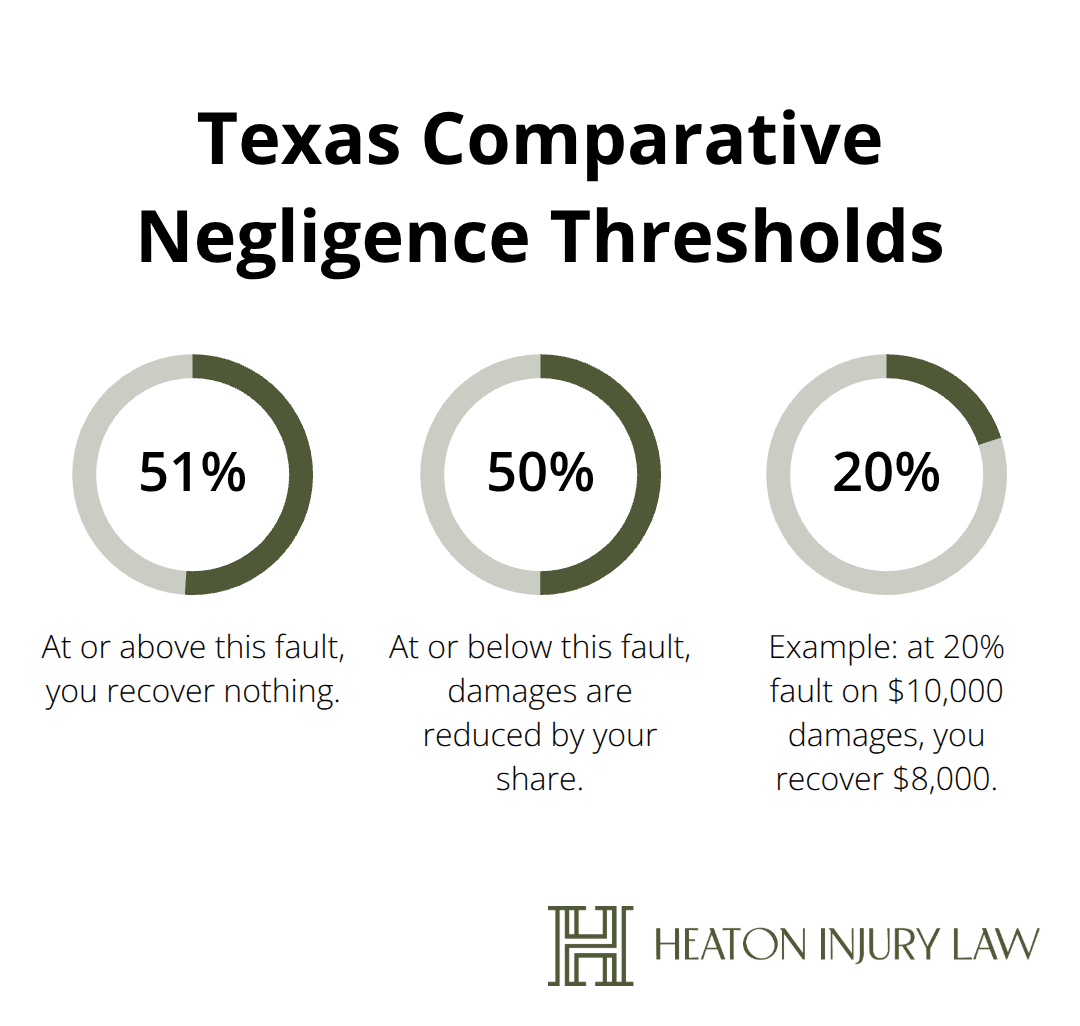
This means even partial fault significantly reduces what you receive, so challenging the other driver’s version of events becomes essential. Insurance adjusters often inflate your fault percentage to minimize their payout, which is why having an attorney matters-we know how insurers manipulate fault assignments and we push back hard on inflated percentages.
What Damages Actually Cover
You can recover medical expenses, lost wages, pain and suffering, and other related damages. Medical expenses include emergency room visits, surgeries, physical therapy, prescription medications, and ongoing treatment for injuries that emerge months after the collision. Lost wages cover income you missed during recovery and reduced earning capacity if your injury prevents you from returning to your previous job. Pain and suffering compensates for physical pain, emotional distress, and reduced quality of life. Keep meticulous records of all medical bills and pay stubs showing lost income because insurance companies scrutinize these numbers and challenge anything they consider excessive.
Insurance Coverage That Protects You
Your own auto policy provides multiple layers of protection beyond the at-fault driver’s liability coverage. Personal Injury Protection covers medical expenses and lost wages for you and your passengers up to policy limits, regardless of who caused the crash. Medical Payments coverage is optional but typically covers medical expenses regardless of fault. Uninsured and Underinsured Motorist coverage protects you if the other driver has no insurance or insufficient coverage and can cover bodily injuries and, depending on your policy, property damage. Texas minimum liability limits are relatively low (at $30,000 per person and $60,000 per accident for bodily injury), so many at-fault drivers carry insufficient coverage to fully compensate your injuries. This is where your UM/UIM coverage becomes invaluable.
When Insurance Refuses Fair Compensation
If the at-fault driver’s insurance refuses fair compensation or the damages exceed their liability limits, you have the right to pursue a personal injury claim. The statute of limitations for Texas car accident claims is two years from the crash date, which sounds like plenty of time but disappears quickly once medical treatment begins and negotiations stall. If insurance companies refuse to settle fairly, filing a lawsuit protects your rights and maximizes what you recover. Understanding these layers of coverage and your legal options sets the stage for the next critical decision: whether professional representation strengthens your position and accelerates your path to fair compensation.
Building Your Case with Professional Representation
How Insurance Companies Operate Against You
Insurance companies employ trained adjusters and defense attorneys whose job is to minimize payouts. They count on injured people settling quickly for far less than their claims are worth. Meredythe Heaton Wilkinson, who leads our firm, spent 14+ years on both sides of litigation-this insider knowledge reveals exactly how insurers manipulate fault assignments, undervalue medical injuries, and pressure claimants into accepting inadequate settlements. An attorney immediately levels the playing field because adjusters change their tone the moment legal representation enters the picture. They stop treating your claim as a routine file and start preparing for potential litigation, which forces them to take damage valuations seriously.
What a Thorough Investigation Uncovers
Our investigation process goes far beyond what you can gather alone. In certain cases, we may obtain traffic camera footage from nearby intersections and businesses, subpoena phone records to establish distraction or impairment, and retain accident reconstruction experts when liability is disputed. We also pull maintenance records from the city to show if road defects contributed to the collision.
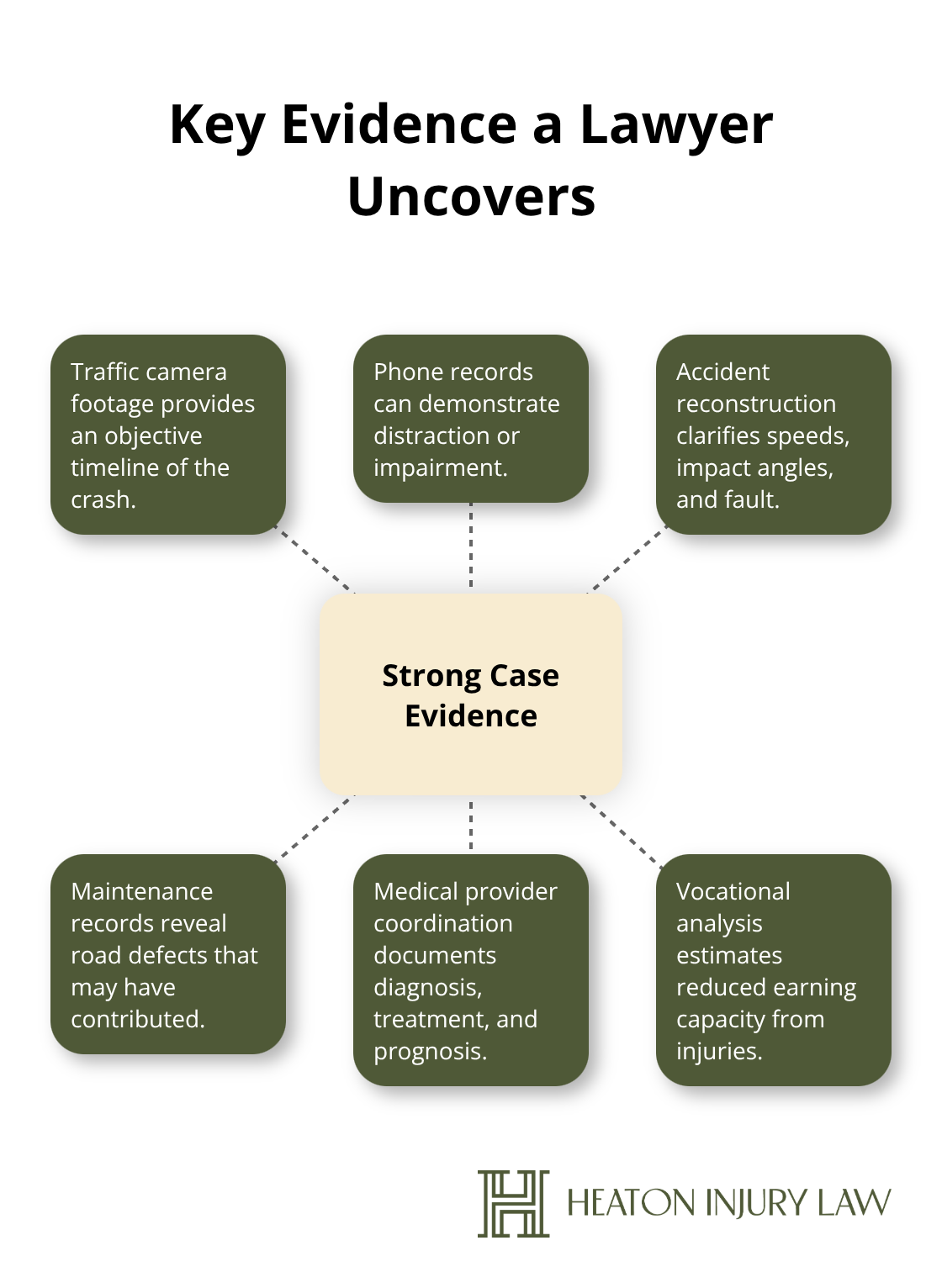
Coordination with your medical providers yields detailed treatment records, and work with vocational experts calculates lost earning capacity if your injury prevents return to your previous job. This comprehensive evidence transforms a simple claim into a documented case that insurance companies cannot dismiss.
Settlement Negotiations Backed by Evidence
Settlement negotiations happen on a completely different level when we present an organized damage report showing exact medical expenses, lost wages with supporting pay stubs, and documented pain and suffering supported by medical records. Insurers know that if they refuse reasonable settlement offers, we will file a lawsuit and prepare for trial. This credible threat of litigation motivates them to settle fairly rather than risk a jury verdict that exceeds their settlement authority. The contingency-fee arrangement means we only recover if you recover, so our financial interests align perfectly with maximizing your compensation rather than rushing to close your file.
Final Thoughts
Your recovery after a vehicle collision depends on three decisions made in the days and weeks following the crash. First, the evidence you gather immediately shapes whether you can prove fault and hold the at-fault driver accountable. Second, understanding Texas law-the at-fault system, comparative negligence rules, and your insurance coverage options-prevents you from accepting inadequate settlements. Third, deciding whether to pursue your claim alone or with professional representation determines whether you recover what your injuries actually cost.
Insurance companies employ trained adjusters whose job is to minimize payouts, and they count on injured people settling quickly for far less than their claims are worth. An Austin vehicle collision attorney levels the playing field because adjusters change their approach the moment legal counsel enters the picture. A thorough investigation uncovers traffic camera footage, phone records, accident reconstruction analysis, and maintenance records that transform your claim into documented evidence insurers cannot dismiss.
We at Heaton Injury Law, PLLC understand how insurers operate because we’ve worked on both sides of litigation. Our contingency-fee arrangement means we only recover if you recover, so our financial interests align perfectly with maximizing your compensation. If you’ve been injured in a vehicle collision, contact us today to discuss your case and learn how we can help you recover what you deserve.
The information provided in this blog is for general informational purposes only and does not constitute legal advice. Every case is unique, and laws may vary by jurisdiction. Reading this content does not create an attorney-client relationship. For guidance specific to your situation, please consult with a qualified personal injury attorney licensed in Texas.
Artificial intelligence may have been used to assist in generating some text or images in these articles.