
Meredythe | October 26, 2026 | Blog
A slip on a wet floor. A fall from a broken staircase. An injury from inadequate security at an apartment complex. These incidents happen across Austin every day, and property owners bear responsibility for keeping their spaces safe.
At Heaton Injury Law, PLLC, we help injured Austinites understand premises liability claims and fight for the compensation they deserve. If you’ve been hurt on someone else’s property due to negligence, this guide walks you through your rights and the steps needed to build a strong case.
What Texas Property Owners Actually Owe You
The Legal Duties Property Owners Must Meet
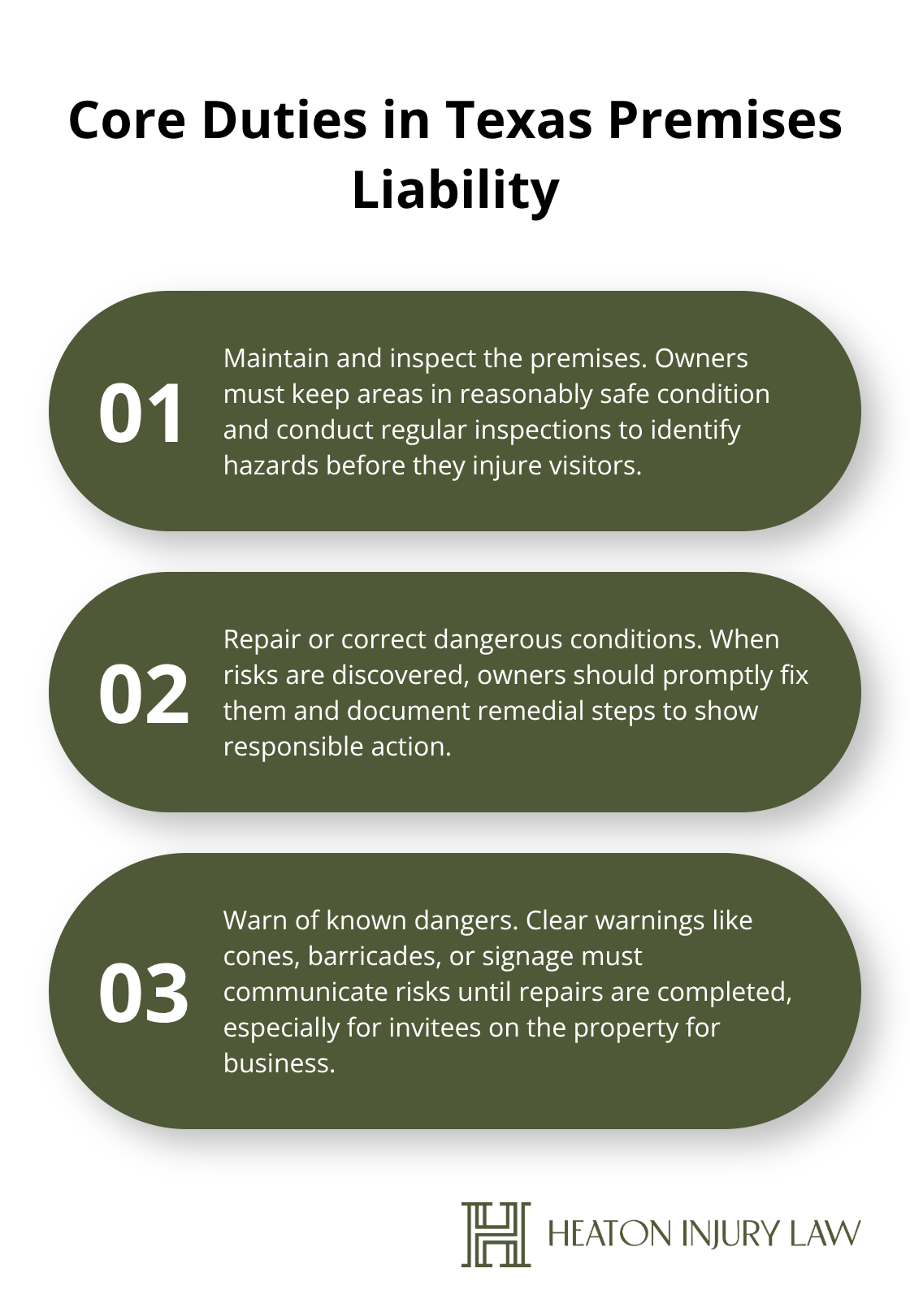
Texas law imposes specific duties on property owners, and understanding these responsibilities matters to building your case. Property owners must maintain their premises in reasonably safe condition and warn visitors of known dangers. The Texas Property Code and common law establish that owners have a duty to inspect their property for hazards, repair dangerous conditions, and communicate risks to people on their land.
This duty applies differently depending on your status as an invitee, licensee, or trespasser, but most injury victims fall into the invitee category-someone invited onto the property for business purposes. The strength of your claim depends heavily on proving the property owner failed in these specific duties.
What “Reasonable Safety” Actually Means
Texas courts recognize that owners cannot guarantee absolute safety, but they must act reasonably to prevent foreseeable harm. If a property owner ignores obvious dangers, fails to repair known hazards, or skips routine maintenance, they’ve breached their duty to you.
Slip-and-fall accidents on wet floors without warning signs, injuries from broken railings, inadequate lighting in parking lots, and negligent security measures all represent clear breaches. The National Floor Safety Institute reports that slip-and-fall accidents account for over 8 million emergency room visits annually, and many involve property owner negligence. Broken stairs, unsecured merchandise, animal bites on poorly maintained properties, and injuries from criminal activity due to insufficient security all establish premises liability.
Proving the Owner Knew About the Hazard
What separates a legitimate claim from a rejected one is proving the owner knew or reasonably should have known about the hazard. Texas courts examine whether a reasonable property manager would have discovered the danger through regular inspections.
If a spill sat on a restaurant floor for hours without cleanup, the owner should have known. If maintenance records show ignored repair requests for a broken handrail, negligence is evident. This standard applies across Austin’s commercial properties, apartment complexes, and retail establishments.
How Your Own Actions Affect Your Claim
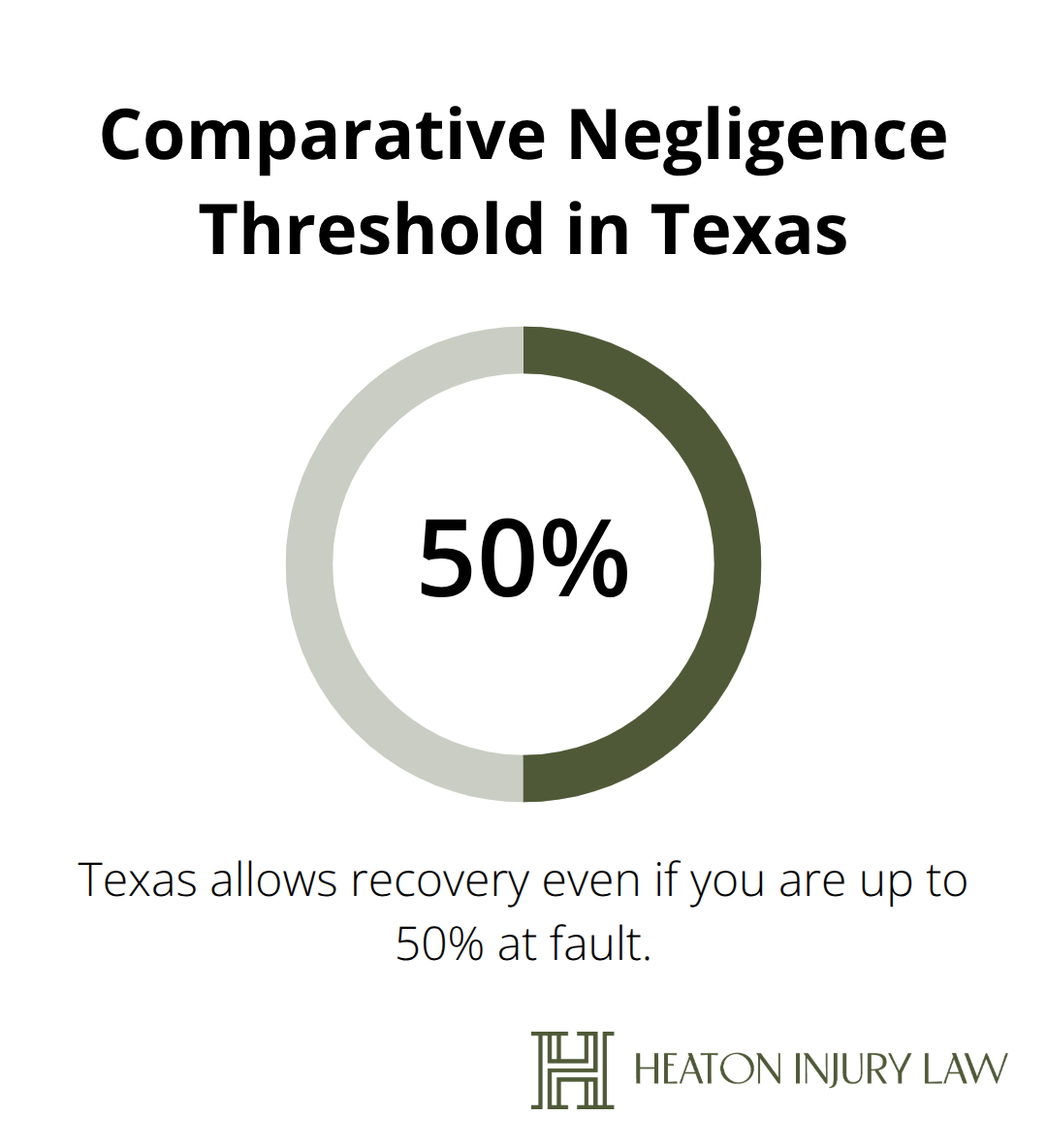
Comparative negligence in Texas means your own actions matter-if you were partially at fault, your recovery gets reduced proportionally. However, this doesn’t eliminate your claim; Texas allows recovery even if you’re up to 50 percent responsible.
Understanding these standards helps you evaluate your situation realistically and gather evidence that demonstrates the property owner’s breach. Once you know what the owner owed you and how they failed, the next step involves collecting the right documentation to prove your case.
Where Premises Liability Claims Happen in Austin
Slip-and-Fall Accidents in Commercial Spaces
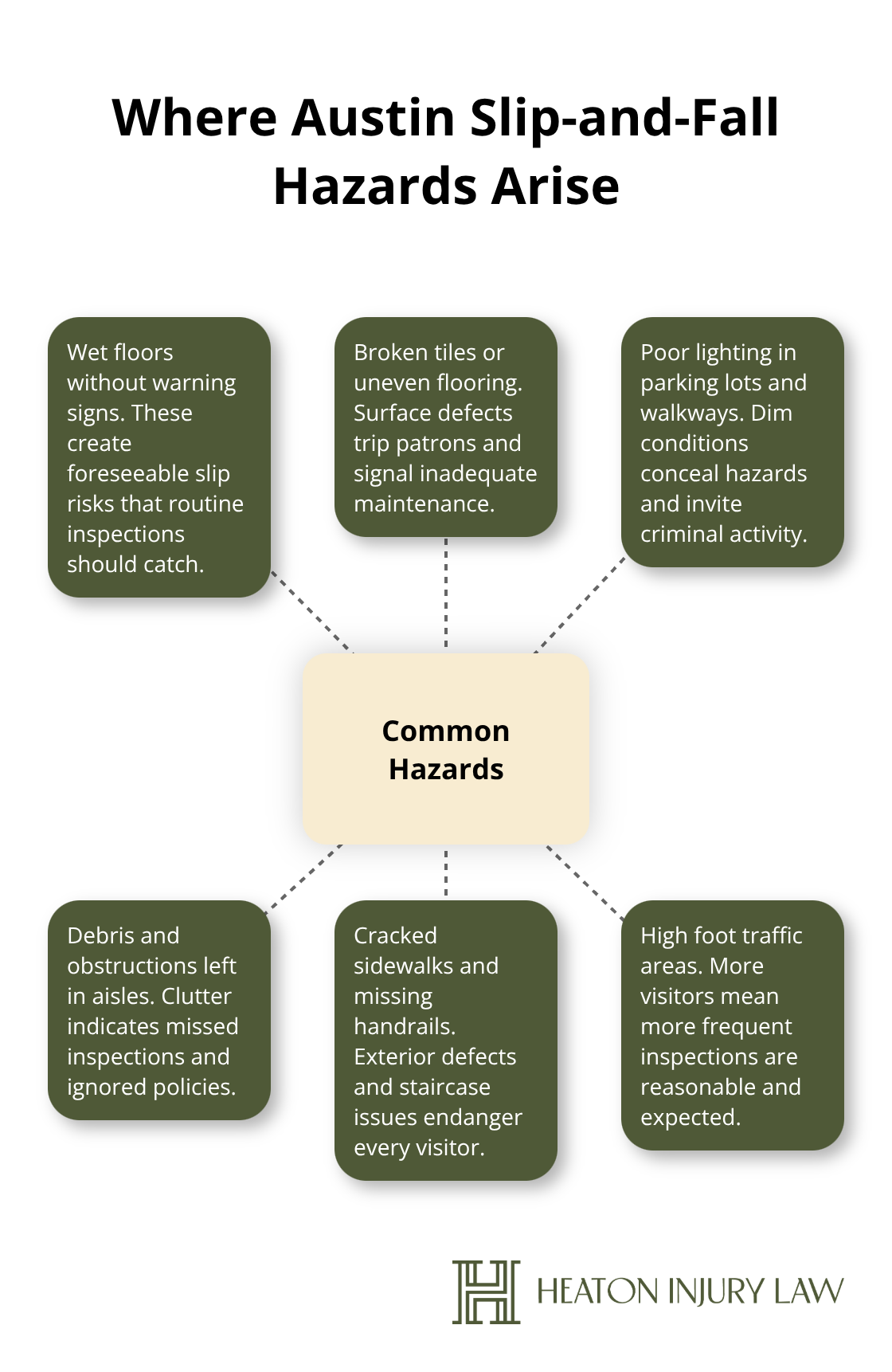
Slip-and-fall accidents dominate premises liability claims across Austin’s commercial landscape. The National Safety Council reports that falls cost the U.S. economy over 50 billion dollars annually in direct and indirect expenses, and Texas sees its share of these preventable injuries. Wet floors without warning signs, broken tiles, debris left unattended, and poor lighting in retail stores and office buildings create obvious hazards that property owners fail to address. Austin’s busy shopping districts, restaurants along South Congress, and downtown office complexes generate constant foot traffic, which means constant opportunities for negligence.
A spill in a grocery store aisle that sits for thirty minutes while customers walk past it represents a clear failure. A cracked sidewalk outside a restaurant that management ignores for weeks endangers every visitor. Stairs with missing handrails in older Austin apartment buildings pose serious risks that owners cannot justify. The critical detail here is timing-courts examine whether the property owner had reasonable opportunity to discover and fix the hazard. If a business conducts hourly floor checks, a wet spot should be caught quickly. If maintenance records show zero inspections, negligence becomes undeniable.
Security Failures and Deferred Maintenance
Security failures and deferred maintenance create the second major category of Austin premises liability claims. Inadequate lighting in parking lots, broken locks on apartment complex doors, missing security cameras, and understaffed security personnel directly enable criminal activity that injures residents and visitors. Texas courts recognize that property owners must take reasonable steps to prevent foreseeable criminal conduct on their premises, particularly in high-crime areas.
An apartment complex in East Austin with a history of break-ins but no security upgrades faces serious liability if a tenant suffers assault. A parking garage downtown without functional lighting where muggings have occurred previously cannot claim surprise when someone is robbed. Negligent maintenance extends beyond security to structural failures-broken handrails, faulty elevators, unsecured merchandise displays that topple onto customers, and deteriorating building conditions all demonstrate owner negligence.
The Cost of Postponed Repairs
Austin’s rental market includes numerous older properties where landlords postpone necessary repairs to save money, directly endangering tenants. Restaurant kitchens with grease buildup create slip hazards. Retail stockrooms with improperly stacked items pose falling-object risks. Apartment complexes with exposed electrical hazards threaten resident safety. Property owners know repairs cost money, but ignoring hazards costs them far more when injuries occur and claims are filed.
Documentation proves negligence when records show the owner knew about the danger. Maintenance logs that reveal ignored repair requests, photographs of deteriorating conditions, and witness statements about long-standing hazards all establish liability. This evidence transforms a premises liability claim from questionable to compelling, which is why the next step involves collecting the right documentation to prove your case.
Building Your Premises Liability Case
Collect Evidence Immediately After Your Injury
The evidence you collect in the first 48 hours after your injury determines whether your claim succeeds or fails. Photograph the exact hazard that caused your injury from multiple angles, capture the surrounding area to show the property’s overall condition, and document any warning signs that were missing. If you slipped on a wet floor, photograph the floor itself, the absence of caution signs, and the lighting conditions. If you fell from a broken staircase, take close-up shots of the damage and wide shots showing the staircase’s location within the building.
Preserve your clothing from the incident, as it may show debris or damage patterns. Write down everything you remember while details remain fresh: the time of day, weather conditions, how many people witnessed the incident, and exactly what happened. Contact the property owner or manager immediately and request a copy of any incident report they file, which becomes critical evidence of their acknowledgment of the hazard.
Request Maintenance Records and Documentation
Texas courts examine maintenance records, inspection logs, and repair requests to determine whether the property owner knew or should have known about the danger. Request these documents through your attorney, as property owners often resist disclosure. If maintenance workers had reported the broken staircase weeks earlier and the owner ignored it, that documentation proves negligence.
Witness statements carry tremendous weight, so obtain contact information from anyone who saw the incident or the hazard before your injury occurred. Security camera footage from the property may show how long the hazard existed before you were injured, which directly contradicts claims that the danger was newly created. If the property had previous injuries from the same hazard, those incidents establish that the owner should have anticipated the risk.
Understand How Your Actions Affect Your Claim
Texas comparative negligence law means your own actions matter, but most courts recognize that property owners bear primary responsibility for maintaining safe premises. If you were distracted by your phone when you fell, that reduces your recovery percentage, but it does not eliminate your claim entirely. Texas allows recovery even when you are up to 50 percent at fault, so a moment of inattention does not automatically defeat your case.
The owner’s failure to maintain basic safety standards typically outweighs minor negligence on your part. Document any pre-existing conditions at the property that worsened your injury, as this strengthens your damage claim. Medical records linking your injury directly to the premises hazard, physical therapy notes, and expert testimony about how the injury occurred all construct a compelling narrative that a jury understands.
Strengthen Your Damage Claim With Medical Evidence
Medical documentation transforms your case from a simple accident into a provable injury with measurable consequences. Obtain detailed medical records that establish the direct connection between the premises hazard and your specific injuries. Physical therapy notes, surgical reports, and ongoing treatment records all demonstrate the severity and duration of your recovery.
Expert testimony about how the injury occurred adds credibility to your account. An engineer can explain why a broken staircase caused your fall, or a safety expert can testify about industry standards for floor maintenance. These professionals help juries understand the mechanics of your injury and the property owner’s failure to prevent it.
Final Thoughts
After an injury on someone else’s property, your immediate actions determine whether you recover fair compensation. You must photograph the hazard, document witness information, and preserve evidence before details fade. Your attorney requests maintenance records and incident reports from the property owner, and medical records linking your injury directly to the premises hazard strengthen your damage claim significantly. Comparative negligence in Texas won’t eliminate your case even if you bear partial responsibility, so a moment of inattention does not defeat your claim entirely.
Property owners and their insurers use tactics designed to minimize payouts-they’ll argue the hazard was obvious, that you should have noticed it, or that maintenance records don’t exist. An experienced attorney understands these defense strategies and counters them with solid evidence. Premises liability Austin Texas cases require proving the owner knew or should have known about the danger, that they failed to fix it, and that this failure caused your injury. Your attorney handles negotiations with insurance companies, manages deadlines, and prepares your case for trial if settlement negotiations fail.
We at Heaton Injury Law, PLLC work on contingency, meaning you pay nothing unless we recover compensation for you. Contact Heaton Injury Law, PLLC to discuss your premises liability case and learn what fair compensation looks like for your specific injuries and circumstances.
The information provided in this blog is for general informational purposes only and does not constitute legal advice. Every case is unique, and laws may vary by jurisdiction. Reading this content does not create an attorney-client relationship. For guidance specific to your situation, please consult with a qualified personal injury attorney licensed in Texas.
Artificial intelligence may have been used to assist in generating some text or images in these articles.