

Meredythe | November 4, 2026 | Blog

A personal injury can turn your life upside down in seconds. Medical bills pile up, work becomes impossible, and you’re left wondering what happens next.
At Heaton Injury Law, PLLC, we help injured Texans navigate Central Texas personal injury claims and recover what they’re owed. This guide walks you through your rights, the claims process, and the practical steps to move forward.
What Personal Injury Claims Are Most Common in Central Texas
Car Accidents Cause Severe Injuries Across Central Texas
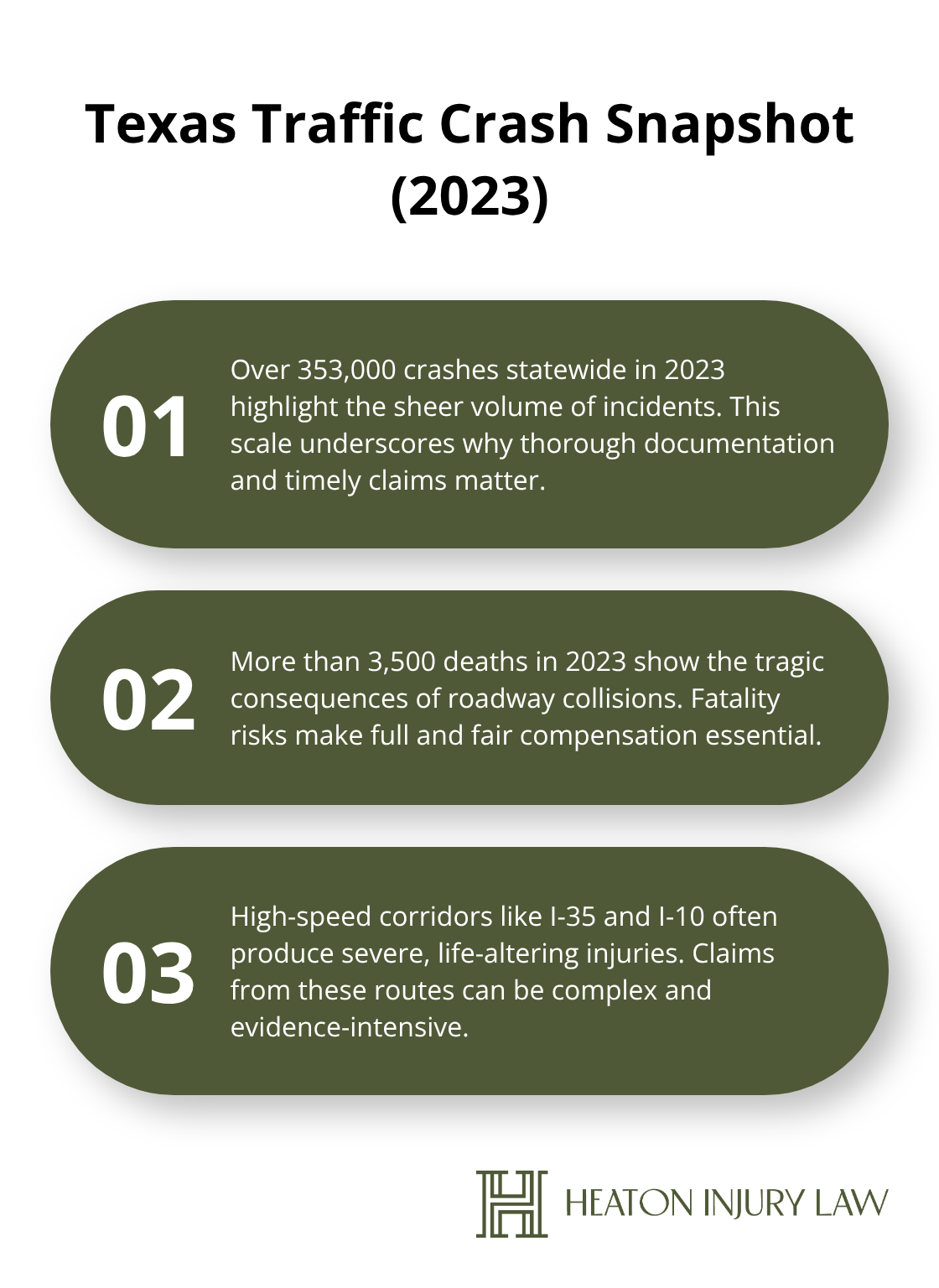
Car accidents dominate Central Texas personal injury claims, and the numbers reflect just how serious the problem is. According to the Texas Department of Transportation, over 353,000 traffic crashes occurred in Texas in 2023, resulting in more than 3,500 deaths. Central Texas sees its share of these collisions on highways like I-35 and I-10, where high-speed impacts cause severe injuries and life-altering consequences.
When another driver’s negligence causes your crash, you have the right to pursue compensation for medical bills, vehicle repairs, and lost income. Insurance companies often offer far less than your claim is worth-this reality makes experienced legal guidance essential from the start.
Workplace Injuries Open Multiple Compensation Paths
Workplace injuries represent another significant category of Central Texas claims. The Texas Department of Insurance reported that employers filed over 400,000 workers’ compensation claims in 2023, though many injured workers don’t realize they can pursue additional claims beyond workers’ compensation if a third party caused the injury.
If defective equipment or a contractor’s negligence injured you at work, you may have grounds for a separate personal injury claim against that third party. This distinction matters because it can substantially increase your total recovery.
Premises Liability Claims Hold Property Owners Accountable
Slip-and-fall accidents and premises liability claims round out the major injury categories affecting Central Texans. Property owners have a legal duty to maintain safe conditions, and when they fail-whether through wet floors, broken stairs, or inadequate lighting-injured visitors can hold them accountable.
These claims often involve retail stores, apartments, restaurants, and commercial properties throughout the Austin area and surrounding communities. The property owner’s insurance typically becomes the target in these cases.
How Responsibility Determines Your Path Forward
The key difference between these claim types is who bears responsibility. In car accidents, the at-fault driver’s insurance covers damages. In workplace injuries, workers’ compensation applies first, but third-party liability claims may also exist. With premises liability, the property owner’s insurance becomes the target (and sometimes multiple parties share fault).
Understanding which category applies to your situation helps determine the right path forward. Once you identify the responsible party and applicable claim type, your next step involves understanding what legal rights you actually possess.
What Rights Do You Have After a Personal Injury
You Can File a Claim Against the Responsible Party
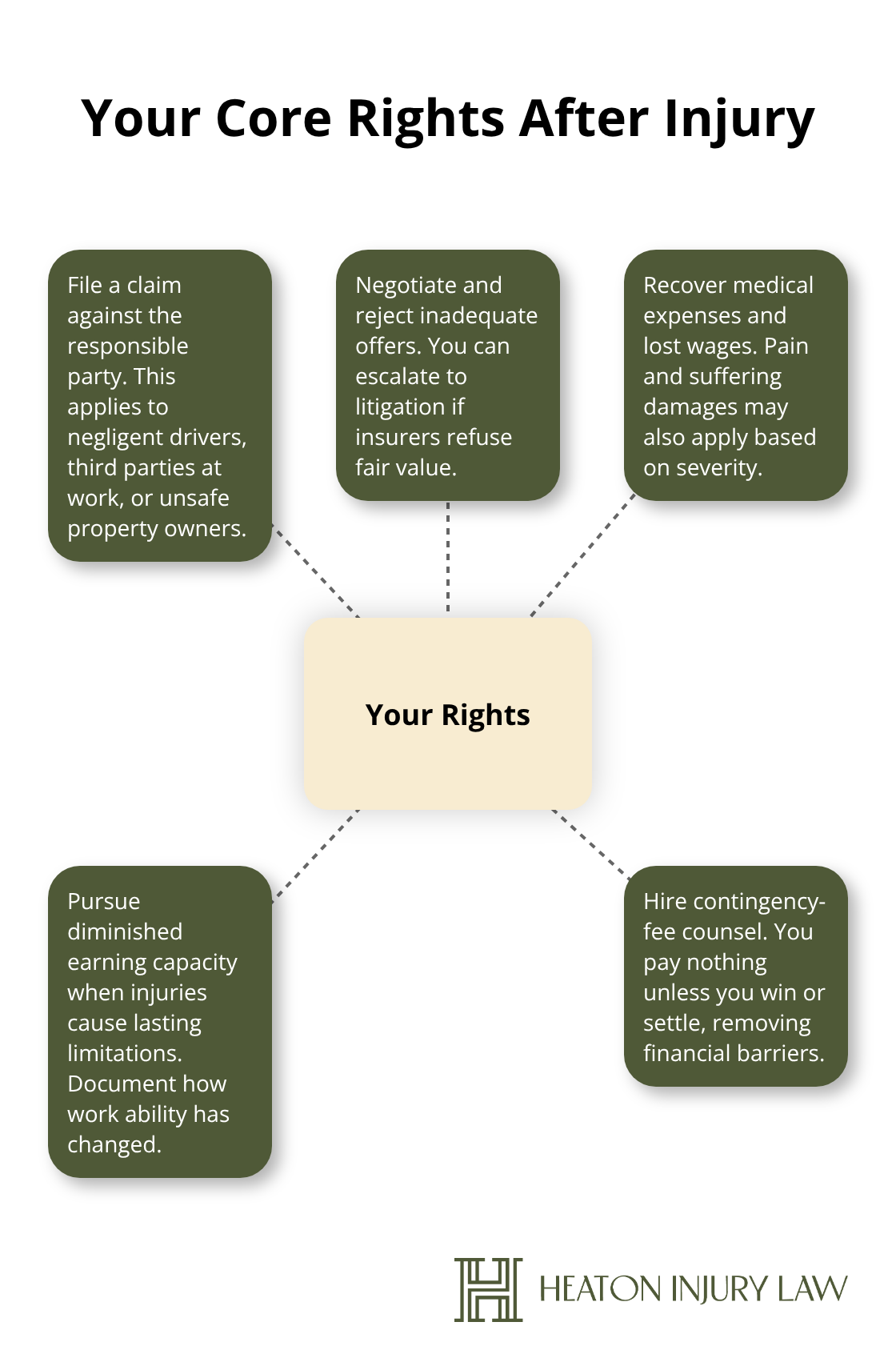
Texas law grants you specific rights when someone else’s negligence injures you, and understanding these rights determines how aggressively you can pursue compensation. Your first right is straightforward: you can file a claim against the party responsible for your injury. This applies whether the at-fault party is a driver who caused your car accident, an employer or contractor whose negligence hurt you at work, or a property owner who failed to maintain safe conditions.
You’re not limited to accepting whatever the responsible party’s insurance company offers in their initial settlement proposal. The insurance company’s job is to minimize payouts, not to give you fair value for your suffering and expenses. Many injured Texans accept lowball offers simply because they don’t understand they have leverage and options.
You Have the Right to Negotiate and Reject Inadequate Offers
You possess the right to negotiate, reject inadequate offers, and pursue litigation if settlement discussions stall. Insurance adjusters count on injured people accepting their first offer without question. When you push back with evidence and professional representation, the dynamics shift dramatically in your favor.
The negotiation phase often determines whether you recover a fraction of your claim’s true value or receive compensation that actually reflects your losses. Your willingness to walk away from a bad deal and file a lawsuit gives you real negotiating power.
Compensation Covers Medical Expenses, Lost Wages, and Pain and Suffering
Your second major right involves compensation scope. Texas allows you to recover medical expenses-including emergency care, surgeries, ongoing treatment, and rehabilitation-plus lost wages from time away from work. If your injury causes permanent disability or scarring, you can pursue damages for diminished earning capacity.
Pain and suffering compensation also applies in Texas personal injury cases, though this amount varies based on injury severity and how well your case is presented. The Texas Supreme Court hasn’t capped non-economic damages in personal injury cases, meaning catastrophic injuries can result in substantial awards.
Legal Representation Removes Financial Barriers to Professional Advocacy
Your third right is legal representation. You’re entitled to hire an attorney to handle negotiations and litigation on your behalf, and most personal injury attorneys work on contingency, meaning you pay nothing unless you win or settle. This structure removes financial barriers to getting professional advocacy.
Insurance companies expect injured people to navigate claims alone, which is precisely why having experienced counsel shifts the balance in your favor. An attorney who understands insurer tactics and knows how to prepare cases for trial (rather than simply settling quickly) maximizes your recovery potential.
Understanding Your Rights Prepares You for the Claims Process
These three rights-filing against the responsible party, negotiating for fair compensation, and securing legal representation-form the foundation of your claim. Knowing what you’re entitled to prevents you from accepting inadequate settlements or making costly mistakes early in the process. The next phase involves understanding exactly how the claims process works and what steps you’ll take to transform these rights into actual compensation.
How the Personal Injury Claims Process Actually Works
Gather Evidence Immediately After Your Injury
Your case strength depends on evidence collected in those first days after your injury. Photograph accident scenes, vehicle damage, and visible injuries while details remain fresh. Collect medical records, treatment receipts, pay stubs showing lost wages, and any documentation proving the responsible party’s negligence-text messages from the at-fault driver admitting fault, maintenance records showing a property owner ignored safety issues, or witness contact information. Insurance companies scrutinize every detail, so gaps in your evidence give them ammunition to deny or minimize your claim.
Many injured Texans wait weeks or months to start gathering evidence, which means critical details vanish and memories fade. The property owner cleans up the hazard, the at-fault driver deletes admissions, and witnesses become impossible to locate. Start this process immediately, even while managing medical treatment and recovery.
Understand Insurance Company Tactics During Negotiations
Negotiations with the insurance company begin once you have solid evidence-and this phase separates injured people who recover fairly from those who accept lowball offers. Insurance adjusters employ predictable tactics: they request your medical records then argue your injuries weren’t severe enough to justify your claimed damages, they offer a quick settlement before you understand your claim’s true value, or they claim the responsible party shares minimal fault to reduce their payout obligation.
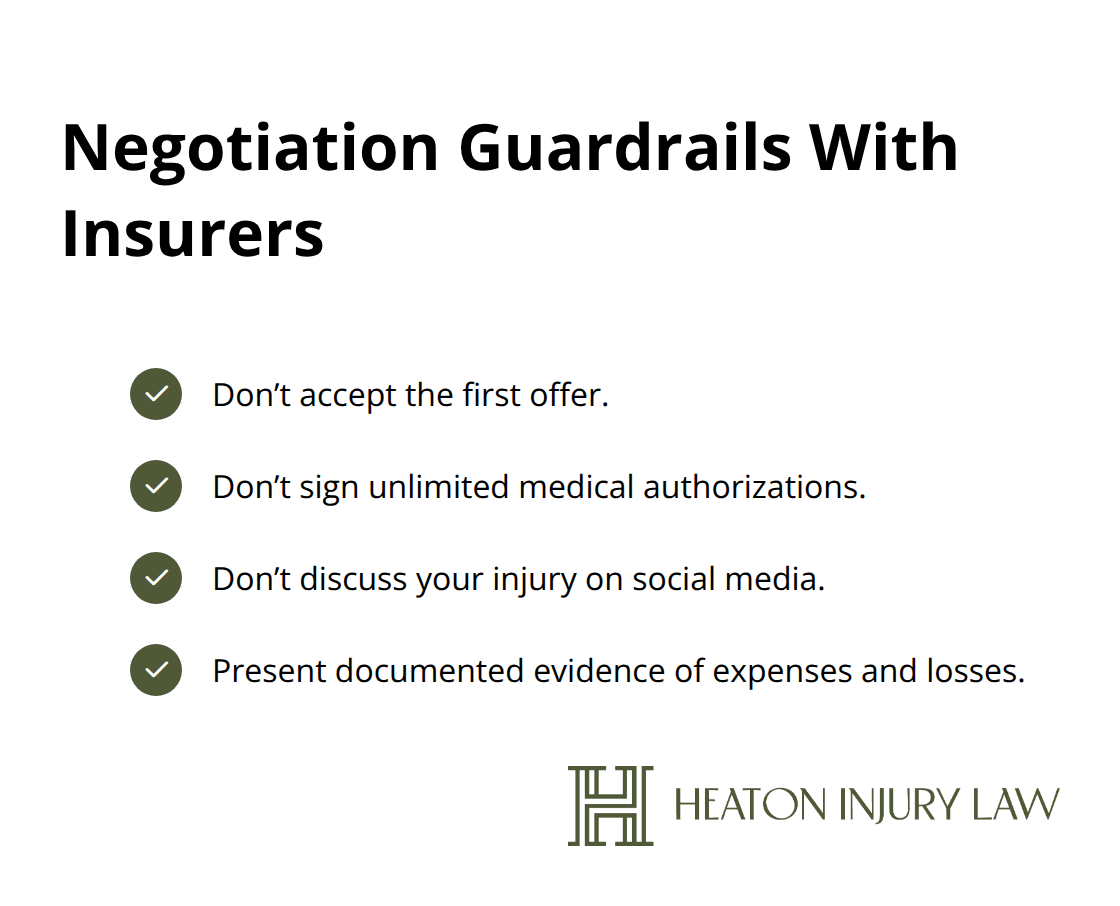
Your response determines the outcome. Don’t accept the first offer, don’t sign medical authorizations giving insurers unlimited access to your records, and don’t discuss your injury on social media where adjusters screenshot posts to argue you’re exaggerating. Present documented evidence of your medical expenses, lost wages, and injury severity-not emotional arguments.
Use Litigation Threats to Strengthen Your Position
If negotiations stall because the insurer refuses fair compensation, filing a lawsuit forces them to take your claim seriously. Texas courts allow injured parties to recover medical expenses, lost wages, pain and suffering, and in cases involving gross negligence, punitive damages designed to punish reckless behavior. The threat of litigation with a trial-ready attorney changes insurer calculations dramatically.
Having representation from someone who actually prepares cases for court (rather than simply settling quickly) becomes your most valuable asset in maximizing recovery. At Heaton Injury Law, PLLC, we use insider knowledge of insurer tactics and a trial-ready approach to shift negotiations in your favor.
Final Thoughts
Your rights after a personal injury in Central Texas are clear: you can pursue compensation from the responsible party, negotiate aggressively for fair settlement, and secure legal representation without upfront costs. The claims process rewards those who gather evidence quickly, understand insurance company tactics, and refuse to accept lowball offers. Taking action now rather than waiting for injuries to heal or memories to fade determines your recovery potential.
Start by documenting everything related to your injury-photograph the scene, collect medical records, gather pay stubs showing lost wages, and preserve any evidence of negligence. Insurance companies are not your allies; their adjusters use predictable tactics to minimize payouts, and accepting their first offer typically means leaving substantial money on the table. You possess leverage through negotiation and the credible threat of litigation, so use it.
If you’ve suffered a car accident, workplace injury, slip-and-fall, or any other Central Texas personal injury, professional guidance makes the difference between inadequate settlements and maximum recovery. Contact Heaton Injury Law, PLLC today for a free consultation about your claim.
The information provided in this blog is for general informational purposes only and does not constitute legal advice. Every case is unique, and laws may vary by jurisdiction. Reading this content does not create an attorney-client relationship. For guidance specific to your situation, please consult with a qualified personal injury attorney licensed in Texas.
Artificial intelligence may have been used to assist in generating some text or images in these articles.