

Meredythe | June 16, 2026 | Blog

An Austin personal injury claim can feel overwhelming when you’re recovering from an accident. You may have questions about what happens next, how much your case is worth, and whether you have a valid claim.
We at Heaton Injury Law, PLLC walk clients through this process every day. This guide breaks down each stage-from your first call to final settlement-so you know exactly what to expect.
Your First Call: What Happens Next
When you call a personal injury attorney after an accident, the conversation matters far more than you might think. We listen to the details of what happened, not pitch services. During this call, we ask specific questions: the date and location of the injury, who was involved, what medical care you received, and whether you’ve already spoken with an insurance company. This last point is critical-many people don’t realize that a recorded statement to an insurer before consulting an attorney can significantly reduce recovery. Insurance adjusters are trained to minimize payouts, and anything you say becomes part of the claim file.
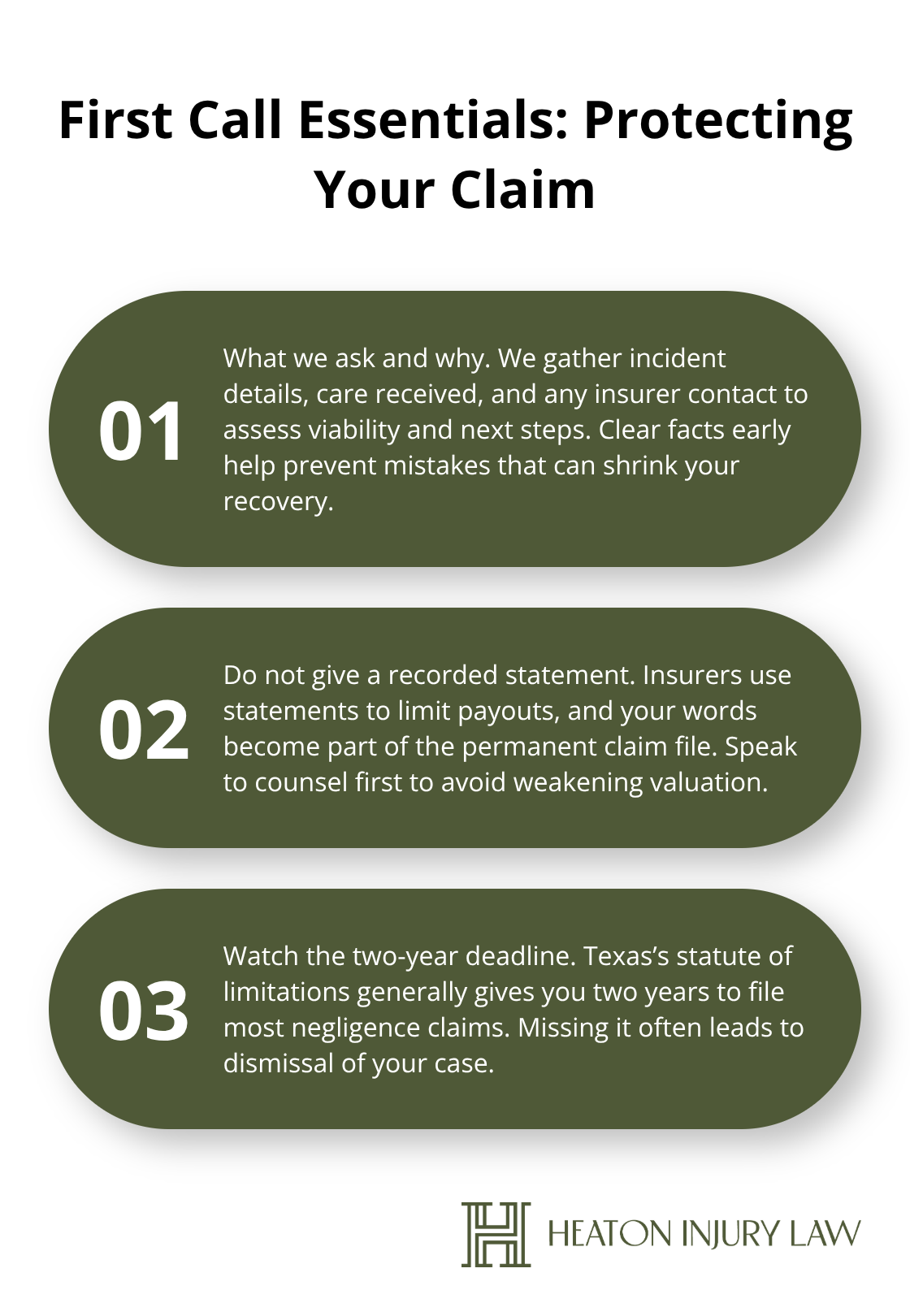
We also determine whether your claim falls within Texas’s two-year statute of limitations, which applies to most personal injury cases including car accidents, slip-and-fall incidents, and workplace injuries. Missing this deadline means the court will dismiss your claim entirely, so timing is never something to ignore.
Why the First Conversation Sets the Tone
The initial call establishes whether you have a viable claim and what obstacles may lie ahead. We ask about prior statements to insurers because those statements can lock you into a lower valuation before you understand your case’s true worth. Texas law gives you two years from the injury date to file a lawsuit-a deadline that applies to car accidents, slip-and-fall cases, workplace injuries, and most other negligence-based claims. If you miss this window, the court will dismiss your case, typically either by the clerk rejecting the filing or the defendant filing a motion to dismiss. We also identify whether any tolling exceptions apply (such as if you were a minor at the time of injury or if the defendant evaded service), though these circumstances are limited and require careful legal analysis.
How We Evaluate Your Case
After the initial conversation, we conduct a thorough case evaluation that goes beyond reviewing facts. We assess liability by examining who acted negligently and whether their actions directly caused your injury-the legal standard requires proving the defendant failed to exercise reasonable care. We quantify damages by reviewing your medical bills, lost wages, and documentation of pain and suffering. Under Texas law, you can recover economic damages like medical expenses and property damage, plus non-economic damages for emotional distress and loss of enjoyment of life. If the injury resulted from gross negligence or intentional misconduct, punitive damages may apply to punish the defendant. We also immediately consider Texas’s modified comparative negligence rule: if you’re found 51% or more at fault, you cannot recover anything, but if you’re 30% at fault with $100,000 in damages, you can recover $70,000. This calculation shapes every decision we make moving forward.
What We Never Do
We never take a case we don’t believe in, and we don’t accept settlement offers from insurers without understanding the full value of what you’ve lost. Insurance companies often aim to minimize payouts by offering quick settlements before you’ve had time to assess your injuries or consult with an attorney. A recorded statement made early in the process can undermine your position later, which is why we advise against speaking with adjusters before legal counsel reviews your situation. The evidence you preserve immediately after an accident-photos of the scene, witness contact information, medical records, and a detailed timeline-directly impacts what your claim is worth. Once we complete our evaluation, we move into the investigation phase, where we gather the documentation and expert testimony that transforms your account into a compelling case.
Building Your Case Through Investigation
After your initial consultation, we transition into the investigation phase, where we systematically gather the documentation and expert testimony that transforms your account into a compelling case.
Medical Records Form the Foundation
Medical records establish the severity and scope of your injuries. We obtain your complete medical history from the date of injury forward, including emergency room reports, imaging studies, surgical records, and ongoing treatment notes. Insurance companies scrutinize these records carefully, so gaps or delays in seeking treatment can undermine your claim’s credibility. If you waited weeks before seeing a doctor, adjusters will argue your injuries weren’t serious. We also collect bills and receipts for all medical expenses, rehabilitation costs, prescription medications, and travel expenses related to treatment.
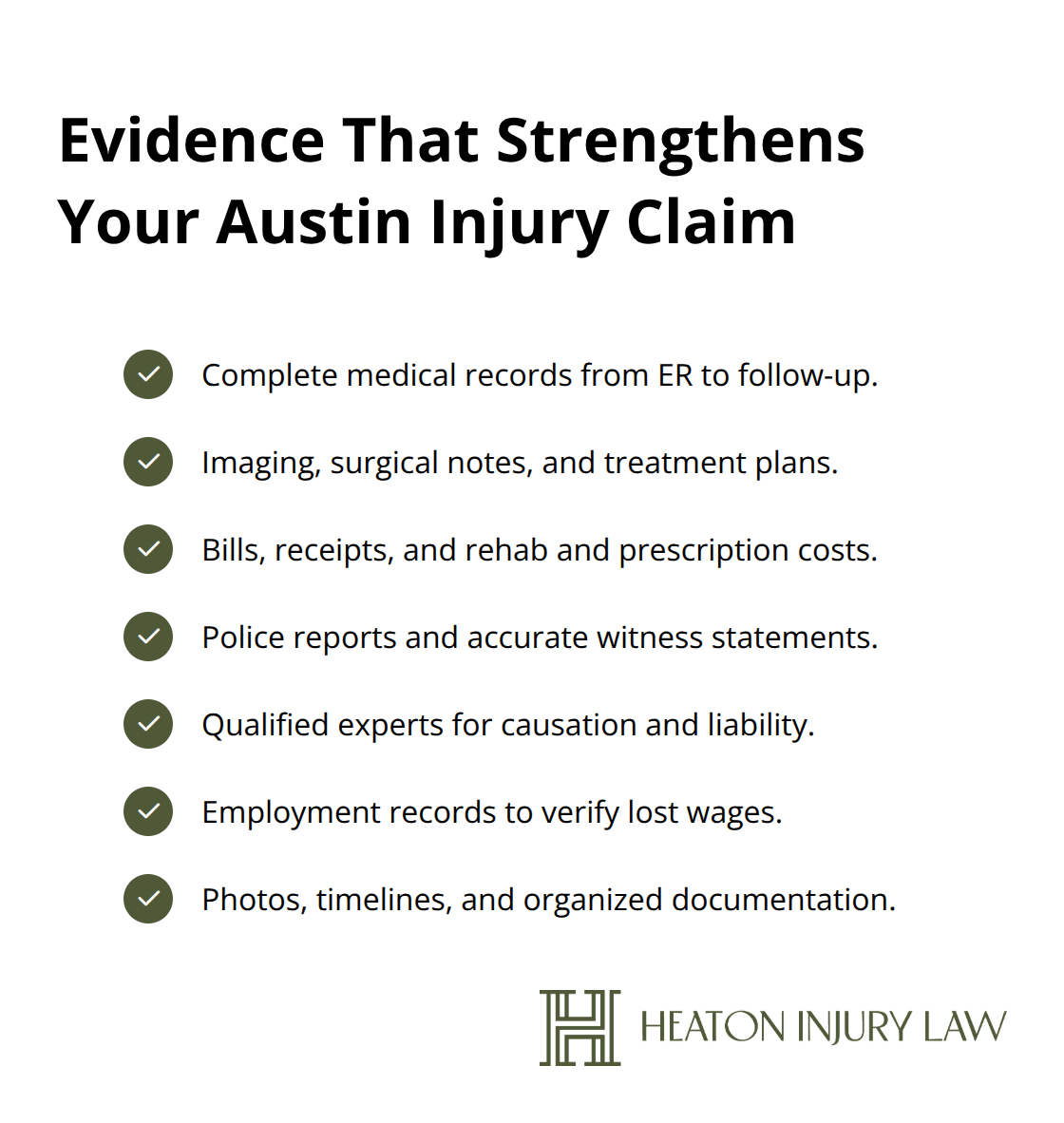
These documents quantify economic damages with precision.
Police Reports and Witness Statements Establish What Happened
Police reports provide an official account of what happened, particularly in motor vehicle accidents. We obtain these reports from the appropriate law enforcement agency and review them for details about fault determination, citations issued, and witness information. Many reports contain inaccuracies or omissions, so we cross-reference them with other evidence. Witness statements carry significant weight because neutral parties without financial interest in the outcome provide them. We identify witnesses at the scene and conduct thorough interviews, documenting their observations in written statements or recorded testimony. Strong witness testimony can be the difference between a modest settlement and full recovery, especially when liability is disputed.
Expert Testimony Proves Causation and Liability
Expert testimony becomes necessary when your case involves technical or medical complexity. Medical experts review your injuries and treatment to establish causation-proving the defendant’s actions directly caused your harm. In motor vehicle accidents, accident reconstruction experts analyze vehicle damage, road conditions, and physics to determine fault. In slip-and-fall cases, we engage premises liability experts to demonstrate whether property owners failed to maintain safe conditions or warn of hazards. Product liability claims require engineering experts to show design defects or manufacturing failures. These experts charge fees ranging from several hundred to several thousand dollars depending on their credentials and case complexity, but their testimony often justifies the investment.
Documentation of Lost Wages and Non-Economic Damages
We gather documentation of lost wages through employment records, pay stubs, and statements from your employer confirming time away from work. Non-economic damages like pain and suffering require different evidence: medical records showing treatment intensity, photographs of injuries if visible, and testimony from family members about how the injury affected daily life. Texas courts recognize that significant injuries cause genuine emotional distress and reduced quality of life, and we document this through your medical records and personal accounts. Throughout this phase, we maintain detailed timelines and organize all evidence systematically because presentation matters when negotiating with insurers or presenting to a jury.
How Strong Evidence Shapes Settlement Negotiations
The evidence we gather during detailed investigation directly influences what happens next. Insurance adjusters evaluate claims based on the strength of documentation, medical causation, and witness corroboration. A well-organized case file with complete medical records, credible witness statements, and expert reports signals that we will pursue trial if necessary, which motivates insurers to offer fair settlements rather than risk a jury verdict.
Negotiation and Settlement Discussions
Insurance adjusters do not evaluate claims based on fairness or what you actually lost-they evaluate claims based on what they think you will accept and what a jury might award. This fundamental difference shapes every negotiation you will have. When we present your case, adjusters immediately assess three things: the strength of liability evidence, the credibility of your damages documentation, and the likelihood you will pursue trial if they lowball the offer. A case with solid witness statements, medical records showing ongoing treatment, and expert testimony is worth significantly more than identical injuries supported only by your account. Insurance companies know this, which is why they scrutinize every detail of the evidence we have gathered. If your medical records show treatment gaps or inconsistencies, adjusters will exploit those gaps to reduce their offer. If witness statements corroborate liability clearly, they know a jury would likely side with you. The negotiation phase is fundamentally about leverage-and leverage comes from preparation and credible evidence.
How Insurance Companies Evaluate Your Claim
Insurance adjusters apply systematic methods to value claims, and understanding these methods helps you recognize when an offer falls short. They calculate economic damages with precision: medical bills, lost wages, and transportation costs. They then apply the multiplier method to non-economic damages, using a factor of 1 to 5 times your medical expenses depending on injury severity and treatment duration. A severe injury requiring surgery and months of physical therapy justifies a higher multiplier than a minor soft-tissue injury.
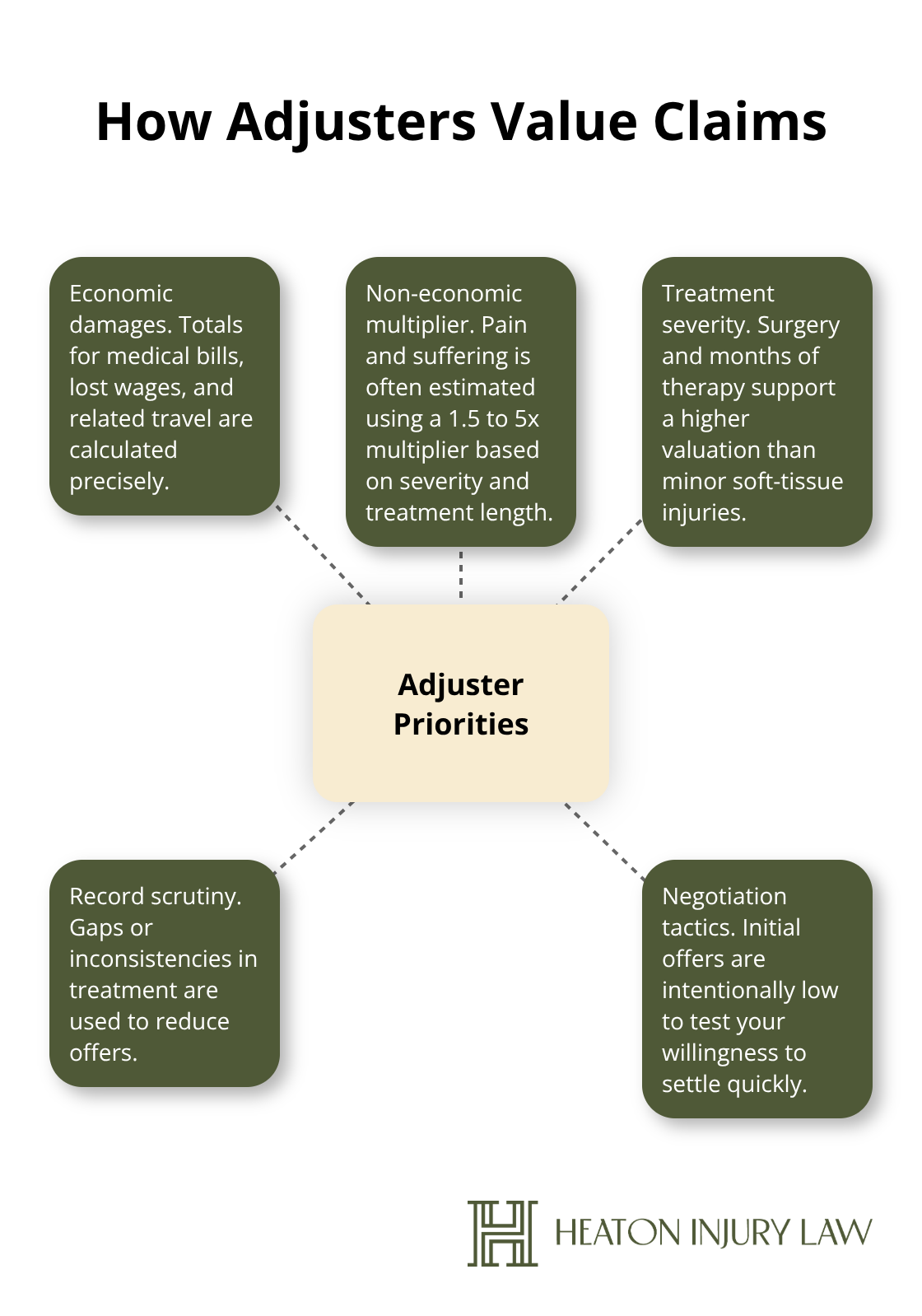
Adjusters make low initial offers to test whether you will settle quickly without understanding your case’s worth. They count on injured people to accept the first number rather than fight for fair compensation.
Strategies for Maximizing Your Recovery
Our approach to maximizing recovery starts with establishing a realistic valuation before any insurer makes an offer. We calculate economic damages precisely: every medical bill, every lost wage, every transportation cost related to treatment. We then add non-economic damages for pain and suffering, which Texas courts recognize as legitimate compensation. We never accept an insurer’s first offer because it is virtually always below market value. We counter with a detailed demand letter that itemizes every loss, references comparable cases when applicable, and explains why the evidence supports a specific recovery amount. This back-and-forth typically continues for weeks or months. Most personal injury claims resolve through settlement rather than trial, which means the negotiation phase determines your final recovery. Walking away from an inadequate offer and signaling our willingness to litigate often motivates insurers to improve their position substantially.
When to Accept an Offer or Proceed to Trial
Accepting a fair settlement before trial saves you time, stress, and the unpredictability of jury verdicts. The decision to accept or reject an offer depends on several factors: whether liability is genuinely disputed, whether your damages are fully documented, whether you can afford to wait for trial, and what assessment suggests a jury might award. If we believe trial would likely result in a significantly higher verdict than the current offer, rejecting settlement makes sense. If the offer is reasonable given the evidence and uncertainties inherent in litigation, accepting it provides certainty and closure. No settlement is perfect-you are always trading certainty against the possibility of more (and that is a legitimate business decision only you can make).
Final Thoughts
An Austin personal injury claim moves through predictable stages, but each case carries unique circumstances that demand individualized attention. From your first call through final settlement, the process requires careful documentation, strategic negotiation, and a clear understanding of what Texas law allows you to recover. You now understand that the two-year statute of limitations creates urgency, that insurance companies systematically undervalue claims, and that strong evidence transforms your position at the negotiation table.
Having experienced legal representation matters because personal injury law involves technical rules, procedural deadlines, and negotiation tactics that injured people typically encounter only once. We at Heaton Injury Law, PLLC bring extensive experience on both sides of litigation, which means we understand exactly how insurers think and what evidence they respect. Our trial-ready approach signals to adjusters that we will pursue litigation if necessary, which motivates fair settlement offers.
If you have suffered an injury caused by someone else’s negligence, contact Heaton Injury Law, PLLC today for a confidential consultation. We work on contingency, meaning you pay nothing unless we recover compensation for you. Your recovery depends on acting quickly to preserve evidence and consult with an attorney before speaking with insurance companies.
The information provided in this blog is for general informational purposes only and does not constitute legal advice. Every case is unique, and laws may vary by jurisdiction. Reading this content does not create an attorney-client relationship. For guidance specific to your situation, please consult with a qualified personal injury attorney licensed in Texas.
Artificial intelligence may have been used to assist in generating some text or images in these articles.