

Meredythe | October 13, 2026 | Blog

A brain injury can change your life in seconds. Whether it happened in a car accident, a fall, or at work, you’re facing medical bills, lost income, and uncertainty about your future.
At Heaton Injury Law, PLLC, we help injured Texans understand their rights and fight for the compensation they deserve. A brain injury lawyer in Texas can guide you through the legal process and hold the responsible parties accountable.
How Brain Injuries Happen in Texas
Car Accidents Cause the Most Brain Trauma
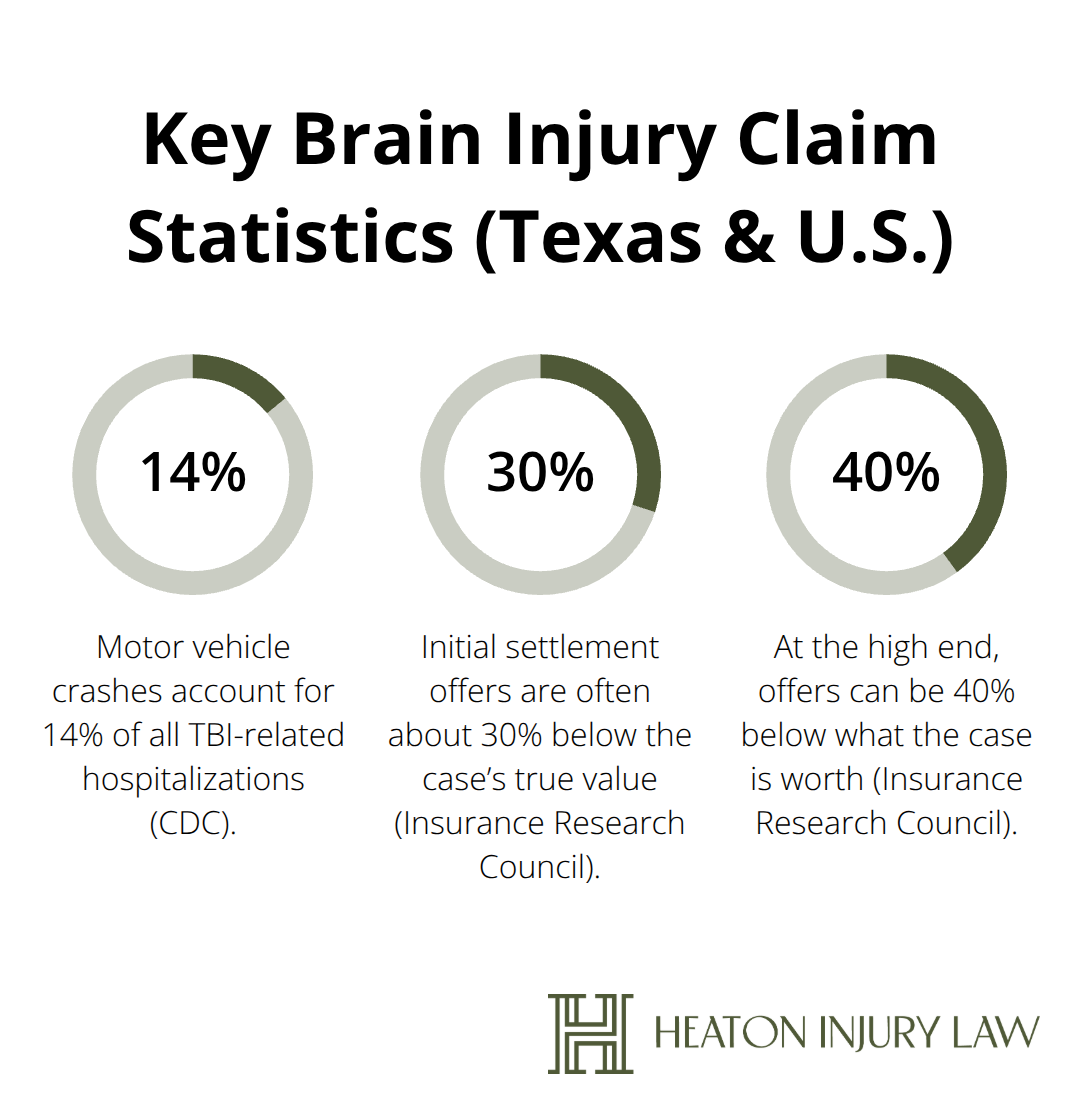
Car accidents remain the leading cause of traumatic brain injuries in Texas. The Centers for Disease Control and Prevention reports that motor vehicle crashes account for approximately 14% of all traumatic brain injury-related hospitalizations. A collision at just 30 miles per hour causes your brain to move violently inside your skull, creating bruising, bleeding, or tearing of brain tissue even without direct impact to your head.
The force of sudden deceleration alone damages brain cells, and many victims don’t realize the severity of their injury immediately because initial symptoms like headaches or mild confusion often seem minor.
Falls Create Hidden Brain Damage
Slip-and-fall accidents represent another significant source of brain trauma in Texas, particularly for older adults. The National Council on Aging found that one in four Americans aged 65 and older experiences a fall each year, with falls being the leading cause of both fatal and nonfatal trauma in this population. A fall from standing height can cause a subdural hematoma or concussion with serious long-term consequences. Even falls that seem minor at the time produce brain swelling or internal bleeding that worsens over hours or days.
Workplace Injuries Affect Texas Workers
Workplace injuries involving head trauma occur frequently in construction, manufacturing, and transportation industries across Texas. According to the Bureau of Labor Statistics, over 900 workers died from traumatic brain injuries in workplace accidents in recent years, with thousands more suffering permanent cognitive or physical disabilities. Many workplace brain injuries result from falls from heights, being struck by equipment, or motor vehicle accidents during work. Construction workers face particularly high risk, as do those operating heavy machinery or working in confined spaces where head strikes happen easily.
Repeated Injuries Compound the Damage
The insidious aspect of brain injuries is that damage compounds over time-repeated concussions or untreated initial injuries increase your risk of chronic traumatic encephalopathy and permanent neurological decline. Multiple mild traumatic brain injuries can accelerate cognitive decline and create lasting disability. Athletes, military personnel, and workers in high-risk industries face elevated danger from cumulative head trauma. This progression makes immediate medical evaluation and legal action essential to protect your health and your rights.
When you suffer a brain injury in Texas, the clock starts ticking on evidence preservation and insurance deadlines. Understanding how your injury occurred forms the foundation for your legal claim, but navigating the claims process requires knowledge of Texas law and insurance company tactics.
How Texas Brain Injury Claims Move Through the Legal System
File Your Claim Before Time Runs Out
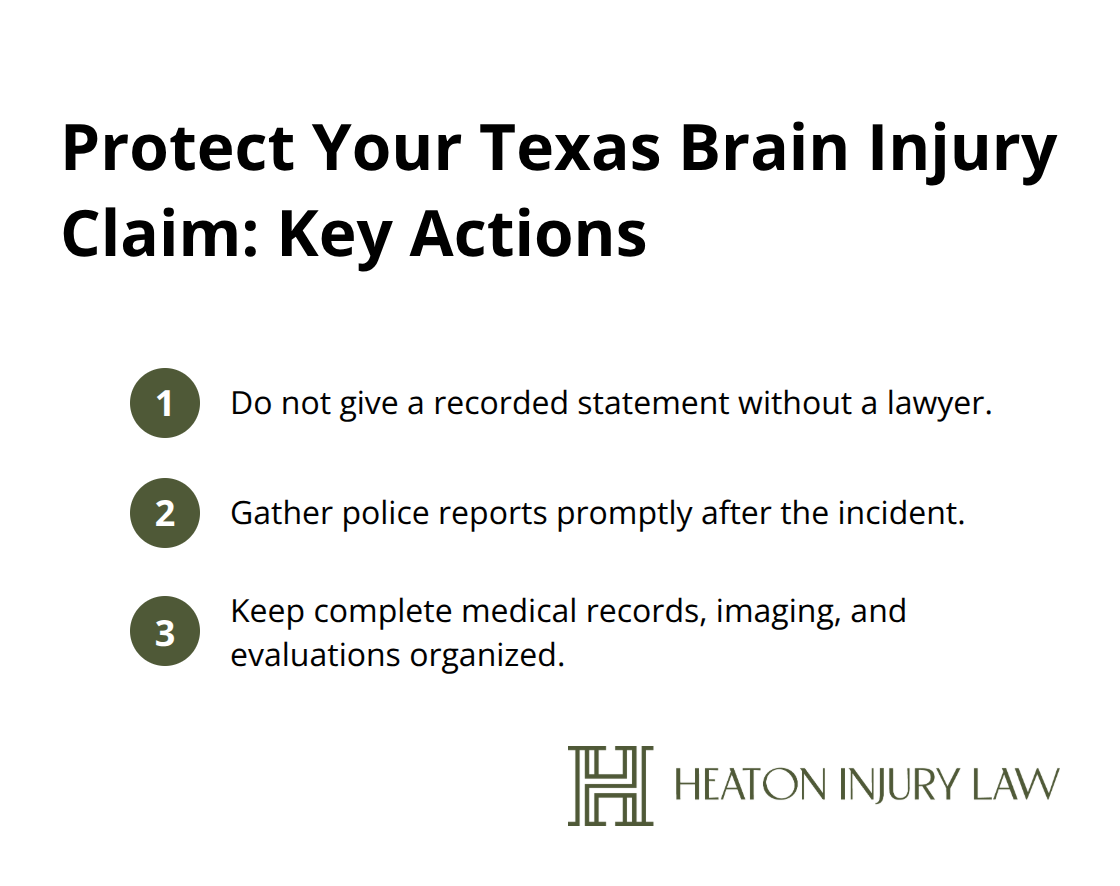
The moment you file a brain injury claim in Texas, insurance companies begin calculating how little they can pay you. They employ adjusters trained to minimize payouts, and they count on injured people not understanding the process. Texas follows a two-year statute of limitations for personal injury cases, meaning you have exactly 24 months from the injury date to file a lawsuit. This deadline is absolute-missing it eliminates your right to recover anything. Start documenting everything immediately: medical records, accident scene photos, witness statements, and any communications with the at-fault party or their insurance company. Request your medical records from all providers treating your brain injury, including emergency room visits, CT scans, MRIs, and neurological evaluations, as these form the backbone of your evidence.
Avoid Recorded Statements Without Legal Guidance
Insurance adjusters will request a recorded statement from you, and this is where many injured people damage their cases by discussing their injuries without understanding how statements will be twisted. Anything you say in a recorded statement can and will be used against you to reduce your settlement. Do not give a recorded statement without consulting a lawyer first. Gather police reports if your injury involved a vehicle accident or incident reported to law enforcement, as these official documents carry significant weight in negotiations. These reports establish facts about how the accident occurred and often include statements from witnesses who saw what happened.
Navigate Settlement Negotiations Strategically
Insurance companies follow a predictable playbook during settlement negotiations: they make an initial lowball offer expecting you to accept it, then gradually increase offers if you push back. According to the Insurance Research Council, the average settlement offer to injury claimants is typically 30-40% below what the case is actually worth. Texas allows you to negotiate directly with insurance companies, but they have teams of lawyers and adjusters working against you. Rejected settlement offers mean your case moves toward trial preparation, where you’ll work with your legal team to develop evidence presentations, gather expert testimony about your brain injury’s long-term effects, and prepare witnesses.
Prepare for Trial With Expert Evidence
Trial preparation in Texas brain injury cases typically involves medical experts who explain how your specific injury occurred and what permanent damage resulted, vocational experts who calculate lost earning capacity, and life care planners who document ongoing treatment costs. Texas juries take brain injuries seriously when evidence is presented clearly, particularly when medical testimony establishes permanent cognitive or physical changes. The defendant’s medical experts will argue your injuries are less severe than claimed-a standard defense tactic in every brain injury case. Preparation for this opposition requires a legal team that understands both how insurers think and how to present your case compellingly to a jury.
Understanding these legal mechanics positions you to make informed decisions about your claim, but the financial recovery available to you depends on knowing exactly what damages Texas law allows you to pursue.
Compensation You Can Recover in a Brain Injury Case
Medical Expenses Add Up Quickly and Continue for Years
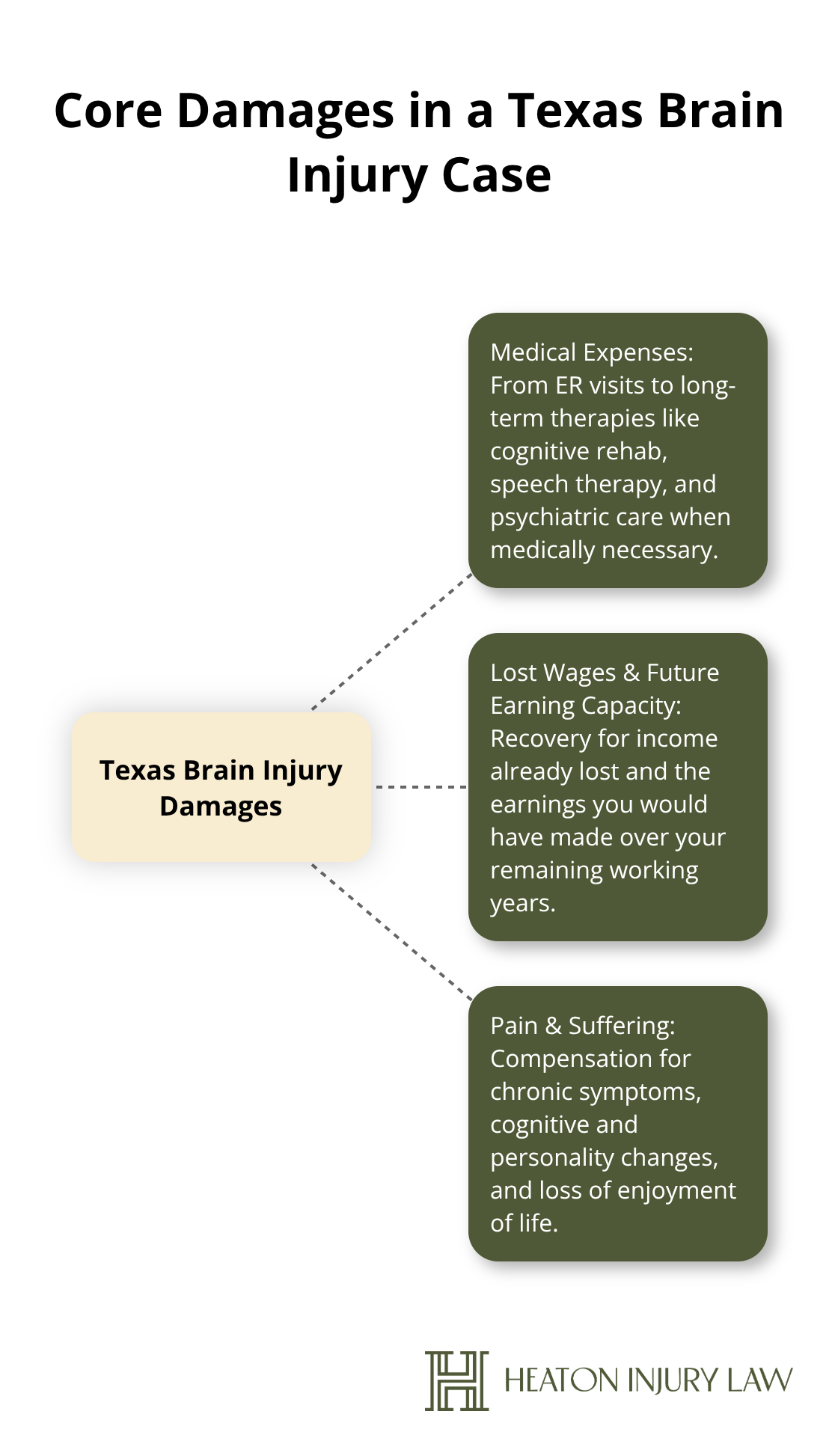
Brain injury compensation in Texas breaks down into three distinct categories, and most injured people severely underestimate what they’re entitled to recover. Medical expenses form the foundation of your claim, but they extend far beyond your initial emergency room visit. If your brain injury requires ongoing neurological treatment, cognitive rehabilitation, speech therapy, or psychiatric care, these costs accumulate rapidly and continue for years or decades depending on injury severity.
A moderate traumatic brain injury often requires 18 to 24 months of intensive rehabilitation, with costs ranging from $50,000 to $150,000 according to the Brain Injury Association of America. More severe injuries demand lifetime care including assisted living facilities, in-home nursing, and specialized medical equipment. You must document every medical expense meticulously because insurance companies will challenge treatment necessity and argue that certain therapies are experimental or unnecessary. Neuroimaging studies, neuropsychological testing, and specialist consultations all constitute recoverable damages when medically necessary for your diagnosis and treatment plan.
Lost Wages and Future Earning Capacity Represent Substantial Recovery
Lost wages and future earning capacity represent the second major damage category, and this is where insurance companies fight hardest to minimize your recovery. If your brain injury prevents you from returning to your previous job, you’re entitled to recover not just the wages you’ve already lost but also the income you would have earned over your remaining working years.
A construction worker earning $65,000 annually who suffers permanent cognitive impairment affecting his ability to work faces potentially decades of lost earnings. Vocational experts calculate this by examining your age, education, work history, and the specific limitations your injury created. Texas courts recognize that brain injuries frequently result in reduced earning capacity even when you return to work, since cognitive changes, memory problems, or behavioral changes often limit advancement or job performance.
Pain and Suffering Damages Compensate for Your Actual Experience
Pain and suffering damages compensate you for the actual experience of your injury and its consequences on your daily life. Texas juries award pain and suffering based on severity and permanence of your condition, not arbitrary formulas. A permanent brain injury causing chronic headaches, cognitive dysfunction, personality changes, or loss of enjoyment in activities you previously enjoyed warrants substantial pain and suffering awards.
Insurance companies will argue that your pain and suffering is minimal, claiming that modern medicine has resolved most symptoms or that you’ve adapted well to your limitations. This is precisely where strong medical testimony and clear documentation of how your injury affects your actual life becomes decisive in settlement negotiations or trial. The defendant’s representatives will present their own medical experts to minimize the permanence of your condition-a standard tactic in every brain injury case.
Final Thoughts
A brain injury transforms your life, your finances, and your future in ways that extend far beyond the initial accident. The medical costs, lost income, and permanent changes to how you think and function demand compensation that reflects the true scope of your damages. Texas law recognizes this reality and provides pathways to recover medical expenses, lost wages, future earning capacity, and pain and suffering damages when someone else’s negligence caused your injury.
The legal process moves quickly, with strict deadlines and insurance companies working systematically to minimize what you receive. Filing your claim promptly, avoiding recorded statements without legal guidance, and understanding settlement tactics separates injured people who recover fair compensation from those who accept inadequate offers. Your brain injury lawyer in Texas must understand both how insurers operate and how to present your case compellingly to a jury when settlement negotiations fail.
Professional legal representation matters because you’re facing experienced insurance adjusters and defense attorneys who know exactly how to undervalue brain injuries. Contact Heaton Injury Law, PLLC to discuss your brain injury claim and learn what compensation you can realistically pursue. We handle car accidents, workplace injuries, slip-and-fall cases, and catastrophic injuries across Texas, and our contingency-fee representation means you pay nothing unless we recover compensation for you.
The information provided in this blog is for general informational purposes only and does not constitute legal advice. Every case is unique, and laws may vary by jurisdiction. Reading this content does not create an attorney-client relationship. For guidance specific to your situation, please consult with a qualified personal injury attorney licensed in Texas.
Artificial intelligence may have been used to assist in generating some text or images in these articles.