

Meredythe | September 9, 2026 | Blog

A catastrophic brain injury in Texas can transform your life in seconds. The physical, financial, and emotional consequences are overwhelming for you and your family.
At Heaton Injury Law, PLLC, we understand what you’re facing. This guide walks you through your rights and how proper legal support can help you rebuild.
What Counts as a Catastrophic Brain Injury
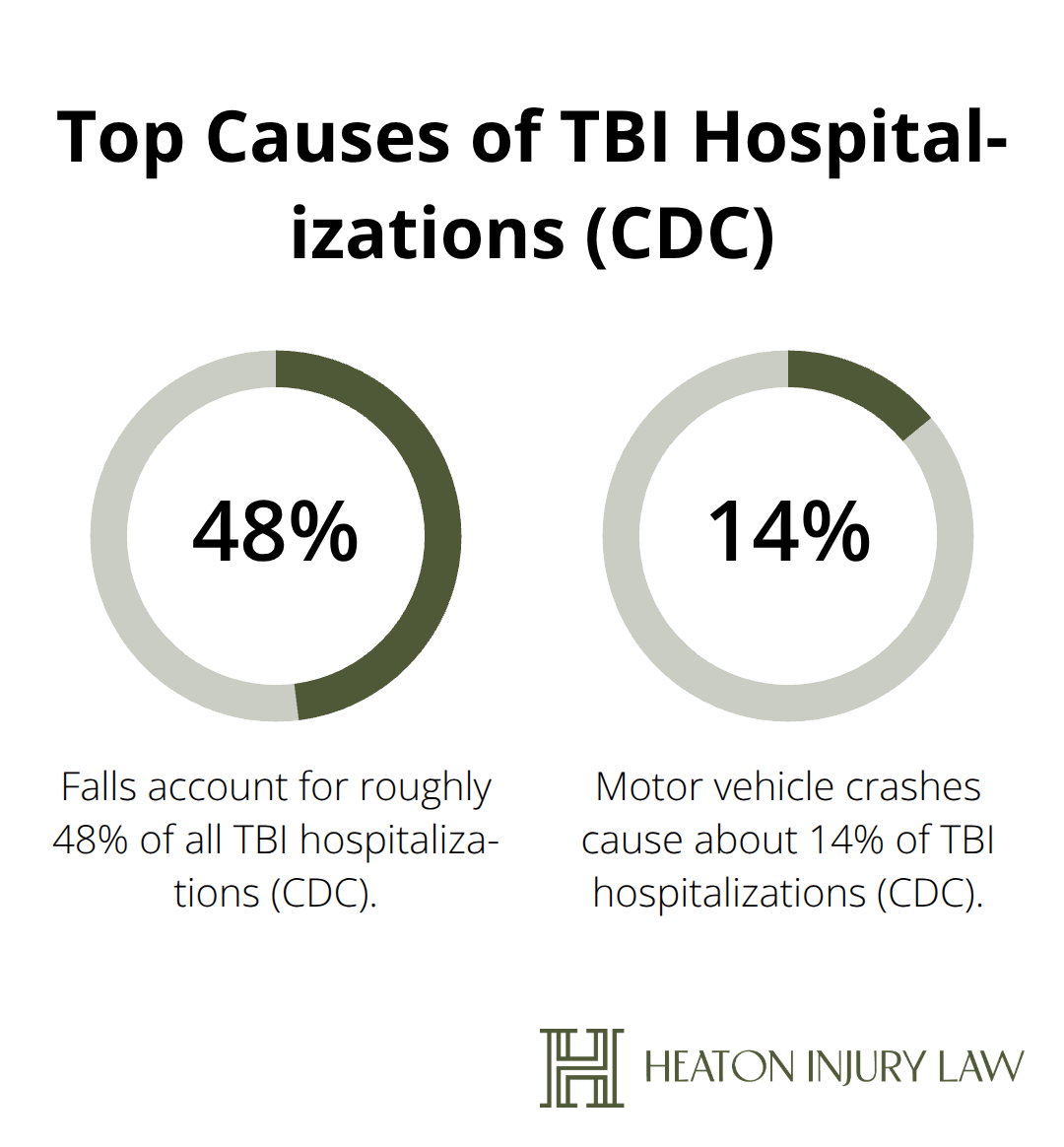
A catastrophic brain injury goes far beyond a simple concussion. The Centers for Disease Control and Prevention defines severe traumatic brain injury as an injury that results in death, hospitalization, or altered consciousness lasting at least 24 hours. In Texas, these injuries typically stem from vehicle collisions, motorcycle accidents, falls from height, and workplace incidents. The CDC reports that falls account for roughly 48 percent of all traumatic brain injury hospitalizations, while motor vehicle crashes cause about 14 percent. Texas sees particularly high rates of fall-related brain injuries among adults over 65, with the state’s aging population contributing to increased emergency department visits for head trauma.
How Catastrophic Brain Injuries Damage the Brain
A catastrophic brain injury classification means the damage extends beyond surface-level trauma. The brain experiences diffuse axonal injury, where nerve fibers tear throughout the organ and disrupt communication between brain regions. Penetrating injuries from objects or severe impact cause localized damage to specific brain areas, affecting speech, movement, memory, or emotion control. The severity depends on which regions sustain injury and the force of impact.
Physical Recovery Requires Years of Rehabilitation
The physical aftermath demands aggressive, long-term treatment. Individuals with severe brain injuries often require months in acute care settings, followed by inpatient rehabilitation for 6 to 12 months or longer. Physical therapists work on mobility, balance, and coordination-basic functions that healthy brains control automatically. Many patients experience spasticity, where muscles remain constantly contracted, limiting movement and causing pain. Seizures develop in approximately 30 percent of severe traumatic brain injury cases, requiring anticonvulsant medications and lifestyle adjustments. Speech and swallowing difficulties frequently occur, necessitating specialized therapy and sometimes feeding tubes.
Cognitive and Behavioral Changes Reshape Independence
Cognitive impairment often proves more disabling than physical injury. Memory loss, difficulty concentrating, and slower processing speeds prevent return to work or independent living. Personality changes emerge frequently-irritability, aggression, depression, or emotional flatness that fundamentally alter family relationships. Executive function deficits make planning, decision-making, and impulse control nearly impossible without supervision. Many patients require permanent oversight for safety, medication management, and personal care. These invisible injuries devastate independence and earning potential far more than outsiders realize, yet insurance companies routinely minimize their significance when calculating fair compensation.
The financial and emotional toll of these injuries extends far beyond the initial hospitalization, creating expenses and challenges that reshape your family’s entire future.
What Brain Injuries Actually Cost Your Family
Medical Expenses Mount Rapidly in Year One
A catastrophic brain injury drains finances faster than most families anticipate. The National Institutes of Health reports lifetime costs averaging $4 million per patient when accounting for acute hospitalization, rehabilitation, ongoing therapy, and long-term care management. Texas families face immediate bills of $250,000 to $500,000 in the first year alone, covering intensive care unit stays, neurosurgery, imaging studies, and specialized rehabilitation facilities.
Home and Ongoing Care Expenses Never Stop
Beyond hospitalization, home modifications become necessary expenses. Wheelchair ramps, bathroom renovations, accessible bedrooms, and safety equipment add $20,000 to $100,000 to household costs. Ongoing care expenses include physical therapy sessions ranging from $100 to $300 per hour, occupational therapy, speech therapy, neuropsychological evaluations, and medications for seizure management or cognitive symptoms.
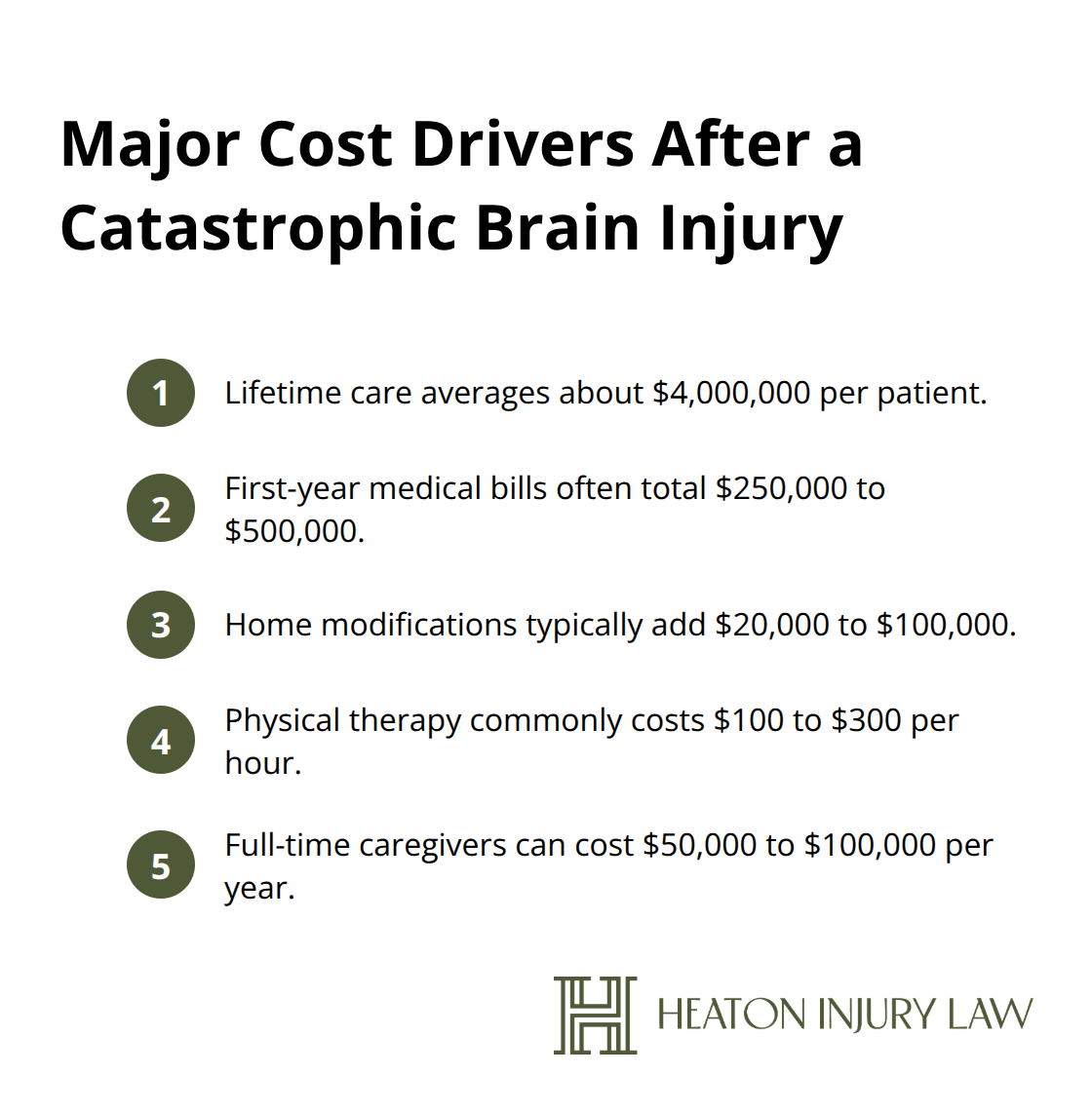
Many patients require full-time caregivers-either family members forced to leave employment or hired professionals costing $50,000 to $100,000 annually. These expenses continue indefinitely, not just for months or years.
Lost Income Compounds Financial Devastation
Lost income destroys household finances when earning capacity vanishes overnight. A 35-year-old earning $60,000 annually faces potential lost wages exceeding $1.2 million over a 30-year work life, without accounting for promotions or raises that would have occurred. Spouses often leave their own careers to provide caregiving, eliminating dual household income and retirement contributions that cannot be recovered.
Emotional Toll Reshapes Entire Families
The emotional toll manifests in documented mental health crises. Family members report depression rates significantly higher than the general population, with caregivers experiencing burnout that destroys marriages and relationships. Insurance companies understand these devastating numbers, which is precisely why they aggressively minimize claims, offer rapid settlements far below actual needs, and exploit families’ desperation during crisis periods.
The true cost of your injury extends far beyond what insurance companies initially offer-and understanding how to prove these damages requires experienced legal guidance.
Why Legal Representation Matters for Brain Injury Claims
Insurance Companies Deploy Systematic Tactics to Minimize Your Payout
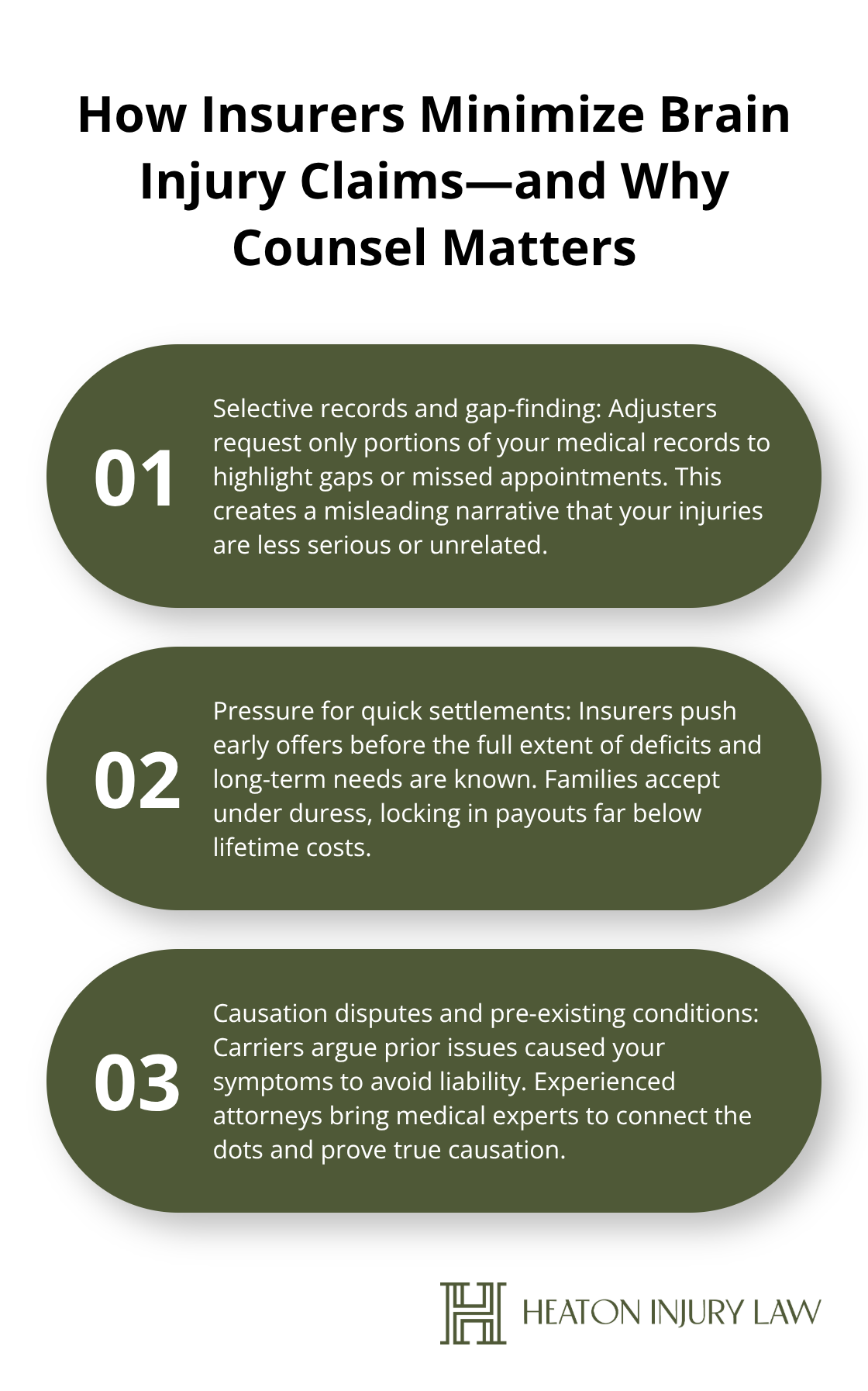
Insurance companies employ dedicated teams trained to minimize brain injury payouts, and they begin their defense strategy the moment your claim arrives. Adjusters use specific tactics designed to reduce what you receive: they request medical records selectively to find gaps in treatment, they pressure families into early settlements before the full extent of injury becomes clear, and they dispute causation by arguing pre-existing conditions contributed to your harm. The American Association for Justice reports that injured claimants who hire attorneys recover approximately 3.5 times more compensation than those negotiating alone. This difference isn’t coincidental-it reflects the structural advantage insurers maintain when facing unrepresented individuals during their most vulnerable moments.
Proving Liability Requires Medical Expertise and Strategic Evidence
Proving liability and quantifying damages in catastrophic brain injury cases demands expertise that extends beyond standard personal injury work. You must establish not only that someone caused your injury but also that the injury’s severity justifies compensation for decades of future care, lost earning potential, and non-economic damages like permanent cognitive impairment. Medical testimony becomes essential-neurologists, rehabilitation specialists, and life care planners must document your condition and project realistic long-term needs with specificity.
Insurance Experts Attack Your Damage Projections Aggressively
Insurance companies attack these projections aggressively, hiring their own experts to argue recovery will be better than anticipated or that certain expenses won’t actually occur. The financial impact chapter showed your lifetime costs approach $4 million, yet many initial settlement offers fall between $200,000 and $800,000, leaving your family responsible for the remaining millions. This gap exposes the fundamental mismatch between what insurers offer and what you actually need.
Comprehensive Life Care Plans Force Fair Settlements
Maximizing compensation requires presenting detailed life care plans that itemize every therapy session, medication, equipment replacement, and caregiver hour for the next 50 years, supported by current market rates and peer-reviewed research on outcomes. These plans transform abstract injury concepts into concrete dollar figures that courts and juries understand. Medical professionals and economists work together to build documentation that reflects actual future expenses rather than insurance company guesses about what you’ll need (or what they hope you’ll accept).
Final Thoughts
The hours immediately following a catastrophic brain injury in Texas determine your family’s financial future. Document everything at the scene-photographs, witness names, police reports, and medical records from day one. Insurance adjusters will contact you within days, often with settlement offers designed to resolve claims quickly before you understand the full scope of your injury, so do not accept any offer or sign documents without legal guidance.
Selecting the right legal team requires understanding their experience with catastrophic cases specifically. General personal injury attorneys lack the specialized knowledge needed to build comprehensive life care plans, coordinate with medical experts, and challenge insurance company projections about your recovery. Your legal team should prepare every case for court, which forces insurers to offer fair settlements rather than hoping you’ll accept lowball numbers.
Your legal team should coordinate with rehabilitation specialists, neuropsychologists, and life care planners to document your actual needs rather than accepting insurance company assumptions about your recovery. This comprehensive approach transforms your case from a simple claim into a detailed financial roadmap that reflects decades of care, therapy, and support your family will require. Contact Heaton Injury Law, PLLC to discuss your catastrophic brain injury claim with attorneys who understand Texas law and the true cost of your recovery.
The information provided in this blog is for general informational purposes only and does not constitute legal advice. Every case is unique, and laws may vary by jurisdiction. Reading this content does not create an attorney-client relationship. For guidance specific to your situation, please consult with a qualified personal injury attorney licensed in Texas.
Artificial intelligence may have been used to assist in generating some text or images in these articles.