

Meredythe | September 14, 2026 | Blog
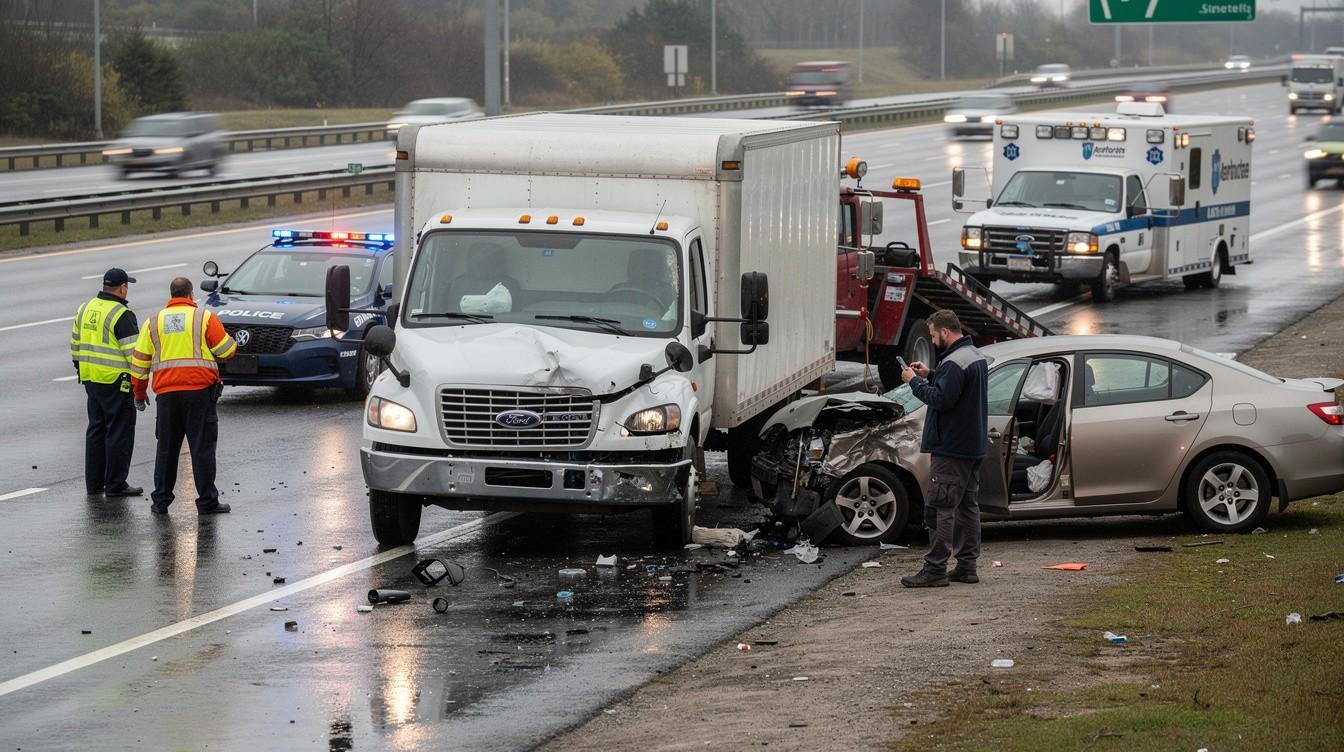
A central Texas truck crash involving a fleet vehicle creates immediate confusion about who’s responsible for your injuries and medical bills. You may face pressure from your employer’s insurance company while dealing with pain and lost wages. At Heaton Injury Law, PLLC, we help injured drivers understand their rights and recover the compensation they deserve.
This guide walks you through the critical steps to protect yourself after a fleet vehicle collision.
Immediate Steps to Take After a Fleet Vehicle Collision
Document the Scene Thoroughly
The first thirty minutes after a fleet crash determine how strong your claim becomes. Your priority is documenting everything before the scene changes, vehicles move, or memories fade. Take photos and videos from multiple angles, capturing vehicle damage, road conditions, traffic signals, skid marks, and the surrounding environment. Use your smartphone to record a voice memo describing what happened while details remain fresh. Accurate scene documentation significantly strengthens injury claims and reduces disputes over fault.
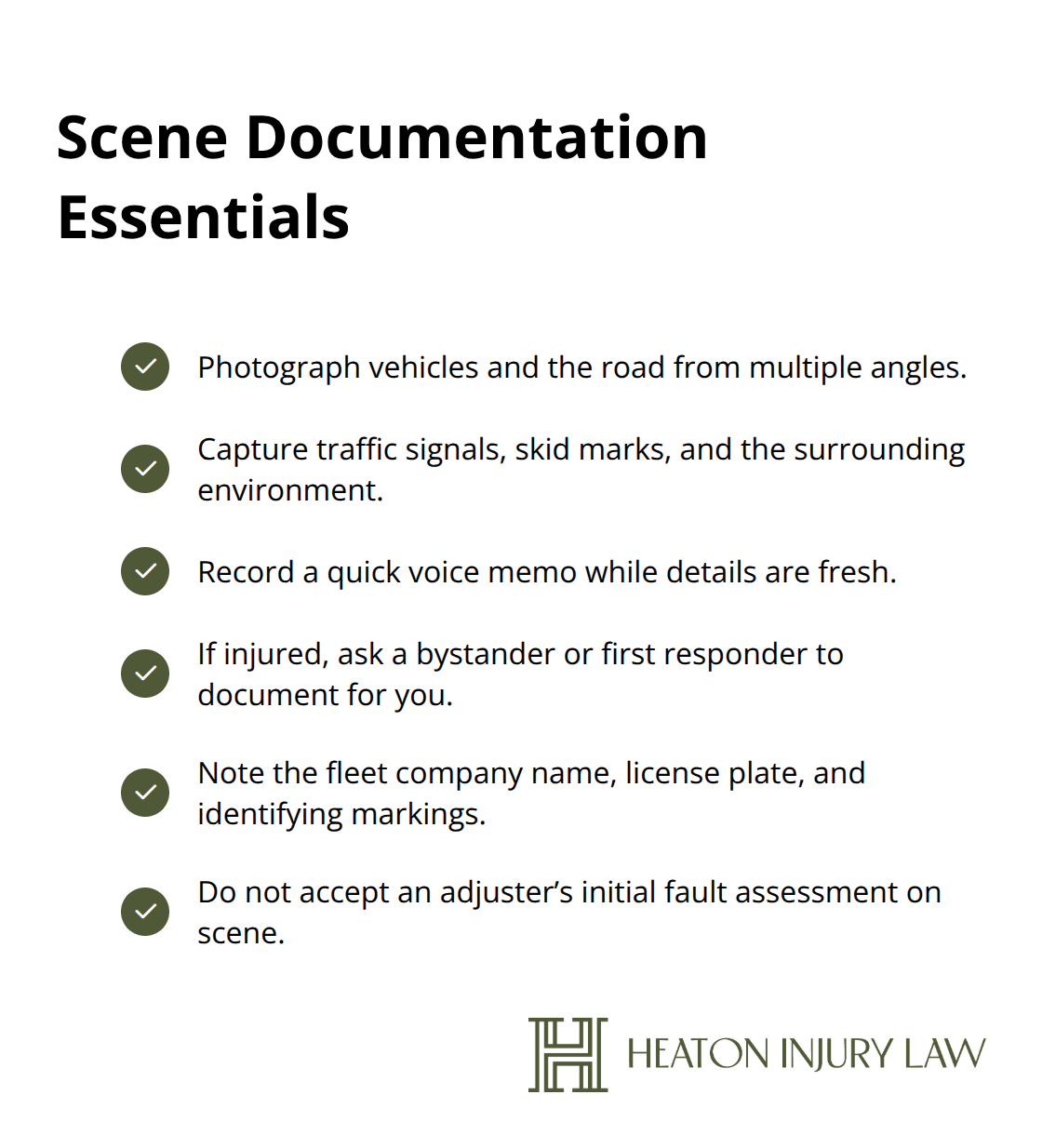
If you’re injured and cannot safely move, ask a bystander or first responder to document the scene for you. Photograph the fleet vehicle’s company name, license plate, and any identifying markings. Do not accept the fleet driver’s insurance adjuster’s initial assessment of fault, as these professionals work to minimize payouts.
Collect Critical Information from All Parties
Get the names, phone numbers, addresses, and insurance information from the other driver, any fleet company representatives, and all witnesses. Write down the exact time, weather conditions, and any statements made by the other driver about what happened. If police respond, obtain the officer’s name and badge number along with the accident report number, which you’ll need later. This information forms the foundation of your claim and prevents disputes about who was present or what occurred.
Report the Accident Strategically
Report the collision to your employer and their insurance company as soon as possible, but approach this carefully. Many fleet drivers worry about job security when reporting accidents, yet federal law protects you from retaliation for reporting workplace injuries truthfully. Provide factual information only, avoiding speculation about fault or your injuries. Keep copies of all written reports and communications.
If you sustained injuries requiring medical attention, seek treatment immediately even if symptoms seem minor, as some injuries develop over hours or days. Texas courts take delayed medical treatment seriously, viewing it as evidence that injuries weren’t significant. Document all medical visits, prescriptions, and expenses. Contact Heaton Injury Law, PLLC before speaking extensively with insurance adjusters, as anything you say can be used against your claim. The insurance company will attempt to settle quickly for far less than your claim is worth.
Understanding who bears financial responsibility for your injuries requires knowledge of how fleet insurance operates differently from standard auto policies.
Understanding Liability and Insurance Coverage for Fleet Crashes
How Fleet Insurance Differs from Personal Auto Policies
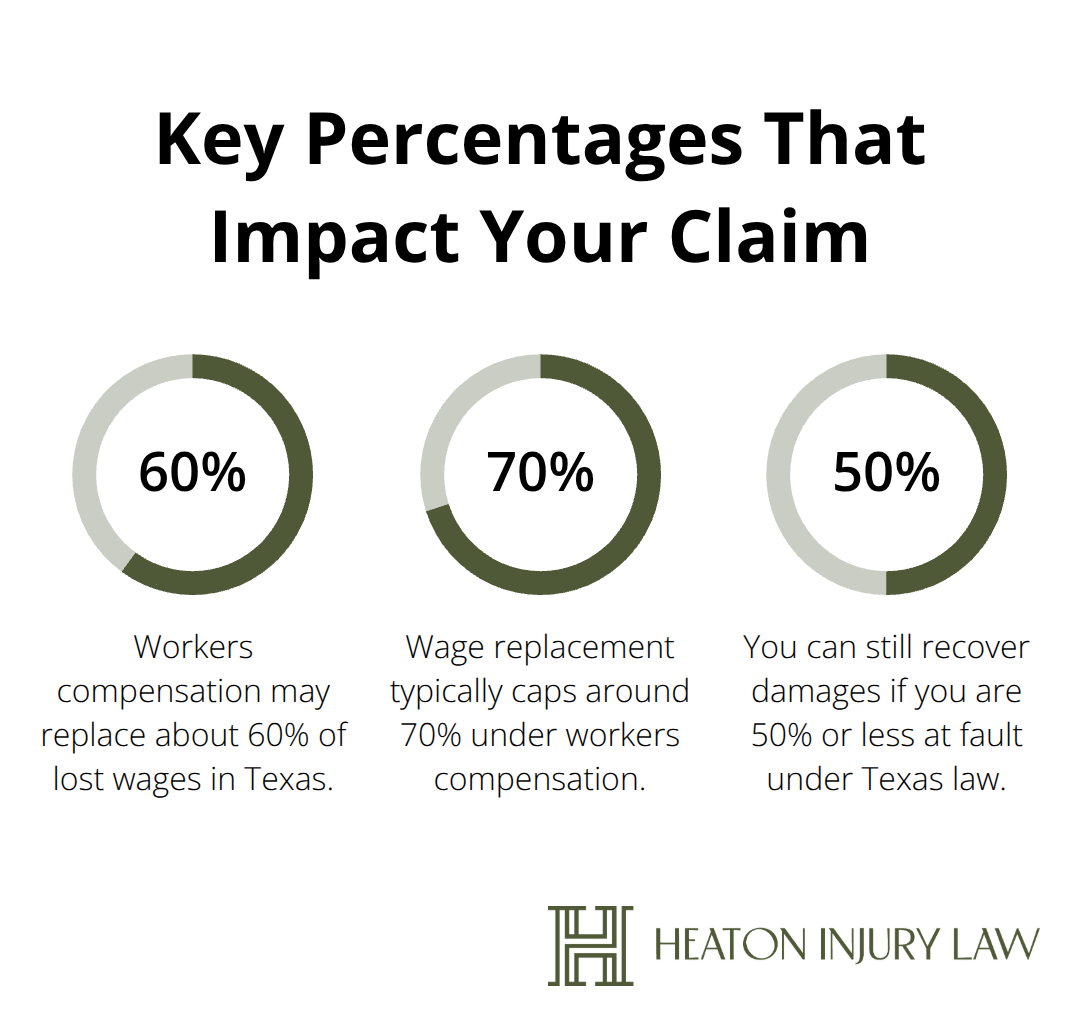
Fleet insurance operates under fundamentally different rules than your personal auto policy, and this distinction directly affects your compensation options. Most fleet policies are commercial policies that cover the vehicle and company liability, not the driver’s personal injuries. The fleet company’s insurer will argue that your employer is responsible for your medical bills through workers compensation, which typically pays only 60 to 70 percent of lost wages and excludes pain and suffering damages.
Texas law, however, allows you to pursue a third-party claim against another driver’s insurance if they caused the collision, even when you’re driving a fleet vehicle. This means you can potentially recover from multiple sources-workers compensation for wage replacement plus a personal injury claim for full damages including pain and suffering. The fleet company’s insurer will not volunteer this information because it reduces their exposure and shifts costs to other insurance carriers.
Determining Fault in Multi-Vehicle Collisions
Determining fault in fleet collisions becomes complicated when multiple vehicles are involved or when the fleet driver shares blame. Texas follows a modified comparative negligence rule, meaning you can still recover damages even if you’re 50 percent at fault, though your award reduces by your percentage of fault. Insurance adjusters will scrutinize every detail of the accident scene, police report, and witness statements to assign maximum fault to you and minimize their company’s liability.
Fleet companies often maintain extensive maintenance records and driver logs that can reveal mechanical failures or violations of federal hours-of-service regulations, which shift liability away from the driver. If the fleet vehicle had defective brakes, worn tires, or the driver exceeded legal driving hours, these facts strengthen your claim significantly. The Texas Department of Transportation reports that commercial vehicle violations contribute to thousands of crashes annually, yet insurance companies routinely suppress this evidence during settlement negotiations.
What Your Policy Covers and Common Exclusions
Your claim’s value depends heavily on establishing that the other party’s negligence-not yours-caused the collision, which requires detailed investigation beyond what police reports typically contain. Many fleet policies contain exclusions for driver negligence, unauthorized vehicle use, or violations of company safety protocols. Insurance companies exploit these exclusions aggressively to deny or reduce payouts, making it essential to understand exactly what your employer’s policy covers before accepting any settlement offer.
Mechanical defects, inadequate vehicle maintenance, and driver fatigue represent common areas where fleet companies bear liability but attempt to shift blame to drivers. Your investigation should identify whether the fleet company failed to maintain the vehicle properly, scheduled unrealistic delivery deadlines that forced speeding, or hired drivers with poor safety records. These factors establish corporate negligence separate from driver error and significantly increase your recovery potential.
Your rights as a fleet driver or injured party in Central Texas extend far beyond what insurance companies initially present to you.
Your Legal Options After a Fleet Vehicle Collision
Multiple Compensation Pathways Available to You
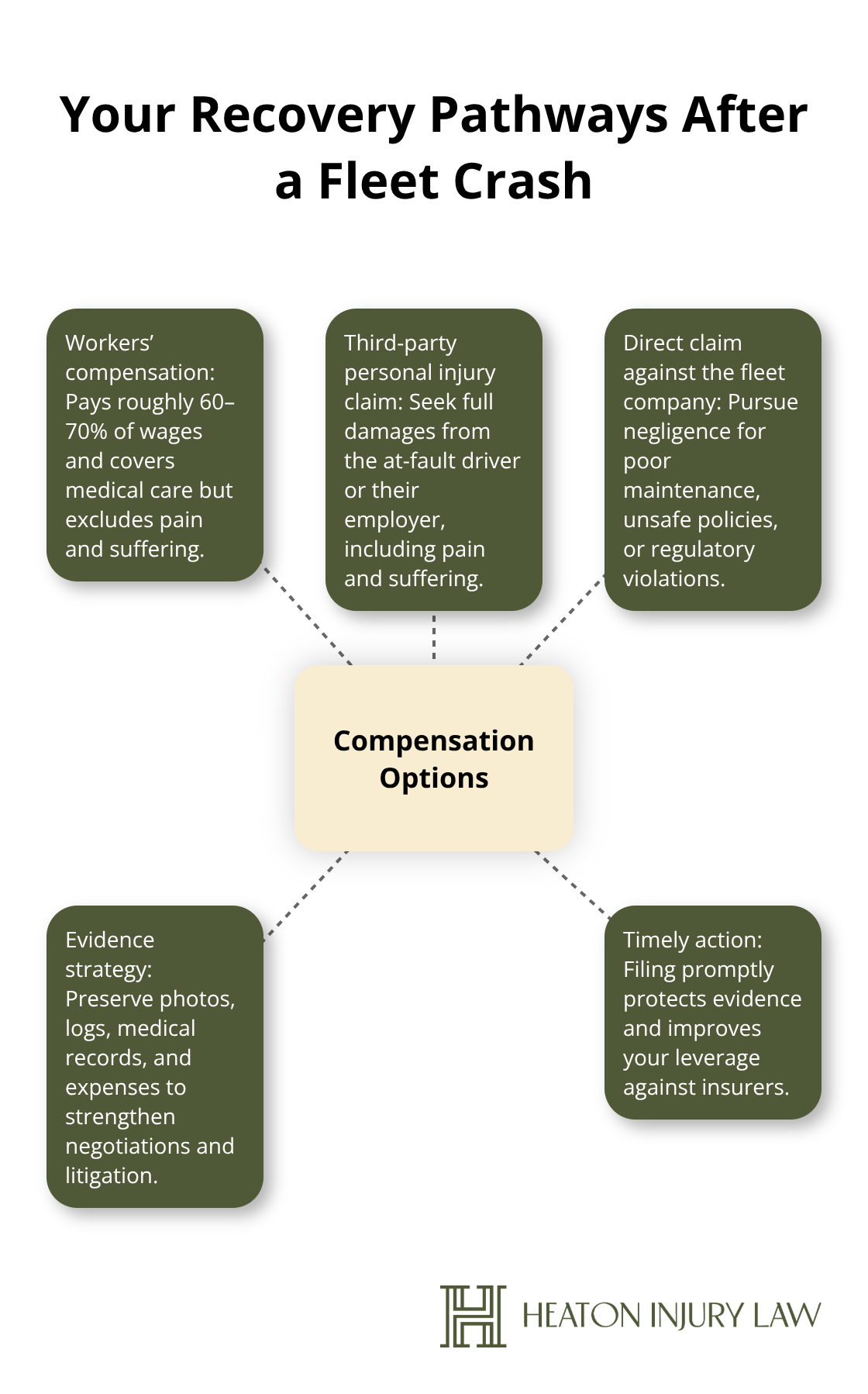
Fleet crashes create a unique legal situation because you’re injured while operating company property, which opens multiple compensation pathways that standard car accidents don’t offer. Most injured fleet drivers focus exclusively on workers compensation, which Texas employers are required to carry, but this represents a significant mistake that costs you thousands in recoverable damages. Workers compensation in Texas pays approximately 60 to 70 percent of your average weekly wage for lost income and covers medical treatment, but it explicitly excludes pain and suffering, permanent scarring, emotional distress, and loss of quality of life. You can simultaneously pursue a workers compensation claim while filing a third-party personal injury claim against the at-fault driver or their employer, and many injured drivers never realize this option exists because insurance adjusters deliberately avoid mentioning it.
The Texas Department of Insurance reports that commercial vehicle accidents result in over 100,000 injuries annually across the state, yet most injured drivers accept inadequate settlements without exploring their full legal rights.
Direct Claims Against the Fleet Company
Your claim against the fleet company itself depends on proving negligence beyond the driver’s actions. If the fleet company failed to maintain the vehicle, hired drivers with documented safety violations, scheduled unrealistic delivery deadlines that encouraged speeding, or violated federal motor carrier regulations, you have grounds for a direct negligence claim against the company separate from the driver’s liability. Fleet companies often carry substantial liability insurance specifically because they understand this exposure, and these policies frequently provide higher coverage limits than individual driver policies.
You should obtain the fleet company’s safety records, maintenance logs, and driver training documentation through discovery, as these documents often reveal systemic negligence that dramatically increases your settlement value. Many fleet companies self-insure or carry high deductibles, meaning they absorb significant portions of settlements, which motivates them to settle substantial claims rather than litigate.
Strategic Timing and Evidence Preservation
The key tactical advantage involves filing your claim promptly, as evidence degrades and witnesses become unavailable, while the fleet company’s liability becomes increasingly difficult to defend over time. Photographs fade in quality, memories shift, and accident scene conditions change with weather and traffic patterns. The sooner you initiate your claim, the stronger your position becomes in negotiations or litigation. Fleet companies understand this reality, which is why they pressure injured drivers to settle quickly for minimal amounts before comprehensive investigations occur.
Final Thoughts
A central Texas truck crash leaves you facing medical bills, lost wages, and uncertainty about your legal options. The steps outlined in this guide protect your claim from the moment the collision occurs through settlement negotiations. Workers compensation alone leaves thousands in damages uncovered, and your right to pursue a third-party claim against the at-fault driver exists separately from your workers compensation benefits.
The insurance company handling your claim will pressure you to settle quickly for minimal amounts because time works against them as evidence strengthens and your investigation deepens. Fleet companies carry substantial liability insurance precisely because they know their exposure to negligence claims, and these policies provide far higher recovery potential than most drivers expect. Your investigation should focus on establishing whether the fleet company failed to maintain the vehicle, hired unsafe drivers, or scheduled unrealistic deadlines that encouraged dangerous driving.
Legal representation fundamentally changes your position in these negotiations. We at Heaton Injury Law, PLLC handle fleet vehicle crashes, workplace injuries, and catastrophic injury claims throughout Central Texas. Contact Heaton Injury Law, PLLC for a free consultation about your fleet crash claim, and we work on contingency, meaning you pay nothing unless we recover compensation for you.
The information provided in this blog is for general informational purposes only and does not constitute legal advice. Every case is unique, and laws may vary by jurisdiction. Reading this content does not create an attorney-client relationship. For guidance specific to your situation, please consult with a qualified personal injury attorney licensed in Texas.
Artificial intelligence may have been used to assist in generating some text or images in these articles.