

Meredythe | October 12, 2026 | Blog

After a serious injury, the last thing you need is financial stress on top of medical bills and lost wages. A contingency fee injury attorney removes that burden by only getting paid if you win your case.
At Heaton Injury Law, PLLC, we work this way because we believe injured Texans shouldn’t have to choose between getting legal help and paying rent. This guide explains how contingency fees work and what they mean for your recovery.
How Contingency Fees Work
No Upfront Costs to You
With a contingency fee arrangement, you pay nothing upfront to hire an attorney. Your lawyer covers case costs-medical record requests, expert witnesses, filing fees, investigation expenses-and only collects a fee from your settlement or judgment if you win. This fundamentally changes how personal injury lawyers approach your case.
Attorney Gets Paid Only if You Win
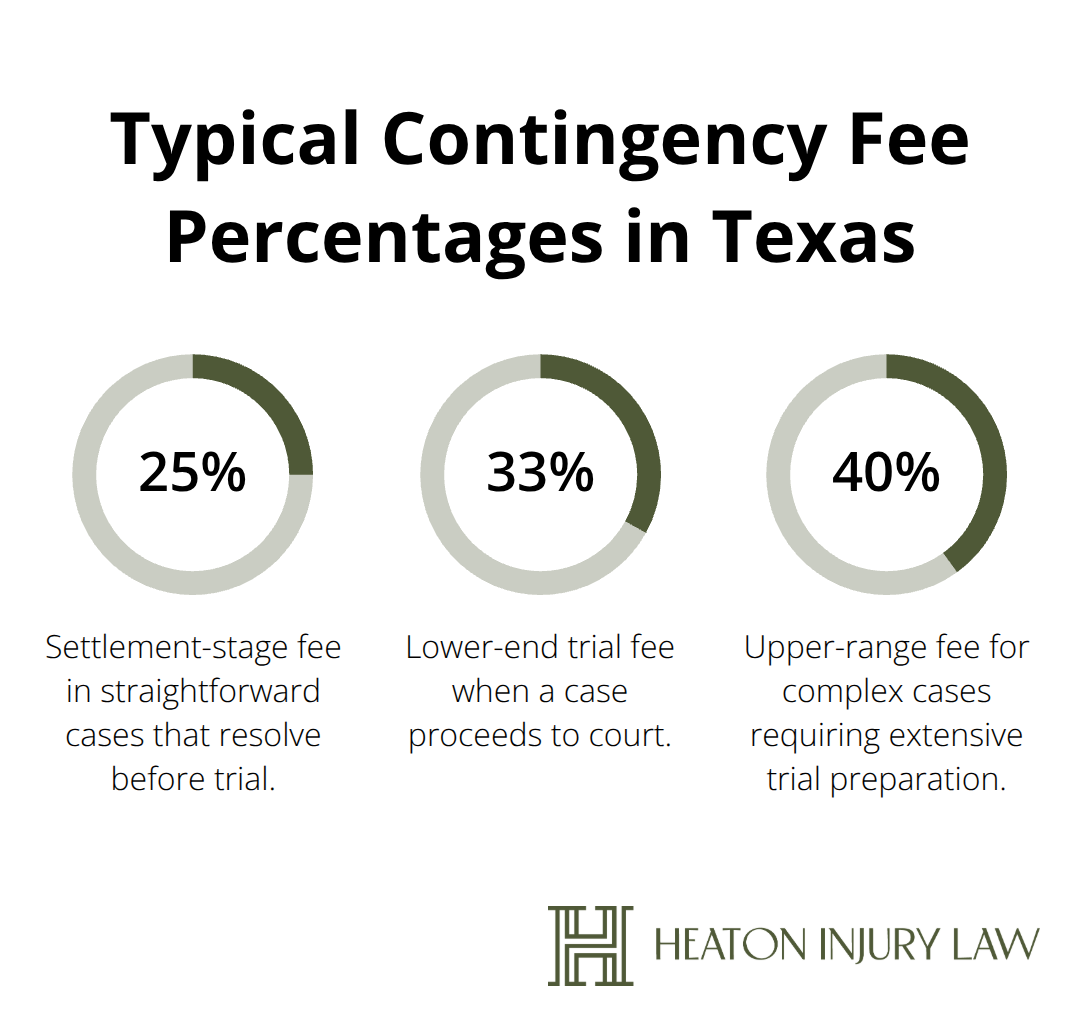
When an attorney’s income depends entirely on your recovery, they have no incentive to rush through your claim or settle for less than it’s worth. The typical contingency fee in Texas personal injury cases ranges from 25% to 40% of your final recovery, though the exact percentage depends on whether your case settles before trial or requires courtroom litigation. A settlement-stage case might cost you 25%, while a case that goes to trial often costs 33% to 40% because the attorney invests substantially more time and resources preparing for trial.
Understanding the Fee Percentage and Agreement Terms
Before you sign any agreement, you need to understand which expenses you’re responsible for separately from the attorney’s fee. Many injured people assume the contingency fee covers everything, but that’s incorrect. You typically pay for court filing fees, deposition costs, medical records retrieval, expert witness fees, and investigative services-these come out of your settlement separate and apart from attorney’s fees.
The fee agreement should clearly itemize which costs you’ll owe and when you’ll owe them (some firms advance these costs and deduct them later, while others require you to pay them as they occur). Reading your fee agreement line by line isn’t paranoid; it’s essential to avoid surprises when your case concludes. Understanding these details now positions you to evaluate what a contingency fee arrangement truly means for your financial recovery.
Why Contingency Fees Give You Real Leverage
Your Attorney’s Success Depends on Your Recovery
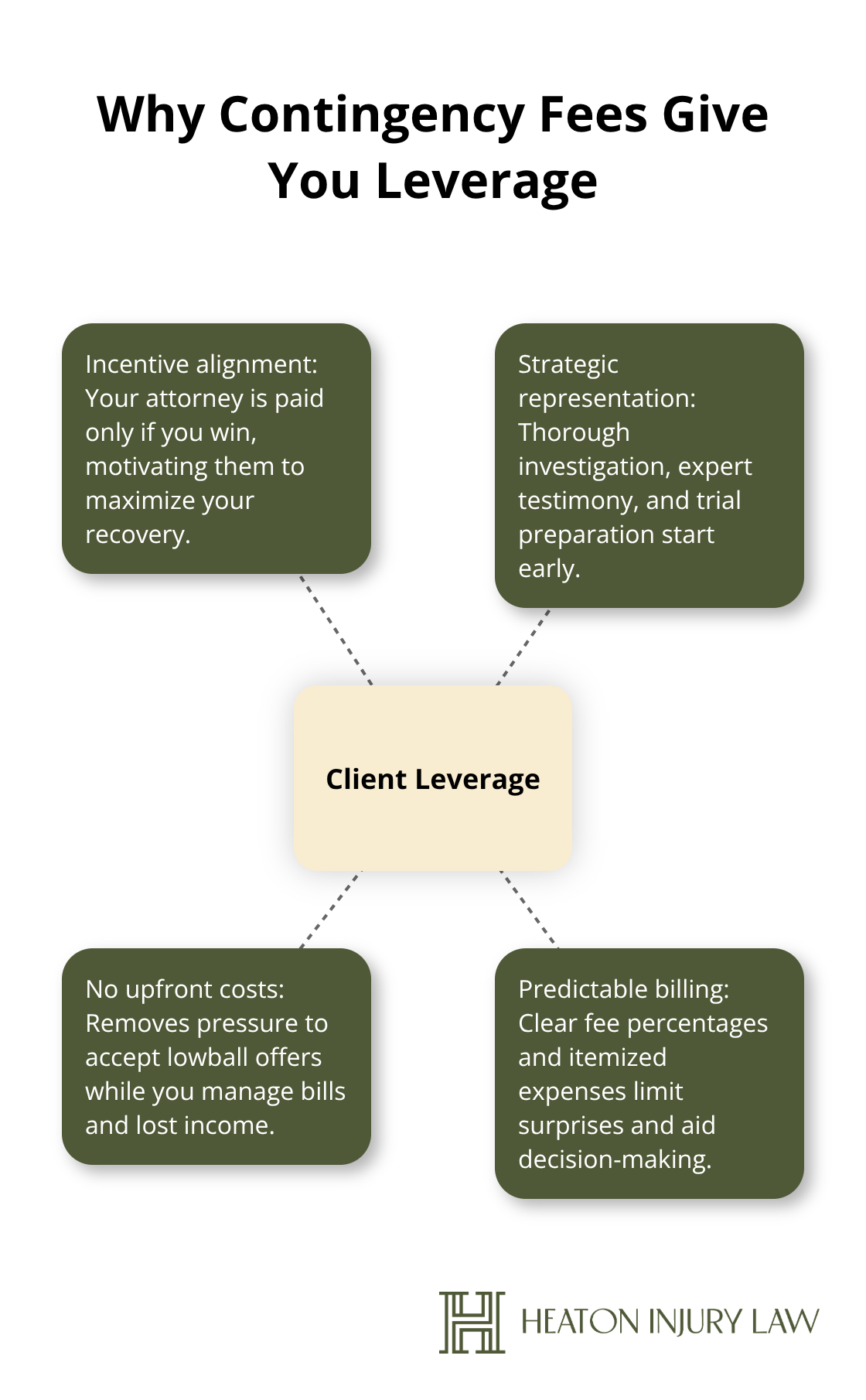
When your lawyer’s paycheck depends entirely on winning your case, they stop viewing you as just another file number. They have skin in the game. This alignment between your interests and theirs creates accountability that hourly billing arrangements simply cannot match. An attorney who bills by the hour receives payment whether your case settles for $50,000 or $150,000, but a contingency fee attorney has every reason to fight for the maximum recovery.
Strategic Representation From Day One
Your attorney won’t recommend settling quickly just to close the file. They investigate thoroughly, gather expert testimony when needed, and prepare for trial if the insurance company refuses fair compensation. This motivation matters most when insurers lowball offers. According to data from the American Association for Justice, injured people who hire attorneys recover significantly more than those who negotiate alone, with the median settlement being substantially higher even after attorney fees are deducted. The financial barrier that stops most injured Texans from getting legal help simply disappears with contingency arrangements.
No Upfront Costs Remove Desperation
You don’t need to scrape together thousands of dollars while managing medical bills and lost income. No upfront retainers. No monthly invoices. No pressure to settle quickly because you can’t afford to keep your attorney working on your case. This removes the desperation that insurance companies rely on when they make lowball offers to unrepresented claimants. You can afford to wait for fair compensation because your attorney advances the cost of expert witnesses, medical record requests, and investigation expenses.
Transparency Eliminates Billing Surprises
Your fee agreement specifies exactly what percentage you’ll pay and under what circumstances, eliminating the surprise invoices that plague hourly billing arrangements. Some attorneys hide their true costs behind vague billing descriptions, but contingency agreements force clarity about case expenses versus attorney fees. This predictability lets you make informed decisions about your recovery. If you receive a settlement offer, you’ll know precisely what you’ll net after attorney fees and case expenses.
That certainty helps you evaluate whether an offer is genuinely fair or whether you should reject it and move forward to trial-a decision that becomes much clearer when you understand the full financial picture.
What You Actually Pay With Contingency Fees
Quality Representation Doesn’t Suffer on Contingency
Contingency fee arrangements don’t mean your attorney works for free or that quality suffers because they’re not receiving hourly payments. This misconception costs injured Texans thousands of dollars. Attorneys who work on contingency take cases they believe they can win, which means they’re highly selective about which claims they accept. They invest their own money upfront for expert witnesses, medical records, court filings, and investigation expenses, betting on your recovery to recoup those costs plus their fee. This financial risk actually creates stronger incentive for thorough representation than hourly billing does.
An attorney billing by the hour gets paid regardless of outcome, but a contingency attorney only profits if you win substantially. The quality difference is real and measurable. Studies from the American Bar Association show that contingency-fee cases receive more aggressive investigation and trial preparation than hourly cases because the attorney’s financial stake depends entirely on winning. Your case gets the resources it needs because your attorney cannot afford to lose.
Case Expenses Separate From Attorney Fees
The critical mistake many injured people make is assuming the contingency fee covers all costs. It doesn’t. After your settlement or judgment, case expenses get deducted separate from attorney’s fees. If your case requires a medical expert to testify about your injuries, that expert costs anywhere from $2,000 to $10,000 depending on their credentials and complexity.
Court filing fees in Texas range from $200 to $500. Deposition transcripts cost $3 to $8 per page. Medical records requests average $100 to $500 per provider.
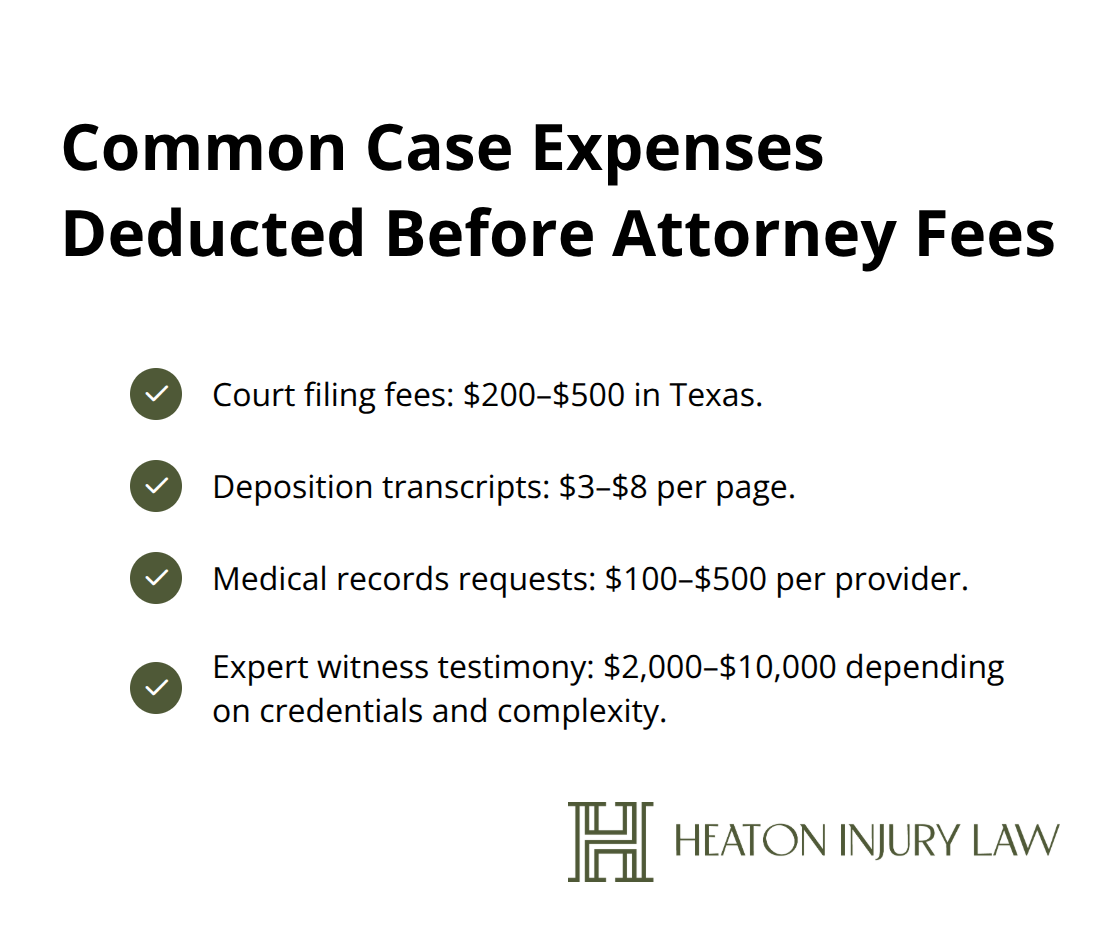
These expenses accumulate quickly, and you’re responsible for them. Some firms advance these costs and deduct them later, while others require payment as they occur.
How Fee Percentages Vary by Case Stage
Fee percentages vary significantly based on case stage and complexity. A straightforward car accident claim that settles before trial might cost 33% of your recovery. A catastrophic injury case requiring multiple expert witnesses and trial preparation could reach 40% or higher. A case with multiple liable parties, significant property damage investigation, or complex liability questions costs more because your attorney invests substantially more time and resources.
Understanding these distinctions upfront helps you know exactly what percentage applies to your specific situation and circumstances.
Final Thoughts
Contingency fee arrangements eliminate the financial gatekeeping that prevents most injured Texans from accessing quality legal representation. You shouldn’t have to choose between paying medical bills and hiring a contingency fee injury attorney who can fight for fair compensation. When your attorney only gets paid if you win, that alignment removes the financial desperation that insurance companies exploit when dealing with unrepresented claimants.
Understanding your fee agreement protects your interests and prevents surprises when your case concludes. Read the agreement carefully to know which expenses you’ll owe separately from your attorney’s percentage, whether your firm advances costs upfront or requires payment as they occur, and exactly what percentage applies to your specific situation. These details matter because a $100,000 settlement looks very different after case expenses and attorney fees are deducted, and clarity about these numbers upfront lets you evaluate settlement offers with confidence.
We at Heaton Injury Law, PLLC handle cases on contingency because we believe injured people deserve representation without financial barriers. Led by Meredythe Heaton Wilkinson with 14+ years of experience on both sides of litigation, our Austin-based firm handles car, motorcycle, truck, brain and catastrophic injuries, rideshare crashes, slip-and-fall, workplace injuries, and wrongful-death claims. Contact Heaton Injury Law, PLLC to discuss your case and understand how contingency fees work for your specific situation.
The information provided in this blog is for general informational purposes only and does not constitute legal advice. Every case is unique, and laws may vary by jurisdiction. Reading this content does not create an attorney-client relationship. For guidance specific to your situation, please consult with a qualified personal injury attorney licensed in Texas.
Artificial intelligence may have been used to assist in generating some text or images in these articles.