

Meredythe | September 15, 2026 | Blog
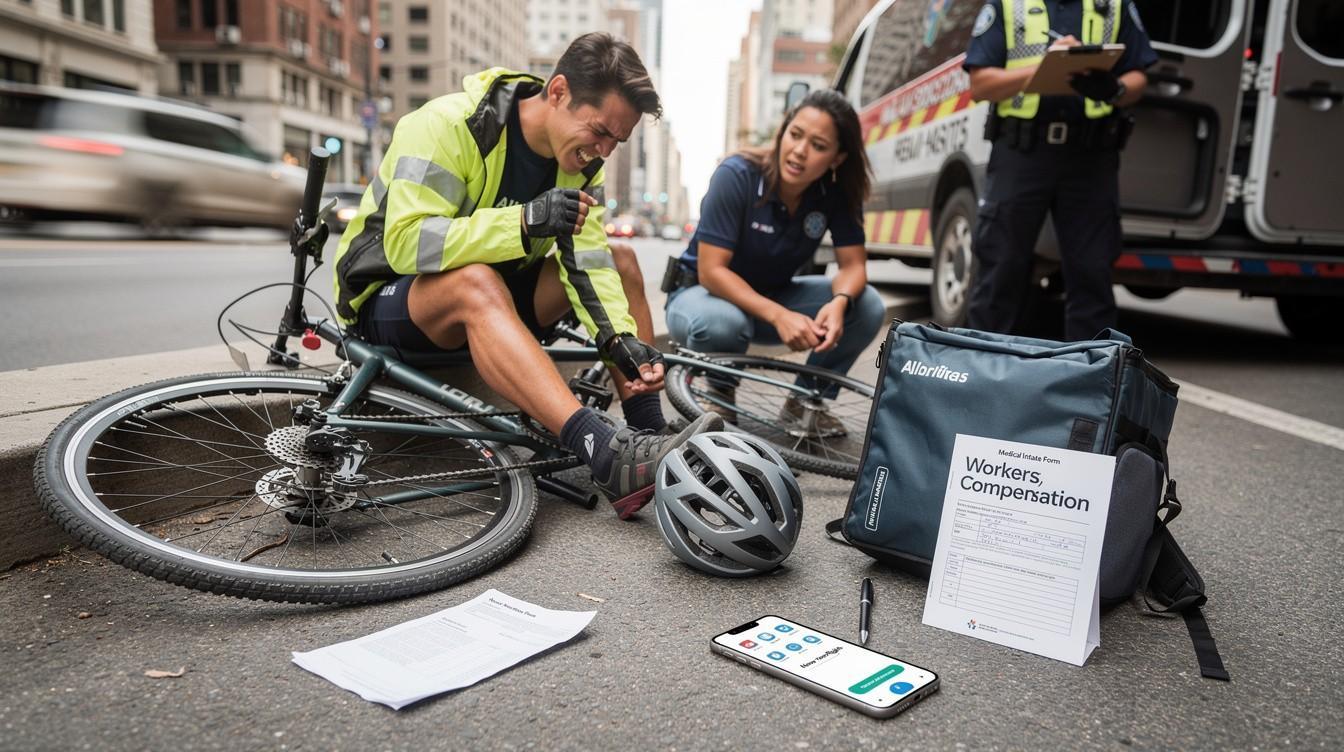
Gig work in Texas has exploded over the past decade, but the legal protections haven’t kept pace. When you’re injured driving for a rideshare company, delivering food, or completing tasks through an app, you’re often left in a gray zone where traditional worker protections don’t apply.
At Heaton Injury Law, PLLC, we’ve seen firsthand how gig worker injury cases in Texas differ dramatically from standard workplace accidents. This guide walks you through your actual rights and the compensation options available to you.
How Gig Work Injuries Fall Outside Traditional Worker Protections
When you suffer an injury as a gig worker in Texas, the legal system treats you fundamentally differently than a traditional employee. Texas workers’ compensation law protects most employees with medical benefits and wage replacement, but it explicitly excludes independent contractors. According to the Texas Department of Insurance, Division of Workers’ Compensation, workers’ compensation coverage is optional for employers, and most gig platforms simply don’t subscribe. If you’re injured driving for a rideshare company, delivering groceries, or completing tasks through an app, you cannot file a workers’ compensation claim. The platform won’t cover your medical bills or lost income through that system. Instead, you must pursue the civil court system where you prove negligence or liability-a far more difficult and expensive path than workers’ compensation claims. This gap exists because gig platforms classify their workers as independent contractors rather than employees, a classification that shifts all risk and liability onto you.
The Classification Problem That Destroys Your Protections
Gig platforms structure their relationships to avoid employer obligations. They call you an independent contractor, which sounds professional but actually means you have zero access to workers’ compensation, unemployment insurance, or employer-provided health coverage. The U.S. Department of Labor has found that misclassification runs rampant in the gig economy, yet platforms continue the practice because the financial incentive is enormous. When you suffer an injury, the platform argues they’re not responsible because you’re not their employee. Their insurer points to the platform’s policy, which typically covers you only during active work periods and excludes certain types of injuries. Meanwhile, you pay for your own medical care, physical therapy, and lost wages while fighting to prove someone else was negligent. This classification trap means you lack the safety net that traditional employees take for granted.
Where Liability Actually Lands When You’re Hurt
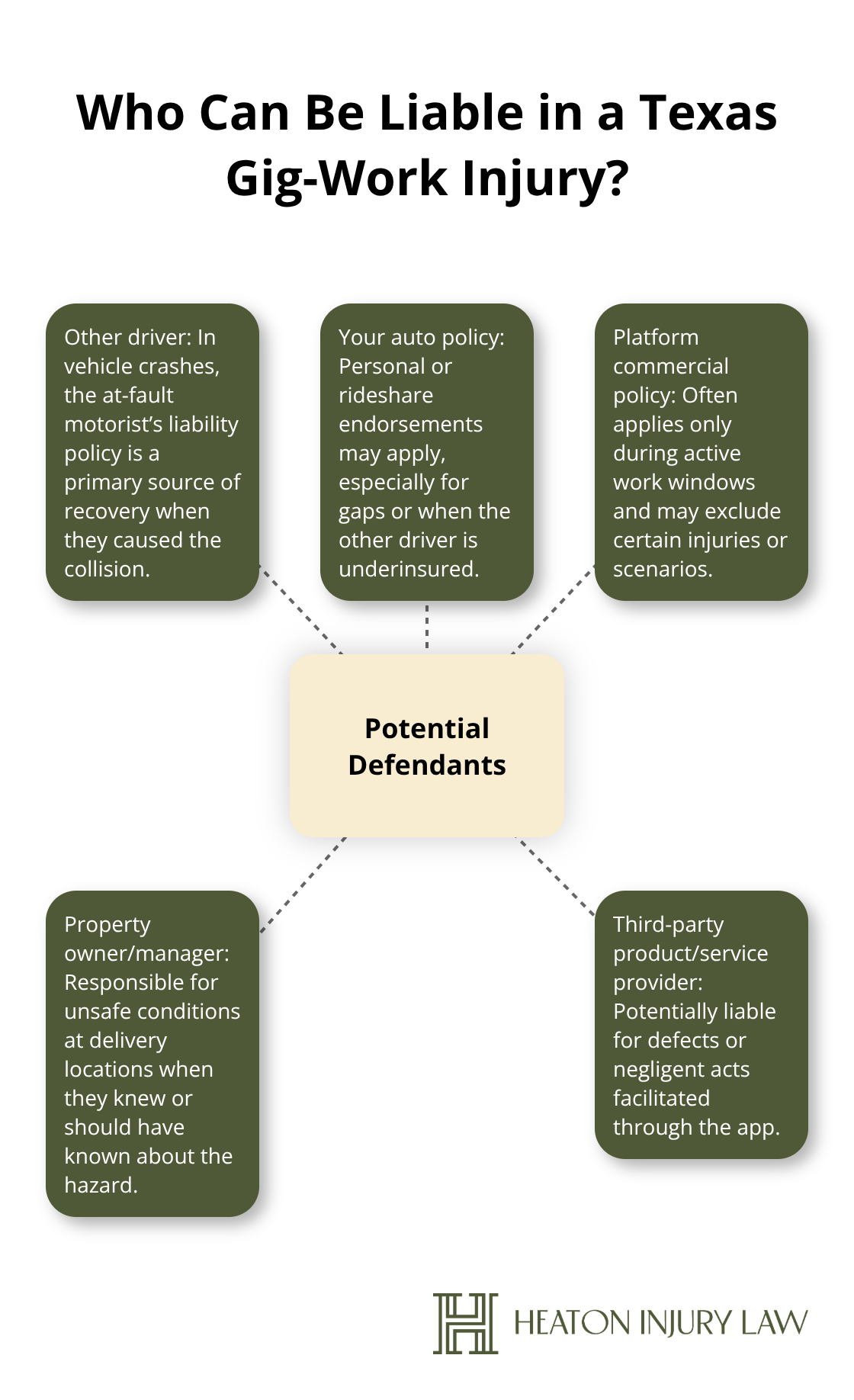
The liability question in gig work injuries remains deliberately murky, and that murkiness benefits the platforms. If you suffer an injury in a car accident while driving for rideshare, liability might fall on the other driver, your own insurance, or the platform’s commercial policy-depending on whether you were actively working, waiting for a job, or in between trips. Each scenario triggers different coverage, and platforms have structured their policies to minimize their exposure. If you suffer an injury due to unsafe working conditions (like delivering to a building with broken stairs), the platform claims they don’t control the property and therefore aren’t liable. If you suffer an injury due to a defective product or service offered through the app, the platform argues they’re merely a technology intermediary, not responsible for third-party actions. This fragmented liability landscape requires you to investigate multiple potential defendants and insurance policies simultaneously. The Texas Department of Insurance confirms that non-subscriber employers face direct civil lawsuits for damages including medical costs, lost wages, and pain and suffering-but you must prove negligence, which requires legal expertise and documentation that most injured workers don’t initially gather.
Why Third-Party Claims Become Your Primary Path Forward
Because workers’ compensation doesn’t apply to you, third-party liability claims become your main avenue for recovery. You may hold the other driver liable in a vehicle accident, the property owner liable for unsafe conditions, or the platform liable for negligent hiring or failure to maintain safe working conditions. Each claim requires different evidence and follows different legal rules. The platform’s own insurance policy might cover you during active work, but only if you meet specific conditions outlined in their contract. Understanding which third parties bear responsibility for your injury-and which insurance policies actually cover your losses-separates successful claims from denied ones. This complexity is why injured gig workers in Texas need to act quickly and strategically after an injury occurs.
What You Must Do Immediately After a Gig Work Injury
The first 48 hours after your injury determine whether you will successfully recover compensation or watch your claim collapse. Most gig workers make critical mistakes during this window because they do not understand that the burden of proof falls entirely on them. You cannot rely on the platform to document anything fairly or thoroughly. The Texas Department of Insurance emphasizes that non-subscriber employers face direct civil liability, but only if you build an airtight case from day one.
Seek Medical Treatment and Create Your Foundation
Act immediately to obtain medical treatment, even if the injury appears minor. Request a written medical report that specifically describes how the injury occurred, what activities you performed, and the exact date and time. This medical record becomes your foundation for proving causation later.
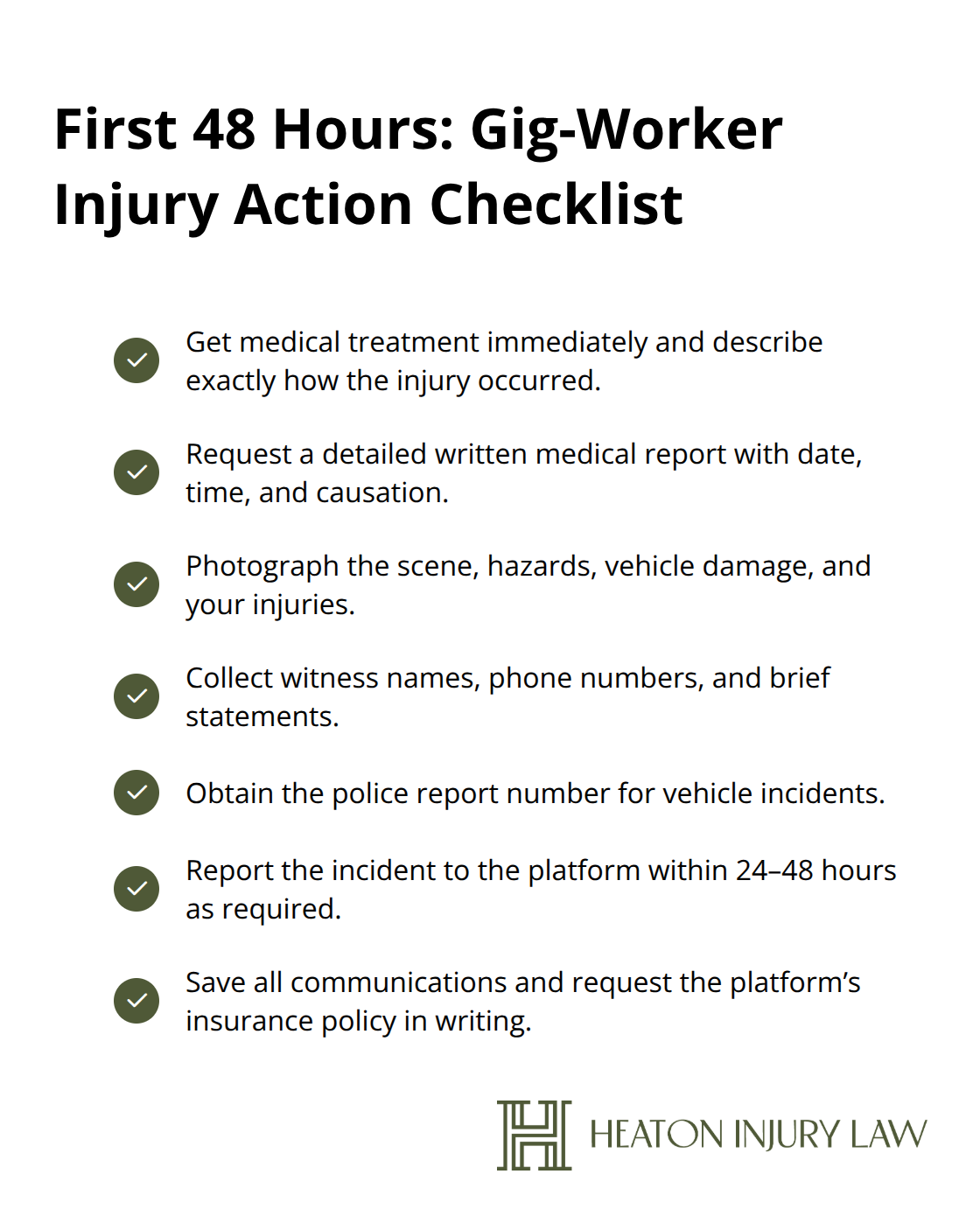
Photograph the accident scene, any hazards, vehicle damage, or injuries before conditions change. Collect contact information from every witness, including their full names, phone numbers, and what they observed. If you suffered an injury in a vehicle accident, obtain the police report number and file your own supplemental report with the rideshare or delivery platform within the timeframe specified in their terms of service (typically within 24 to 48 hours). Do not minimize your injuries or accept the platform’s initial settlement offer without legal review. Platforms train their response teams to minimize payouts, and their initial offers rarely reflect the true cost of your medical care, lost income, or future complications.
Document Your Work History with Precision
Platforms deliberately make work history documentation difficult, so you must act strategically. Screenshot your app activity showing the date, time, and nature of the work you performed when injured. Save your earnings records, delivery confirmations, or job completion timestamps. Collect any communications with the platform, including messages about the incident, platform policies, or coverage details. The platform’s insurance policy contains specific exclusions and coverage limits that determine what compensation is available, so request this policy document in writing and keep copies of all correspondence. If the platform denies coverage or claims you were not actively working, your documented work history directly contradicts their argument.
Build Evidence for Third-Party Claims
Third-party claims require you to prove negligence, which means you must gather evidence that another party owed you a duty of care and breached it. If injured in a vehicle accident, the other driver’s insurance company will contact you, but never provide a recorded statement without legal counsel present. Insurance adjusters use recorded statements to trap you into admissions that undermine your claim. If you suffered an injury due to unsafe conditions at a delivery location, document the hazard with photos and written descriptions of what created the dangerous condition. For misclassification claims against the platform itself, compile evidence showing the platform controlled your work conditions, set your compensation, and exercised authority over your performance despite calling you an independent contractor. This documentation transforms your case from a weak he-said-she-said situation into a compelling factual record that third-party insurers and civil courts take seriously.
Protect Your Rights Before Speaking to Insurers
Never communicate with any insurance company without understanding the implications of your statements. Insurance adjusters will attempt to minimize their company’s liability by obtaining admissions from you that contradict your injury claim. Request all policy documents in writing and maintain copies of every communication. The platform’s coverage terms determine what compensation is available to you, and these terms often contain language designed to exclude your specific injury scenario. Understanding these exclusions before you speak to an adjuster allows you to counter their arguments with facts rather than emotion.
Your documented evidence and medical records now form the foundation for pursuing compensation through civil claims. The next step involves understanding which parties bear legal responsibility for your injury and how to hold them accountable.
How to Recover Compensation as a Gig Worker
After documenting your injury and work history, you face the critical question of where compensation actually comes from. Third-party liability claims form the backbone of gig worker recovery in Texas because workers’ compensation simply does not apply to you. When you suffer an injury during active work, you can pursue the driver who hit you, the property owner whose negligence caused your fall, or the platform itself if they failed to maintain safe working conditions or hired someone with a violent history. The key distinction separates active work from waiting periods. If you were actively completing a job when injured, the platform’s commercial insurance typically covers you during that specific window. If you were waiting between jobs or traveling to pick up an assignment, coverage becomes murky and often requires litigation to establish.
Understanding Third-Party Liability in Vehicle Accidents
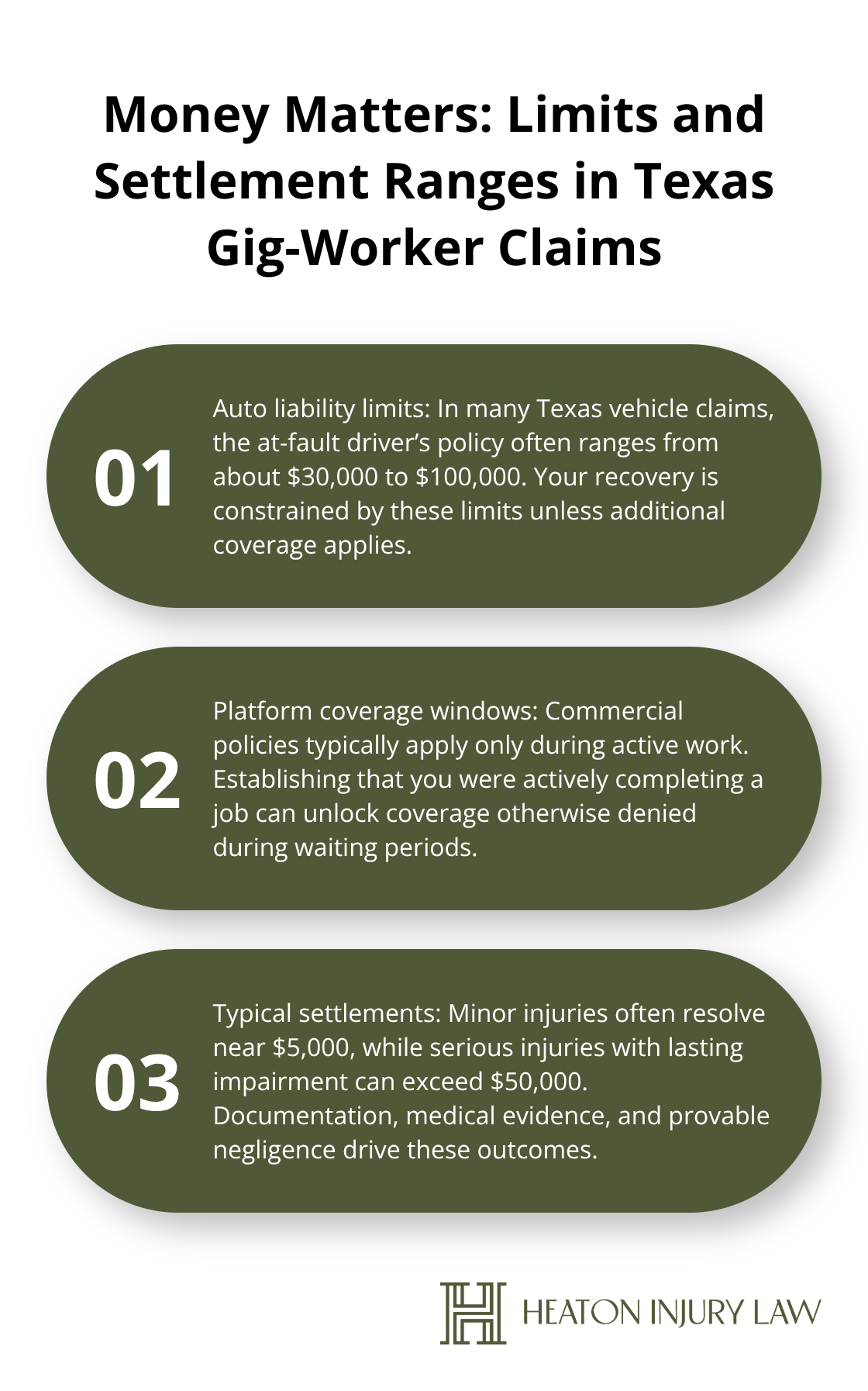
Vehicle accidents represent the highest-value claims because the at-fault driver carries liability insurance, and their policy limits typically range from $30,000 to $100,000 in Texas, depending on coverage levels. According to the Texas Department of Insurance, non-subscriber employers face direct civil liability for medical costs, lost wages, and pain and suffering, but you must prove the platform or third party acted negligently. This means gathering evidence that the defendant owed you a duty of care, breached that duty, and caused your injury. The other driver’s insurance company will contact you, but never provide a recorded statement without legal counsel present. Insurance adjusters use recorded statements to trap you into admissions that undermine your claim.
Slip-and-Fall Claims at Delivery Locations
Slip-and-fall claims at delivery locations often yield lower settlements because property owners argue they did not know about the hazard, making your photographic evidence and witness statements essential to proving negligence. Document the hazard with photos and written descriptions of what created the dangerous condition. If you suffered an injury due to unsafe conditions at a delivery location, this documentation transforms your case from a weak he-said-she-said situation into a compelling factual record that third-party insurers and civil courts take seriously.
Direct Liability Claims Against Platforms
Personal injury lawsuits against the platform itself demand a different approach because platforms aggressively defend against direct liability claims. You must prove the platform exercised control over your work despite classifying you as an independent contractor, or that they knew about dangerous conditions and failed to warn you. Misclassification claims succeed when you document that the platform dictated when you worked, how you performed tasks, what equipment you used, and how much you earned, contradicting the independent contractor label. The U.S. Department of Labor has documented widespread misclassification in the gig economy, yet platforms continue the practice because the financial benefit of avoiding employment obligations exceeds litigation costs.
Negotiating with Insurance Companies for Maximum Recovery
Never accept the first settlement offer from an insurance company. Insurance adjusters calculate initial offers assuming you lack legal representation and do not understand policy limits or comparable settlements. Request the full policy document, which specifies coverage limits, exclusions, and whether coverage applies to your specific injury scenario. Many platforms structure their policies to exclude certain injury types or to limit coverage during non-active work periods, creating gaps you can exploit by proving you were actually working when injured. Demand written explanations for any coverage denials, and escalate to the insurance company’s supervisor if the adjuster refuses reasonable requests for documentation. The Texas Department of Insurance operates a complaint process for denied claims, and filing a formal complaint pressures insurers to reconsider their position. Settlement amounts for gig worker injuries typically range from $5,000 for minor injuries to $50,000 or more for serious cases involving permanent impairment, but these numbers depend entirely on your documentation, medical evidence, and ability to prove liability.
Final Thoughts
Gig worker injury in Texas leaves you without the safety net that traditional employees receive, but it does not leave you without options. The path forward requires immediate action, strategic documentation, and a clear understanding that the burden of proving negligence falls entirely on you. Your medical records, photographs, witness statements, and work history form the foundation of every claim you pursue, and third-party liability claims against drivers, property owners, or the platform itself become your primary avenue for recovery because workers’ compensation simply does not apply to independent contractors in Texas.
Insurance adjusters count on your uncertainty and your desire to resolve the situation quickly, offering settlements that cover only a fraction of your actual losses. Your documented evidence transforms weak claims into compelling cases that insurers take seriously, and acting within the first 48 hours to seek medical treatment, photograph the scene, collect witness information, and preserve all communications with the platform makes the difference between recovering full compensation and accepting inadequate payouts. Never provide recorded statements to insurance companies without legal counsel present, and request the platform’s insurance policy in writing to understand what coverage actually applies to your injury.
We at Heaton Injury Law, PLLC have handled rideshare crashes, slip-and-fall claims, and workplace injuries for years, using insider knowledge of how insurance companies operate to maximize your recovery. Contact Heaton Injury Law, PLLC for a consultation about your rights and options after a gig worker injury in Texas.
The information provided in this blog is for general informational purposes only and does not constitute legal advice. Every case is unique, and laws may vary by jurisdiction. Reading this content does not create an attorney-client relationship. For guidance specific to your situation, please consult with a qualified personal injury attorney licensed in Texas.
Artificial intelligence may have been used to assist in generating some text or images in these articles.