

Meredythe | September 22, 2026 | Blog
Rideshare accidents happen fast, but the aftermath moves slowly. If you’ve been injured in an Uber or Lyft crash in Texas, you’re facing medical bills, lost income, and insurance companies that won’t return your calls.
We at Heaton Injury Law, PLLC help injured passengers and drivers navigate rideshare injury claims in Texas. This guide walks you through what happens after a crash and how to get the compensation you deserve.
Who’s Actually Liable After Your Rideshare Crash
Three Insurance Layers Determine Your Payout
Rideshare crashes in Texas create a complex liability landscape that catches most injured people off guard. The moment your Uber or Lyft driver hits another vehicle or causes you to collide with something, three separate insurance layers potentially come into play, and figuring out which one pays first determines whether you receive full compensation or get stuck fighting coverage gaps. The driver’s personal auto insurance activates immediately when the app is off, but once the driver accepts a ride request and the app is active, the rideshare platform’s contingent coverage kicks in alongside or replaces the driver’s personal policy.
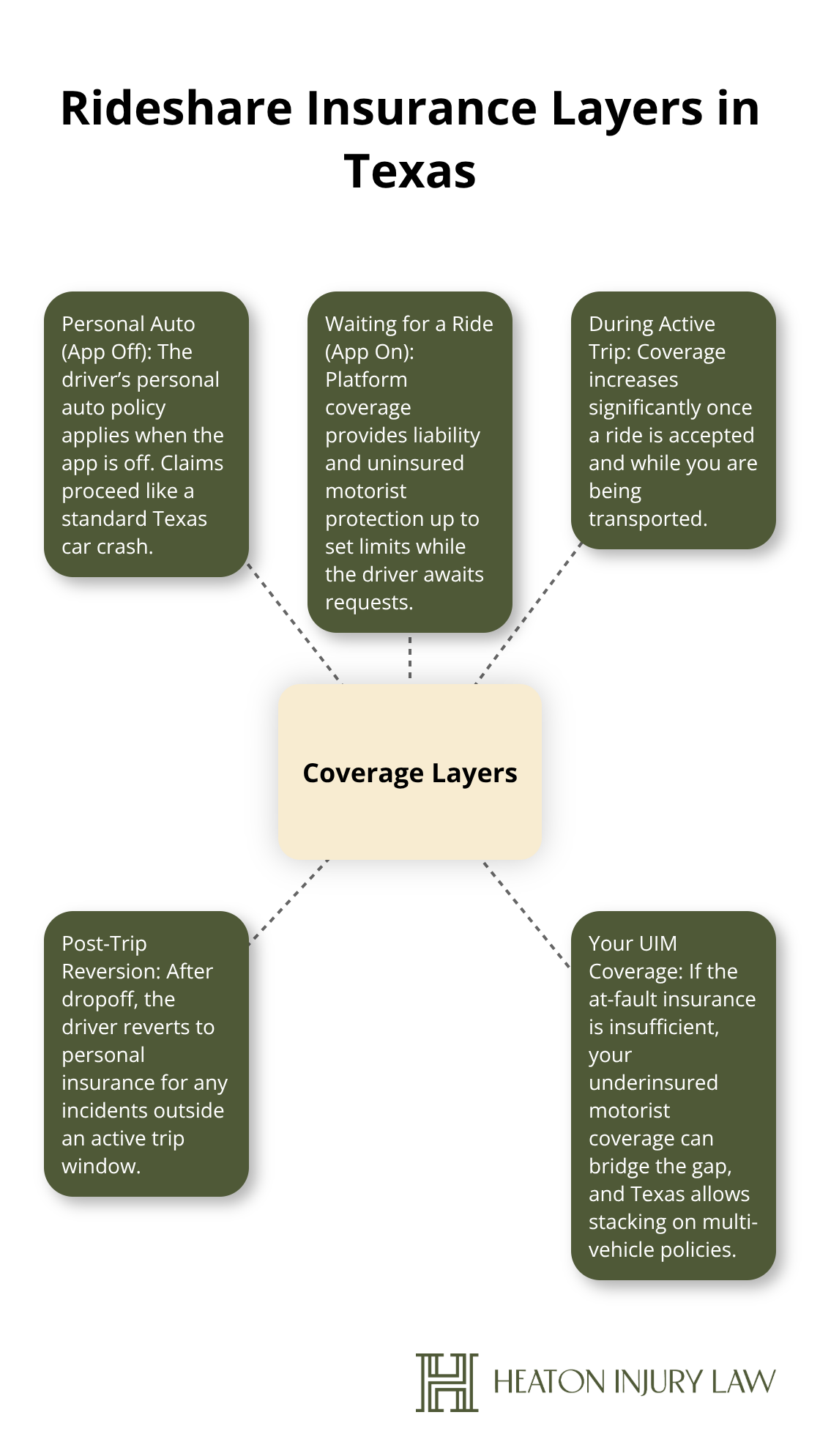
Texas Department of Insurance guidelines specify that rideshare coverage windows shift depending on trip stage: when the driver waits for a ride, platform coverage provides liability and uninsured motorist protection up to certain limits; when actively transporting you, coverage increases significantly; and once you exit, the driver reverts to personal insurance. This matters tremendously because if the at-fault driver carries minimal personal coverage, you need the rideshare company’s layer to avoid a shortfall. Your own underinsured motorist coverage also plays a role-if the liable driver’s total available insurance falls short of your damages, your UIM coverage can bridge the gap, and Texas allows stacking options that multiply your protection across multiple vehicles on your policy.
Texas Comparative Fault Reduces Your Recovery
Texas comparative fault law directly impacts your recovery amount and your negotiating position with insurers. Under the modified comparative negligence rule from Texas Civil Practice and Remedies Code Section 33.001, you can recover damages only if you are 50 percent or less at fault for the crash; if you are found more than 50 percent responsible, you cannot recover anything. Your damages get reduced by your percentage of fault, so if you are determined 20 percent at fault and your total damages are $100,000, your recovery drops to $80,000.
Insurance adjusters routinely inflate the other party’s fault percentage to shrink your payout, which is why documenting the crash scene, obtaining the police report, and collecting witness statements immediately becomes your strongest defense against inflated fault assignments. The statute of limitations for filing a rideshare injury lawsuit in Texas is two years from the crash date according to Texas Civil Practice and Remedies Code Section 16.003, which sounds like plenty of time but disappears quickly once medical treatment ends and settlement negotiations begin.
Non-Economic Damages Have No Cap in Texas
Unlike medical malpractice claims, Texas imposes no cap on non-economic damages like pain and suffering in standard personal injury cases, meaning your compensation for physical pain, emotional distress, and quality-of-life losses can be substantial if your injuries warrant it. The rideshare driver remains personally liable for negligent driving-distracted driving, speeding, or failing to yield all create clear liability-but the rideshare company itself faces vicarious liability only if you were an active passenger during an ongoing trip, which is why trip status and timing matter enormously when establishing who pays.
Understanding these three liability layers and how Texas law applies to your specific situation positions you to identify all available compensation sources before you negotiate with adjusters or consider settlement offers. The next section walks you through the immediate steps you must take at the crash scene to preserve evidence that supports your liability claims and protects your right to recover.
What to Do Immediately After Your Rideshare Crash
Act Fast at the Scene to Preserve Evidence
The first hour after a rideshare crash determines whether you’ll have strong evidence or weak documentation when insurers start investigating. Call 911 immediately even if injuries seem minor-the police report becomes your official record of fault, vehicle damage, and scene conditions, and the National Highway Traffic Safety Administration confirms that crash reports are critical evidence for establishing liability. While waiting for police, photograph the damage to both vehicles from multiple angles, capture the surrounding area showing road conditions and traffic signals, and take close-ups of any visible injuries on your body.
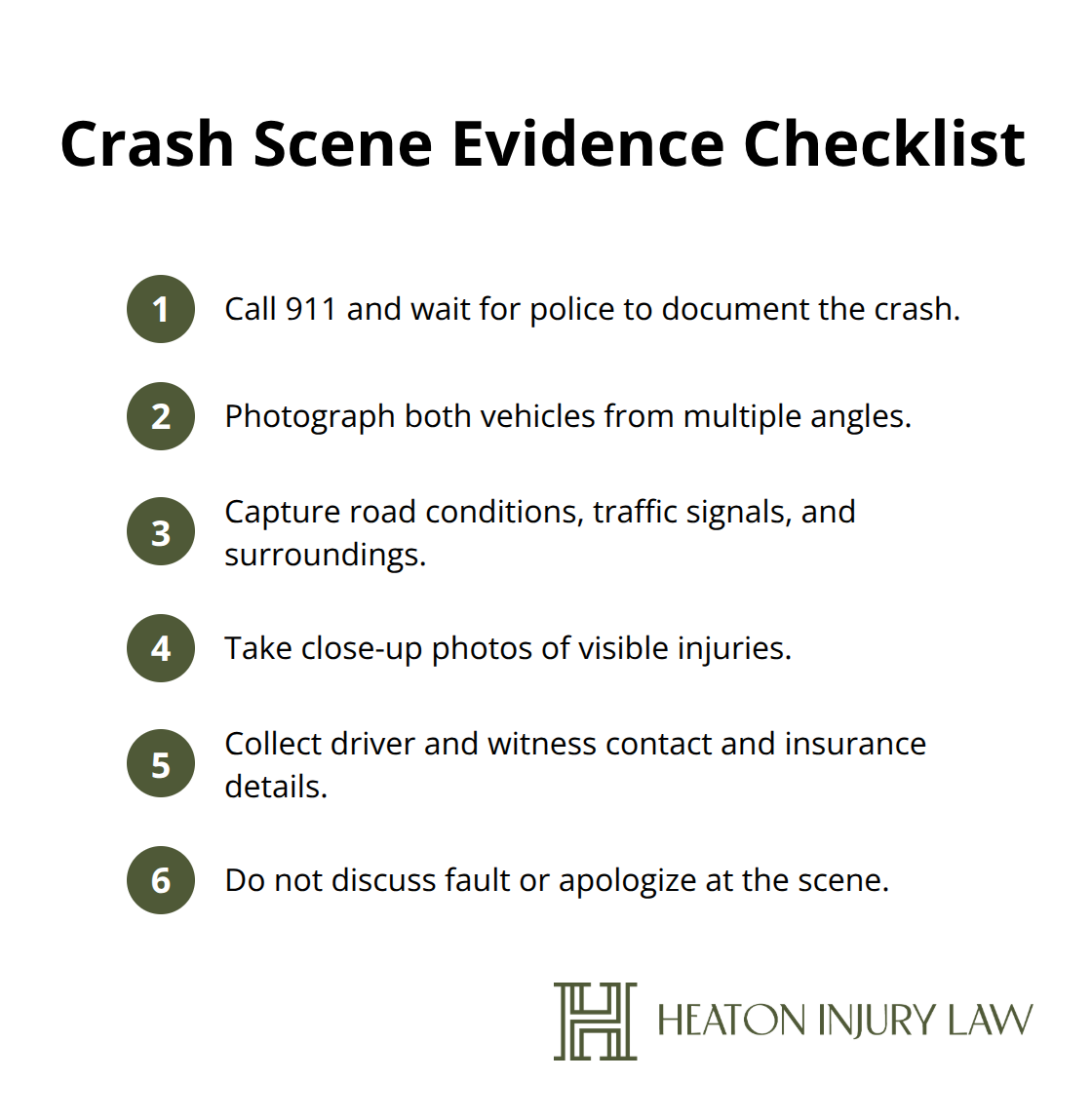
Get the other driver’s name, phone number, insurance company, policy number, and vehicle details; collect contact information from every witness at the scene, including their relationship to either party; and write down street names, weather conditions, and time of day. Do not discuss fault or apologize to anyone at the scene, as adjusters will use your words against you later.
Preserve Your Rideshare App Data Immediately
Most injured passengers overlook the rideshare app itself as evidence, but this data proves you were an active passenger during the incident and establishes which insurance layer should cover your claim. Take a screenshot of your trip ID, driver name, vehicle details, pickup and dropoff locations, and timestamps before you close the app. This information (trip status, driver identity, vehicle details) becomes critical when insurers later dispute coverage or try to deny your claim based on technicalities about when the trip officially ended.
Report to the Rideshare Company Within 24 Hours
Reporting to Uber or Lyft within 24 hours initiates their claims process, but do not provide a recorded statement or detailed narrative without legal guidance first. Contact the rideshare company through the app and provide basic facts: date, time, location, and that you were injured, then request written confirmation of your report. This creates a documented record that you reported the incident promptly, which strengthens your credibility with insurers.
Seek Medical Evaluation and Document Everything
Seek medical evaluation within 48 hours of the crash-the Centers for Disease Control and Prevention emphasizes that prompt evaluation documents your injuries and establishes the causal link between the crash and your symptoms, which insurers will later challenge if you delay treatment. Keep every medical receipt, prescription bottle, therapy invoice, and wage loss documentation in a single folder; maintain a detailed ledger of all out-of-pocket expenses including transportation to appointments, medications, and time away from work.
Document lost income with pay stubs or employer letters showing the exact dates and amounts you missed. Request your complete medical records and imaging results directly from your healthcare providers rather than relying on summaries, since insurers scrutinize original documentation. Write down all symptoms and limitations in a daily journal-what activities you couldn’t perform, pain levels, sleep disruption, and emotional impacts-because these details support non-economic damage claims that adjusters routinely undervalue.
Preserve All Electronic Records for Later Use
Preserve all electronic records: ride history, app screenshots, dashcam footage if available, text messages, and emails related to the incident, as these become evidence if your claim reaches negotiation or litigation. This documentation creates a complete picture of what happened and protects you against adjusters who attempt to minimize your injuries or shift blame. Once you’ve gathered this evidence and completed initial medical treatment, you’ll face the critical task of calculating what your injuries actually cost and determining whether the insurance company’s first offer reflects your true damages.
Calculating Your Actual Damages and Fighting Undervaluation
Start with Complete Medical Documentation
Insurance adjusters count on injured people underestimating what their injuries truly cost. Medical expenses represent only the starting point-most rideshare injury victims miss lost wages, future medical care, diminished earning capacity, and the legitimate financial impact of pain and suffering that Texas law allows without caps. Gather every medical bill, not just summaries: emergency room charges, surgeon fees, imaging costs, physical therapy invoices, prescription receipts, and transportation expenses to appointments all belong in your damage calculation.
The National Association of Insurance Commissioners confirms that thorough economic damage documentation-medical costs, therapy, medications, transportation, and time off work-directly correlates with higher settlements because adjusters cannot dispute what you prove with receipts and records. Request your complete medical records and imaging results directly from your healthcare providers rather than relying on summaries, since insurers scrutinize original documentation.
Calculate Lost Wages and Future Earning Capacity
Calculate lost wages by multiplying your hourly rate or daily salary by the exact number of work days missed, then request a letter from your employer confirming dates and income lost. If your injuries prevent you from returning to your previous job, you have a claim for diminished earning capacity-the difference between what you earned before and what you can realistically earn going forward. This requires expert testimony to quantify, but it represents real financial harm that adjusters routinely ignore in their initial offers.
Document Pain and Suffering Without Caps
Non-economic damages like pain and suffering, emotional distress, and reduced quality of life have no ceiling in Texas personal injury cases, meaning an adjuster’s initial offer of $5,000 for severe chronic pain might actually justify $50,000 or more depending on your injury severity and medical evidence. Maintain a daily journal of pain levels, sleep disruption, activities you cannot perform, and emotional impacts. Have your physician provide a written statement about your prognosis and permanent limitations to support these claims.
Reject Lowball Offers and Demand Justification
Insurance companies will reject your first damage calculation and counter with a number 40 to 60 percent lower than what you deserve, counting on you to accept the gap rather than fight back. Do not sign anything without understanding that a settlement release waives all future rights to compensation, meaning you cannot return later if your injuries worsen or new symptoms emerge. Demand written responses to every damage item you present, forcing the adjuster to justify why they’re reducing medical expenses or denying wage loss claims with specific documentation rather than vague assertions.
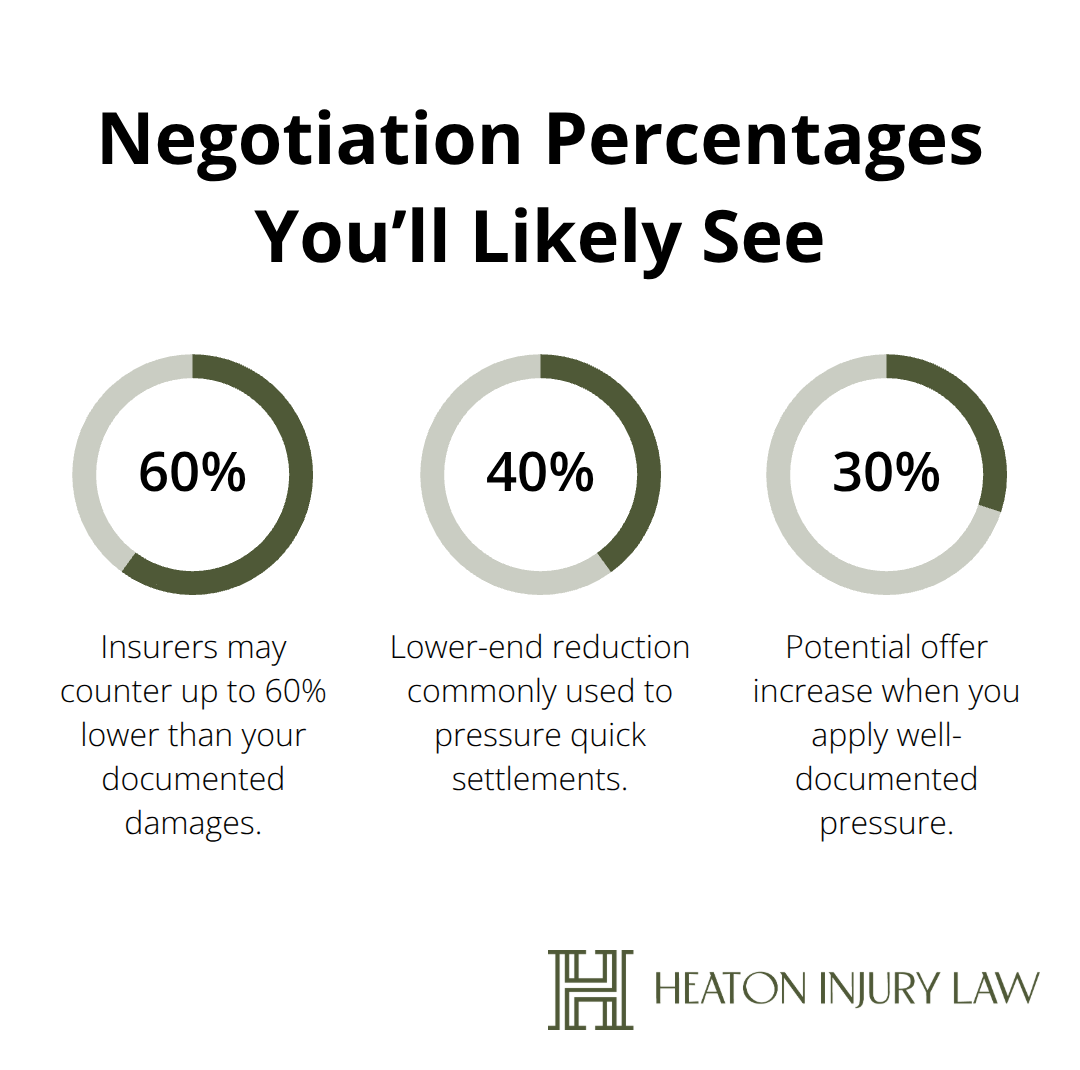
If the insurer disputes liability or attempts to shift fault to you unfairly, reject their narrative immediately and provide the police report, witness statements, and scene photographs that contradict their position. Most adjusters respond to well-documented pressure by increasing their offer substantially-sometimes 20 to 30 percent-when they realize you’ve done the work and won’t accept lowball numbers.
Pursue Legal Action When Settlement Stalls
If the insurer’s final offer still falls short of your documented damages or if they deny coverage entirely, pursuing legal action becomes the only path to fair compensation. A trial-ready approach shifts the negotiating power back to you by making clear that you will litigate if settlement discussions stall. We at Heaton Injury Law, PLLC evaluate rideshare injury cases based on the complete damage picture, not just what insurers initially offer, and our experience with insurer tactics helps identify all available compensation sources before you negotiate or consider settlement offers.
Conclusion
Rideshare injury claims in Texas demand immediate action and strategic thinking. You now understand the three insurance layers that determine your payout, how Texas comparative fault reduces your recovery if you share any blame, and why non-economic damages can reach substantial amounts without legal caps. The evidence you gather at the crash scene, the medical documentation you preserve, and the damage calculations you complete directly determine whether you receive fair compensation or accept an adjuster’s lowball offer.
Most injured rideshare passengers settle for 40 to 60 percent less than their claims justify because they lack the documentation, legal knowledge, or negotiating leverage to push back against insurance companies. Adjusters count on this gap and know that injured people face medical bills, lost income, and emotional stress that makes quick settlement tempting, even when the offer falls short of actual damages. An attorney with experience handling rideshare injury claims in Texas identifies all liable parties, navigates the insurance coverage layers, and calculates damages that reflect your actual losses rather than what adjusters initially offer.
Contact Heaton Injury Law, PLLC for a free consultation to discuss your rideshare injury claim. Bring your police report, medical records, photos from the scene, and any documentation you’ve gathered, and we’ll evaluate your case based on the complete damage picture. The statute of limitations gives you two years to file a lawsuit, but waiting costs you leverage in settlement negotiations and risks losing evidence as memories fade and witnesses become harder to locate.
The information provided in this blog is for general informational purposes only and does not constitute legal advice. Every case is unique, and laws may vary by jurisdiction. Reading this content does not create an attorney-client relationship. For guidance specific to your situation, please consult with a qualified personal injury attorney licensed in Texas.
Artificial intelligence may have been used to assist in generating some text or images in these articles.