

Meredythe | September 1, 2026 | Blog

A slip and fall injury can happen in seconds, but the financial aftermath often lasts much longer. Slip and fall medical costs add up quickly-from emergency room visits to months of physical therapy-and many injured people don’t know how to plan for these expenses.
At Heaton Injury Law, PLLC, we help injured Texans understand what they’ll actually owe and what options exist to cover these bills. This guide breaks down the real costs you might face and shows you how to recover financially after a slip and fall accident.
Immediate Medical Expenses After a Slip and Fall
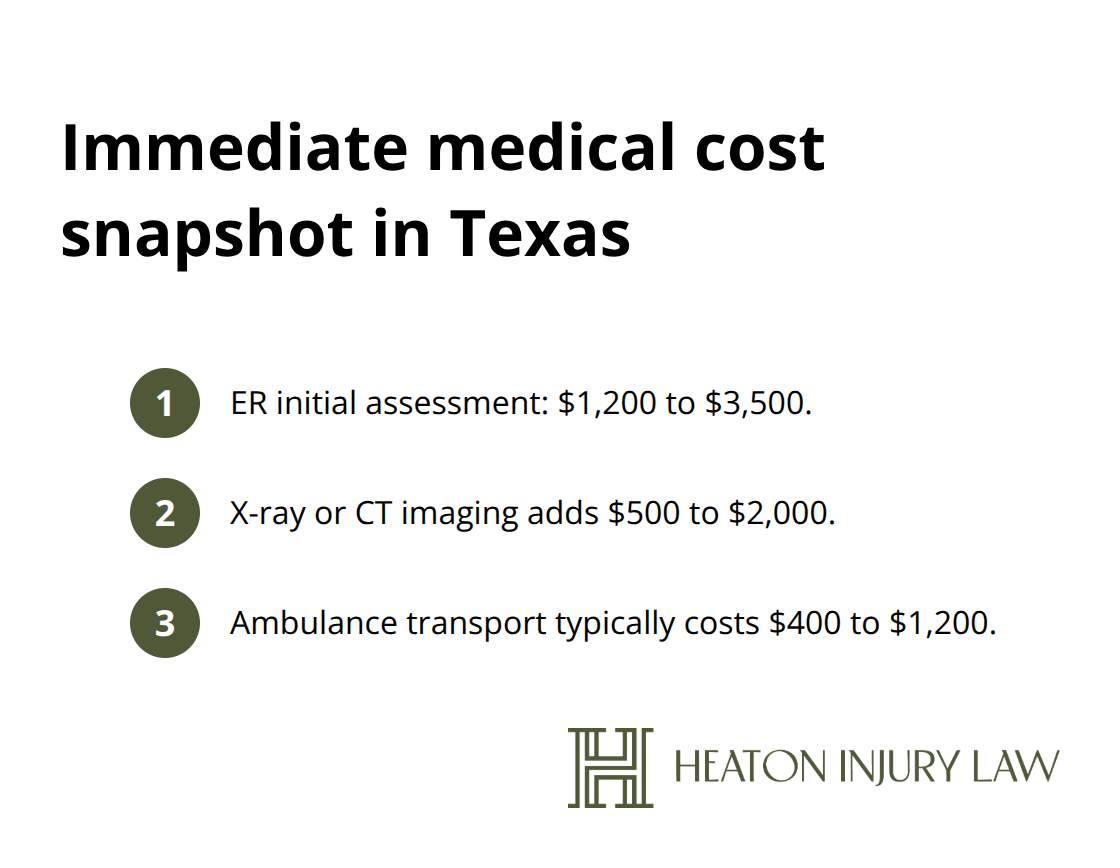
The first 24 to 72 hours after a slip and fall injury determine much of your immediate financial burden. Emergency room visits in Texas cost between $1,200 and $3,500 just for the initial assessment, according to healthcare pricing data, and that’s before any diagnostic imaging or treatment. If you need an X-ray or CT scan to rule out fractures or internal injuries, add another $500 to $2,000 depending on the facility and imaging type. Ambulance transport, if required, typically runs $400 to $1,200 in Texas, with rates varying by county and distance.
Many people assume their health insurance covers these costs immediately, but insurance often requires you to meet your deductible first-typically $500 to $2,000 for individual plans. You may owe the full emergency room bill out of pocket before insurance kicks in. Gather and organize every single receipt and bill from day one, including requests for itemized statements from the hospital, ambulance service, and imaging centers, not just summary bills. These itemized documents later become your evidence when building a personal injury claim, showing exactly what the slip and fall forced you to pay.
Stabilization Treatment and Hidden Charges
Beyond emergency room fees, stabilization treatment adds up fast. If you need stitches, wound care, or casting, expect $300 to $800 per procedure. Medication administered in the ER-pain relievers, antibiotics, or anti-nausea drugs-gets billed separately and can add $100 to $400. Facility fees, equipment charges, and provider fees often appear as separate line items on hospital bills, sometimes doubling what you initially expected to pay.
Document the exact date and time of your fall and your arrival at the hospital; this timeline matters when you later pursue a personal injury claim. If you had to take an ambulance, request the ambulance company’s report, which includes distance traveled and any medical interventions performed en route. This documentation strengthens your case by showing the severity warranted emergency transport.
Creating an Official Record
Within the first week, contact the property owner or manager where you fell and request a written incident report. This creates an official record of the accident and puts the property owner on notice, which is essential for establishing liability later when you’re seeking compensation to cover these medical bills. The incident report, combined with your itemized medical records and ambulance documentation, forms the foundation for recovering your immediate expenses through a personal injury claim. Your next step involves understanding what happens beyond these first critical days-how ongoing treatment costs accumulate and what financial options become available as your recovery extends into weeks and months.
Long-Term Care and Recovery Costs
Recovery from a slip and fall injury extends far beyond those first emergency room visits. Physical therapy sessions in Texas typically cost $75 to $150 per session, with most people needing 12 to 24 sessions over two to four months, totaling $900 to $3,600 just for basic rehabilitation. If your injury involves a fractured bone or soft tissue damage requiring specialized care, you might need occupational therapy, orthopedic follow-ups, or pain management appointments that add another $1,500 to $4,000.
Prescription Medications and Specialist Care
Prescription medications for pain, inflammation, or infection can run $50 to $300 monthly depending on the drug and your insurance coverage. A simple ankle fracture might require pain medication for eight weeks, adding $400 to $2,400 to your total costs. Specialist appointments with orthopedists, neurologists, or rheumatologists cost $200 to $500 each, and someone recovering from a serious fall might need four to eight specialist visits over several months.
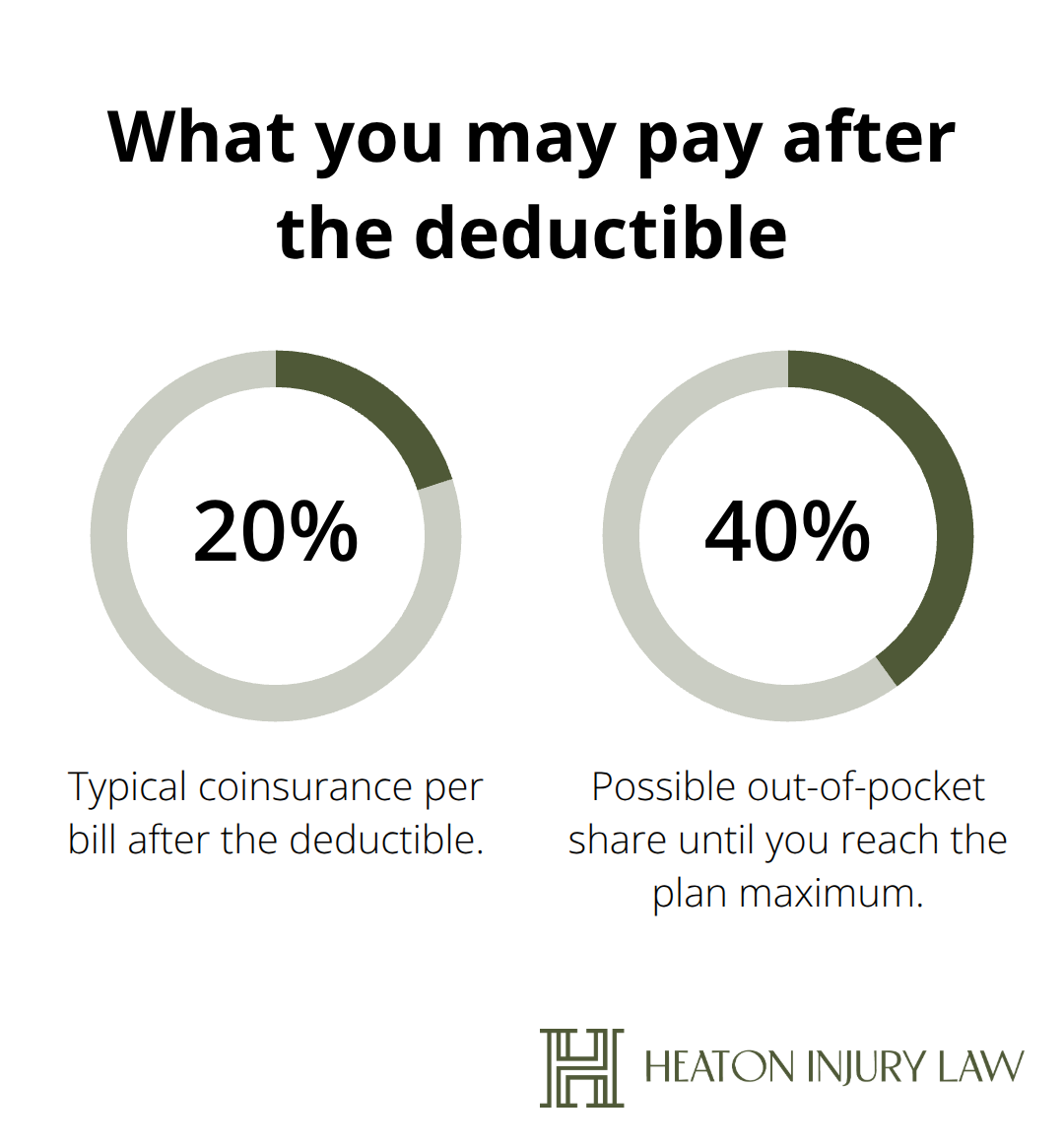
The CDC reports that nonfatal falls among older adults generated approximately $28.9 billion in Medicare payments alone in 2015, demonstrating the massive burden these injuries place on the healthcare system and individuals. Your health insurance deductible applies to many of these services, meaning you may owe 20 to 40 percent of each bill out of pocket until you hit your out-of-pocket maximum, typically $3,000 to $8,000 for individual plans.
Home Modifications and Assistive Devices
Home modifications and assistive devices become necessary expenses that insurance often refuses to cover. Grab bars, shower chairs, raised toilet seats, and canes cost $50 to $300 each, but a comprehensive home assessment and installation might total $1,000 to $3,000. If your injury affects mobility long-term, you might need a stair lift ($3,000 to $15,000), wheelchair ramp ($1,500 to $5,000), or bathroom remodeling ($5,000 to $20,000).
Building Your Documentation Record
Document every single expense, including receipts and invoices proving the modification directly relates to your fall injury. Track medical bills chronologically with dates of service, provider names, and amounts owed, creating a clear narrative showing how the slip and fall forced you into months of treatment and adaptation. Insurance companies scrutinize these claims heavily, so keep itemized bills rather than summary statements and maintain a personal recovery journal noting when you started physical therapy, which specialist you saw, and what mobility challenges persisted.
This detailed record transforms scattered expenses into compelling evidence of your actual financial burden. When you pursue a personal injury claim, clear documentation and direct links between your accident and each expense make settlements and judgments substantially higher. Your next step involves understanding what insurance actually covers and what financial recovery options exist to help you manage these mounting costs.
Insurance Coverage and Financial Recovery Options
Your health insurance covers some medical expenses from a slip and fall, but not all of them, and understanding what falls through the cracks is essential to budgeting realistically. Most health insurance plans in Texas cover emergency room visits, diagnostic imaging, surgery, and specialist appointments once you meet your deductible, but they typically exclude home modifications, assistive devices, lost wages, and pain and suffering. Your deductible applies first, meaning you pay the initial $500 to $2,000 out of pocket before insurance covers anything. After that, you owe coinsurance, usually 20 percent of each bill, until you reach your out-of-pocket maximum. The problem is that while insurance covers treatment costs, it doesn’t cover the income you lost while recovering, the home equipment you need to function safely, or compensation for the injury itself.
What Your Health Insurance Actually Covers
Health insurance plans in Texas typically cover emergency room visits, diagnostic imaging, surgery, and specialist appointments once you meet your deductible. However, they typically exclude home modifications, assistive devices, lost wages, and pain and suffering. Your deductible applies first, meaning you pay the initial $500 to $2,000 out of pocket before insurance covers anything.
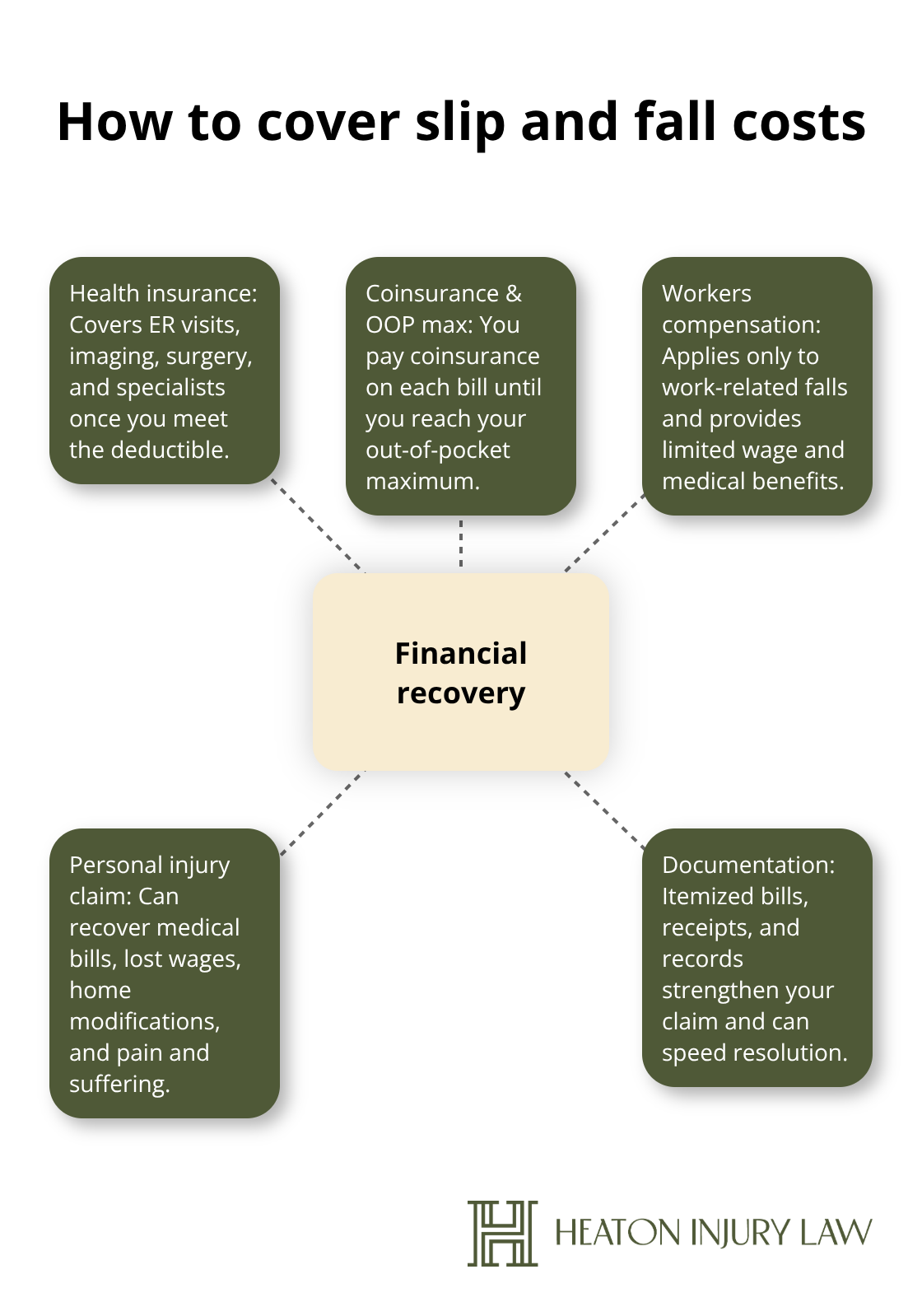
After that, you owe coinsurance, usually 20 percent of each bill, until you reach your out-of-pocket maximum (typically $3,000 to $8,000 for individual plans). The gap between what insurance covers and what you actually owe can be substantial.
Workers Compensation Benefits if Applicable
Workers compensation benefits apply only if you fell at work on your employer’s property or during work hours, and even then, benefits are limited to two-thirds of your average weekly wage and medical expenses directly tied to the workplace injury. If you fell at a retail store, restaurant, apartment complex, or someone else’s property, workers compensation doesn’t apply, leaving a significant gap between what insurance covers and what you actually owe.
Personal Injury Claims Close the Financial Gap
Texas law allows you to recover all medical expenses, lost wages, home modifications, and compensation for pain and suffering from the property owner if you prove they knew about the hazard and failed to fix or warn you. The settlement or judgment covers past medical bills, future medical costs that doctors project you’ll need, lost income from time off work, and non-economic damages like pain and disability. Many slip and fall cases settle without trial because strong medical documentation and clear liability evidence convince insurance adjusters to pay rather than fight, meaning you recover compensation faster.
File your personal injury claim within six months of the fall while evidence is fresh and memories are clear, even though Texas law gives you two years from the injury date to file a lawsuit. Insurance companies move slowly, and waiting until the last minute pressures you into accepting lower settlements just to get money before the deadline expires.
Building Your Documentation for Maximum Recovery
Document everything from day one: medical bills, receipts for home equipment, paycheck stubs showing lost wages, and communications with the property owner. This documentation transforms your scattered expenses into a compelling damages case that justifies higher settlements covering not just current costs but future medical needs and the impact the injury had on your quality of life. Insurance companies scrutinize these claims heavily, so keep itemized bills rather than summary statements and maintain a personal recovery journal noting when you started physical therapy, which specialist you saw, and what mobility challenges persisted.
Final Thoughts
Slip and fall medical costs demand a realistic budget that accounts for immediate expenses, ongoing treatment, and long-term recovery needs. Most injured people underestimate these costs by focusing only on emergency room bills while overlooking physical therapy, specialist appointments, medications, and home modifications that accumulate over months. Your health insurance covers treatment but leaves gaps in lost wages, assistive devices, and pain and suffering compensation that can total thousands of dollars beyond what your policy pays.
If you fell on someone else’s property due to negligence, a personal injury claim recovers all these costs plus compensation for your suffering. Texas law gives you two years to file a lawsuit, but acting within six months while evidence remains fresh and memories are clear produces faster settlements and stronger outcomes. Insurance companies move slowly and often deny claims without proper documentation, so gathering itemized medical bills, receipts for home equipment, paycheck stubs, and incident reports from day one transforms scattered expenses into a compelling damages case.
We at Heaton Injury Law, PLLC understand how overwhelming these financial decisions feel when you recover from injury. Our Austin-based firm handles slip and fall claims with a trial-ready approach to maximize your recovery and protect your financial future. Contact us to discuss your claim and learn how we can help you recover the full compensation you deserve.
The information provided in this blog is for general informational purposes only and does not constitute legal advice. Every case is unique, and laws may vary by jurisdiction. Reading this content does not create an attorney-client relationship. For guidance specific to your situation, please consult with a qualified personal injury attorney licensed in Texas.
Artificial intelligence may have been used to assist in generating some text or images in these articles.