

Meredythe | August 27, 2026 | Blog
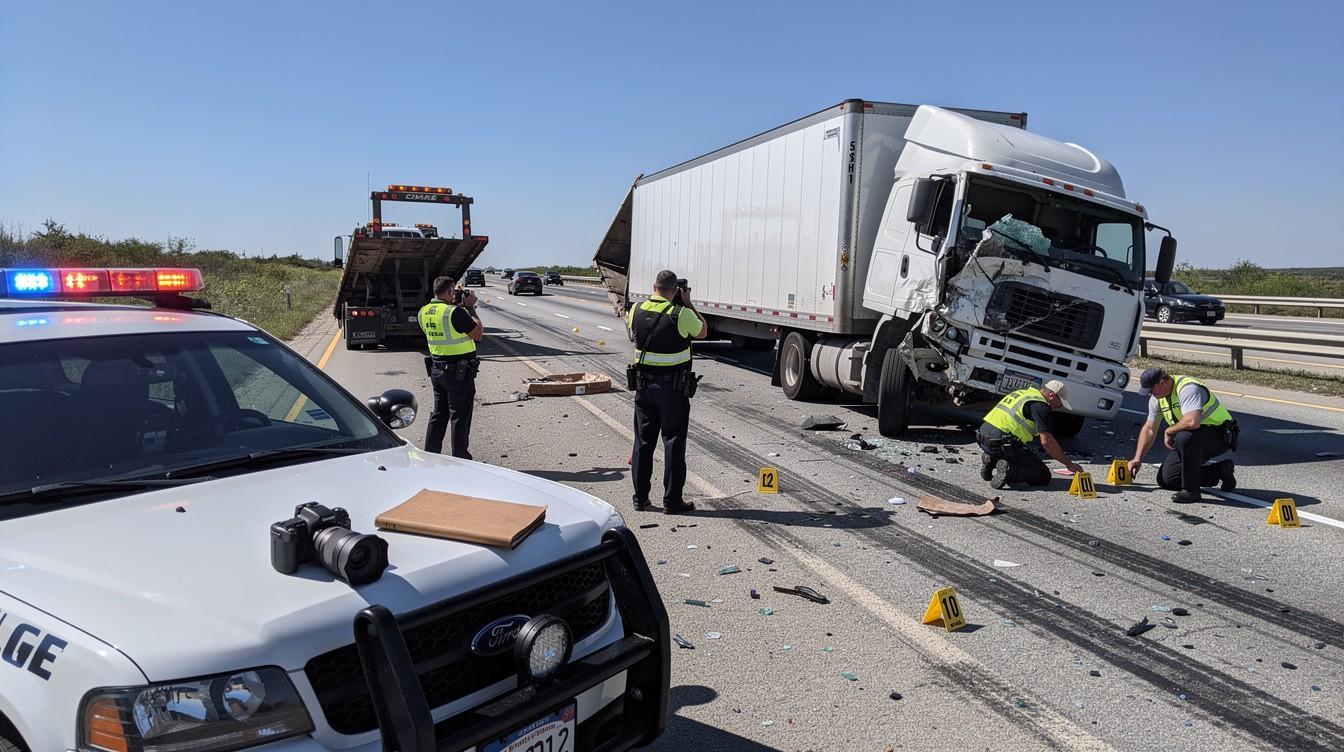
Truck crashes in Texas cause serious injuries and financial hardship for victims. Understanding truck crash liability in Texas is the first step toward getting the compensation you deserve.
At Heaton Injury Law, PLLC, we help injured Texans navigate these complex claims. This guide breaks down who pays, how liability works, and what options you have.
How Liability Works in Texas Truck Crashes
Texas is an at-fault state, which means the party responsible for the crash pays for the damages. Establishing liability in a truck crash requires proving four elements: the defendant owed you a duty of care, they breached that duty, their breach caused your injuries, and you suffered damages as a result. This sounds straightforward, but truck crashes are far more complicated than standard car accidents because multiple parties often share responsibility. Texas uses a modified comparative fault rule-if you’re found to be 51% or more at fault, you cannot recover anything.
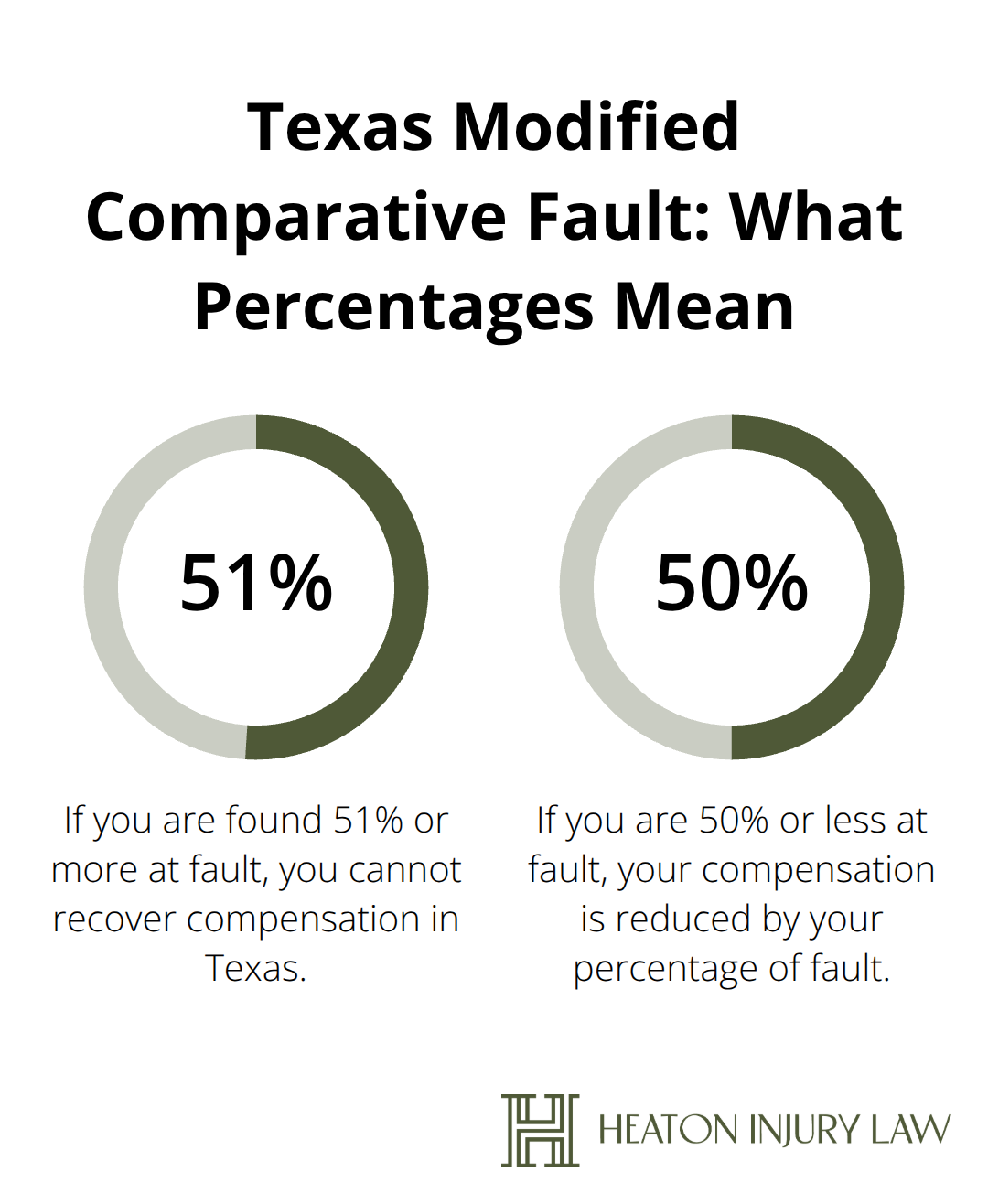
If you’re 50% or less at fault, your compensation is reduced by your percentage of fault. This means even partial responsibility on your side can significantly reduce what you receive, making it important to establish clear liability early.
What Actually Causes Truck Crashes in Texas
Texas experienced more than 38,000 commercial truck accidents in 2022, and the causes matter because they reveal who bears responsibility. Driver negligence includes speeding, driving while fatigued despite federal hours-of-service violations, distracted driving, and impairment from drugs or alcohol. Federal regulations limit truck drivers to 11 hours of driving per 14-hour work period, and violations of these rules documented in electronic logging devices (ELDs) or driver logs become powerful evidence of negligence. Mechanical failures-brake problems, tire blowouts, steering failures-often stem from inadequate maintenance or manufacturer defects rather than driver error. Improper loading causes jackknife and rollover crashes; overloaded cargo or uneven weight distribution puts enormous stress on a truck’s handling. Poor road conditions can also contribute, though claims against government entities require specific notice procedures and have narrower liability windows. The actual cause of your crash determines which parties you can hold liable and shapes your entire claim strategy.
Identifying Fault Across Multiple Parties
Truck crashes rarely involve just the driver. The trucking company may be liable for negligent hiring if they employed a driver with a history of violations, inadequate training, or failure to discipline dangerous driving patterns. Employers can also face liability if they pressured drivers to violate hours-of-service rules or ignored maintenance issues. Freight brokers and shippers bear responsibility for negligent loading practices. Maintenance contractors and mechanics face liability if they failed to catch or properly repair defective equipment. Even manufacturers can be held accountable for defective brakes, tires, underride guards, or other components that contributed to the crash. The National Safety Council notes that Texas leads the nation in deaths from large truck crashes, underscoring how serious these incidents are.
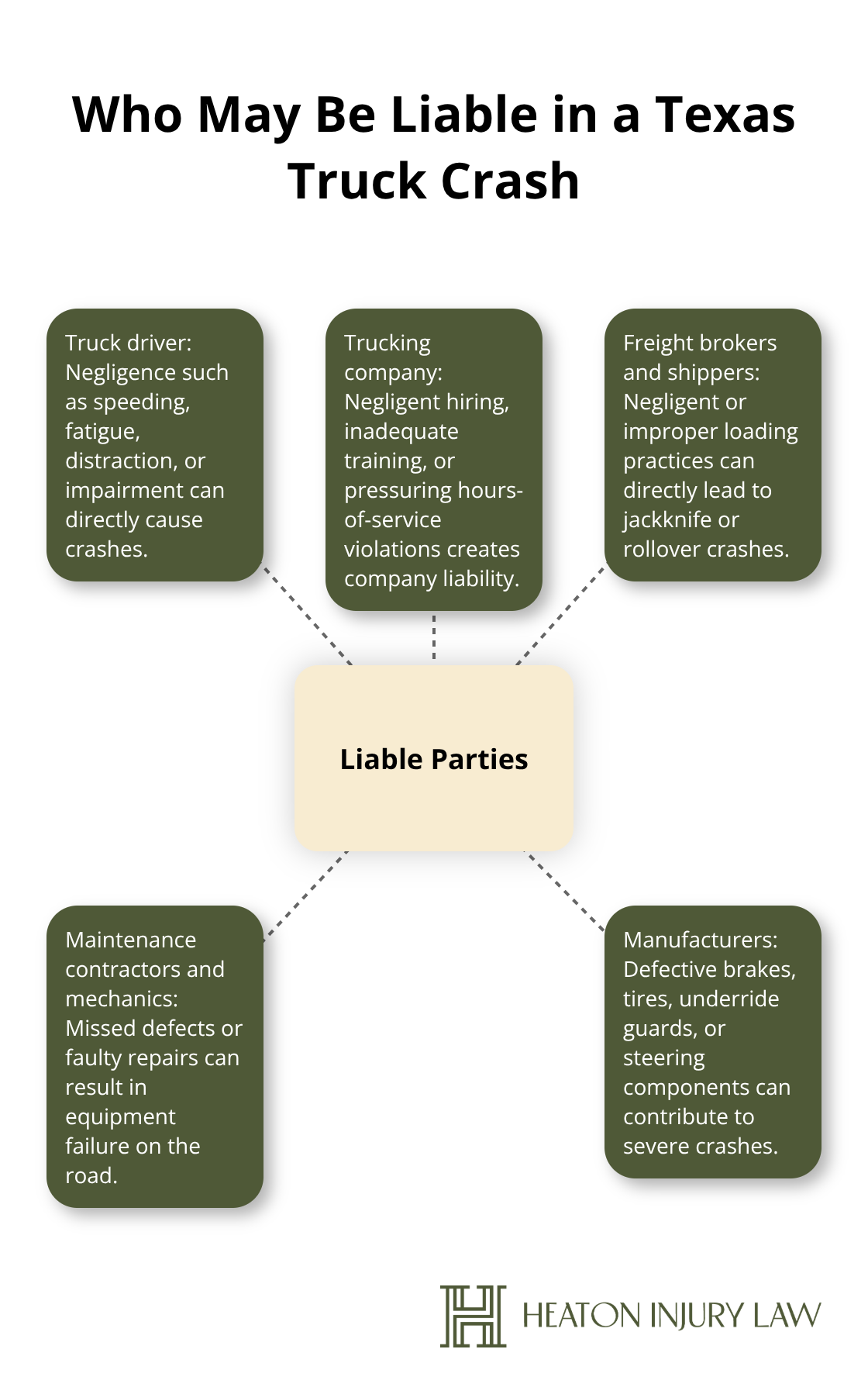
Because multiple defendants may share fault, your recovery depends on identifying every responsible party and the strength of evidence against each one.
Preserving Evidence Before It Disappears
Acting quickly to preserve evidence separates strong claims from weakened ones. Dashcam footage, black box data, maintenance records, and driver logs can vanish within days if carriers destroy or lose them. Electronic logging devices contain records of hours violations that prove driver fatigue. Maintenance files reveal whether the trucking company neglected equipment inspections or repairs. Police reports and witness statements document the crash scene before memories fade. Photographs and videos of vehicle damage, road conditions, and cargo placement establish how the crash occurred. The longer you wait, the more evidence disappears, and the harder it becomes to prove liability against all responsible parties. Understanding who may be liable for your truck crash sets the stage for identifying the specific parties you can pursue for compensation.
Who Can Be Held Liable for Your Truck Crash
Truck Drivers and Direct Negligence
Truck drivers face liability when their actions directly cause crashes. Speeding appears in roughly 23% of fatal truck crashes according to federal data, and courts treat speed violations as clear negligence. Drowsy driving violations show up in electronic logging device records when drivers exceed their 11-hour daily limit or fail to take required rest breaks. Impairment from alcohol or drugs, distracted driving, and failure to adjust for speed in poor weather all create liability for the driver. However, pinning liability solely on the driver often misses the bigger picture. Trucking companies frequently pressure drivers to meet impossible schedules, creating incentives to violate hours-of-service rules. Some carriers skip required vehicle inspections or ignore maintenance complaints to keep trucks on the road longer.
Employer Liability and Company Responsibility
Trucking companies become liable when they knowingly tolerate unsafe practices. When you can prove the employer knew about unsafe practices and did nothing, the company shares liability alongside the driver. Federal regulations require carriers to maintain detailed inspection records, and missing or falsified maintenance logs suggest the company cut corners on safety. Employers can face liability for negligent hiring if they employed a driver with a history of violations, inadequate training, or failure to discipline dangerous driving patterns. Companies that pressured drivers to violate hours-of-service rules or ignored maintenance issues bear responsibility for the consequences. The strength of your evidence linking the company to specific negligent actions determines whether insurers will accept liability or fight your claim.
Third Parties in the Supply Chain
Freight brokers, shippers, and loading companies create liability through negligent loading practices that directly cause crashes. Overloaded cargo exceeding legal weight limits of 80,000 pounds for standard 18-wheelers puts extreme stress on brakes and tires, leading to jackknife and rollover accidents. Uneven weight distribution shifts the truck’s center of gravity and makes steering unstable. Unsecured loads that shift during transit cause the driver to lose control. Maintenance contractors and mechanics face liability when they miss brake defects, ignore tire wear, or perform faulty repairs that result in equipment failure during operation.
Manufacturers and Equipment Defects
Manufacturers of trucks, brakes, tires, underride guards, and steering systems can be held accountable when design or manufacturing defects contribute to crashes. Even minor component failures compound in commercial trucks operating at highway speeds with heavy loads. A defective brake system or faulty tire design becomes catastrophic when a truck carries 80,000 pounds at 65 miles per hour. Identifying all liable parties-from the driver to the manufacturer-directly increases your compensation potential. The stronger your evidence linking each party to specific negligent actions, the harder it becomes for insurers to deny responsibility or reduce settlement offers. Understanding which parties bear liability shapes your entire recovery strategy and determines how aggressively you can pursue compensation from multiple sources.
Insurance Coverage and Compensation Options
Commercial Truck Insurance Requirements in Texas
Texas law requires commercial trucking operations to carry liability insurance, but the minimum limits often fall far short of covering serious injuries from 80,000-pound vehicles traveling at highway speeds. Most trucking companies carry between $750,000 and $5 million in liability coverage, though some larger carriers maintain significantly higher limits. The problem is that insurers aggressively defend truck crash claims and actively work to minimize payouts, even when liability is clear. They employ delay tactics, challenge medical treatment as excessive, and pressure injured victims to settle quickly for far less than their claims are worth.
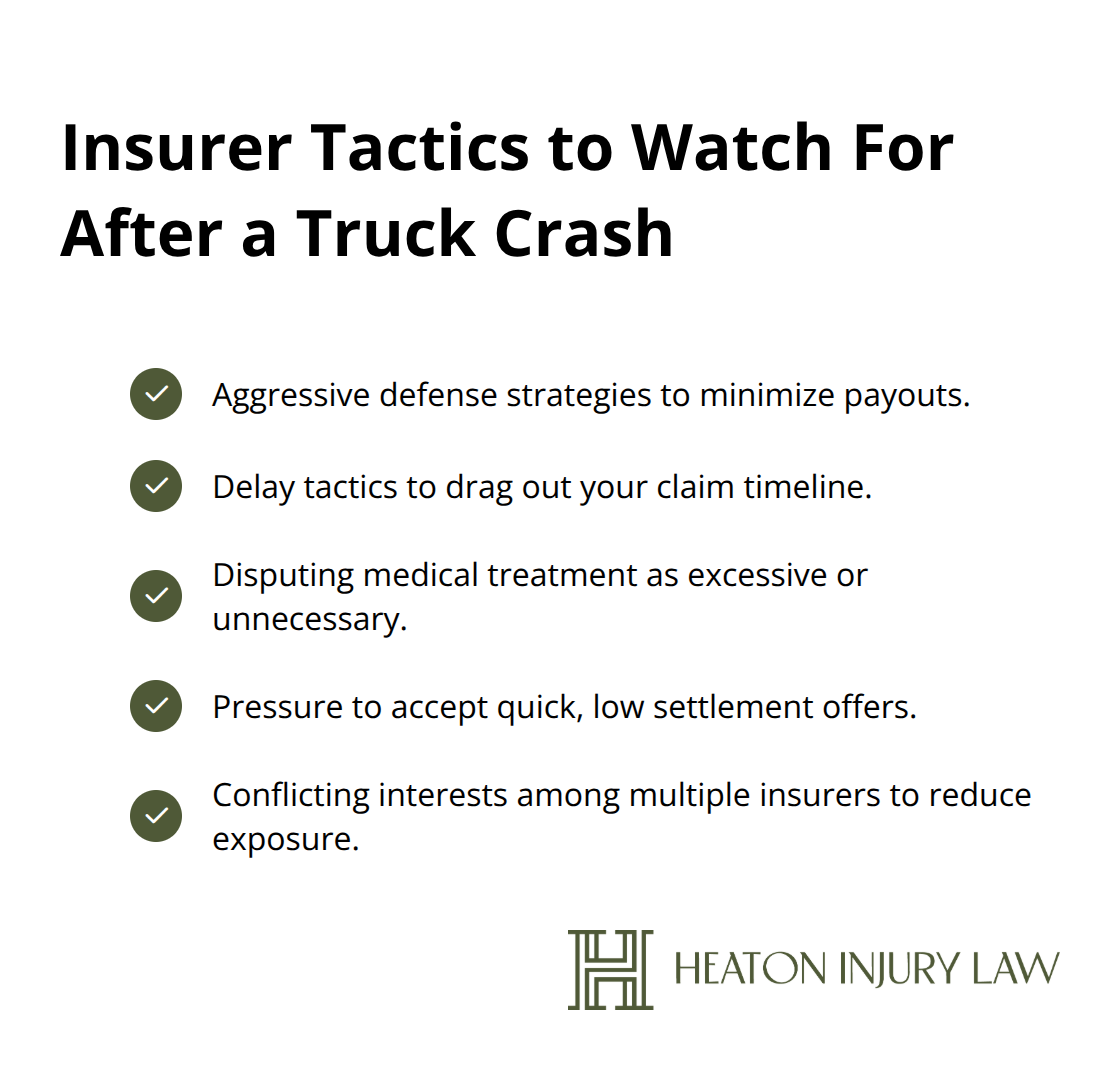
Commercial trucking policies typically include coverage for the driver, the trucking company, and sometimes freight brokers or shippers depending on how the policy is structured. This layering of coverage creates multiple potential sources of compensation but also multiple insurers with conflicting interests in reducing their exposure. When you file a claim, the insurer for the at-fault party bears the primary obligation to pay, but if that coverage is insufficient or the insurer denies liability, your options shift to other available policies.
Uninsured and Underinsured Motorist Coverage
Uninsured and underinsured motorist coverage protects you when the responsible party lacks adequate insurance or carries none at all. Your own auto insurance policy may include this coverage, and it applies when a truck driver or trucking company cannot fully compensate you for damages. If the at-fault party has $1 million in coverage but your damages total $2.5 million, your underinsured motorist coverage fills the gap up to your policy limits. This coverage is separate from the liable party’s insurance and depends entirely on what you purchased for yourself. Many injured victims overlook their own policies and miss substantial recovery opportunities.
Review your policy limits immediately after a crash and consult with an attorney before accepting any settlement offer. This step protects your rights and prevents you from accepting inadequate compensation based on incomplete information about available coverage sources.
Pursuing Damages Through Legal Action
Legal action becomes necessary when insurers deny claims, offer unreasonably low settlements, or when multiple liable parties create complex recovery scenarios requiring negotiation across several insurance policies. A skilled attorney identifies all potentially liable parties, gathers evidence linking each to the crash, and presents a compelling case that makes insurers choose settlement over trial risk. The strength of your evidence directly determines settlement value, which is why preserving dashcam footage, black box data, maintenance records, and witness statements within the first 48 hours after a crash matters enormously. Insurers know that strong evidence increases their litigation costs and trial exposure, making them far more willing to negotiate reasonable settlements when you have documentation on your side.
Personal injury claims can provide several types of compensation beyond immediate medical expenses, including lost wages and pain and suffering. Understanding what damages you can recover helps you evaluate settlement offers and ensures you pursue full compensation for all losses resulting from the crash.
Final Thoughts
Truck crash liability in Texas hinges on proving negligence across multiple parties, from the driver to the trucking company, freight brokers, maintenance contractors, and manufacturers. The strength of your evidence determines whether you recover full compensation or accept an inadequate settlement. Dashcam footage, black box data, maintenance records, and electronic logging devices become worthless if they disappear, which is why acting within the first 48 hours after a crash matters more than most injured victims realize.
After a truck crash, your immediate actions shape your entire recovery. Document everything at the scene if you’re physically able, including vehicle positions, road conditions, and cargo placement. Seek medical attention even if injuries seem minor, because some injuries develop over days or weeks. Report the crash to police and obtain the report number, photograph your injuries and vehicle damage, and collect contact information from witnesses.
Do not speak with insurance adjusters or accept settlement offers before consulting an attorney, as insurers exploit injured victims who lack legal guidance and pressure them to settle quickly for far less than their claims are worth. We at Heaton Injury Law, PLLC understand that truck crash liability Texas cases demand specialized knowledge of federal trucking regulations, complex liability chains, and aggressive insurer defense tactics. Contact us for a free case evaluation and let us fight for the full compensation you deserve.
The information provided in this blog is for general informational purposes only and does not constitute legal advice. Every case is unique, and laws may vary by jurisdiction. Reading this content does not create an attorney-client relationship. For guidance specific to your situation, please consult with a qualified personal injury attorney licensed in Texas.
Artificial intelligence may have been used to assist in generating some text or images in these articles.