

Meredythe | August 31, 2026 | Blog

Rear end collisions happen in seconds, but their consequences can last for months or years. At Heaton Injury Law, PLLC, we help injured Texans understand what happens next and how to protect their rights.
The settlement process doesn’t have to be confusing. This guide walks you through each step, from the accident scene to negotiating fair compensation.
How Liability Works in Rear End Collisions
The Legal Presumption and Why It Matters
Texas Transportation Code Section 545.062 places a legal duty on every driver to maintain a safe following distance, and this creates a presumption that the rear driver caused the collision. This presumption exists because physics and human behavior support it-the trailing vehicle has the clearest view of the vehicle ahead and the most time to react. In practice, this presumption shifts the burden of proof: the rear driver must demonstrate they were not at fault, rather than the front driver proving the rear driver was negligent.
When the Front Driver Bears Responsibility
Texas law recognizes that front drivers can share fault or bear full responsibility if their actions made the collision unavoidable. A front driver who stops suddenly without warning, has non-functioning brake lights, reverses into traffic, or drives erratically can shift liability to themselves or create shared fault scenarios. Courts and insurance adjusters examine the moments immediately before impact to determine who bears responsibility based on their specific actions.
How Insurance Companies Evaluate Liability
Insurance companies run rear end claims through evaluation software like Colossus or Mitchell ClaimIQ, which generates value ranges based on liability percentages, injury severity, and medical costs. If the rear driver presents dashcam footage, skid marks, witness statements, or police crash reports showing the front driver braked suddenly or had defective brake lights, they can challenge the presumption and potentially reduce their fault percentage or escape liability entirely.
Texas Comparative Fault Rules and Settlement Impact
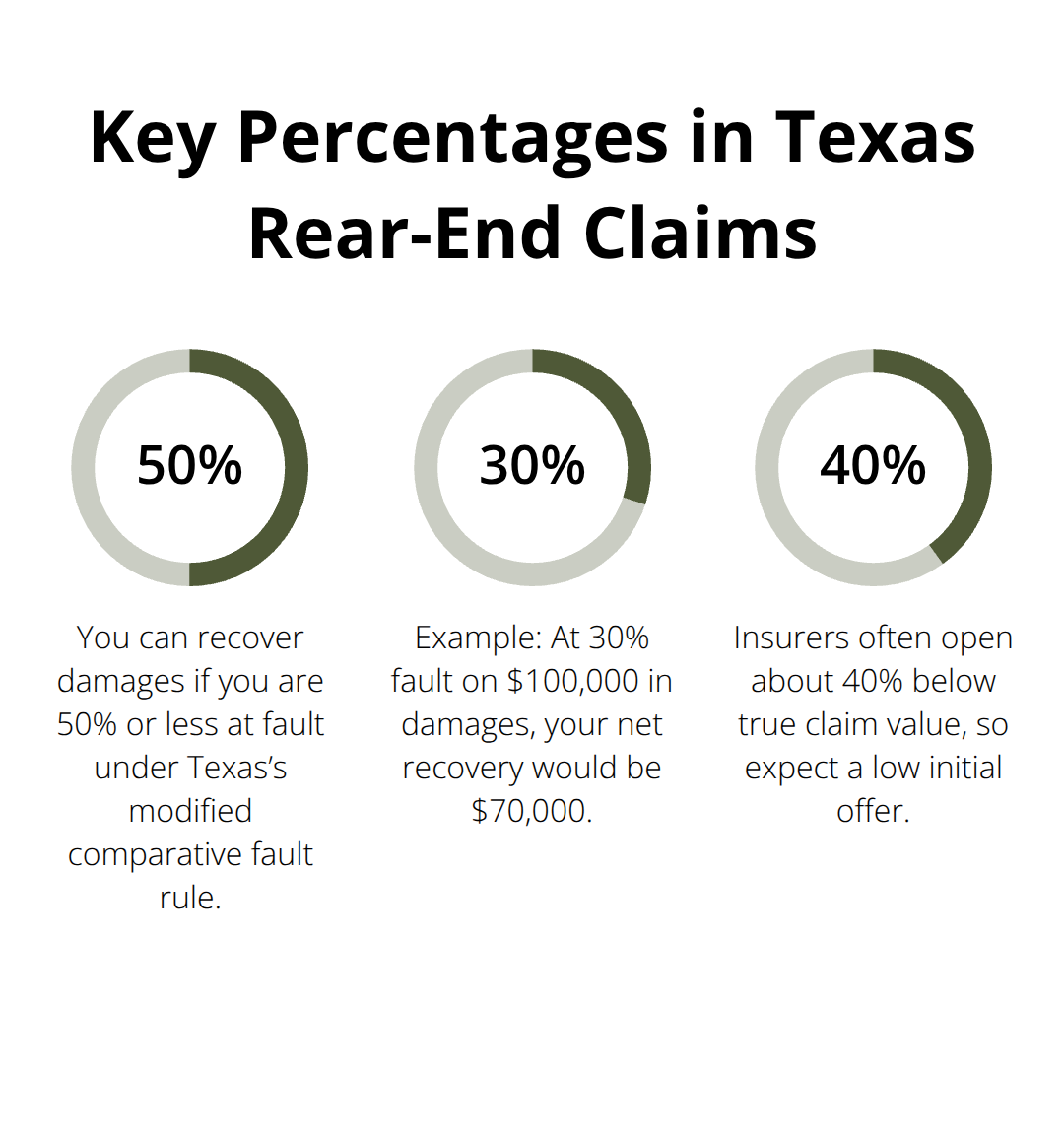
Texas follows a modified comparative fault rule under the Texas Civil Practice and Remedies Code Section 33.001, meaning you can recover damages if you are 50 percent or less at fault, but your recovery is reduced by your percentage of fault. A driver found 30 percent at fault in a collision with $100,000 in damages recovers $70,000. This proportionate responsibility approach means even partial fault assignments significantly impact settlement value, making evidence quality and early documentation critical to your case outcome.
Understanding how adjusters interpret liability in these cases directly affects what happens next. The evidence you gather at the scene and the medical records you maintain will shape settlement negotiations from the first contact with the insurance company.
What to Do Right After the Collision
Call 911 and Secure the Police Report
The first minutes after a rear-end collision are critical-the decisions you make directly influence your settlement value. Call 911 immediately, even if injuries seem minor. Whiplash, spine injuries, and concussions often appear hours or days later, and a police report creates an official record that insurers heavily rely on during investigation. Texas law requires police to document the scene, and this report becomes one of the strongest pieces of evidence for establishing liability and damages. Request the police report number before leaving the scene and follow up within 48 hours to obtain a copy; most departments in Texas complete reports within 5–10 business days.
Document the Scene With Photos and Witness Information
Photograph the vehicle damage from multiple angles at the scene. Capture road conditions, traffic signals, skid marks, the other driver’s license plate, and the accident location. Take wide shots showing the road layout and narrow shots showing impact points. These images matter more than your memory-insurance adjusters scrutinize damage patterns to determine impact force and speed, which affects injury valuation. Witness contact information is equally important; obtain names, phone numbers, and a brief statement about what they saw.
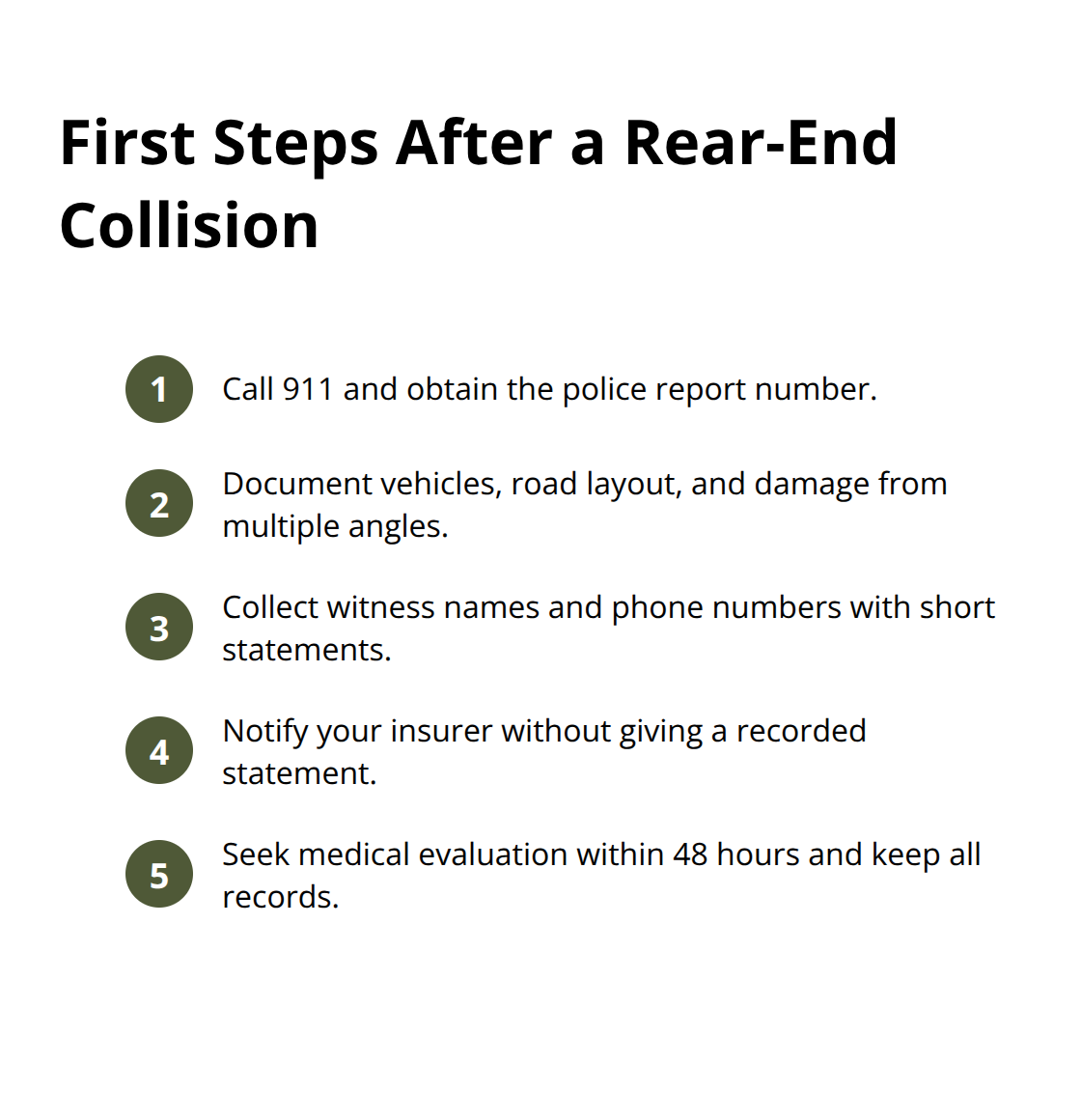
Witnesses disappear quickly, and their statements can be the difference between the insurer accepting liability and disputing it. Exchange information with the other driver, including name, phone number, address, driver’s license number, vehicle identification number, license plate, and insurance details. Do not discuss fault or apologize at the scene-stick to facts only.
Notify Your Insurance Company Carefully
Notify your own insurance company within 24 hours, but avoid giving a recorded statement without consulting an attorney first. Adjusters are trained to extract information that minimizes insurer payouts, and recorded statements can be used against you later. Provide basic facts-date, time, location, and that you were rear-ended-but defer detailed questions. This approach protects you from inadvertently weakening your claim through statements made before you fully understand the situation.
Seek Medical Evaluation and Maintain Records
Seek medical attention within 48 hours, even if you feel fine. Emergency rooms document injuries on the date of impact, creating a causal link between the crash and your symptoms. If the emergency room finds nothing, see your primary care doctor or a chiropractor within one week; treatment delays weaken your claim significantly. Maintain organized medical records: keep copies of bills, test results, imaging reports, and treatment notes in one folder. Insurance adjusters use medical documentation to calculate damages-gaps in treatment or inconsistent symptom reporting reduce settlement offers. Track lost wages by requesting written confirmation from your employer showing dates missed and hourly rate. These specifics, not estimates, determine compensation for income loss.
Build Your Evidence Foundation for Settlement Negotiations
The documentation you gather now-photos, witness statements, medical records, and wage loss confirmation-forms the foundation for settlement negotiations. Insurance companies evaluate claims based on the strength of your evidence and the clarity of your medical timeline. Strong documentation early in the process signals to adjusters that you have a solid case, which often leads to faster and fairer settlement discussions. With your scene evidence and medical records in place, you’re ready to understand how adjusters calculate what your case is actually worth.
Settling Your Rear End Claim
How Insurance Adjusters Calculate Settlement Value
Insurance adjusters value rear-end claims using predictable software formulas, and understanding how those calculations work gives you a real advantage during settlement talks. Adjusters run cases through Colossus or Mitchell ClaimIQ, which generates a range based on your injury type, medical bills, lost wages, and liability percentage. The formula weights medical expenses heavily-a $50,000 hospital bill for spine surgery carries more value than a $5,000 urgent care visit for the same diagnosis. Your job is to ensure the adjuster has complete and accurate information about your injuries and costs before they plug numbers into that software.
Gaps in medical treatment, vague symptom descriptions, or missing wage documentation directly reduce the value the software generates. Texas rear-end settlements typically range from $3,000 for minor soft-tissue injuries to $250,000 or more for cases involving surgery or permanent disability, but these are broad bands-your actual value depends on the specifics of your case.
Opening Offers and Initial Negotiation Strategy
Insurance companies intentionally open settlement negotiations with low offers, often 40 to 50 percent below what your claim is worth. This is deliberate strategy: they test whether you’ll accept fast money without pushback. After you reject that initial offer, expect a second offer that’s marginally higher, followed by genuine negotiation if you stand firm.
Don’t accept the first or second offer unless you’ve reached maximum medical improvement and have documentation showing all your costs and losses. Timing matters here-settling before you finish treatment or reach stability means you’re guessing at future medical expenses, which is a gamble you’ll lose.
When Settlement Stalls and Litigation Becomes Necessary
If the adjuster refuses to move the offer meaningfully after two or three rounds of negotiation, that’s a signal the case won’t settle without filing a lawsuit. Texas law gives you two years from the crash date to file suit, so filing a claim in court isn’t a last resort-it’s a legitimate pressure point when insurers undervalue your injury. Many adjusters shift into serious settlement mode once they know you’re willing to litigate, because trials are expensive and unpredictable for them.
Evaluating Settlement Offers Against Case Value
If you’re offered a settlement that covers your documented medical bills, lost wages, and pain-and-suffering component, and the offer is close to what comparable cases have settled for, it’s reasonable to consider accepting. But if the offer leaves gaps-for example, it ignores future physical therapy you’ll need or undervalues your lost earning capacity-reject it and pursue litigation or continued negotiation. We at Heaton Injury Law, PLLC work with injured Texans to evaluate settlement offers against realistic case value, so you’re not making that decision in isolation.
Final Thoughts
Rear-end collisions follow predictable patterns, and so does the settlement process. You now understand how Texas liability rules work, what evidence matters most, and how insurance adjusters calculate settlement value. The key to maximizing your recovery is acting quickly after the crash-call 911, document the scene thoroughly, seek medical attention within 48 hours, and maintain organized records from day one.
Settlement negotiations are iterative and often frustrating, as insurance companies open low and expect pushback. Don’t accept their first offer unless you’ve reached maximum medical improvement and have complete documentation of all costs and losses. If the adjuster refuses to move meaningfully after multiple rounds, filing a lawsuit is not failure-it’s leverage that shifts many cases into serious settlement mode.
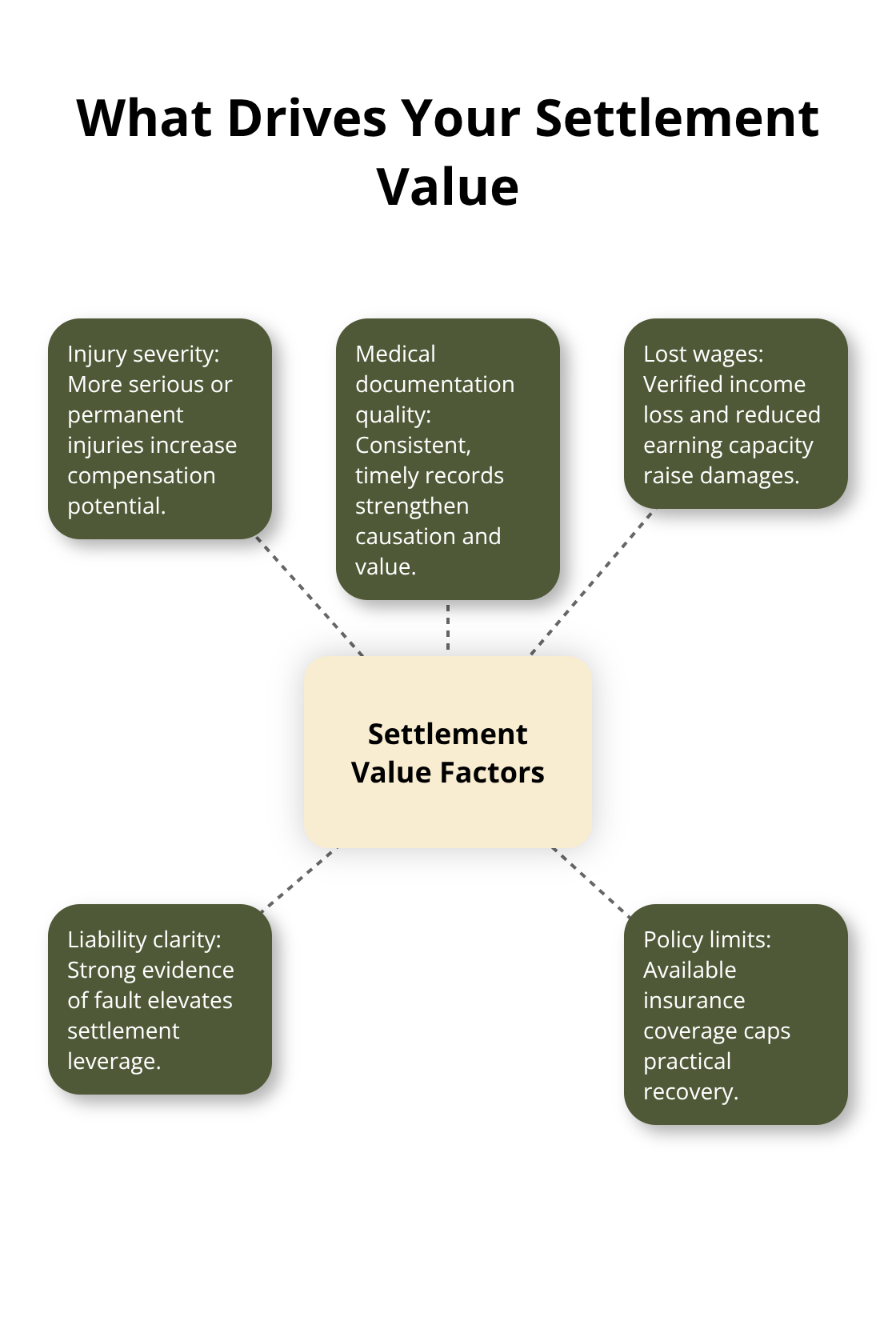
Your settlement value depends on injury severity, medical documentation quality, lost wages, liability clarity, and your insurance policy limits. A rear end collision attorney can evaluate whether settlement offers match your case value and protect you from accepting less than you deserve.
Contact Heaton Injury Law, PLLC for a free case review-we work on contingency, so you pay nothing unless we recover compensation for you.
The information provided in this blog is for general informational purposes only and does not constitute legal advice. Every case is unique, and laws may vary by jurisdiction. Reading this content does not create an attorney-client relationship. For guidance specific to your situation, please consult with a qualified personal injury attorney licensed in Texas.
Artificial intelligence may have been used to assist in generating some text or images in these articles.