

Meredythe | October 14, 2026 | Blog

Rideshare accidents happen fast, but the legal aftermath moves slowly. You’re injured, medical bills pile up, and the rideshare company’s insurance team is already working against you.
At Heaton Injury Law, PLLC, we’ve helped injured Texans navigate rideshare injury claims and recover what they deserve. This guide shows you exactly how to build a winning case.
Understanding Rideshare Liability and Insurance Coverage
The insurance puzzle that rideshare companies don’t want you to understand operates in four distinct phases, and your recovery depends entirely on which phase you occupied when the crash happened. This four-phase system forms the backbone of rideshare liability, and insurance companies exploit gaps in driver and passenger understanding constantly.
How Rideshare Insurance Differs from Personal Auto Insurance
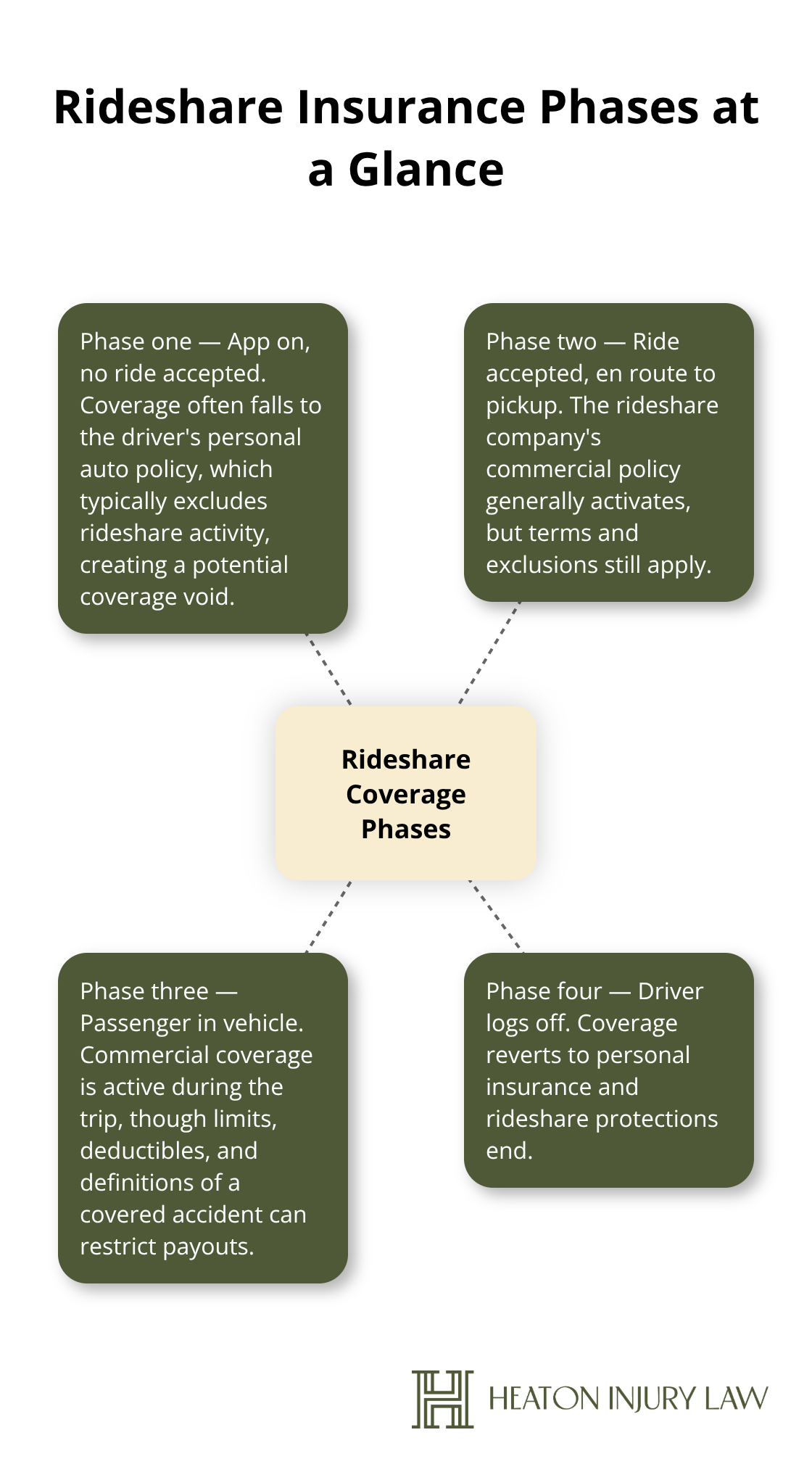
Phase one covers the moment a driver logs into the app but hasn’t accepted a ride yet. Phase two begins the instant a driver accepts your request and starts heading to pick you up. Phase three is the active trip with you in the vehicle. Phase four is when the driver logs off completely.
Most people assume rideshare companies carry continuous coverage, but that assumption costs them thousands in unrecovered damages.
During phase one, coverage often falls to the driver’s personal auto policy, which typically excludes rideshare activity entirely, leaving a complete coverage void. When you suffer injury during this gap, the rideshare company claims the driver’s personal insurer should pay, while the driver’s insurer claims rideshare activity isn’t covered under their policy. You sit caught between two companies refusing responsibility.
Coverage Gaps During Different Phases of the Rideshare Trip
Phase two and three have better coverage because both Uber and Lyft maintain commercial insurance policies that activate once a ride is accepted. However, these policies carry limits and exclusions that personal auto insurance doesn’t. Uber’s contingent liability coverage provides up to $1 million in bodily injury protection, but this is contingent coverage-it only applies if the driver’s personal policy denies the claim. Lyft operates similarly with $1 million in coverage. The critical detail: these policies include deductibles, coverage caps per incident, and restrictions on what qualifies as a covered accident.
What Damages You Can Claim in a Rideshare Accident
Rideshare settlements typically range from $20,000 to $250,000 depending on injury severity, but this range masks the real issue: most injured people settle for far less than their actual damages. Minor injuries like whiplash or soft tissue damage often settle between $10,000 and $50,000, while moderate injuries like broken bones or herniated discs fall into the $50,000 to $250,000 range. Severe injuries and fatalities push settlements into the millions. A notable Lyft settlement of $1.35 million involved a herniated disc case, and an Uber settlement of $285,000 covered Complex Regional Pain Syndrome.
You can claim medical expenses, lost wages, pain and suffering, permanent disability, disfigurement, and loss of earning capacity. Texas law under the Civil Practice and Remedies Code allows recovery for past and future medical care, income lost during recovery, and non-economic damages like emotional distress. The problem is quantifying these damages correctly. Insurance adjusters use low multipliers for pain and suffering, typically offering three to five times your medical bills. Your actual pain and suffering value may be significantly higher, especially if the injury affects your long-term quality of life.
If you suffered a catastrophic injury, lost earning capacity becomes the largest component of your claim, sometimes exceeding $1 million for younger workers with decades of lost income ahead. Documentation determines your damage calculation. Medical records showing ongoing treatment, specialist referrals, and functional limitations provide the foundation. Without detailed medical evidence, adjusters dismiss claims of chronic pain or disability. If you stop treatment too early, adjusters argue your injuries resolved, regardless of whether you actually recovered or simply ran out of money for continued care.
The next step involves collecting the right evidence to support what your damages actually are-and that evidence must come from sources insurance companies cannot dispute.
Evidence Collection and Documentation After a Rideshare Crash
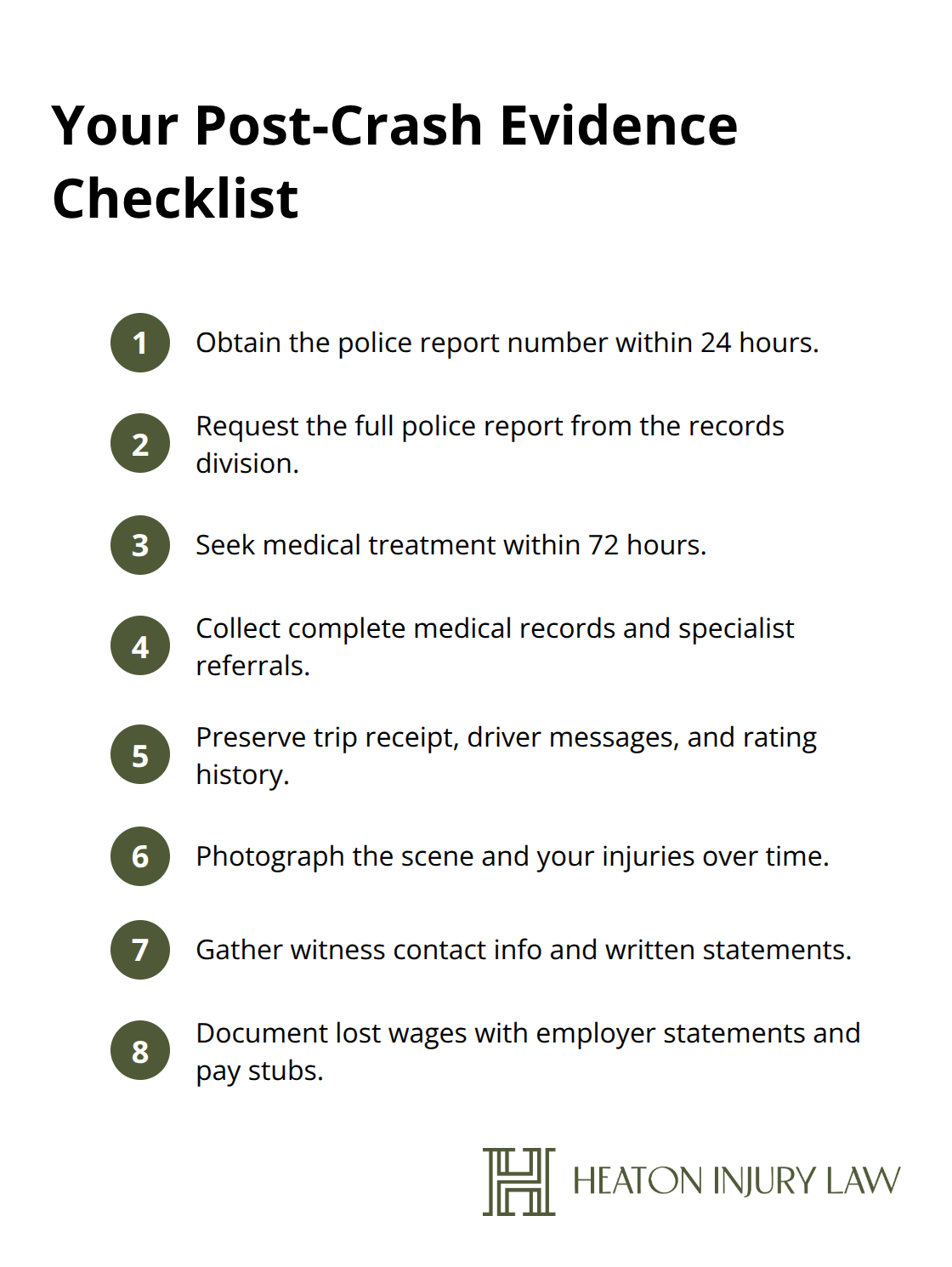
Police reports are your first priority, and you need the actual report number within 24 hours of the crash. Texas law requires police to file reports for accidents involving injury, and the report becomes the official record that insurance companies cannot challenge on basic facts like vehicle positions, driver statements, and weather conditions. Request the report directly from the police department’s records division rather than waiting for it to arrive by mail, which takes weeks.
When you obtain it, verify that the officer documented the rideshare driver’s admission of fault, any traffic violations, and witness contact information. If the report omits critical details like the driver running a red light or your immediate pain complaints, request a report amendment from the investigating officer within 30 days.
Medical Records Establish Injury Severity
Medical records demand the same urgency as police reports. Seek treatment within 72 hours of the crash, even if you feel minor pain, because insurance adjusters use treatment delays to argue your injuries weren’t serious. Request complete medical records from every provider who treats you, including initial emergency room notes, imaging results, physician notes, and any specialist referrals. These records establish the injury timeline and severity that your settlement demand rests upon. Medical documentation proving ongoing treatment matters more than the initial injury diagnosis. Insurance adjusters scrutinize treatment gaps, so maintain consistent appointments with your physician and specialists. If you cannot afford continued treatment, inform your healthcare provider, as many offer payment plans or sliding scale fees.
Preserve Digital Evidence from the Rideshare App
Rideshare apps generate digital evidence that proves liability and driver behavior. Within hours of the crash, preserve the trip receipt, driver rating history, and any in-app messages with the driver before the accident occurred. Screenshot everything because rideshare companies can delete records or alter driver profiles after incidents. Request the driver’s vehicle maintenance records and inspection history through the rideshare company’s legal department, as neglected maintenance often contributes to crashes. This digital trail (trip data, communications, and maintenance history) creates a comprehensive picture of what led to your accident.
Document the Scene and Injuries Visually
Photograph the accident scene from multiple angles, capturing vehicle damage, road conditions, traffic signals, and street signs that establish location and fault. Photograph your visible injuries at the hospital and again at home over the following weeks as bruising develops and swelling changes. Visual documentation transforms abstract injury claims into concrete evidence that adjusters cannot dismiss or minimize.
Collect Witness Statements and Lost Wage Documentation
Witness statements carry enormous weight because they come from neutral parties without financial interest in the outcome. Collect names, phone numbers, and email addresses from every person who saw the crash, and ask them to write a brief statement describing what they observed. Police officers typically record witness information, but directly contacting witnesses yourself ensures you have their account before insurance adjusters pressure them or their memories fade. Document lost wages through employer statements, tax returns, and paycheck stubs showing income lost during recovery and ongoing reduced earning capacity if the injury limits your work capability. This financial documentation quantifies the economic impact of your injury in terms insurance companies understand and cannot dispute.
The evidence you collect now determines whether you negotiate from strength or weakness when the insurance company’s adjuster contacts you.
Negotiating With Insurance Adjusters Who Undervalue Your Claim
Insurance adjusters deploy specific tactics to catch you unprepared and minimize payouts. The adjuster will contact you within days of the crash, often before you’ve gathered complete medical records or consulted with anyone about your claim. They ask detailed questions about your injuries, your medical history, and your job, recording everything you say. This initial call is a trap-anything you say can reduce your settlement offer.
Adjusters specifically ask whether you’ve had prior injuries to the same body part, hoping you’ll mention an old car accident or sports injury they can blame instead of the rideshare crash. They ask about your work history to establish baseline income figures they’ll use to cap lost wage claims. They ask whether you’re currently working, knowing that returning to work (even part-time or modified duty) gives them ammunition to argue your injuries aren’t serious. Never accept a settlement offer during this first conversation.
Why Adjusters Make Lowball Offers Immediately
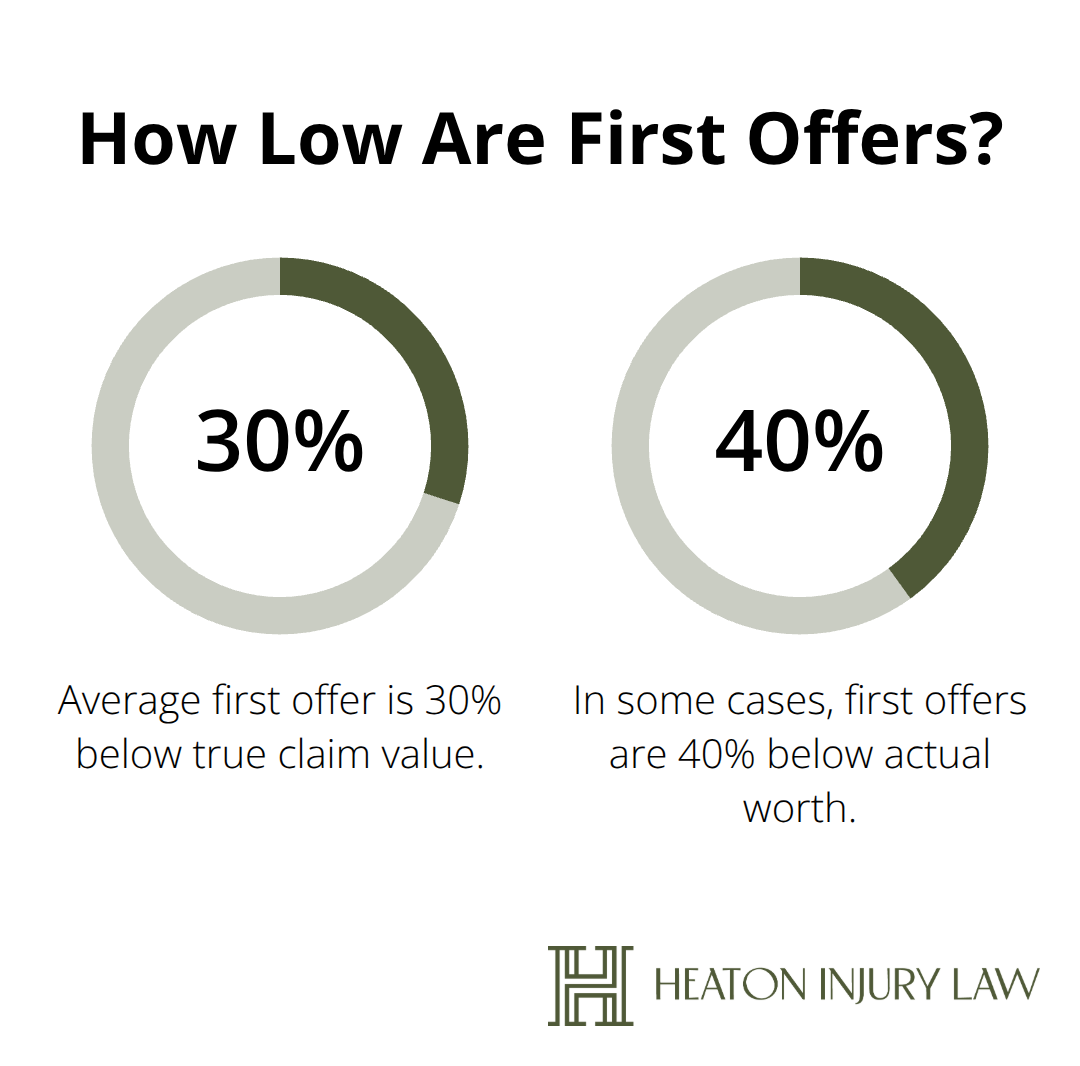
Insurance adjusters make lowball offers immediately because they know most injured people, desperate for money and overwhelmed by medical bills, accept whatever comes first. The average settlement offer from an adjuster in the first contact is 30 to 40 percent below what the claim is actually worth, according to industry data on settlement patterns. Your response should be simple: tell the adjuster you’re gathering medical documentation and will contact them once your treatment is complete.
Do not discuss settlement value, do not accept their offer, and do not sign anything they send you without reviewing it carefully.
Building a Strong Demand Package With Complete Documentation
A strong demand package presents your case as a complete financial picture rather than scattered medical bills. Start with a cover letter explaining the crash, the driver’s fault, and your injuries in plain language. Include the police report, all medical records from every provider, imaging results showing structural damage like fractures or disc herniations, specialist reports confirming diagnoses, documentation of all medical expenses paid and those still outstanding, proof of lost wages from your employer, and photographs of vehicle damage and your injuries.
Calculate your damages in three categories: economic damages (medical bills plus lost wages), non-economic damages (pain and suffering, emotional distress, loss of enjoyment of life), and if applicable, future damages (ongoing medical care, permanent disability, reduced earning capacity). For non-economic damages, use a multiplier approach based on injury severity. Minor injuries like soft tissue damage typically warrant a multiplier of 3 to 5 times medical expenses. Moderate injuries like fractures or herniated discs warrant 5 to 8 times medical expenses. Severe injuries with permanent disability warrant 8 to 15 times medical expenses or higher.
A herniated disc case that settled for $1.35 million with Lyft likely used medical expenses of $150,000 to $200,000 multiplied by the severity of ongoing pain and functional limitations. State your demand as a specific number based on these calculations, not a range. Adjusters treat ranges as negotiating positions and immediately offer the low end. A specific demand of $187,500 sends a different message than a range of $150,000 to $250,000. Include a deadline for response, typically 30 days, after which you’ll proceed with litigation. This deadline creates pressure because litigation costs the insurance company money in attorney fees and court costs.
Responding to Inadequate Settlement Offers
When the adjuster responds with an offer that falls dramatically short of your demand (say they offer $35,000 when you demanded $187,500), reject it firmly and explain why. Do not counter with a number between their offer and your demand. Instead, write a detailed response explaining that their offer fails to account for documented medical expenses, ignores specialist recommendations for ongoing treatment, and undervalues your pain and suffering given the severity of your injuries. Reference specific medical records showing ongoing symptoms, treatment recommendations, and functional limitations. Point out if the adjuster’s offer doesn’t cover your actual medical bills, which is common.
Request a revised offer with written justification for how they calculated their number. If they refuse to increase their offer meaningfully after multiple rounds of negotiation, you’ve reached the point where litigation becomes your leverage. Most insurance companies increase their offers substantially once you file suit because litigation creates real costs and unpredictability. The threat of trial, backed by strong documentation and a willingness to follow through, typically moves settlement negotiations from the $35,000 range into more realistic territory.
Final Thoughts
You’ve now seen exactly how rideshare injury claims work, where insurance companies exploit gaps in coverage, and how to build documentation that forces fair settlements. The path from crash to compensation requires precision at every step, and mistakes early on cost you thousands in lost recovery. We at Heaton Injury Law, PLLC understand the specific tactics rideshare companies and their insurers use because we’ve fought them repeatedly, and we know how to hold them accountable.
Your rideshare injury claim succeeds when you have an attorney who investigates every detail, preserves critical evidence before it disappears, and builds a demand package so thorough that settlement becomes the insurance company’s only rational choice. We approach every case as trial-ready from day one, meaning we prepare as if we’re walking into court, and insurance adjusters recognize this preparation and respond by increasing their offers substantially. They know we won’t accept lowball settlements, and they know we have the experience and resources to win at trial if necessary.
Contact Heaton Injury Law, PLLC for a free consultation. We work on contingency, meaning you pay nothing unless we win your case. Your recovery starts with a single conversation.
The information provided in this blog is for general informational purposes only and does not constitute legal advice. Every case is unique, and laws may vary by jurisdiction. Reading this content does not create an attorney-client relationship. For guidance specific to your situation, please consult with a qualified personal injury attorney licensed in Texas.
Artificial intelligence may have been used to assist in generating some text or images in these articles.