

Meredythe | July 30, 2026 | Blog
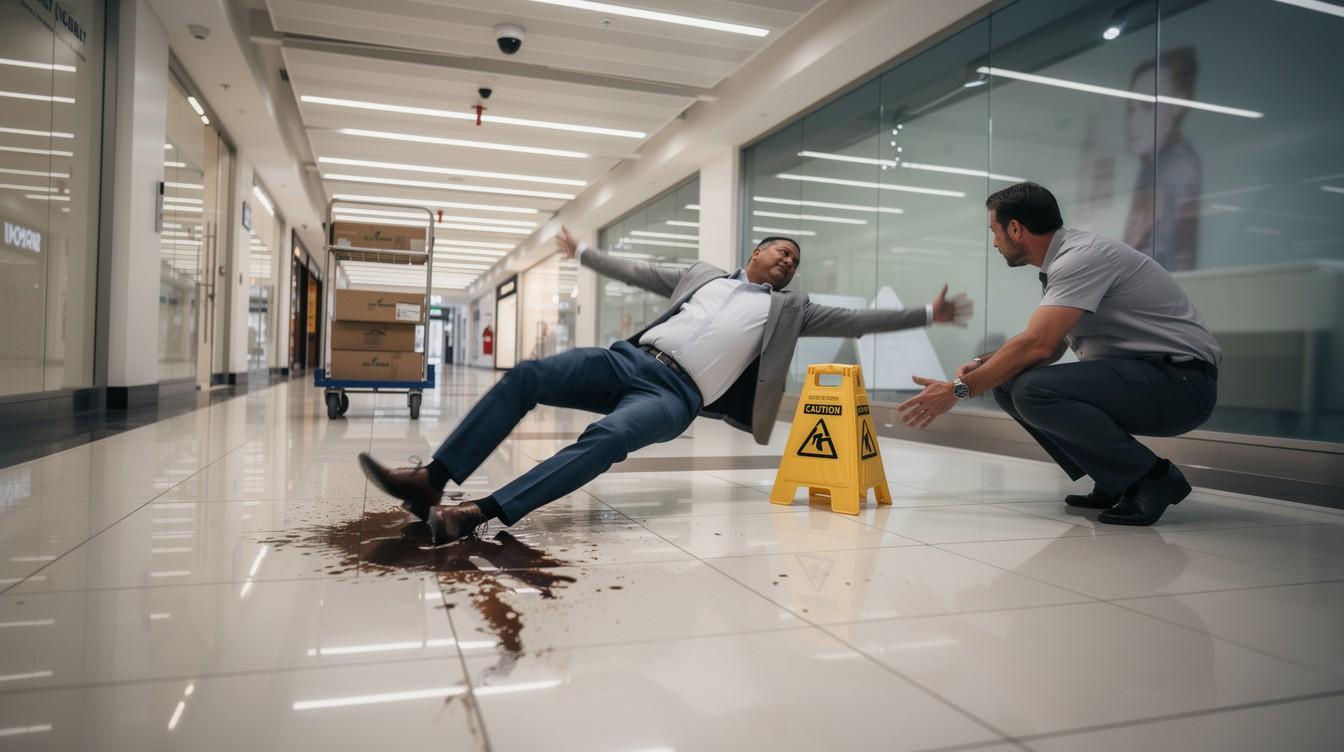
A commercial property slip and fall can happen in seconds, leaving you with serious injuries and mounting medical bills. Property owners in Texas have a legal responsibility to maintain safe conditions, and when they fail, you may have grounds for a premises liability claim.
We at Heaton Injury Law, PLLC help injured Texans understand their rights and recover the compensation they deserve. This guide walks you through what you need to know about slip-and-fall claims, how to prove negligence, and the damages available to you.
What Premises Liability Actually Means in Texas
The Legal Standard Property Owners Must Meet
Premises liability in Texas is straightforward: a property owner or manager must keep their commercial space reasonably safe, and when they don’t, they’re legally responsible for injuries that result. This isn’t about perfection-it’s about meeting a basic standard of care. Under Texas law, property owners owe a duty to invitees (customers, clients, and other business visitors) to either fix dangerous conditions or warn about them. The moment a hazard exists that a reasonable property owner should know about, liability exposure begins.
Common Hazards in Commercial Settings
Wet floors from a spill, broken tile, uneven surfaces, poor lighting, and cluttered aisles all qualify as premises hazards. The National Safety Council reports that falls account for over 8 million emergency room visits annually, with slip-and-fall incidents making up the majority. In commercial settings like restaurants, retail stores, hotels, and parking garages, these incidents are preventable-and when prevention fails, the owner bears responsibility.
How Texas Courts View Property Owner Knowledge
Texas courts recognize that constructive notice matters: if a hazard has been present long enough that a reasonable inspection would have found it, the owner should have known about it. This shifts the burden away from proving the owner saw the problem directly; instead, you prove they failed to inspect or maintain the property adequately. Property owners cannot hide behind warnings alone-a wet floor sign does nothing if the floor remains dangerously slippery.
What Actually Reduces Risk on Commercial Property
Repairs, maintenance schedules, staff training on hazard response, and timely remediation are what actually reduce risk. If a property manager knew of a problem (through incident reports, maintenance requests, or prior complaints) and did nothing, that’s clear negligence. If they should have known through regular inspections and failed to conduct them, that’s also negligence.
Building Your Evidence for a Claim
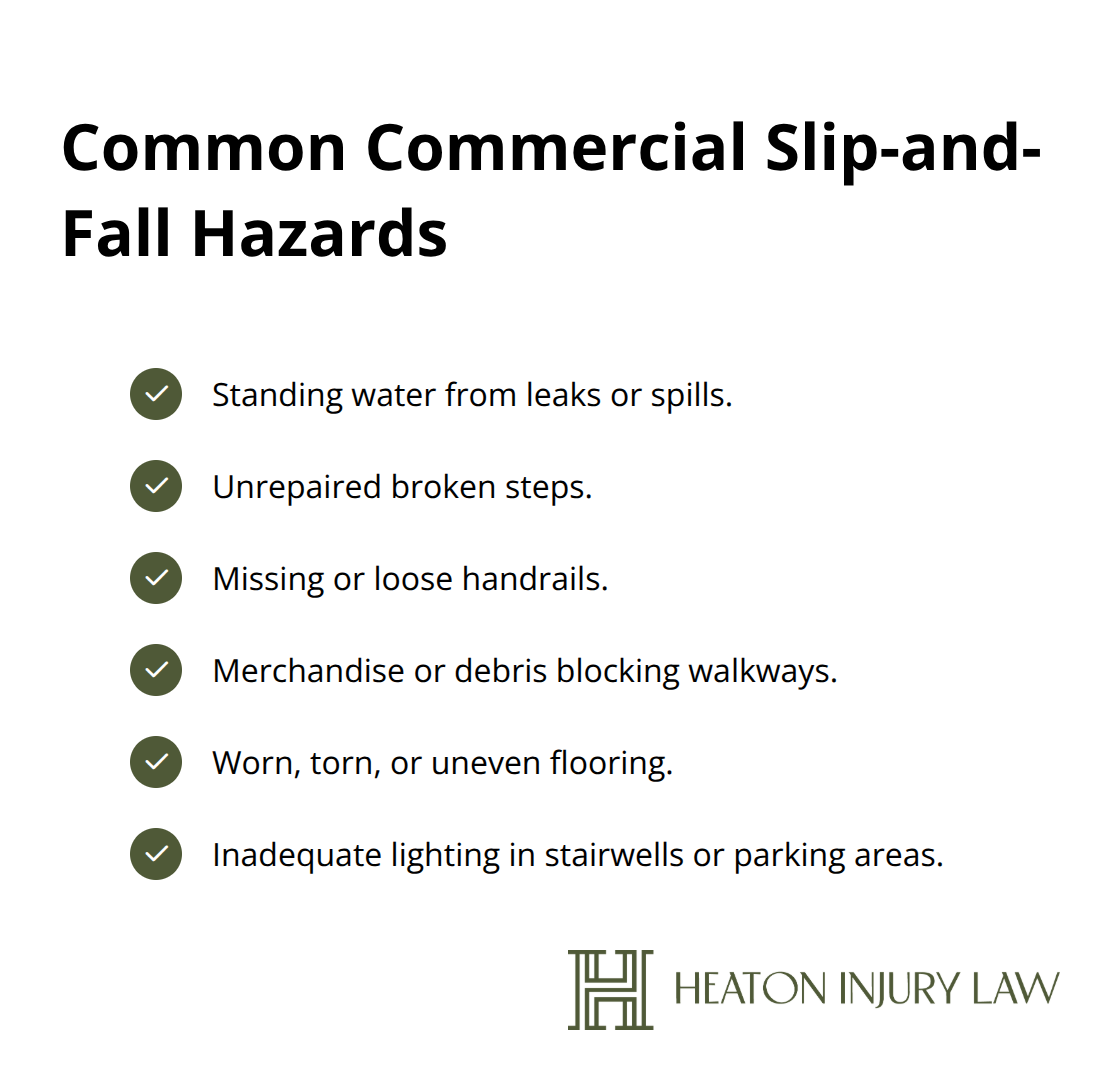
You’ll need evidence to support your claim: photographs of the hazard, witness statements, maintenance records showing when inspections occurred or didn’t occur, incident reports, and medical documentation proving injury. Common commercial hazards that lead to successful claims include standing water from leaks, unrepaired broken steps, missing handrails, merchandise or debris blocking walkways, worn or torn flooring, and inadequate lighting in stairwells or parking areas. The stronger your evidence of the owner’s knowledge or negligence, the stronger your position when pursuing compensation for medical expenses, lost income, and pain and suffering. Understanding what constitutes negligence sets the foundation for proving your claim-which brings us to the specific steps required to establish liability in court.
How Property Owners Reveal Their Negligence
The Four Elements You Must Establish
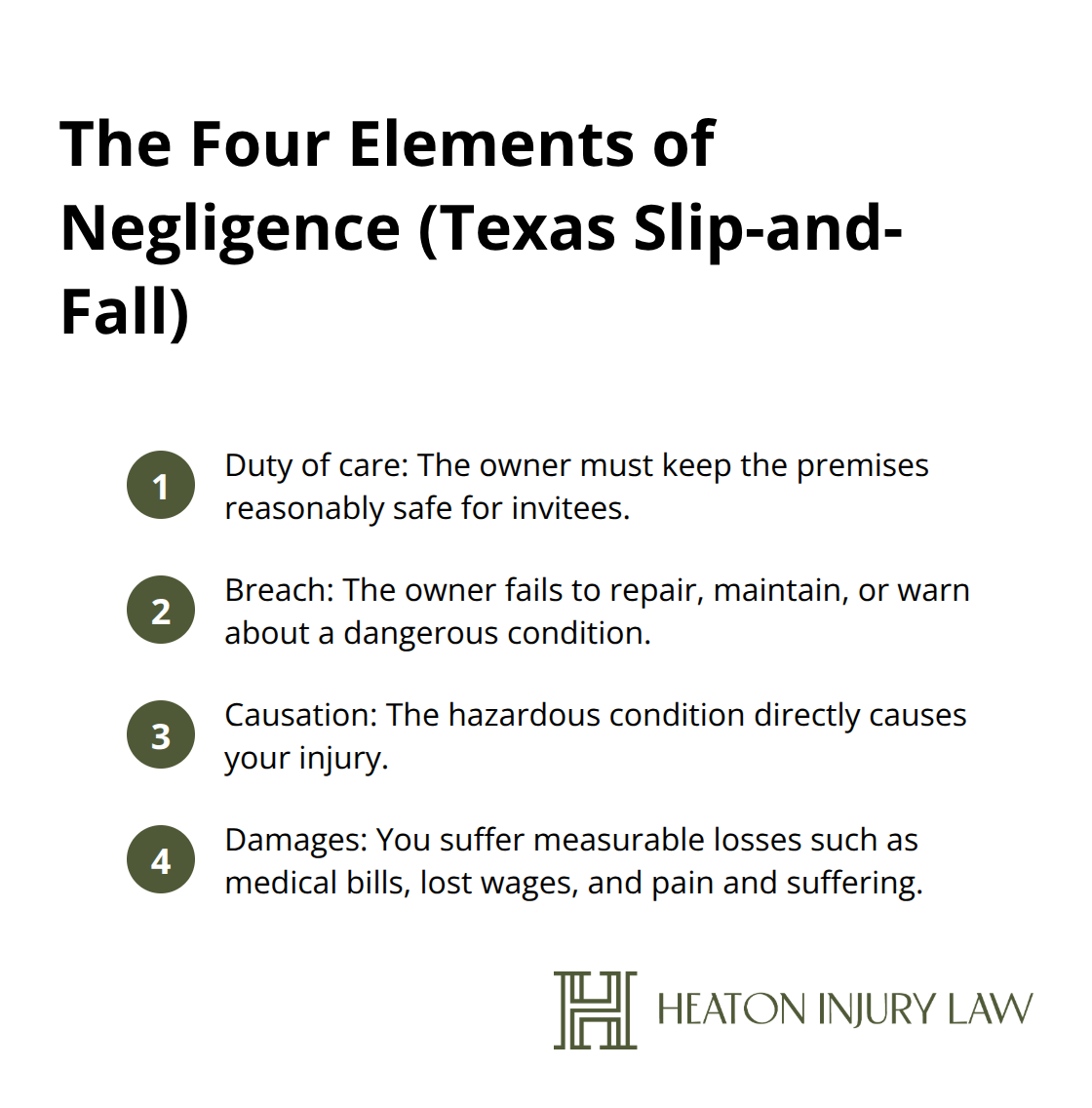
Proving negligence in a slip-and-fall case requires establishing four elements: the property owner’s duty to maintain safe conditions, their breach of that duty, your injury as a direct result, and measurable damages. Texas courts focus heavily on whether the owner knew or should have known about the hazard. This is where your evidence becomes decisive.
Documentation That Exposes Knowledge
Maintenance logs, incident reports, prior complaints, and inspection schedules reveal what property owners actually knew. If a property owner received a complaint about a wet floor two weeks before your fall but never inspected or fixed it, that’s constructive notice-they should have known. Surveillance footage showing the hazard existed for hours before your injury strengthens this argument significantly.
Witness statements from employees who acknowledge the condition was visible carry substantial weight. Property owners often claim they conduct regular inspections, but when you request those inspection records and find gaps or no documentation at all, you’ve exposed negligence. Many Texas commercial properties fail to maintain written inspection schedules, which actually works against them in litigation. The absence of records proves they weren’t inspecting adequately.
Photographs taken immediately after your fall showing the exact hazard are non-negotiable evidence. If the property was wet and slippery, images of standing water or the spill matter. If flooring was damaged, document the specific location and condition. Medical records linking your injuries directly to the fall establish causation-this includes emergency room reports, imaging studies, and follow-up treatment notes that clearly connect your injuries to the incident.
Why Warnings Alone Don’t Satisfy Legal Obligations
Failure to warn or repair is where negligence becomes obvious. A wet floor sign does not satisfy a property owner’s legal obligation if they leave the hazard unaddressed. Texas courts have consistently ruled that warnings alone are insufficient when the condition itself remains dangerous. If a retailer knew about a broken step for three months and simply posted a warning sign instead of repairing it, that’s negligent.
Documentation of when repairs should have occurred versus when they actually occurred reveals this failure. Contractors or maintenance vendors hired to fix problems create a paper trail-work orders, invoices, and completion dates. If these show delayed repairs or incomplete work, you have evidence of breach.
Establishing Direct Causation Between Negligence and Injury
Direct causation means proving the specific negligent act caused your specific injury. This requires medical testimony establishing that your fall resulted from the hazard, not from your own misstep or a pre-existing condition. Your doctor’s report stating you fell due to an unexpected wet surface, uneven flooring, or inadequate lighting connects the negligence directly to your harm.
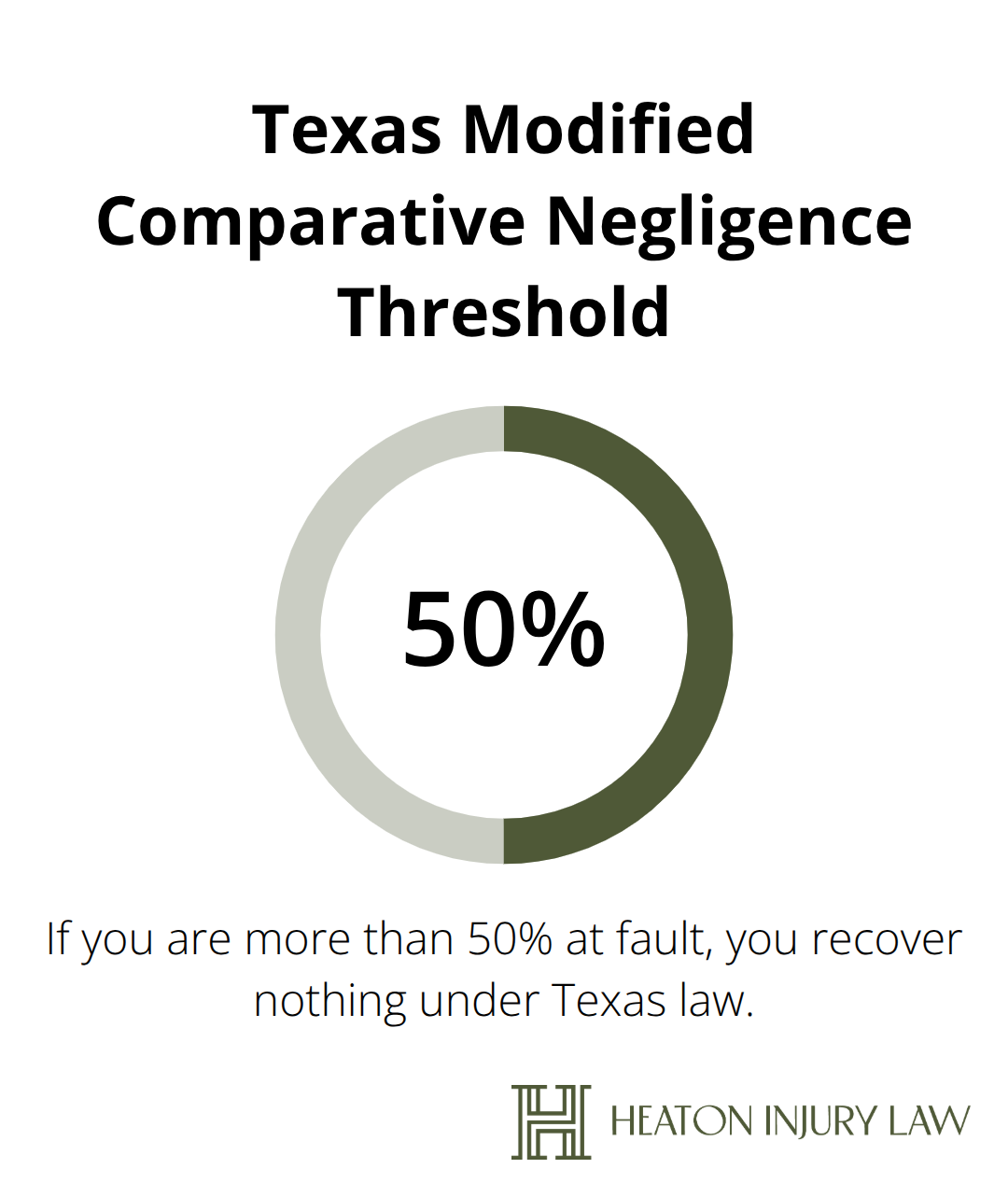
Insurance adjusters often argue comparative negligence, claiming you should have been more careful. Texas uses modified comparative negligence, meaning if you’re found more than 50 percent at fault, you recover nothing. This is why establishing that the hazard was not open and obvious becomes critical. If a spill was hidden in a corner or lighting was genuinely insufficient, a reasonable person could not have avoided it.
Your medical records, witness statements about visibility conditions, and photographs all work together to show the hazard was not something you could reasonably have noticed and avoided. Insurance companies weaponize causation arguments, which is precisely why the strength of your evidence determines whether you recover full compensation or nothing at all. Once you’ve established negligence, the next step involves calculating exactly what damages you’re entitled to recover.
What Compensation Can You Actually Recover
Medical Expenses Form Your Claim’s Foundation
Calculating damages in a slip-and-fall claim requires understanding exactly what Texas courts allow you to recover and how insurers attempt to minimize payouts. Medical expenses form the foundation of your claim, and this includes far more than just emergency room bills. Hospital stays, imaging studies like MRIs or CT scans, physical therapy sessions, prescription medications, and ongoing specialist care all count as recoverable damages. If your injury requires future treatment-say, arthroscopic surgery scheduled three months after your fall-you can include those anticipated costs in your claim. Document every medical expense with invoices and receipts; insurers scrutinize medical bills aggressively, often arguing that certain treatments were unnecessary or unrelated to your fall. Texas courts have consistently upheld claims for medical expenses directly connected to the incident, so maintaining detailed records of every provider visit and treatment recommendation strengthens your position significantly.
Lost Wages and Reduced Earning Capacity
Lost wages represent income you actually stopped earning due to your injury. If you missed two weeks of work during recovery, your employer’s pay stubs and a letter from your HR department prove this damage. Many injured workers underestimate their wage claims by failing to include benefits lost during recovery periods-health insurance contributions, retirement matching, and bonuses you would have earned all factor into total lost income. If your injury permanently reduces your earning capacity, meaning you can no longer perform your previous job duties or must accept lower-paying work, Texas courts award damages for that long-term financial impact. An accountant or vocational expert can calculate the difference between your pre-injury earning potential and post-injury capacity over your remaining working years, converting that into a present-day award. This calculation often represents the largest component of a slip-and-fall settlement because it accounts for decades of reduced income potential.
Pain and Suffering Compensation Reflects Your Actual Harm
Pain and suffering compensation addresses the non-economic harm you experienced-the physical pain, emotional distress, reduced quality of life, and psychological impact of your injury. Texas does not cap pain and suffering damages in premises liability cases, meaning there is no legal maximum. However, insurers use aggressive tactics to minimize these awards, often arguing your pain is exaggerated or that you recovered faster than medical records indicate. Your medical records must support the severity and duration of your pain; if your doctor documented moderate to severe pain for six months post-injury, that strengthens your claim substantially. Testimony from family members about how your injury changed your daily life-inability to exercise, sleep disruption, dependency on pain medication, or loss of enjoyment in activities you previously enjoyed-carries significant weight with juries and settlement negotiators. The National Safety Council reports that fall-related injuries cost the U.S. healthcare system billions annually, with many victims experiencing chronic pain long after initial recovery. If your fall resulted in permanent nerve damage, chronic pain syndrome, or ongoing mobility limitations, the compensation reflects that permanent change to your quality of life. Insurers systematically undervalue pain and suffering claims by offering settlements far below what injured workers actually deserve. The strength of your medical documentation, expert testimony, and witness accounts of your suffering directly determines whether you recover a fair award or accept an inadequate settlement that fails to compensate you for the genuine harm you endured.
Protect Your Claim Now
Seek medical evaluation immediately after a commercial property slip fall, even if your injuries appear minor-many worsen over hours or days, and delayed treatment weakens your claim because insurers argue the injury wasn’t serious. Photograph the exact hazard from multiple angles and capture surrounding visibility conditions. Contact witnesses at the scene and request their information, as their statements prove the property owner knew or should have known about the danger.
File an incident report with the property manager and request copies of maintenance logs, inspection records, and prior incident reports for that location. Property owners often resist documentation, but gaps in their records expose negligence directly. Preserve all evidence: medical bills, receipts, photographs of your injuries as they heal, pay stubs showing lost work time, and any communications with the property owner or their insurance company.
Contact Heaton Injury Law, PLLC to protect your rights and maximize your recovery. We at Heaton Injury Law, PLLC handle slip-and-fall claims across Texas and work on contingency, meaning you pay nothing unless we win your case.
The information provided in this blog is for general informational purposes only and does not constitute legal advice. Every case is unique, and laws may vary by jurisdiction. Reading this content does not create an attorney-client relationship. For guidance specific to your situation, please consult with a qualified personal injury attorney licensed in Texas.
Artificial intelligence may have been used to assist in generating some text or images in these articles.